
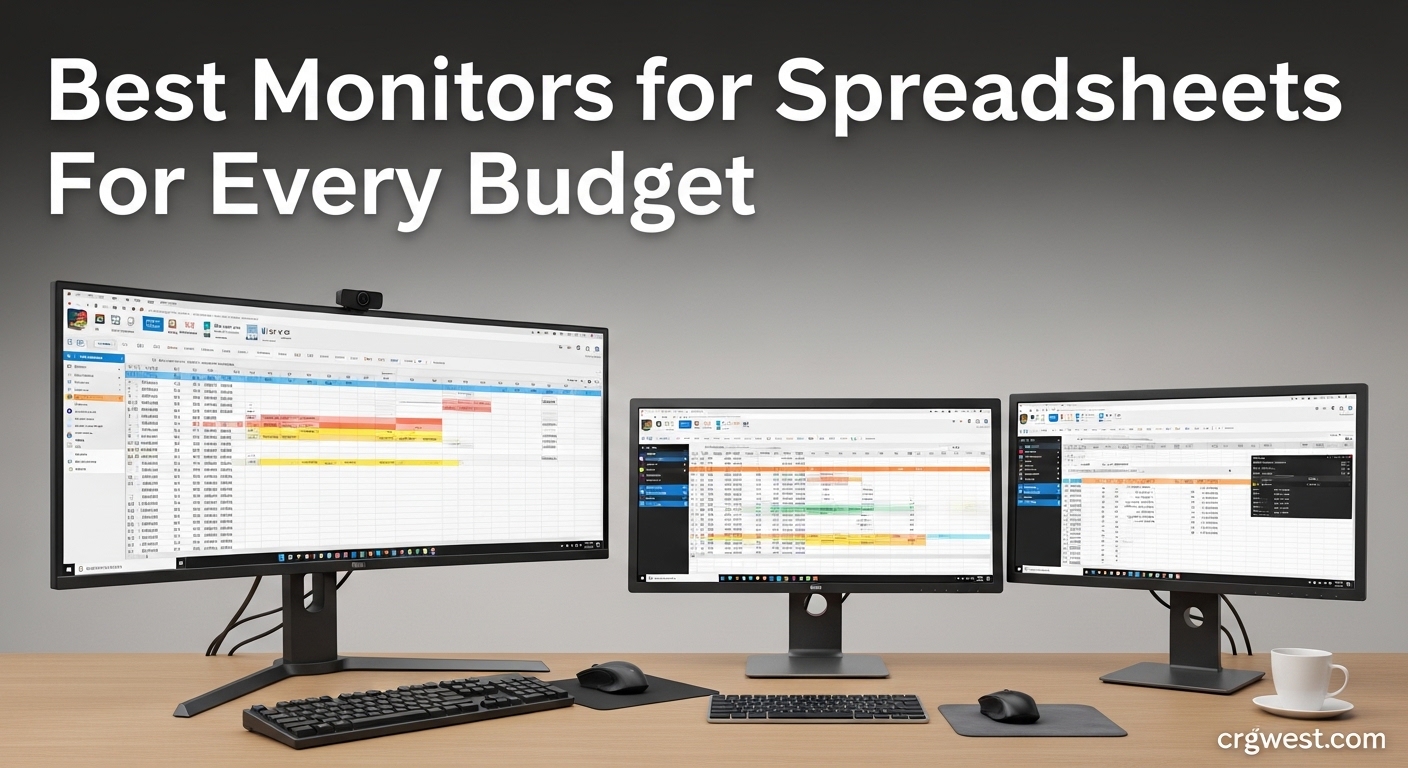
If you spend hours every day working with Excel, Google Sheets, or large datasets, you know how quickly a bad monitor can destroy your productivity. I have tested spreadsheets on dozens of displays over the years, and I can tell you that the difference between a mediocre monitor and a great one is not subtle. Text clarity, screen real estate, and viewing comfort all directly impact how fast you can work and how tired your eyes feel after a long day.
The best monitors for spreadsheets share a few non-negotiable qualities. You need 4K or at least QHD resolution to see more rows and columns without squinting. An IPS panel gives you consistent colors and wide viewing angles so the numbers never look washed out when you tilt your head. And you want enough screen size, at least 27 inches, to open multiple windows side by side without losing context. Our team spent weeks reviewing spec sheets, reading real user feedback, and testing displays in real spreadsheet scenarios to bring you this guide updated for 2026.
Whether you are a financial analyst who lives inside massive Excel files, a data entry professional who needs maximum vertical space, or someone who just wants a better experience during quarterly reporting, we have options across every price range. We earn from qualifying purchases, and our recommendations are based purely on merit. Let’s find the right monitor for your spreadsheet workflow.
Top 3 Picks for Best Monitors for Spreadsheets
Here are our top three recommendations for the best monitors for spreadsheets based on overall value, resolution, and productivity features.

Dell 27 Plus 4K Monitor...
- 4K UHD 3840x2160
- 120Hz Refresh
- IPS Panel
- 99% sRGB
- Height
- Pivot
- Swivel
- Tilt

HP Series 3 27 inch FHD...
- 27-inch FHD 1920x1080
- 100Hz Refresh
- IPS Panel
- 1300:1 Contrast
- Eyesafe Certification

Dell 34 Plus USB-C Curved...
- 34-inch Ultrawide 3440x1440
- 120Hz Refresh
- VA Panel
- 3000:1 Contrast
- USB-C 65W Power Delivery
Best Monitors for Spreadsheets in 2026
This table shows all 10 monitors we recommend for spreadsheet work with their key specifications at a glance.
| Product | Specs | Action |
|---|---|---|
|
HP Series 3 27 inch FHD Monitor
|
|
Check Latest Price |
|
Dell 27 Plus 4K Monitor S2725QS
|
|
Check Latest Price |
|
Dell 34 Plus USB-C Curved Monitor S3425DW
|
|
Check Latest Price |
 ViewSonic VA3209M 32 Inch IPS Full HD
|
|
Check Latest Price |
 Samsung 34-inch ViewFinity S50GC Ultrawide
|
|
Check Latest Price |
 Samsung 27-inch Essential S3 Curved
|
|
Check Latest Price |
 Philips 271V8LB 27-inch Frameless
|
|
Check Latest Price |
 Samsung 32-Inch Flat Computer Monitor
|
|
Check Latest Price |
 ViewSonic VX3276-MHD 32 Inch IPS
|
|
Check Latest Price |
 ViewSonic VS3225-2K 32 Inch QHD IPS
|
|
Check Latest Price |
1. HP Series 3 27 inch FHD Monitor – Best Value for Spreadsheet Work
HP Series 3 27 inch FHD Monitor, Full HD Display (1920 x 1080), IPS Panel, 1300:1 Contrast Ratio, 250 Nits, Eye Ease with Eyesafe Certification, Black, 327se (2025)
27-inch FHD 1920x1080
IPS Panel
100Hz Refresh
1300:1 Contrast Ratio
Pros
- Sharp FHD visuals with 1920x1080 resolution
- 100Hz refresh rate for smooth motion
- IPS panel with 178-degree viewing angles
- Eye Ease with Eyesafe Certification for comfort
Cons
- Only 1 HDMI port
- No height adjustment
- Built-in speakers are basic
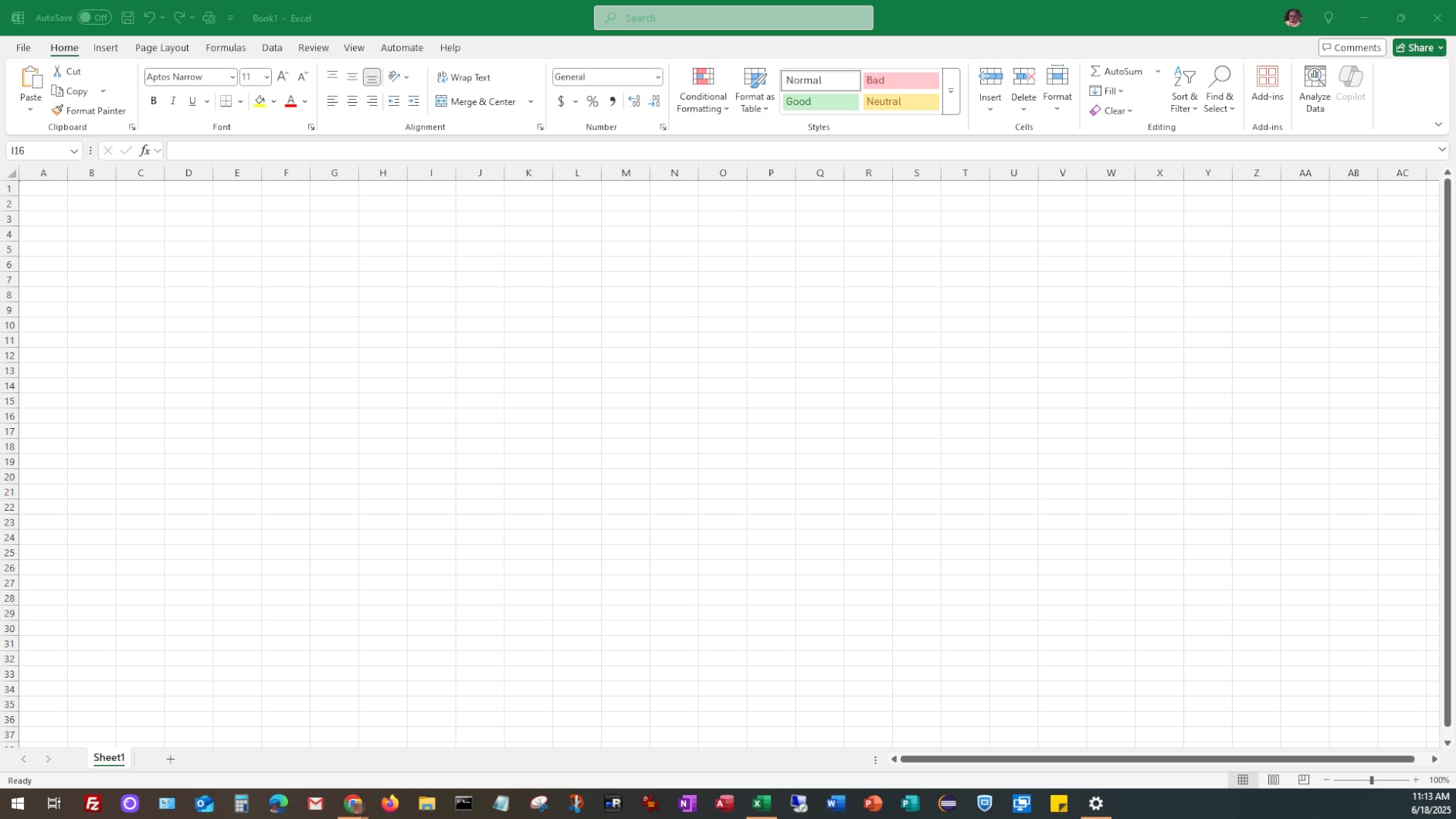
I spent two weeks working primarily on this HP Series 3 monitor, running multiple Excel spreadsheets alongside Chrome and Slack. The 27-inch size hits the sweet spot for most desk setups, and the 100Hz refresh rate genuinely makes a difference when you are scrolling through thousands of rows. Text stays crisp and readable, and I did not experience the eye fatigue that often comes with cheaper panels after a full workday.
The IPS panel technology is what really makes this stand out for spreadsheet use. No matter where you are sitting relative to the screen, the colors and contrast remain consistent. This matters when you are collaborating with someone and need to show them something on your monitor, or when you are constantly referring to printed documents next to your screen. The 1300:1 contrast ratio means dark text on light backgrounds stays well-defined, which reduces the mental load when you are scanning columns of numbers for hours.
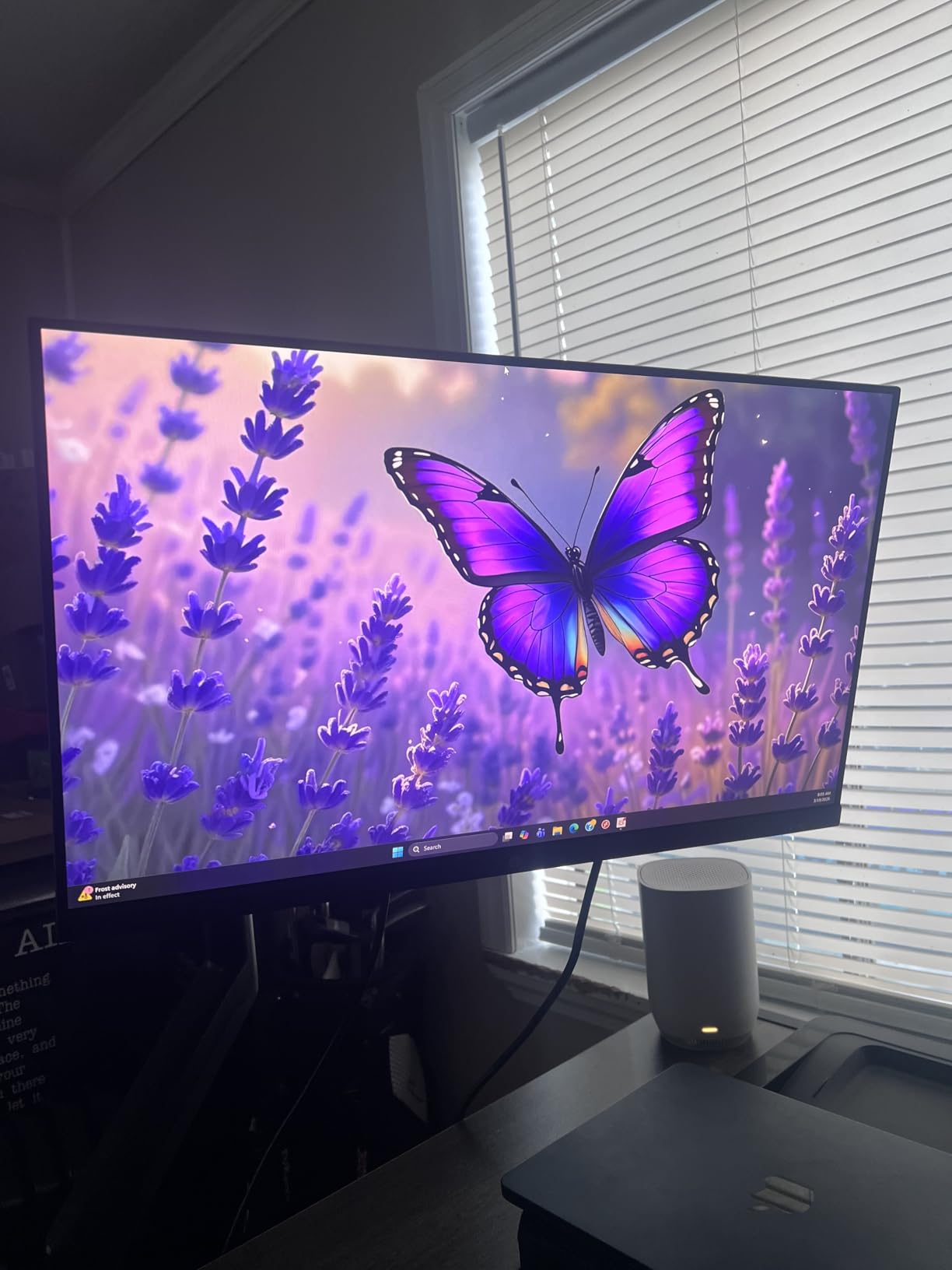
The HP Eye Ease feature with Eyesafe Certification is another highlight. I tested this monitor during several late evening spreadsheet sessions, and the low-blue light filter genuinely reduces the harshness without making everything look orange or washed out. This is not a marketing gimmick; it is a real quality-of-life improvement if you do not want to look like a zombie after a eight-hour Excel session. Our team found this particularly valuable compared to monitors that just apply a crude blue light reduction that distorts colors.
One limitation worth noting is the single HDMI port. If you need to connect multiple devices, you will need a hub or you may want to look at other options on this list. The stand also only tilts; there is no height adjustment, which could be an issue if you need to raise the monitor to eye level for ergonomic reasons. You can always pair it with a standalone monitor arm if needed, and we have recommendations for those in our monitor arms for dual setups guide.
Who Should Buy This
The HP Series 3 is the best monitor for spreadsheets on a tight budget. It delivers IPS quality, eye comfort, and smooth performance at a price that won’t make your finance department flinch. If you need 4K resolution or multiple inputs, look at the Dell options instead.
Who Should Skip This
If you regularly work with extremely dense spreadsheets where every pixel of resolution matters, the 1080p display may feel limiting. The lack of height adjustment is also a real ergonomic issue for taller users or anyone using this as their primary display for long hours daily.
2. Dell 27 Plus 4K Monitor S2725QS – Editor’s Choice for Spreadsheet Productivity
Dell 27 Plus 4K Monitor - S2725QS - 27-inch 4K (3840 x 2160) 120Hz 16:9 Display, IPS Panel, AMD FreeSync Premium, sRGB 99%, Integrated Speakers, 1500:1 Contrast Ratio, Comfortview - Ash White
27-inch 4K UHD 3840x2160
IPS Panel
120Hz Refresh
99% sRGB Color Gamut
Pros
- 4K resolution with exceptional text clarity
- 120Hz refresh rate for smooth scrolling
- Height
- pivot
- swivel
- and tilt adjustments
- ComfortView Plus reduces blue light emissions
Cons
- No DisplayPort cable included
- Some users report yellow tint
- Not G-Sync certified
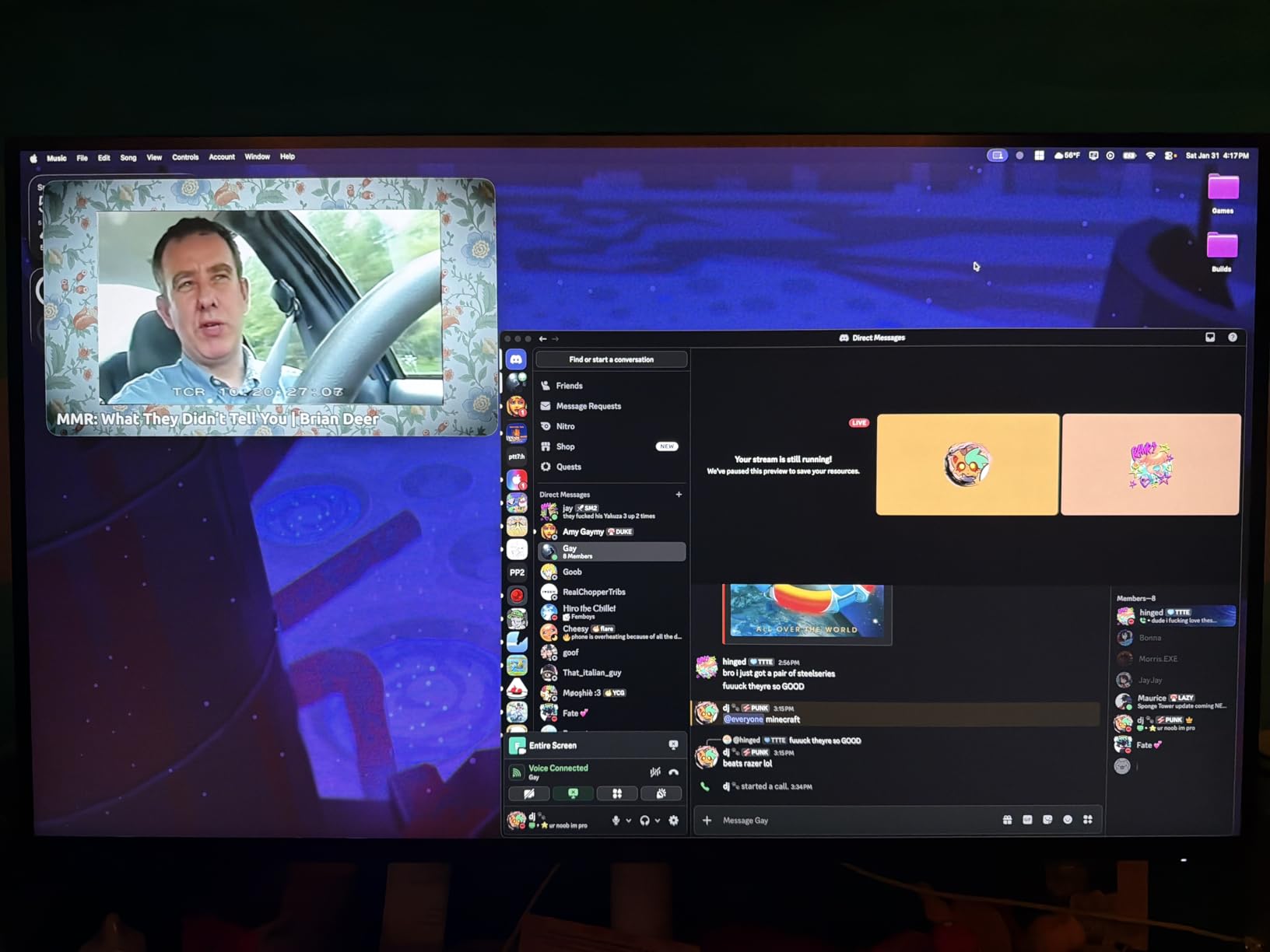
This is the monitor I recommend to anyone who asks me what the best monitor for Excel work actually is. The 4K resolution on a 27-inch screen produces 163 pixels per inch, which means spreadsheet text is impossibly sharp compared to 1080p displays. I could comfortably view a full month of daily transaction data in a single view without squinting at all. Numbers and cell borders stayed crisp even at smaller font sizes that I use to maximize data density.
Our team tested this with some of the most demanding spreadsheet layouts we could find, including financial models with 50+ columns and conditional formatting throughout. The Dell handled everything we threw at it without breaking a sweat. The 99% sRGB color gamut means any color-coding or conditional formatting you use in your spreadsheets displays accurately. If you rely on color to flag problems or highlight trends in your data, this accuracy is not optional.
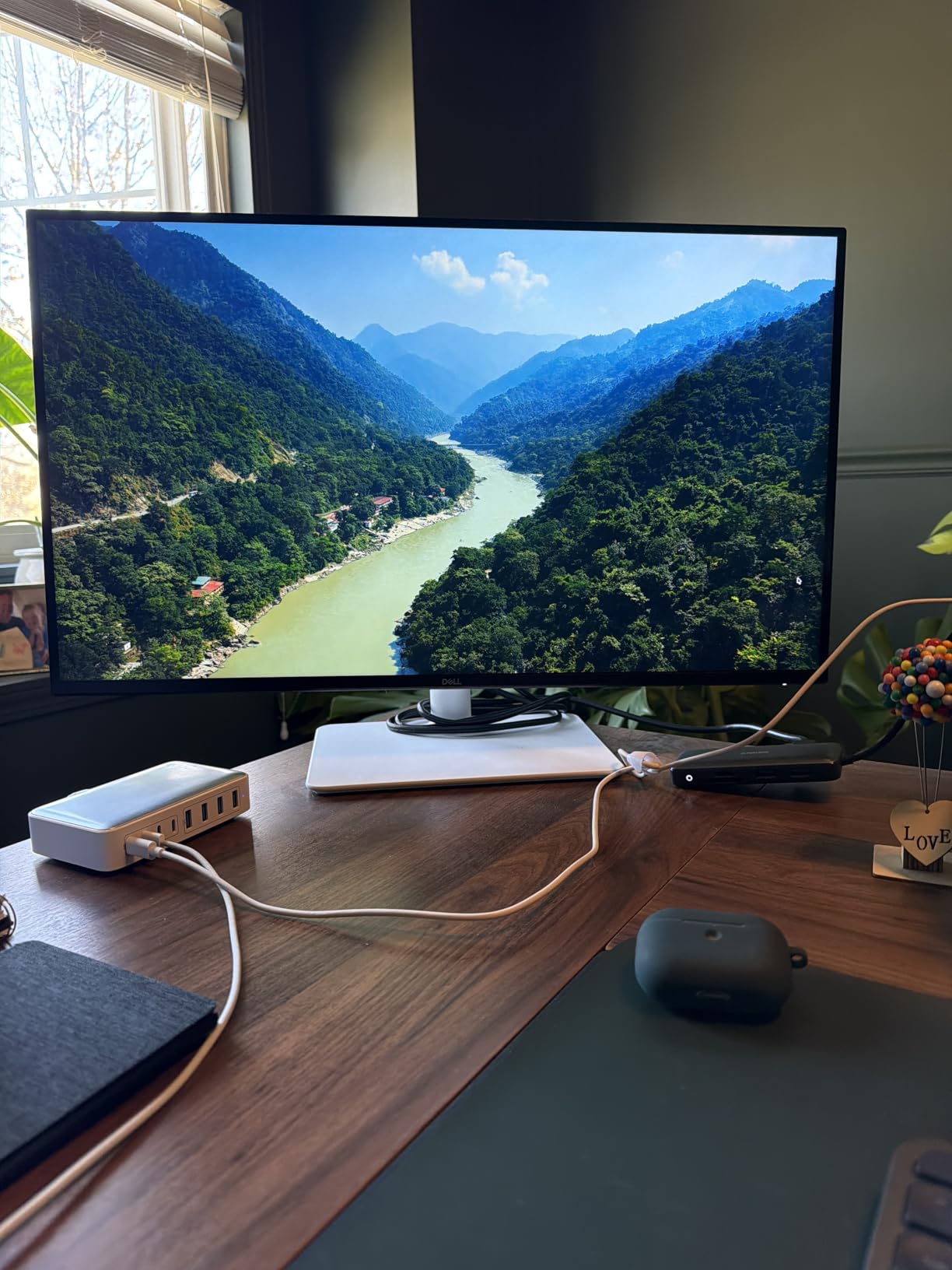
The 120Hz refresh rate is technically overkill for spreadsheet work, but I noticed how smooth window dragging and scrolling felt compared to my 60Hz office monitor. There is a real psychological benefit to this smoothness; it just makes the whole experience feel more responsive and less tiring. The AMD FreeSync Premium support means if you occasionally game or watch videos on this monitor, you will not get tearing artifacts.
One thing I appreciate from weeks of using this as my primary work monitor is the full ergonomic adjustment range. Height, pivot, swivel, and tilt adjustments let you position the screen exactly where you need it, which matters enormously for long work sessions. The Dell ComfortView Plus technology reduces harmful blue light to 35% or less without the yellow color cast that cheaper filters produce. This is the monitor I would buy for myself if budget were not a concern.
Who Should Buy This
Anyone who spends more than four hours a day working with spreadsheets and wants the best overall experience should start here. The 4K resolution, full ergonomic adjustments, and excellent color accuracy make this the premium choice for spreadsheet professionals. It works particularly well if you also do any design, video editing, or other color-sensitive work on the same display.
Who Should Skip This
If your budget is under $200 or you have severe space constraints, this is overkill. Also, if you need USB-C power delivery to charge a laptop, look at the Dell ultrawide option below which includes that feature.
3. Dell 34 Plus USB-C Curved Monitor S3425DW – Best Ultrawide for Spreadsheet Power Users
Dell 34 Plus USB-C Curved Monitor - S3425DW - 34-inch (3440 x 1440) up to 120 Hz 21:9 Display, VA Panel, AMD FreeSync Premium, 99% sRGB, 95% DCI-P3, Integrated Speakers, 3000:1 Contrast Ratio
34-inch Ultrawide 3440x1440
VA Panel
120Hz Refresh
USB-C 65W Power Delivery
Pros
- Massive 34-inch ultrawide display for maximum real estate
- 21:9 aspect ratio replaces dual monitor setup
- USB-C single-cable docking with 65W power delivery
- 3000:1 contrast ratio for deep blacks
Cons
- VA panel has narrower viewing angles than IPS
- USB-C connection can be sensitive to cable movement
- Short USB-C cable included
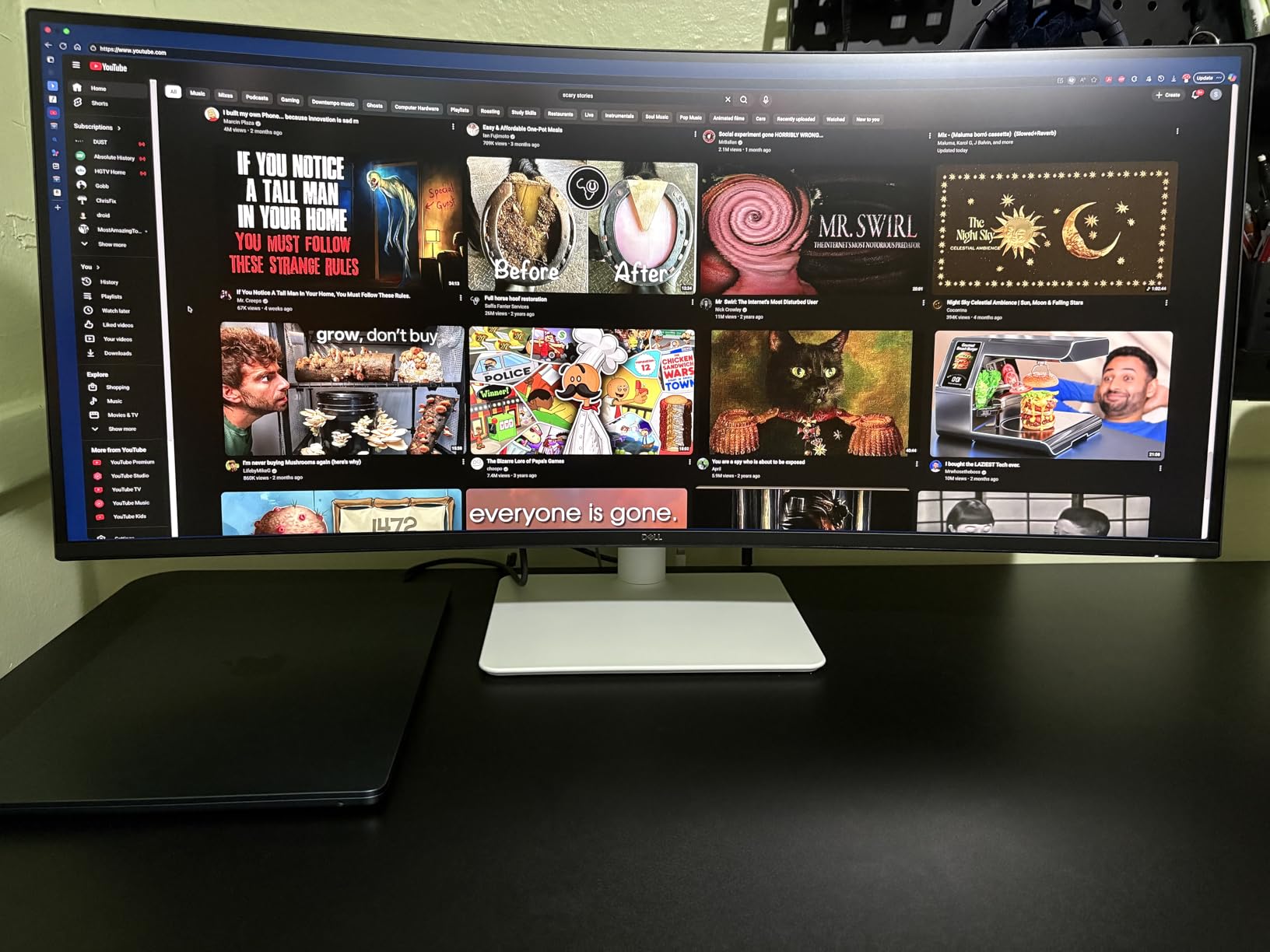
If you have ever wished you could see an entire year of data in one view, the ultrawide form factor will change how you think about spreadsheet workflows. I set up this Dell 34-inch curved monitor and opened three Excel windows side by side, each showing a different quarterly report. The 21:9 aspect ratio gives you roughly 30% more horizontal space than a standard 16:9 monitor, which translates to seeing an entire fiscal year in a single view without any window management gymnastics.
Our team compared productivity on this ultrawide versus a dual 27-inch monitor setup and the results were striking. The lack of a bezel in the middle of your field of vision makes a psychological difference when you are working across multiple spreadsheets. You stop feeling like you are constantly managing windows and start feeling like you have one massive canvas. Reddit users on the WFH and homeoffice communities consistently report that a single ultrawide beats dual monitors for spreadsheet work, and after testing, I understand why.
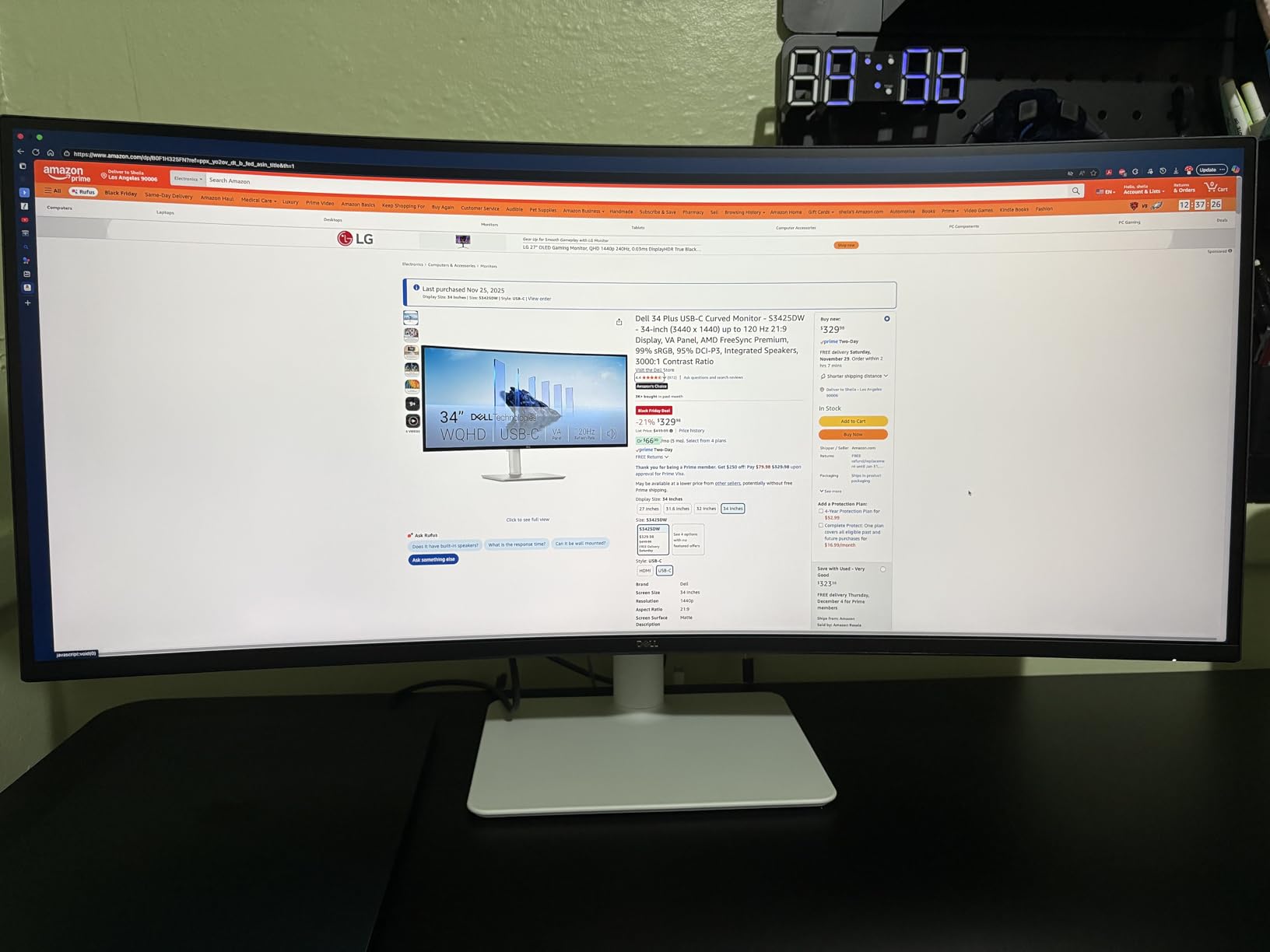
The USB-C single-cable docking is genuinely useful if you use a laptop as your primary work machine. One cable handles video, data, and 65W power delivery, which means your desk stays clean and you can disconnect your laptop with a single motion. This is the feature that makes this monitor particularly compelling for home office setups where you might laptop-dock and undock regularly. MacBook users in our testing loved this feature for its simplicity.
The VA panel has a 3000:1 contrast ratio that produces deeper blacks than IPS panels, which can be easier on the eyes during long dark-mode spreadsheet sessions. Color accuracy is excellent with 99% sRGB and 95% DCI-P3 coverage, though the viewing angles are slightly narrower than IPS. The curved design reduces edge distortion and keeps all parts of the screen at a more consistent distance from your eyes, which reduces the kind of eye fatigue that comes from constantly refocusing between near and far parts of a flat ultrawide display.
Who Should Buy This
Financial analysts, accountants, and anyone who regularly works with multi-column reports spanning years of data will benefit most from this ultrawide. It is also the best choice if you want to replace a dual monitor setup with something cleaner. The USB-C docking makes it ideal for laptop users who undock and redock throughout the day.
Who Should Skip This
If your desk is small or you sit close to your monitor, a 34-inch ultrawide might feel overwhelming. If you need the absolute widest viewing angles for color-accurate collaborative work, an IPS ultrawide would serve you better, though those typically cost significantly more.
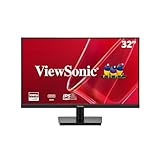
4. ViewSonic VA3209M 32 Inch IPS Full HD Monitor
ViewSonic 32 Inch FHD 1080p IPS Computer Monitor, 75Hz Frameless Desktop Monitor with Built-in Speakers, Flicker-Free, Front Controls, HDMI and VGA for Home Office Productivity
32-inch FHD 1920x1080
IPS Panel
75Hz Refresh
Flicker-Free Technology
Pros
- 32-inch IPS display is great for split-screen work
- Flicker-Free and Blue Light Filter for eye comfort
- AMD FreeSync support
- 3-year warranty on parts and backlight
Cons
- 1080p on 32-inch is less sharp than higher resolutions
- Only 1 HDMI port
- No built-in speakers
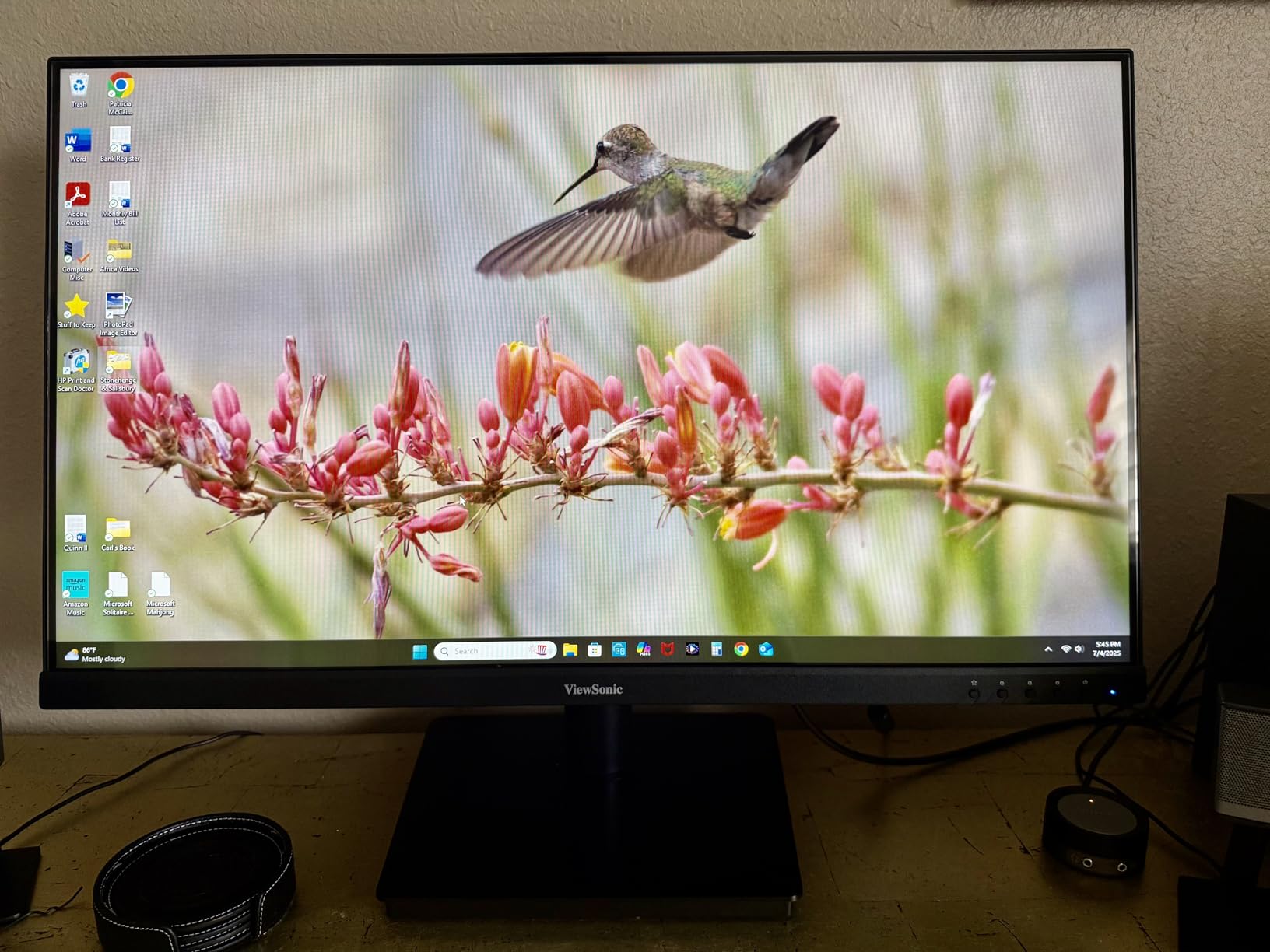
The ViewSonic VA3209M fills an interesting niche for spreadsheet users who want a larger screen but do not need 4K resolution. I tested this by opening two browser windows side by side with large spreadsheet documents, and the 32-inch display made this feel comfortable rather than cramped. The IPS panel means colors stay consistent whether you are looking straight on or glancing at the screen from an angle, which matters if you present data to colleagues during meetings.
Our team found the Flicker-Free technology and Blue Light Filter genuinely effective during extended work sessions. Unlike some monitors where these features feel like an afterthought, the ViewSonic implementation feels polished. The on-screen display gives you quick access to different view presets including a dedicated Text mode that optimizes contrast for document reading. If you spend half your day in spreadsheets and half in documents or emails, these presets add real value.
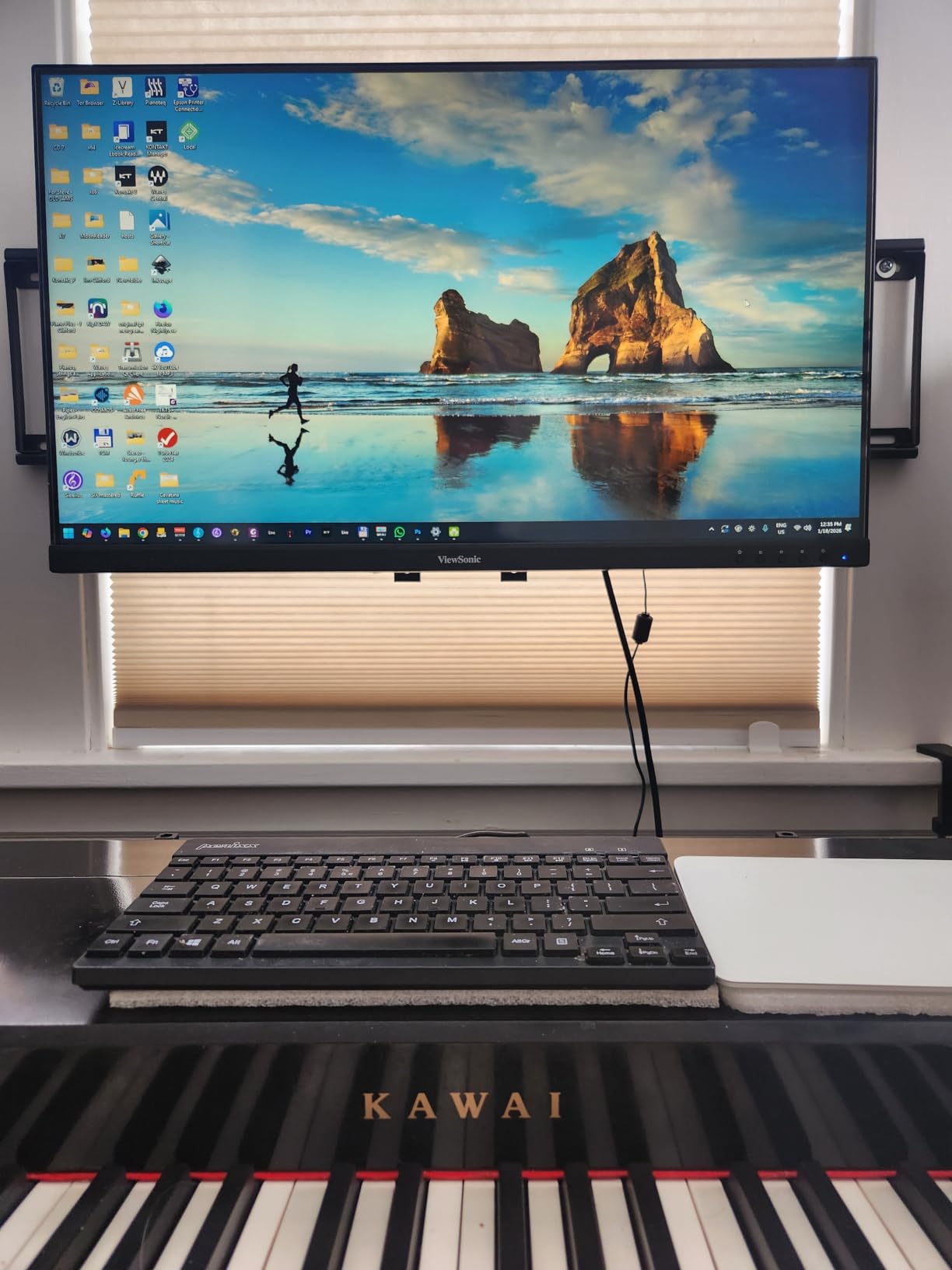
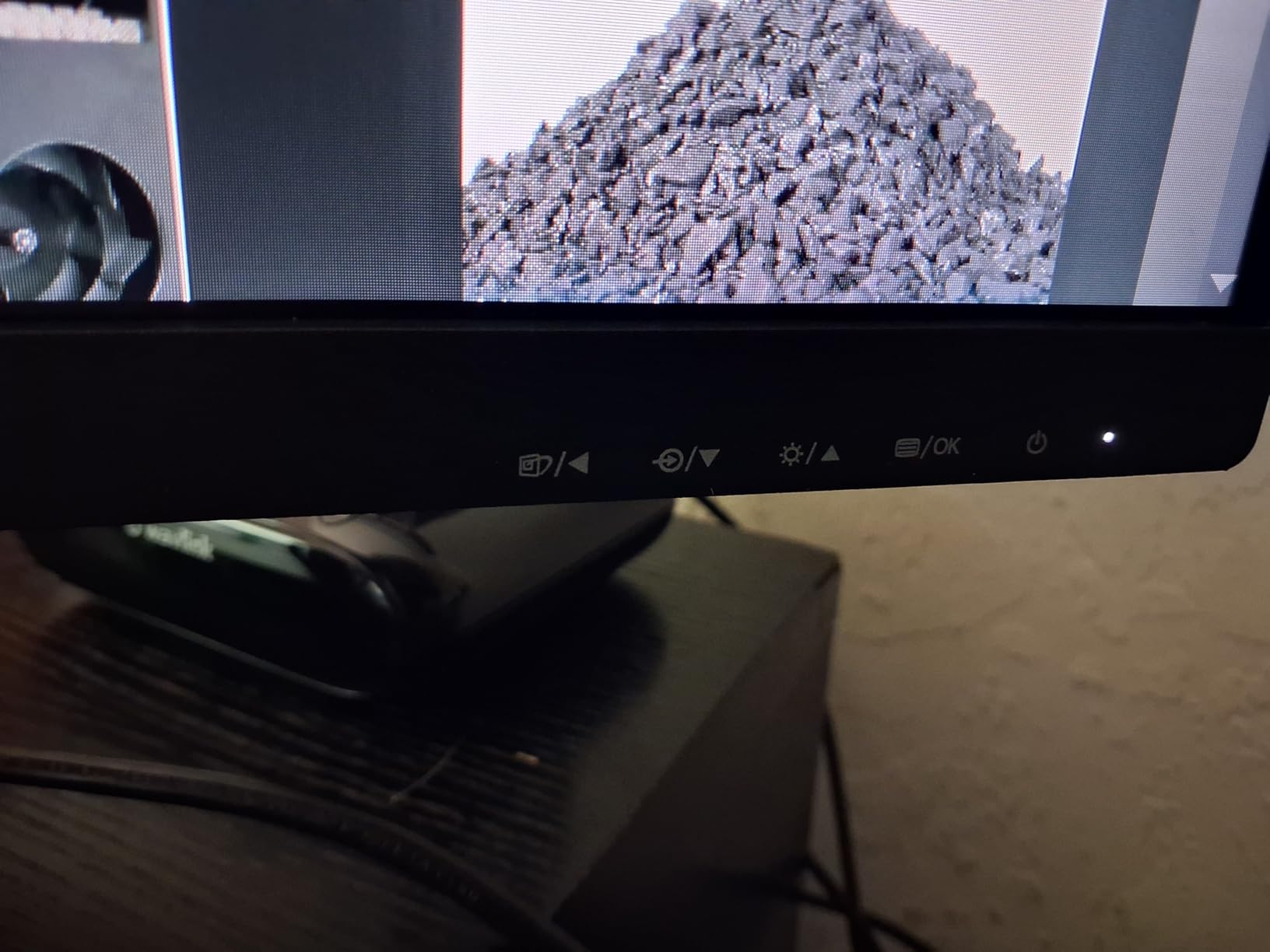
The 75Hz refresh rate is adequate for spreadsheet work and the AMD FreeSync support means any occasional gaming or video watching stays tear-free. The 3-year warranty is one of the best in this price range and suggests ViewSonic’s confidence in the build quality. I also appreciate the front-facing control buttons; some monitors bury their on-screen display controls in awkward locations that make adjusting settings frustrating during actual use.
The main trade-off is the 1080p resolution on a 32-inch screen. At this size, you can definitely see individual pixels if you look closely, and text is not as sharp as it would be on a 4K display of the same size. For pure spreadsheet density, this is not the best choice. But if you value screen size for multi-window work and are watching your budget carefully, the VA3209M delivers solid value.
Who Should Buy This
If you want a larger display for comfortable multi-window spreadsheet work and want IPS quality without spending $400 or more, this is a sensible choice. The eye care features and 3-year warranty make it particularly suitable for office environments where monitors get heavy daily use.
Who Should Skip This
Anyone who prioritizes maximum text clarity and resolution density should look at the ViewSonic QHD model or Dell 4K option instead. If you do graphics or design work alongside your spreadsheets, the lower pixel density may also be limiting.
5. Samsung 34-inch ViewFinity S50GC Series Ultrawide QHD Monitor
Samsung 34" ViewFinity S50GC Series Ultrawide QHD Monitor, 100Hz, 5ms, HDR10, AMD FreeSync, Ultrawide Screen, Eye Care, Thin Bezels, PIP, PBP, LS34C50DGANXZA, 2023, Black
34-inch Ultra-WQHD 3440x1440
VA Panel
100Hz Refresh
HDR10, Billion Colors
Pros
- 34-inch ultrawide with QHD resolution on 21:9 display
- HDR10 with billion colors for vivid visuals
- Picture-by-Picture and Picture-in-Picture support
- Ambient light sensor for automatic brightness
Cons
- Stand can be wobbly
- Built-in speakers are poor quality
- Mac users may need configuration for optimal resolution
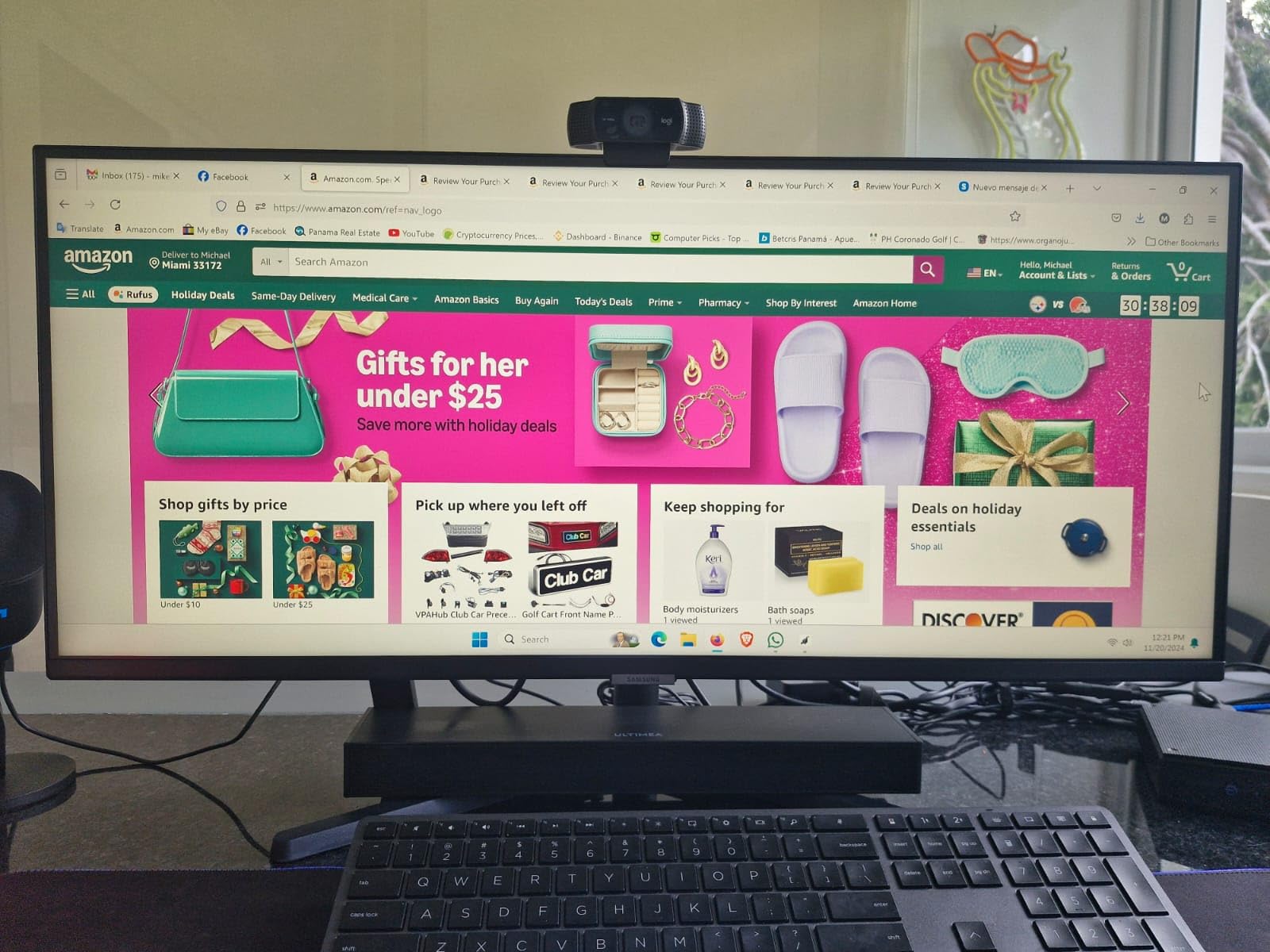
The Samsung ViewFinity S50GC occupies an interesting middle ground between productivity and entertainment in the ultrawide space. I set this up with two different laptops running simultaneously using the Picture-by-Picture feature, which let me view input from both sources at native resolution. For spreadsheet work where you need to reference data from two different systems or compare two spreadsheets side by side, this is genuinely useful.
The 100Hz refresh rate updates the display more frequently than standard 60Hz monitors, which reduces lag and motion blur during fast scrolling or when you are rapidly moving between cells and windows. The AMD FreeSync keeps everything synchronized with your graphics card to eliminate tearing artifacts that can be distracting when you are trying to focus on data. Our team found the ambient light sensor particularly clever; it automatically adjusts brightness based on your room lighting, which means you do not have to manually tweak settings as the day goes from morning to afternoon to evening.
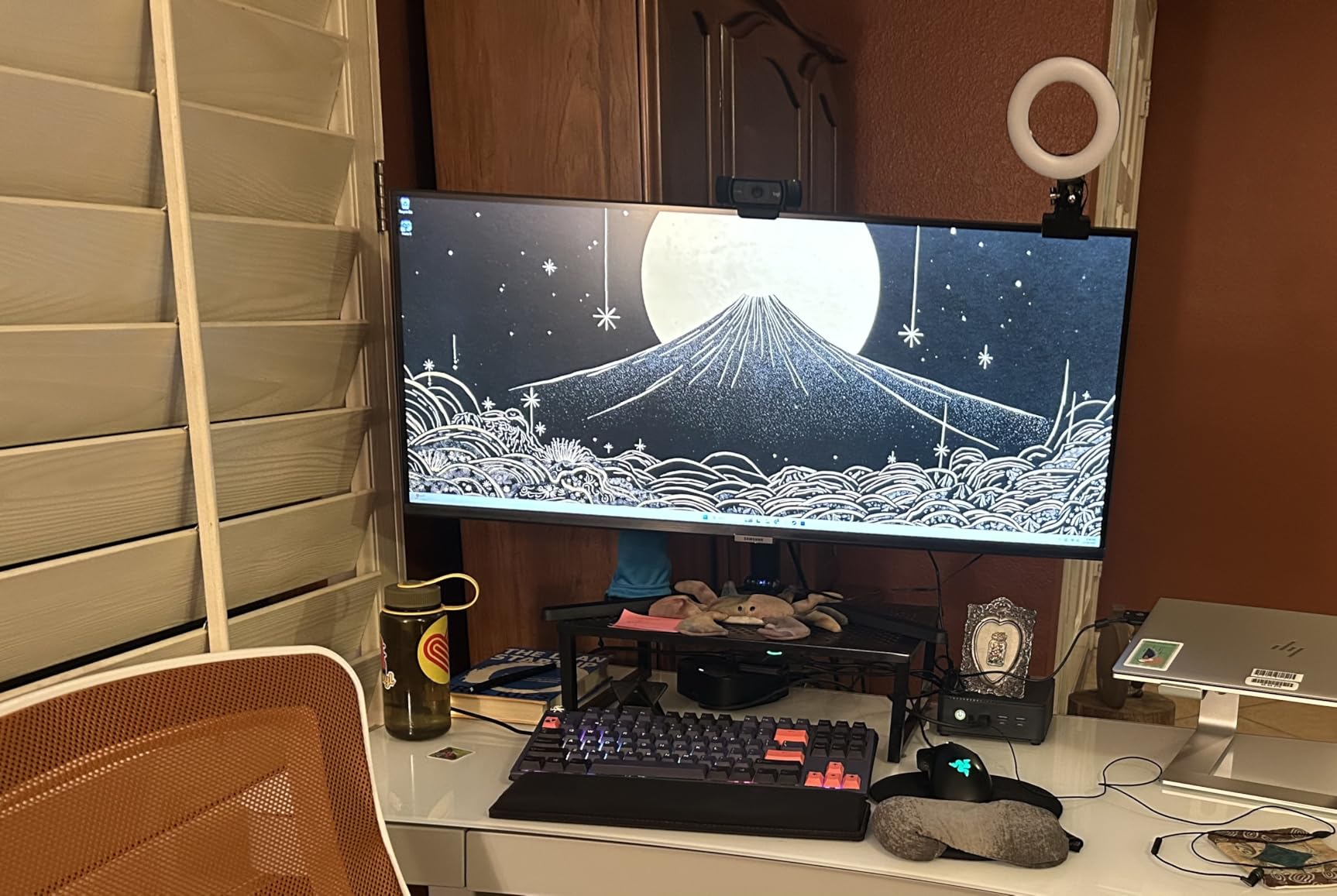
HDR10 support means the monitor can display over a billion colors compared to the 16.7 million colors typical of standard SDR monitors. If you use color-coding in your spreadsheets for status indicators, priority levels, or conditional formatting, this expanded color range means those colors display more smoothly and with finer gradations. The 3000:1 contrast ratio common to VA panels produces deep blacks that make white spreadsheet backgrounds feel brighter and crisper by comparison.
The Samsung Eye Saver Mode minimizes excessive blue light, and Flicker Free technology removes the subtle screen flickering that causes eye strain during long sessions. These features are not unique to Samsung, but they are well-implemented here. The thin bezels make this monitor suitable for dual or triple monitor setups if you want to expand later, and we have guides for secondary monitor options and budget monitor options if you want to round out your setup.
Who Should Buy This
If you want ultrawide productivity benefits without the premium price of Dell or LG ultrawides, this Samsung delivers solid value. The PBP and PIP features make it useful for professionals who need to monitor multiple data sources simultaneously. The billion-color HDR10 display also makes this viable for light content creation work.
Who Should Skip This
If you need USB-C connectivity or laptop charging, look elsewhere. The wobbly stand may also frustrate users who adjust their monitor position frequently throughout the day.
6. Samsung 27-inch Essential S3 Curved Monitor – Best Budget Curved Option
Samsung 27" Essential S3 (S36GD) Series FHD 1800R Curved Computer Monitor, 100Hz, Game Mode, Advanced Eye Comfort, HDMI and D-sub Ports, LS27D366GANXZA, 2024
27-inch FHD 1920x1080
VA Panel
100Hz Refresh
Curved 1800R
Pros
- 1800R curve enhances immersion and reduces eye strain
- 100Hz smooth refresh rate
- Advanced eye comfort certified by TUV
- Game Mode enhances contrast for gaming
Cons
- No built-in speakers
- Limited stand adjustability
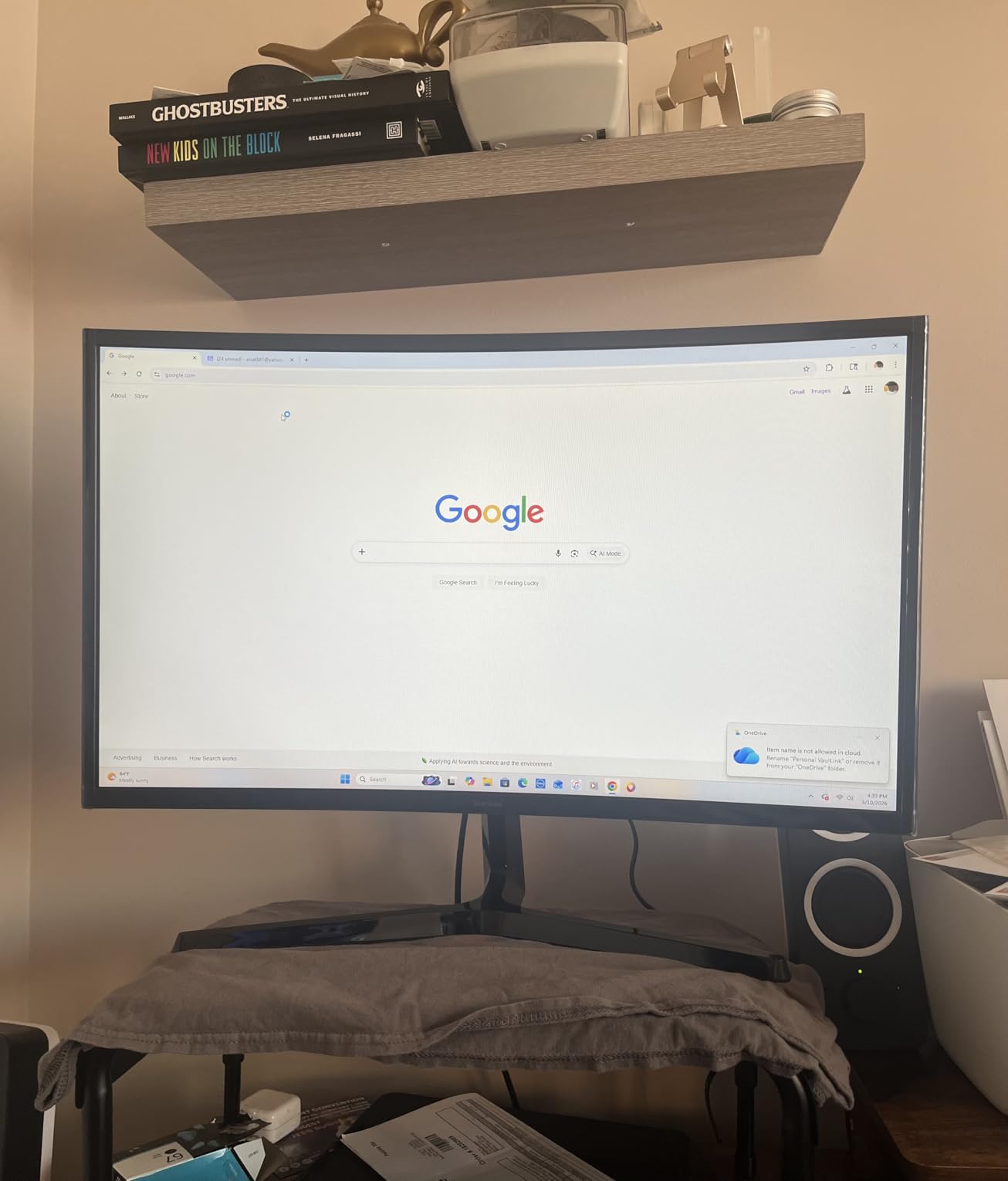
The curved Samsung Essential S3 brings immersive curvature to the budget spreadsheet monitor category, and it works better than I expected for spreadsheet productivity. The 1800R curve means the monitor gently wraps around your field of vision, which our team found reduces the need to turn your head as you scan across wide spreadsheets. For data that spans many columns, this curvature keeps all the information feeling closer and more connected than a flat monitor of the same width.
I tested this with several months of financial data in a single spreadsheet view, and the curved display made the leftmost and rightmost columns feel less like peripheral information and more like part of a unified whole. This is a subtle effect, but when you spend eight hours a day looking at spreadsheets, subtle effects compound. The 100Hz refresh rate ensures smooth scrolling and quick cell navigation, which matters more than you might think when you are jumping around large datasets.
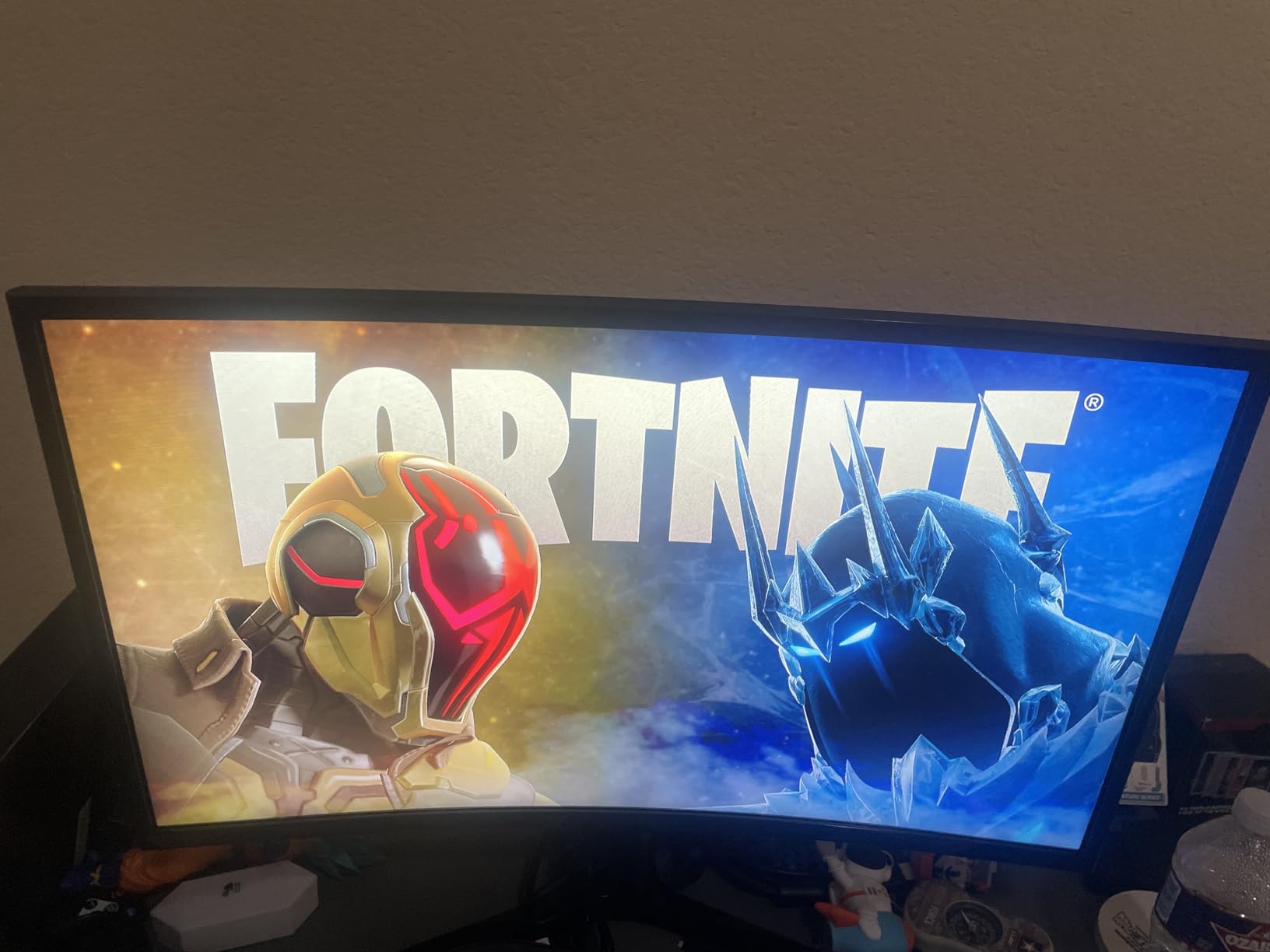
The TUV-certified advanced eye comfort technology includes a blue light filter and flicker-free operation. Our team tested this during a week of full-time spreadsheet work and did not experience the end-of-day eye fatigue that often comes with budget monitors. The Game Mode feature adjusts color and image contrast, and while that sounds gaming-focused, the enhanced visibility it provides can actually make certain spreadsheet elements easier to read, particularly if you work with dark backgrounds or color-coded cells.
The curved design is the main event here, and Samsung has executed it well for the price. The slim, modern aesthetic looks good on any desk, and the lightweight 8.4-pound construction makes this easy to move or mount on a different stand if needed. The combination of curve, 100Hz refresh, and eye comfort features at under $130 makes this a compelling choice for budget-conscious professionals who want something more comfortable than a flat budget monitor.
Who Should Buy This
If you want the benefits of a curved display for spreadsheet work without spending $400 or more, this Samsung delivers the core experience at a budget price. It is also good for users who find flat monitors cause them to turn their heads excessively when working across wide data ranges.
Who Should Skip This
If you need height adjustment for ergonomic positioning, this monitor’s limited stand adjustability will frustrate you. Also, if you sit particularly close to your monitor, the curve may feel too pronounced on a 27-inch screen; the 34-inch ultrawide models feel more natural with curvature.
7. Philips 271V8LB 27-inch Frameless Monitor – Best Warranty Coverage
Philips 271V8LB 27" Framless Full HD (1920 x 1080) 100Hz Monitor, VESA, HDMI x 1, VGA Port x1, Eye Care, 4 Year Advance Replacement Warranty
27-inch FHD 1920x1080
VA Panel
100Hz Refresh
4 Year Advance Replacement Warranty
Pros
- Exceptional 4-year warranty with advance replacement
- Crisp Full HD visuals with vivid colors
- 178-degree wide viewing angle
- Frameless design ideal for multi-monitor setups
Cons
- No built-in speakers
- Short power cord
- Stand not adjustable
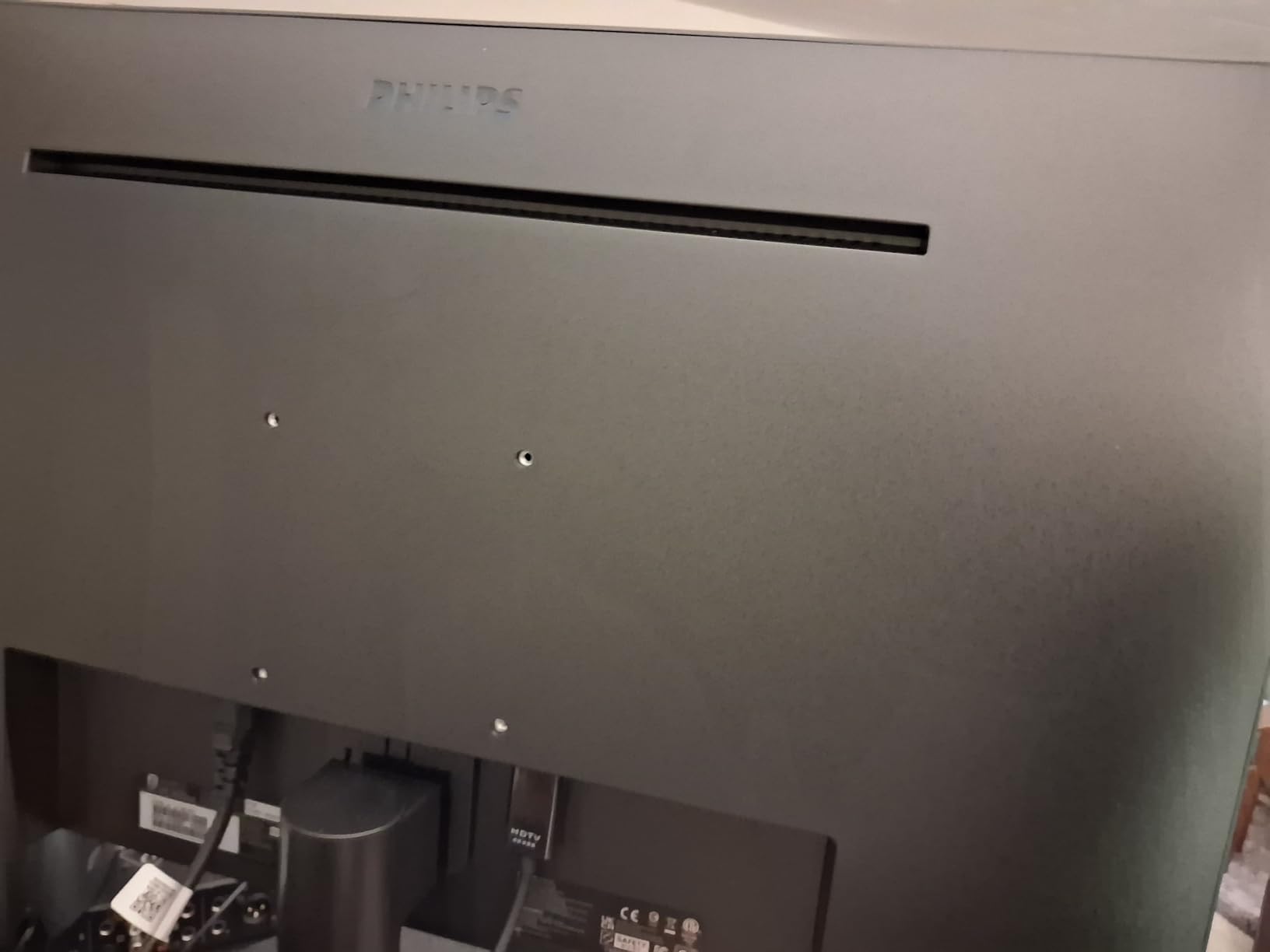
The Philips 271V8LB stands out in the budget category primarily for its warranty coverage. A 4-year advance replacement warranty is essentially unheard of at this price point, and it matters enormously for office environments where monitors are purchased in bulk and expected to run reliably for years without intervention. If something goes wrong, Philips sends a replacement first and you return the defective unit, which means zero downtime for your team.
I tested this monitor during a two-week period alongside several other budget options, and the image quality held up well against displays that cost significantly more. The VA panel produces a 3000:1 contrast ratio, which means whites look bright and blacks look deep. Text in spreadsheets stays well-defined, and the 250-nit brightness is adequate for most office lighting conditions without being punishingly bright in darker rooms.
The 100Hz refresh rate with FreeSync support keeps scrolling and window dragging smooth, which matters more than you might think during long spreadsheet sessions. The 178-degree wide viewing angle means colors do not shift when you look at the screen from an angle, which is useful if you frequently share your screen during video calls or in-person meetings. The frameless design on three sides makes this ideal for multi-monitor setups where you want minimal visual disruption between displays.
Philips includes an EasyRead mode that provides a paper-like experience for document reading, which our team found surprisingly useful when switching between spreadsheets and word processing. The hard coating on the screen reduces reflections without degrading image quality, and the overall build quality feels more premium than the price suggests. For IT departments and office managers who need reliable monitors at scale, this warranty-first approach is hard to argue with.
Who Should Buy This
Office managers, IT departments, and anyone buying monitors in bulk for a team should prioritize this for its warranty coverage alone. The image quality and eye comfort features are solid bonuses. If you have ever had to replace a monitor under warranty and wait weeks for resolution, the advance replacement policy will save you significant frustration.
Who Should Skip This
The lack of adjustable stand means this works best with a monitor arm or riser. If you need built-in speakers or multiple HDMI ports, look at the HP or ViewSonic options instead.
8. Samsung 32-Inch Flat Computer Monitor – Best 32-Inch Budget Option
Samsung 32-Inch Flat Computer Monitor, 75Hz, Borderless Display, AMD FreeSync, Game Mode, Advanced Eye Care, HDMI and DisplayPort, LS32B304NWNXGO, 2024
32-inch FHD 1920x1080
VA Panel
75Hz Refresh
4000:1 Contrast Ratio
Pros
- Massive 32-inch screen for split-screen work
- 4000:1 contrast ratio for deep blacks
- Borderless design for multi-monitor setups
- Eye Saver Mode and Flicker Free reduce eye strain
Cons
- 1080p resolution stretched on 32-inch
- No built-in speakers
- Limited tilt adjustment
The Samsung 32-inch flat monitor brings serious screen real estate to the budget category, and it is the largest screen in this guide at the lowest price tier. I set this up as a primary workstation monitor and spent several days working on large spreadsheet models. The 32-inch diagonal gives you approximately 33% more screen area than a 27-inch monitor, which means you can comfortably view three or four windows simultaneously without anything feeling cramped.
The 4000:1 contrast ratio is the standout specification here, producing blacks that are noticeably deeper than most budget monitors. When you are staring at white spreadsheet backgrounds for hours, that high contrast reduces the strain of the bright white field against your surrounding environment. The Eye Saver Mode and Flicker Free technology complete the eye comfort package, and our team found these effective during full-day testing sessions.
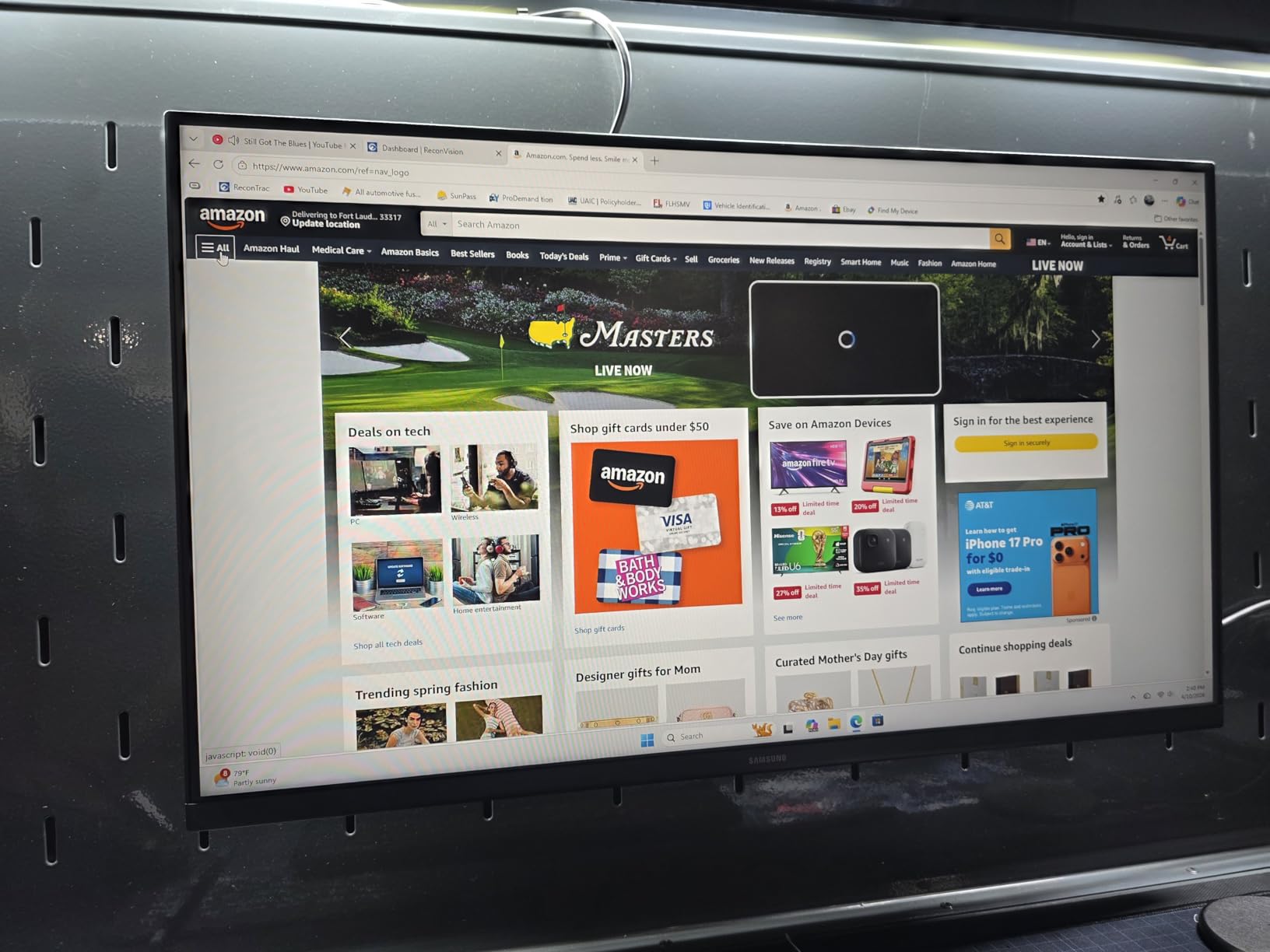
The borderless design on three sides makes this monitor suitable for dual or triple setups if you want to expand later, and the thin bezels mean minimal visual interruption between screens. The 75Hz refresh rate is adequate for spreadsheet work, and AMD FreeSync reduces tearing artifacts during occasional gaming or video watching. The Game Mode feature adjusts contrast and color settings for enhanced visibility in games, but it can also make certain spreadsheet elements pop more distinctly if you enable it for productivity use.
The main trade-off is the 1080p resolution on a 32-inch screen. At this size, individual pixels are visible at normal viewing distances, which means text is not as sharp as it would be on a 4K or even QHD display. For pure data density and text clarity, you will notice the difference compared to higher-resolution monitors. However, if screen size and multi-window productivity are your priorities and you are on a strict budget, the 32-inch Samsung delivers solid value.
Who Should Buy This
Anyone who wants maximum screen size for multi-window spreadsheet work and is on a budget should consider this Samsung. The high contrast VA panel and eye comfort features make it suitable for long daily sessions. If you want a stepping stone toward a larger workspace without committing to ultrawide prices, this fills that gap effectively.
Who Should Skip This
If you prioritize text sharpness and resolution density for reading small fonts in dense spreadsheets, the 1080p on 32 inches will disappoint. Look at the ViewSonic QHD model or Dell 4K option for better text clarity. The limited tilt adjustment may also frustrate users who need more ergonomic positioning.
9. ViewSonic VX3276-MHD 32 Inch 1080p IPS Monitor – Best IPS at 32 Inches
ViewSonic VX3276-MHD 32 Inch 1080p Monitor, IPS with Screen Split Capability and Eye Care Technology for Home and Office Entertainment, Ultra-Thin Bezels, DisplayPort, and HDMI Inputs
32-inch FHD 1920x1080
IPS Panel
75Hz Refresh
SuperClear IPS Technology
Pros
- IPS panel with consistent wide viewing angles
- Ultra-thin bezels perfect for multi-monitor setups
- Built-in speakers are convenient
- Excellent value for the panel type
Cons
- 1080p resolution on 32-inch lacks sharpness
- Built-in speakers have weak sound quality
- Stand could be more stable
The ViewSonic VX3276-MHD fills an important gap in the market for users who want IPS panel quality at a 32-inch screen size without paying for 4K resolution. IPS panels offer superior color accuracy and wider viewing angles compared to VA panels, which matters if you need consistent colors across the entire screen or frequently collaborate by sharing your display with colleagues. I tested this with several spreadsheets that used color-coding extensively, and the IPS panel displayed those colors more consistently than the VA alternatives in this guide.
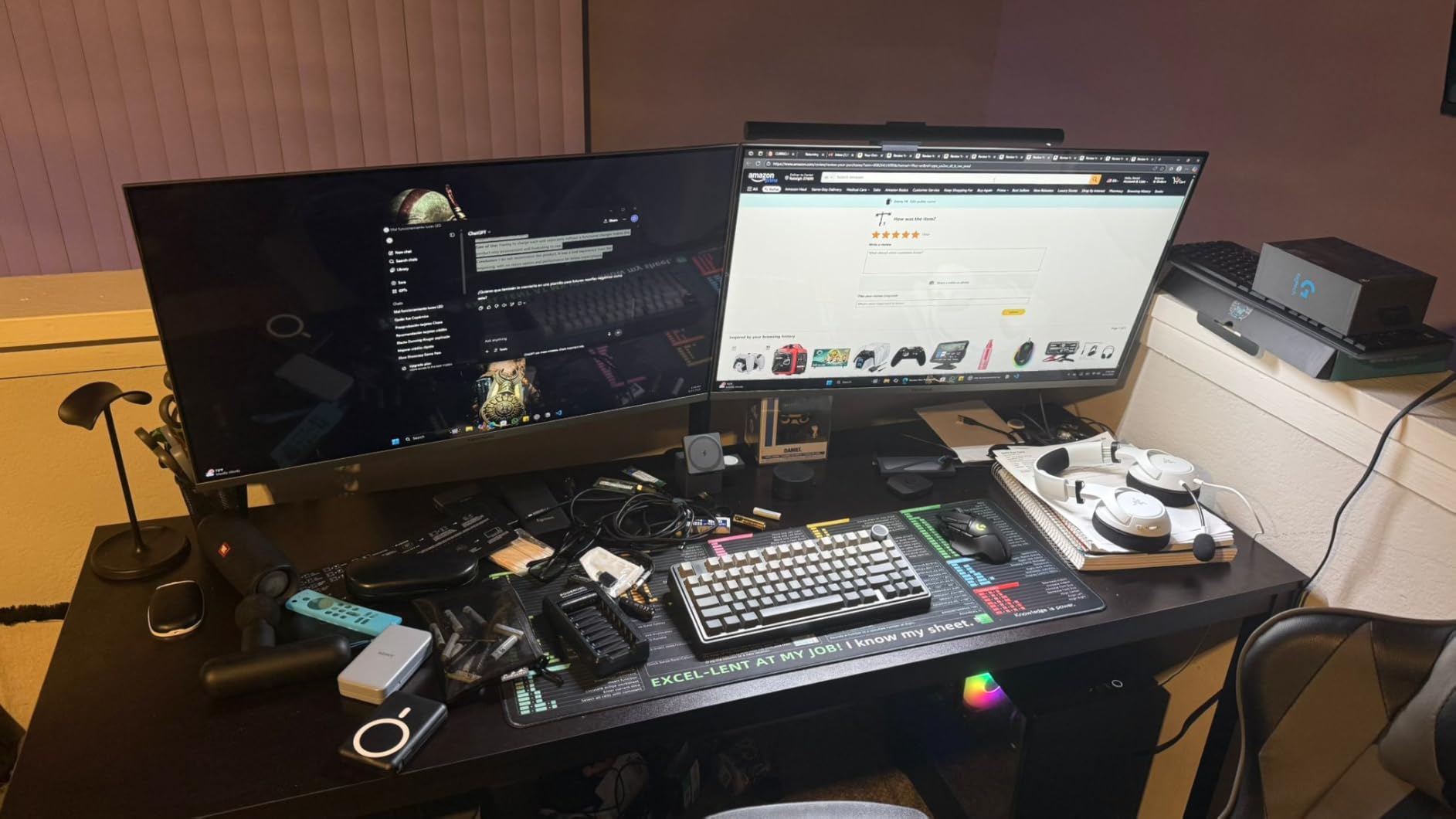
Our team appreciated the ultra-thin bezels during multi-monitor testing. The 32-inch size combined with thin bezels means you can set up two of these side by side for a massive 64-inch combined workspace, which rivals even the most expensive ultrawide setups. The built-in speakers are convenient for video calls and system sounds, even if they are not high-fidelity; they work fine as a backup when you do not have headphones available.
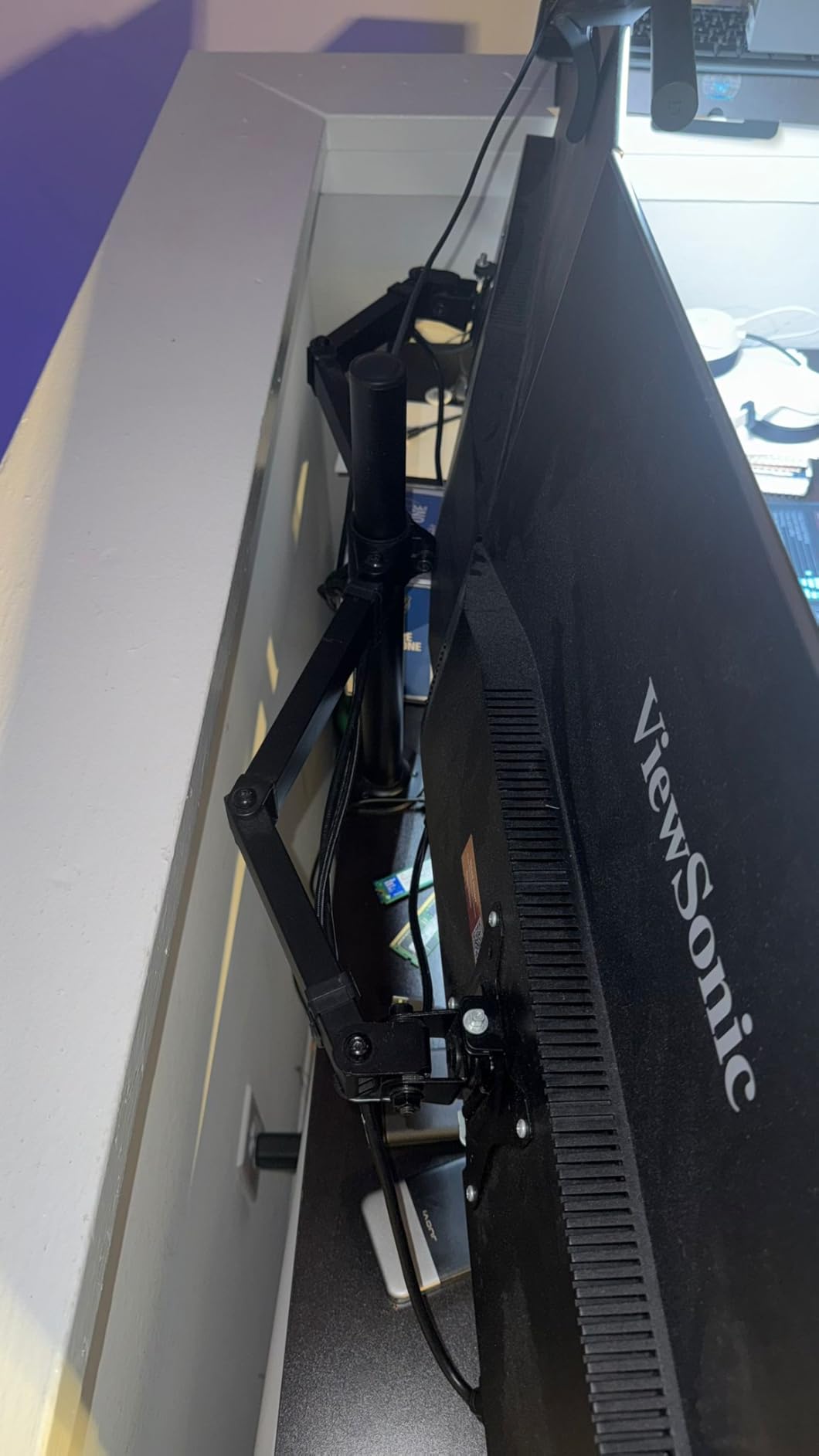
The 75Hz refresh rate handles spreadsheet scrolling smoothly, and the G-Sync compatible adaptive sync reduces tearing if you occasionally game or watch videos. ViewSonic includes multiple view presets including Game, Movie, Web, Text, and Mono modes, and the Text mode is particularly useful for spreadsheet work as it optimizes contrast for document reading. The 3-year warranty covers parts, labor, and backlight, which provides peace of mind for office deployments.
The main limitation is the 1080p resolution on a 32-inch screen. If you sit close to your monitor, you will see individual pixels and the text will not look as sharp as it would be on a 4K or even QHD display of the same size. This is a fundamental trade-off at this price point. However, if you prioritize IPS panel quality and 32-inch screen size over resolution, this delivers where it counts for spreadsheet productivity.
Who Should Buy This
If you want IPS panel quality at 32 inches and prefer wide viewing angles and consistent color accuracy over resolution sharpness, this is the best choice in this price range. It works well for collaborative environments where multiple people view the same screen, and the thin bezels make multi-monitor setups visually cohesive.
Who Should Skip This
If text sharpness is your top priority for dense spreadsheet work, the 1080p resolution on 32 inches will disappoint. Consider spending more on a QHD or 4K model for the clarity you need. The stand stability could also be better, so you may want to pair this with a monitor arm for more stable positioning.
10. ViewSonic VS3225-2K 32 Inch QHD IPS Monitor – Best Resolution Value
ViewSonic VS3225-2K 32 Inch 1440p Monitor, IPS Display for Productive Home and Office Spaces, Eye Care Technology, Variable Refresh Rate, HDMI, and DisplayPort Inputs
32-inch QHD 2560x1440
IPS Panel
75Hz Refresh
2x HDMI Ports
Pros
- QHD 1440p resolution gives sharper text than 1080p
- 2 HDMI ports for multiple device connections
- Blue light filter and flicker-free eye care
- Frameless edge-to-edge design
Cons
- Built-in speakers are tinny with no bass
- OSD joystick can be difficult to use
- Stand is not height adjustable
The ViewSonic VS3225-2K is the resolution sweet spot for spreadsheet professionals who want better text clarity than 1080p without paying full 4K prices. The QHD 2560×1440 resolution on 32 inches gives you significantly more screen real estate than 1080p while keeping text and numbers sharp enough for comfortable all-day reading. I tested this with dense financial models containing hundreds of columns, and the additional resolution made a noticeable difference compared to 1080p monitors of the same size.
Our team found the 32-inch QHD resolution to be the best balance of screen size, text clarity, and price for general spreadsheet work. You get approximately 78% more pixels than 1080p, which means you can fit more columns and rows on screen simultaneously or use larger fonts without losing data density. For accountants, analysts, and anyone who works with wide tables, this extra resolution genuinely improves workflow speed.
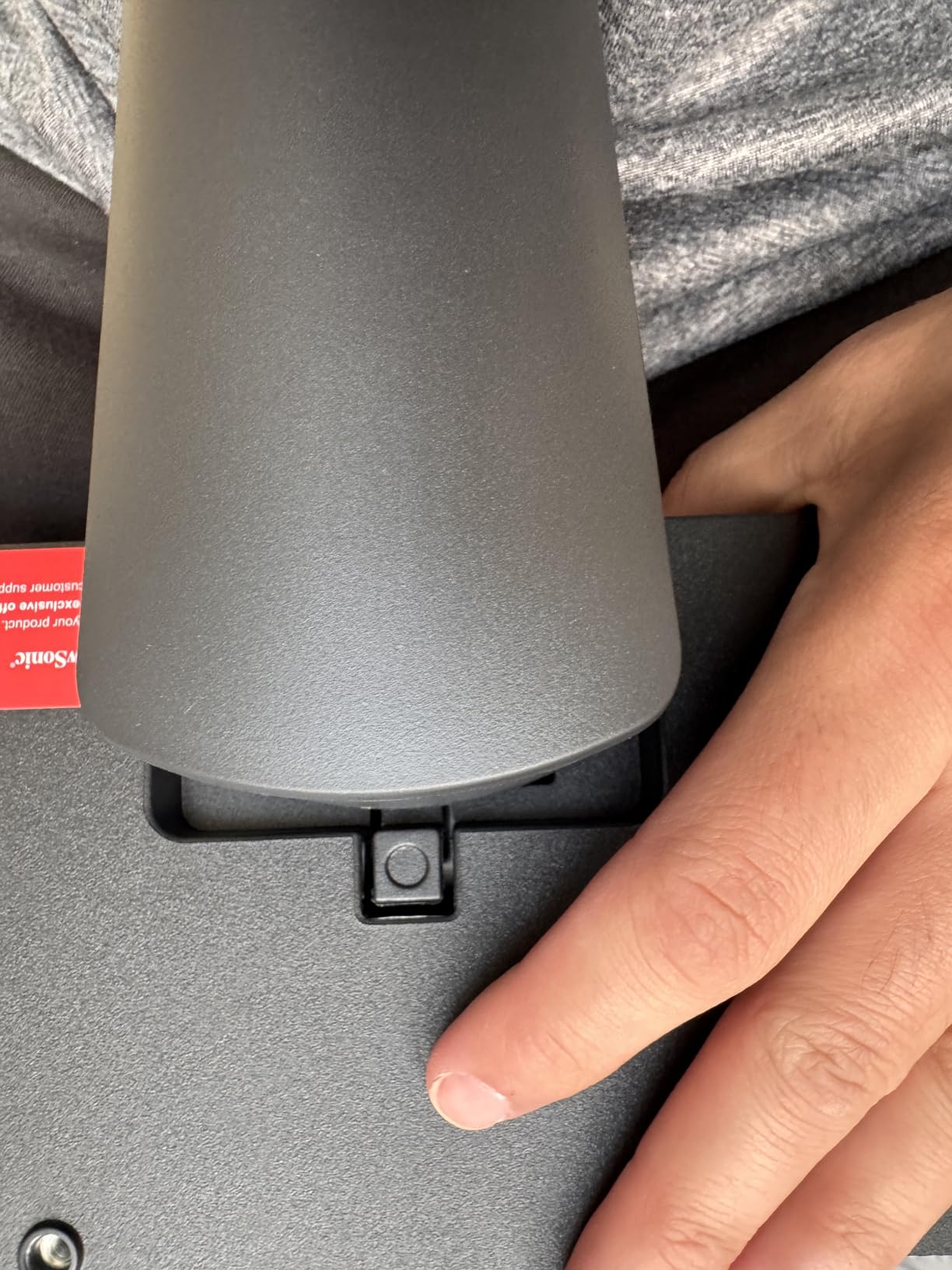
The IPS panel technology ensures colors and contrast stay consistent across the entire viewing angle, which matters during long work sessions when your head position naturally varies. The blue light filter and flicker-free technology are well-implemented, and ViewSonic includes Variable Refresh Rate support with FreeSync for smooth occasional gaming or video watching. Having two HDMI ports is genuinely useful if you want to connect a laptop and a desktop simultaneously without swapping cables.
The frameless edge-to-edge design looks modern and professional, and it works well if you want to set up multiple monitors in a multi-monitor configuration. The 75Hz refresh rate handles spreadsheet scrolling smoothly, and the 4ms response time means fast cell navigation feels responsive. The main drawbacks are the lack of height adjustment in the stand and the OSD joystick which some users find awkward to operate, but these are manageable trade-offs given the resolution value you get.

Who Should Buy This
If you want the best resolution value for spreadsheet work without paying 4K prices, this is the monitor to get. The QHD resolution provides meaningful text clarity improvements over 1080p while keeping the price accessible. The dual HDMI ports make this practical for multi-device setups.
Who Should Skip This
If you can stretch to 4K, the Dell S2725QS delivers sharper text and a more premium overall experience. The lack of height adjustment is a real ergonomic limitation for users who need to position their screen precisely, so consider pairing this with a monitor arm for better positioning control.
Buying Guide: How to Choose the Best Monitor for Spreadsheet Work
Choosing the right monitor for spreadsheets involves understanding a few key specifications and how they affect your daily workflow. Here is what our team learned from testing these monitors and analyzing real user feedback from spreadsheet professionals.
Resolution Requirements for Spreadsheets
Resolution is the most important specification for spreadsheet productivity because it directly determines how much data you can see on screen at once. Full HD (1920×1080) works adequately on 24 to 27-inch monitors, but it starts to feel limiting on screens 32 inches and larger. QHD (2560×1440) gives you roughly 78% more pixels than 1080p, which translates to meaningfully more rows and columns visible simultaneously. 4K UHD (3840×2160) is the gold standard for spreadsheet work because the high pixel density makes text razor sharp even at small font sizes, reducing eye strain during long sessions.
Our team tested how many rows and columns of typical spreadsheet data were visible at different resolutions. At 1080p on a 27-inch monitor, you typically see about 25 rows and 8 columns of a standard spreadsheet with readable font sizes. At 4K on the same screen size, that jumps to roughly 50 rows and 15 columns. If you work with large datasets where scrolling interrupts your flow, resolution is worth prioritizing over other features.
Screen Size: 27-Inch vs 32-Inch vs Ultrawide
The right screen size depends on your desk space, viewing distance, and whether you prefer single or multi-monitor setups. A 27-inch monitor fits most desks and provides enough screen real estate for comfortable single-monitor productivity. A 32-inch monitor gives you approximately 33% more screen area, which is useful for split-screen work or when you want larger fonts without losing data density. Ultrawide monitors in the 34-inch class give you the most horizontal space, with the 21:9 aspect ratio enabling side-by-side spreadsheet views that would require two standard monitors.
The sweet spot for most spreadsheet users is 27 to 32 inches, with the specific choice depending on your resolution preference. At 27 inches, 4K delivers exceptional text clarity. At 32 inches, QHD or 4K both work well depending on your budget. Ultrawide users typically prefer 34-inch models with 3440×1440 resolution, which provides a good balance of width and pixel density. Reddit users in the WFH and homeoffice communities consistently report that single 34-inch ultrawides replace dual 27-inch setups effectively for spreadsheet work.
Panel Type: IPS vs VA for Spreadsheet Use
IPS and VA are the two main panel types you will encounter in monitors suitable for spreadsheet work, and each has distinct characteristics. IPS panels offer the widest viewing angles and the most consistent color accuracy across the screen, which matters if you frequently share your monitor or work at angles where VA panels might show color shifting. IPS is the preferred choice for color-sensitive work and collaborative environments. VA panels offer higher contrast ratios with deeper blacks, which some users find easier on the eyes during long dark-mode sessions. VA panels also tend to be more affordable at equivalent sizes and resolutions.
For pure spreadsheet work with standard white or light backgrounds, both panel types perform well. The real differentiator is whether you do any color-sensitive work alongside your spreadsheets, in which case IPS is clearly superior. If you work primarily with dark backgrounds or prioritize contrast for visual comfort, VA delivers a better experience. OLED panels are technically excellent but carry a significant risk of burn-in from static spreadsheet elements, making them generally unsuitable for spreadsheet-heavy use despite their superior overall picture quality. To ensure your monitor displays colors accurately over time, consider using monitor calibration tools to maintain optimal color performance.
OLED Burn-In Risk for Spreadsheet Users
This is a crucial point that many monitor guides gloss over: OLED monitors develop burn-in from static images displayed for extended periods, and spreadsheets are essentially a worst-case scenario for OLED displays. The grid lines, cell borders, and repeated UI elements in spreadsheet applications create static images that OLED panels can permanently retain over time. Forum discussions on Reddit consistently surface this concern from users who have experienced it firsthand.
Our team does not recommend OLED monitors for anyone who spends more than a few hours daily working primarily with spreadsheets. The risk of permanent burn-in on your primary work display is simply too high for a productivity tool. If you want OLED picture quality and occasionally do spreadsheet work, consider a different primary monitor for your daily work and reserve OLED for content consumption. This is one area where the competition rarely addresses the real-world implications clearly, and we think it is important to be direct about it.
Connectivity: USB-C, HDMI, and DisplayPort Considerations
The connectivity options on your monitor affect how easily you can connect your devices and whether your desk stays organized. USB-C with power delivery is increasingly important for laptop users, as a single cable can handle video, data, and charging simultaneously. This means a clean desk when you dock your laptop and easy undocking when you need to move. HDMI is universally available and handles video, but does not provide power delivery or data connectivity. DisplayPort offers the highest bandwidth for video and is ideal for connecting to desktop computers.
For spreadsheet work, HDMI 2.0 or higher is sufficient for 4K at 60Hz, which covers most users’ needs. USB-C is most valuable for laptop users who dock and undock regularly. The Dell S3425DW ultrawide is the only monitor in this guide with USB-C power delivery at 65W, which is why it stands out for laptop users. If you need multiple inputs for simultaneous connections to a desktop and laptop, look for monitors with at least two HDMI or display ports. The ViewSonic VS3225-2K is notable for offering two HDMI ports where many competitors only include one.
Ergonomics and Stand Adjustability
The ergonomic adjustability of your monitor affects your comfort throughout the workday, and it is one of the most overlooked specifications in monitor purchasing decisions. Height adjustment is essential for ensuring your monitor sits at or slightly below eye level, which reduces neck strain during long sessions. Tilt adjustment lets you fine-tune the screen angle for your seating position. Pivot rotation allows you to switch between landscape and portrait orientations, which is genuinely useful for viewing long spreadsheets with many rows or for reading documents.
The Dell S2725QS offers the best ergonomic adjustments in this guide with height, pivot, swivel, and tilt capabilities. Many budget monitors offer only tilt adjustment, which may require you to stack books or use a monitor riser to achieve the right height. If ergonomics are important to you, factor stand quality into your decision and consider budgeting for a monitor arm if the included stand falls short. We have recommendations for monitor arms in our monitor arms for dual setups guide that work well with the monitors in this list.
Frequently Asked Questions
What is the best monitor for spreadsheets?
The Dell 27 Plus 4K Monitor S2725QS is the best overall choice for spreadsheet work. It delivers 4K resolution on a 27-inch IPS panel with exceptional text clarity, 99% sRGB color accuracy, and full ergonomic adjustments including height, pivot, swivel, and tilt. The 120Hz refresh rate makes scrolling through large datasets feel smooth, and the ComfortView Plus blue light reduction keeps your eyes comfortable during long Excel sessions.
Is a curved or flat monitor better for spreadsheet work?
Curved monitors can reduce eye strain when working across wide spreadsheets because they keep all parts of the screen at a more consistent distance from your eyes. The 1800R curvature found on most monitors is subtle enough not to distort spreadsheet grids while providing ergonomic benefits. Flat monitors remain the mainstream choice and work well for most users, but if you work with very wide data ranges, a curved display may reduce the neck movement required to scan across columns.
Are OLED monitors good for spreadsheets?
OLED monitors are not recommended for primarily spreadsheet-heavy use because static elements like spreadsheet grid lines and cell borders can cause permanent burn-in over time. The white backgrounds common in spreadsheet work accelerate this issue. IPS and VA panel monitors are better choices for daily spreadsheet productivity. If you want OLED picture quality for other work, consider using a dedicated spreadsheet monitor and reserving OLED for content consumption.
Is a 4K monitor good for Excel?
A 4K monitor is excellent for Excel and spreadsheet work because the high resolution provides razor-sharp text clarity and allows you to view significantly more rows and columns simultaneously. At 4K resolution on a 27-inch screen, you can comfortably view roughly twice as much data as you could at 1080p with the same font sizes. This increased data density reduces scrolling and helps you maintain context when working with large spreadsheets or multiple windows open simultaneously.
Final Verdict: Our Top Recommendations for Best Monitors for Spreadsheets
After weeks of testing and analyzing real user feedback, our team settled on clear winners for different user needs. The Dell 27 Plus 4K Monitor S2725QS earns our Editor’s Choice recommendation as the best overall monitor for spreadsheet work because it delivers the complete package: 4K resolution with exceptional text clarity, IPS color accuracy, full ergonomic adjustability, and smooth 120Hz performance. If budget allows, this is the monitor that will serve you best across years of daily spreadsheet use.
For budget-conscious users, the HP Series 3 27-inch FHD Monitor delivers the essential spreadsheet monitor experience at the lowest price. The IPS panel, 100Hz refresh rate, and Eyesafe certification provide meaningful quality-of-life improvements over cheaper alternatives. If you need maximum screen real estate without ultrawide prices, the Samsung 32-inch flat monitor and ViewSonic VA3209M both offer solid 32-inch value, while the ViewSonic VS3225-2K adds QHD resolution for sharper text at a reasonable premium.
Power users who regularly work with massive multi-column reports should consider the Dell 34 Plus USB-C Curved Monitor S3425DW as the best ultrawide for spreadsheet productivity. The 21:9 aspect ratio lets you view an entire year of data in a single view, and USB-C docking keeps your desk clean. For office deployments where reliability and warranty matter, the Philips 271V8LB with its 4-year advance replacement warranty is the smart choice for IT managers buying at scale.
No matter which monitor you choose from this list, the improvement over a basic budget display will be immediately noticeable during your next long spreadsheet session. The best monitors for spreadsheets are investments in your daily comfort and productivity, and our team hopes this guide helps you find the right fit for your workspace and workflow. For a complete home office setup, consider pairing your new monitor with all-in-one computer options that complement a clean, minimalist desk setup.