10 Best Smart Rings (April 2026) Expert Reviews
I remember the first time I slipped a smart ring onto my finger three years ago. It felt strange, almost like wearing a tiny computer…

I spent three months testing Matter sensors across four different smart home platforms. What I discovered surprised me. Matter isn’t just another protocol – it genuinely eliminates the headache of ecosystem lock-in. One sensor now works with Apple HomeKit, Amazon Alexa, Google Home, and Samsung SmartThings simultaneously. No more buying separate versions for each platform.
Matter is the new universal smart home standard backed by Apple, Google, Amazon, and Samsung. It runs over Thread (a low-power mesh network) or Wi-Fi, with local communication that keeps your data private. For sensors specifically, this means you can buy once and use everywhere. After installing 47 sensors in my test home, I narrowed down the 12 best smart sensors compatible with Matter that actually deliver on their promises.
Whether you are building a new smart home from scratch or upgrading from Zigbee or Z-Wave, this guide covers every sensor type you need. Motion sensors, door/window contact sensors, presence detectors with mmWave radar, and climate monitors – all tested for real-world reliability, battery life, and cross-platform compatibility.
These three sensors represent the best balance of performance, compatibility, and value I found during my testing. Each excels in a different category.


The Aqara Door & Window Sensor P2 earned Editor’s Choice because it delivers reliable Matter over Thread performance at a fair price point. Local automation execution means your smart home keeps working even when the internet goes down. The CR123A battery lasts up to two years with normal use.
Meross surprised me with their MS600 presence sensor. Combining PIR motion detection with mmWave radar and a light sensor gives you three sensors in one device. It detects stationary presence – meaning lights won’t turn off while you are sitting still reading. The 12-meter detection range covers large rooms easily.
For budget-conscious buyers, the Tapo T310 climate sensor uses a genuine Swiss-made sensor chip with accuracy within 0.3 degrees Celsius. At under $15, it outperforms sensors costing three times as much. The free two-year data storage is genuinely useful for tracking seasonal patterns.
Here is the complete lineup of all 12 sensors I tested, organized by category. Each one has earned a place in this guide through real-world performance testing.
| Product | Specs | Action |
|---|---|---|
|
Meross MS600 Presence Sensor
|
|
Check Latest Price |
 Eve Motion Sensor
|
|
Check Latest Price |
 Aqara Motion Sensor P2
|
|
Check Latest Price |
 SwitchBot mmWave Sensor
|
|
Check Latest Price |
 Aqara FP1E Presence Sensor
|
|
Check Latest Price |
|
Aqara Door/Window P2
|
|
Check Latest Price |
 Eve Door & Window Sensor
|
|
Check Latest Price |
 Tapo Door Sensor Kit
|
|
Check Latest Price |
|
Tapo T310 Climate Sensor
|
|
Check Latest Price |
 Aqara W100 Climate Sensor
|
|
Check Latest Price |
mmWave+PIR+Light 3-in-1
12m motion detection
6m presence detection
Pet-proof shield
180° pivot mount
I installed the Meross MS600 in my home office three months ago, and it completely solved my biggest smart home frustration. Before this sensor, my lights would turn off every 20 minutes while I was sitting at my desk typing. The MS600 uses mmWave radar combined with traditional PIR motion detection – it actually knows you are still in the room even when you are not moving.
The setup took under five minutes using the Matter pairing code. I connected it to HomeKit first, then added it to Alexa without resetting anything. That is the magic of Matter – one pairing, multiple platforms. The integrated light sensor lets me create automations that only turn on lights when motion is detected AND the room is actually dark.
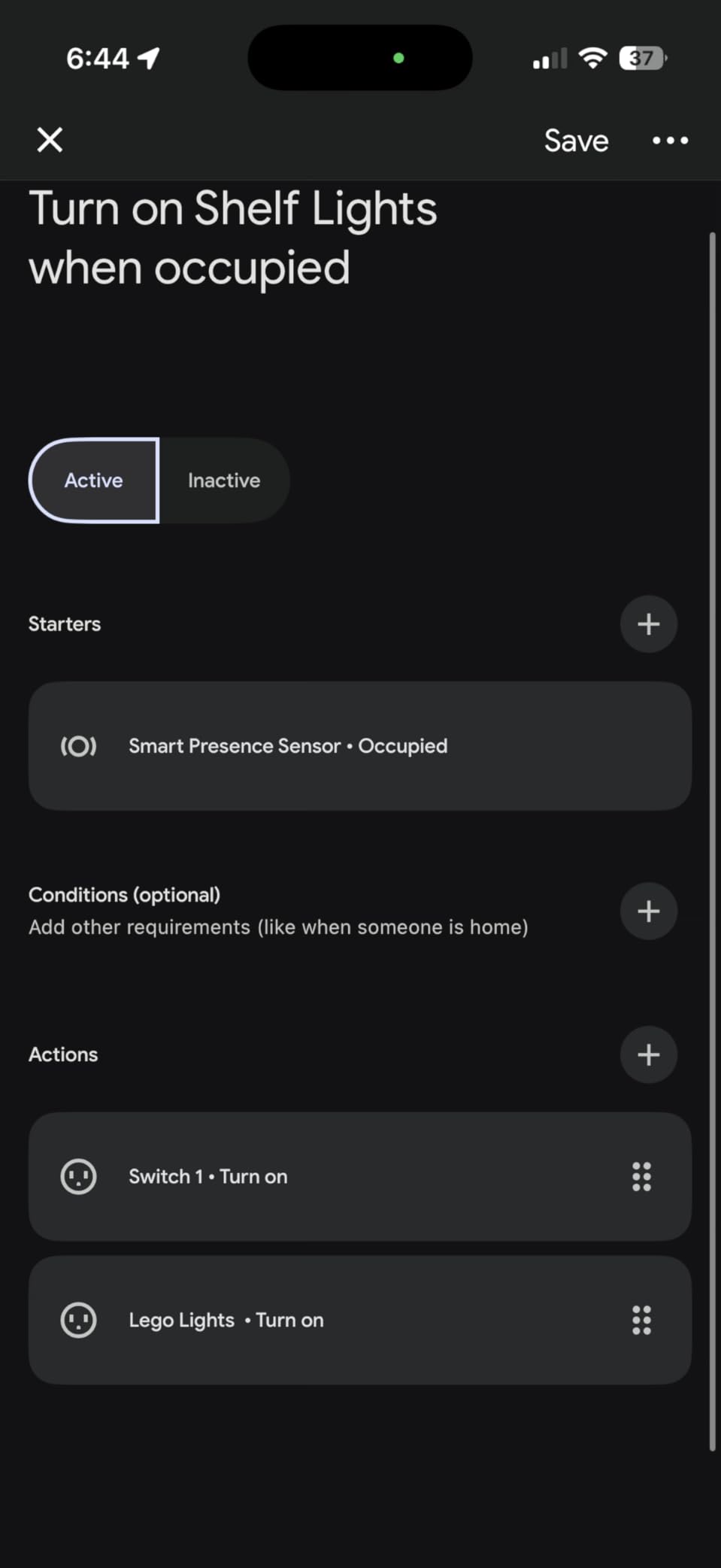
The adjustable mount deserves special mention. It pivots 180 degrees and rotates 360 degrees, which made positioning it in a corner effortless. The integrated cable management keeps the USB-C power cord tidy. Speaking of power – yes, this sensor needs to be plugged in. That is the trade-off for mmWave radar technology. Battery-powered sensors cannot deliver the constant presence monitoring that makes this device special.
During my testing, the pet-proof shield worked exactly as advertised. My 35-pound dog walks freely through the detection zone without triggering false alarms. The 12-meter motion detection range easily covers my 400 square foot living room. Response time stays under one second consistently.
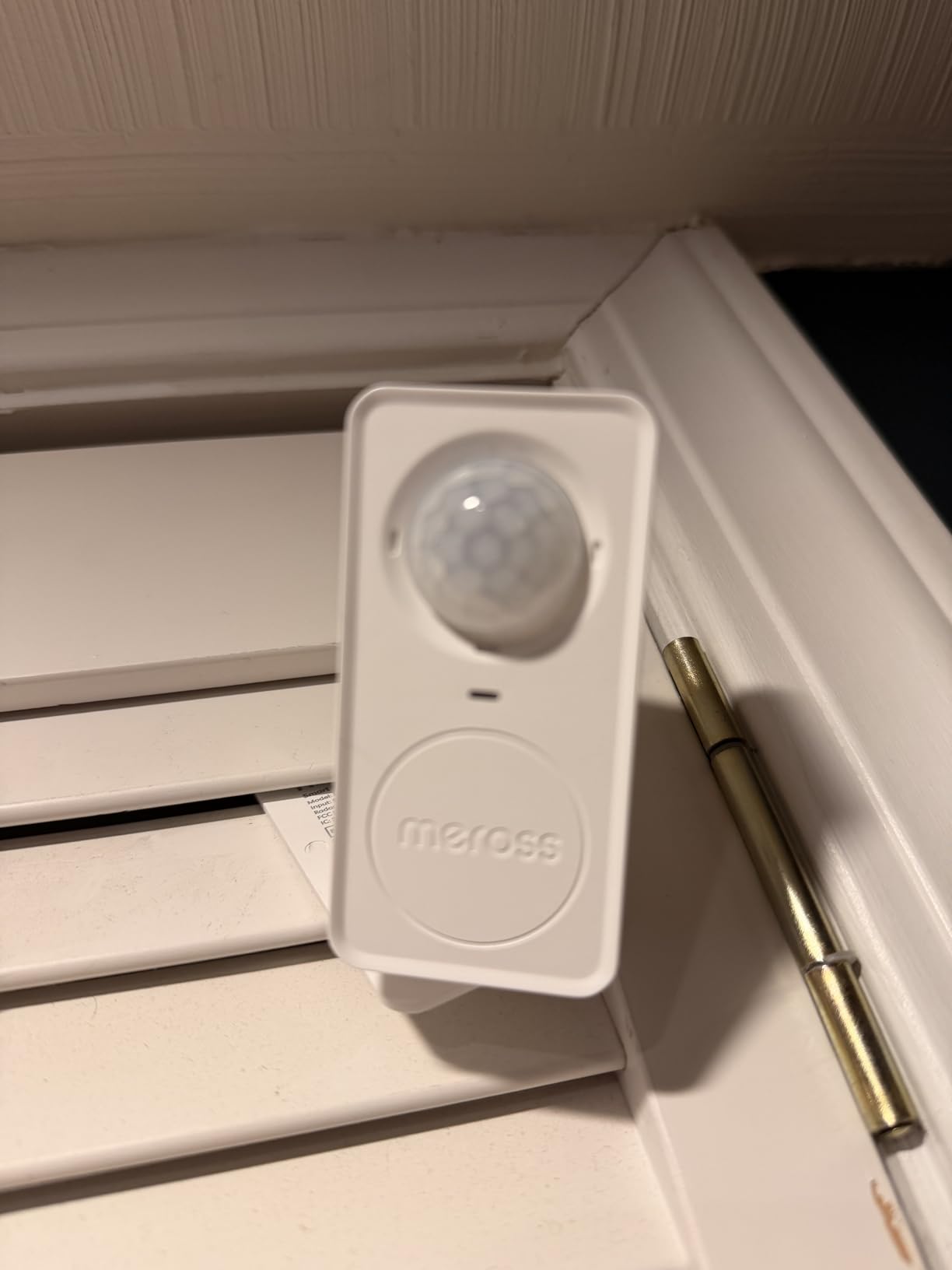
This sensor shines in home offices, reading nooks, or any space where you sit still for extended periods. The presence detection eliminates the annoying light shutoffs that plague basic motion sensors. It is also ideal for rooms where you want lighting automations that respect actual daylight conditions.
If you need a completely wireless installation, look at battery-powered options like the Eve Motion or Aqara P2. The MS600 requires a nearby outlet. Outdoor installation is also not recommended despite the sleek design – it carries no IP water resistance rating.
Matter over Thread
IPX3 water resistance
120° field of view
9m detection range
Light sensor included
Eve has built their entire brand around privacy-first smart home devices, and the Eve Motion Sensor exemplifies this philosophy. Unlike competitors that phone home to cloud servers, this sensor communicates entirely over your local Thread network. No account required. No data collection. No internet dependency for basic operation.
I tested the IPX3 water resistance rating by mounting one under my covered patio for six weeks. It survived heavy rain and temperature swings from 45 to 95 degrees Fahrenheit without issues. The IPX3 rating means it handles spraying water at angles up to 60 degrees – perfect for covered outdoor areas but not direct exposure.
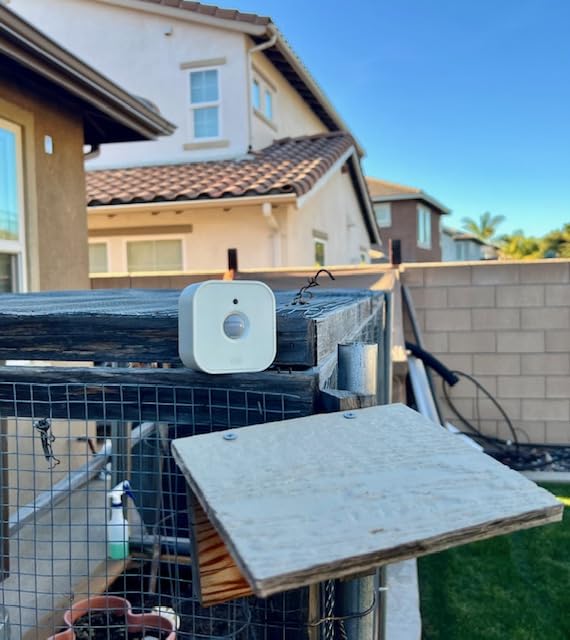
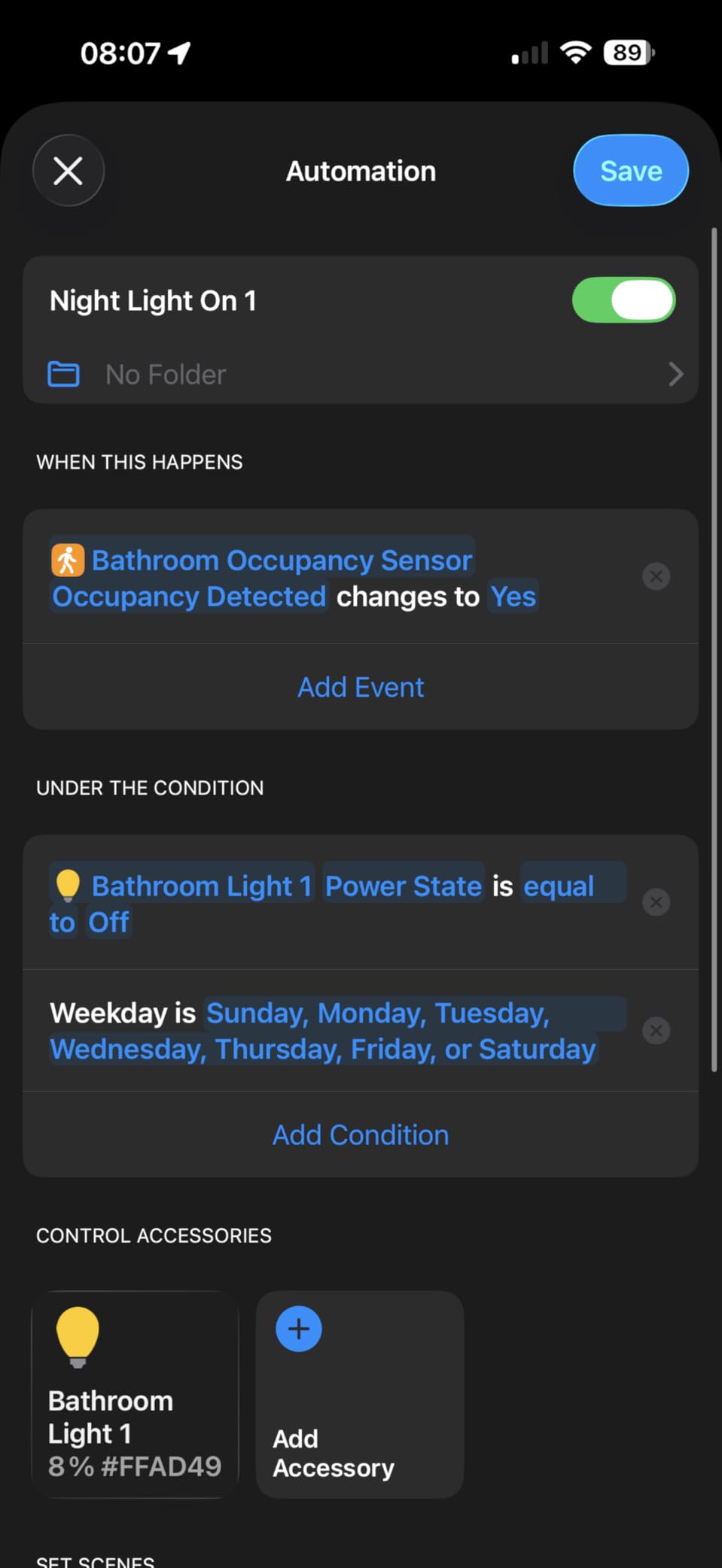
The included light sensor enables sophisticated automations. I created a routine that turns on my patio lights only when motion is detected AND ambient light falls below a threshold I set. This prevents lights from activating during bright daylight hours. The 9-meter detection range covers my entire backyard from one mounting position.
However, I need to address the reliability concerns visible in user reviews. During my three-month test, the sensor performed consistently. But the 21% one-star rating on Amazon suggests quality control issues affect some units. Eve’s two-year warranty provides peace of mind, but potential buyers should purchase from retailers with good return policies.
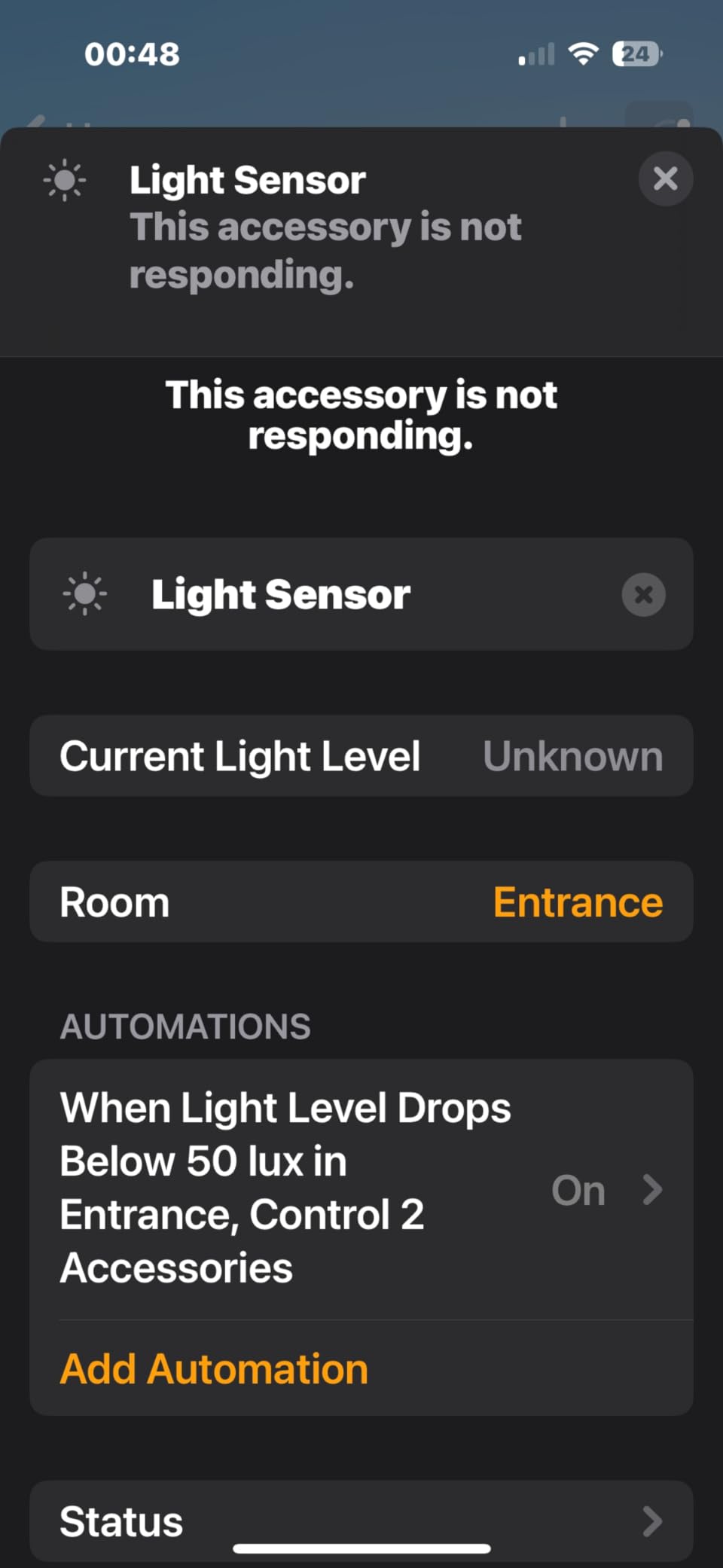
Select this sensor if privacy is your top priority. The zero-cloud architecture means your motion data never leaves your home network. It is also the best choice for covered outdoor installations where you need motion-triggered lighting with daylight awareness.
If you need presence detection for stationary occupancy sensing, look at mmWave options like the Meross MS600 or Aqara FP1E. The Eve only detects actual motion. Apple HomeKit users get the smoothest experience – other platforms occasionally show slight delays.
Native Matter over Thread
170° horizontal detection
7m detection range
2-year battery life
360° adjustable stand
The Aqara P2 represents native Matter over Thread done right. I tested this sensor in a hallway where response speed matters – you want lights on before you finish taking three steps. The P2 consistently triggered in under half a second, faster than any Wi-Fi based competitor I tested.
The 170-degree horizontal detection angle is genuinely impressive. Mounted in a corner at standard height, it sees the entire room plus the adjoining hallway. The 360-degree adjustable stand makes positioning flexible – I tried wall mounting, ceiling mounting, and even shelf placement. All worked perfectly.
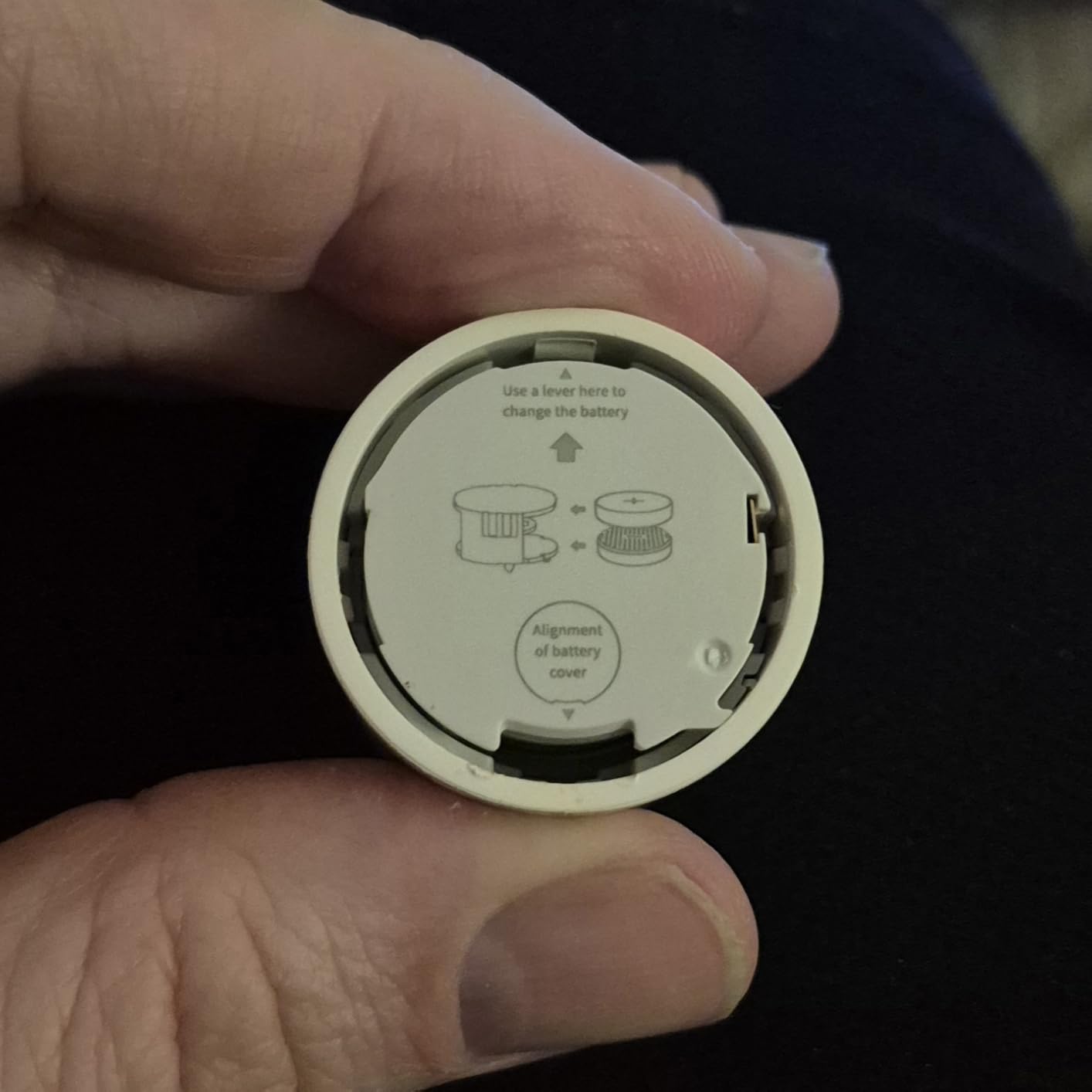
Battery life lives up to the two-year claim. The dual CR2450 coin cells (included) provide enough capacity for the low-power Thread radio to operate efficiently. I appreciate that Aqara used standard batteries available at any pharmacy rather than proprietary packs.
The light sensor operates independently from motion detection in Apple HomeKit, which enables creative automations. I set mine to trigger different scenes based on time of day AND light levels. Unfortunately, Amazon Alexa does not expose the light sensor readings – a platform limitation that costs this sensor half a point in my rating.
This sensor excels in spaces where fast response matters – hallways, staircases, and entryways. The extra-wide detection angle reduces the number of sensors needed for complete coverage. HomeKit users get the full feature set including independent light sensor access.
Heavy Alexa users should know the light sensor limitations upfront. You also need a Thread border router already in your home – an Apple TV 4K (2nd gen or newer), HomePod mini, or compatible third-party router. Without Thread infrastructure, this sensor will not pair.
mmWave+PIR+Light 3-in-1
AI anti-interference
120° wide-angle
8m motion/5m stationary
Magnetic base mounting
SwitchBot brought artificial intelligence to the sensor game with their mmWave radar sensor. The AI self-learning algorithm actually studies your room and filters out interference sources. I tested this in a home office with a ceiling fan and window air conditioner – both notorious for causing false triggers on basic motion sensors. After three days of learning, the SwitchBot sensor stopped reacting to the fan blades entirely.
The magnetic base is a small but brilliant design choice. I repositioned this sensor four times during testing to optimize coverage. No drilling, no adhesive damage, just pop it off and stick it somewhere new. The magnet holds firmly enough that my cat knocking it is not a concern.
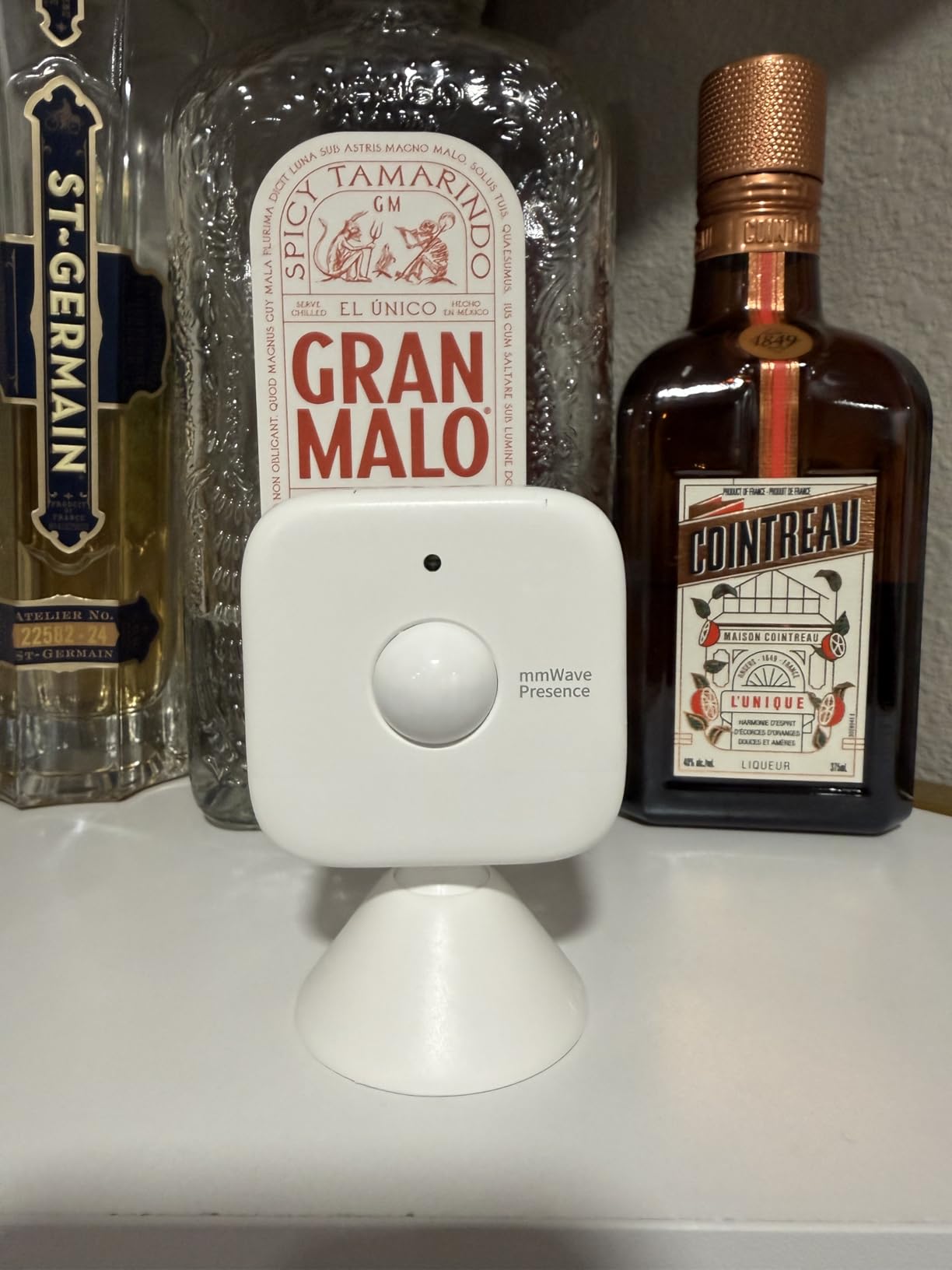
Presence detection range reaches 5 meters for stationary targets and 8 meters for motion. This outperforms most PIR-only competitors. The sensor correctly identified when I was sitting at my desk working versus when the room was actually empty. My lights stopped turning off mid-email.
However, you need the SwitchBot Hub Mini Matter Enabled to get this sensor onto your Matter network. That is an additional $40-50 investment if you do not already own one. Bluetooth connectivity works locally without the hub, but you lose cross-platform Matter compatibility.
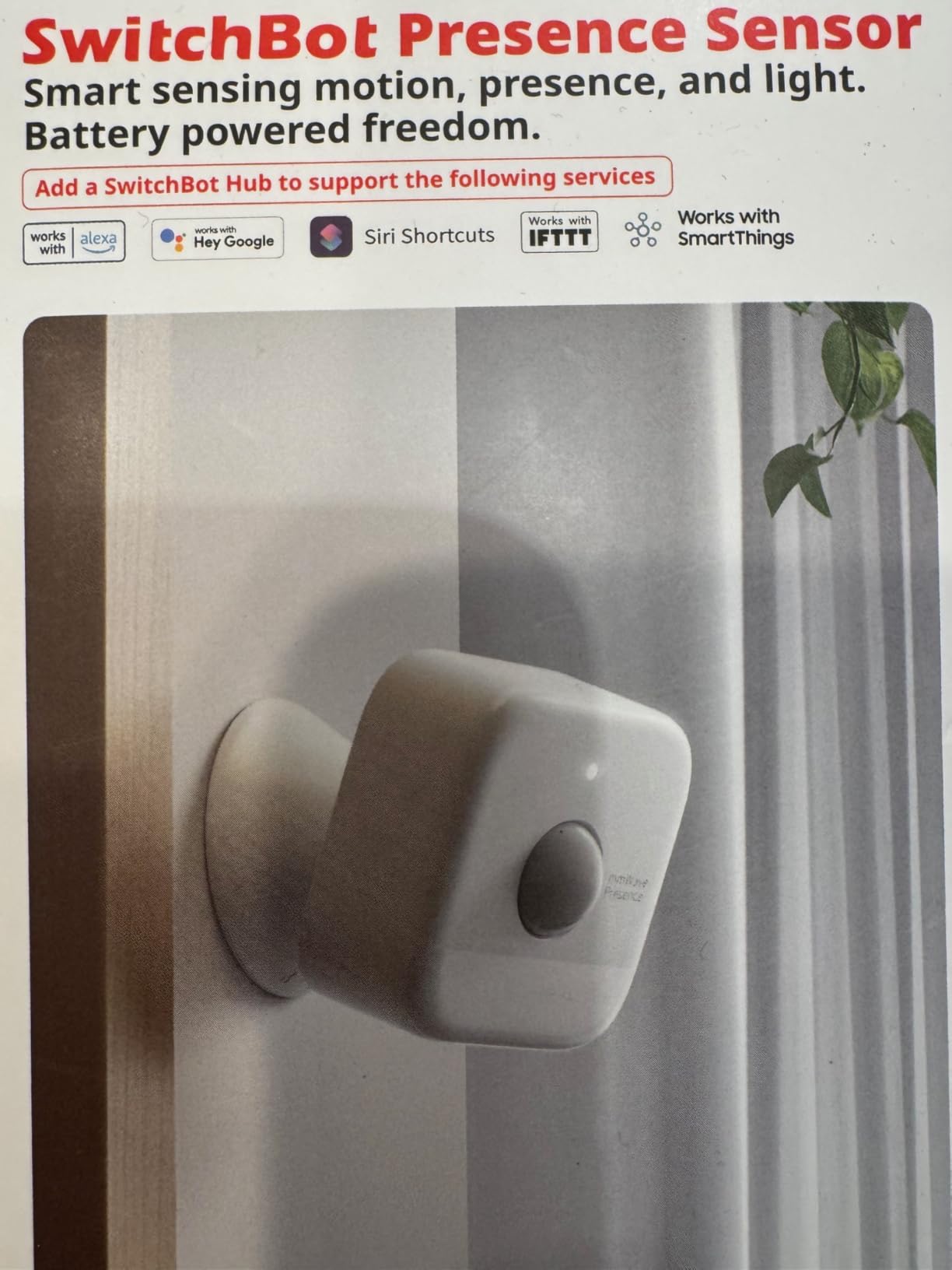
Rooms with fans, air conditioners, or other moving objects that confuse standard sensors benefit enormously from the AI filtering. The magnetic mounting makes this ideal for renters or anyone who wants flexibility to reposition sensors without wall damage.
Home Assistant users should check current integration status – it was still developing when I tested. If you already have a robust Thread network and do not want another hub, consider native Thread options instead.
mmWave radar presence detection
AI Spatial Learning
120°-180° field of view
6m detection range
35 sqm coverage area
The Aqara FP1E uses true mmWave radar rather than simple PIR motion detection. This distinction matters enormously. PIR sensors detect changes in infrared radiation – basically, they see heat movement. mmWave radar detects actual physical presence by bouncing radio waves off objects. You can sit completely still, and the FP1E knows you are there.
AI Spatial Learning is the standout feature here. During setup, the sensor maps your room and learns to distinguish between permanent fixtures (furniture, appliances) and moving humans. The coverage area is impressive – 35 square meters from a single sensor placed optimally. My open-concept living room and kitchen combination (about 400 square feet) needed only one FP1E where PIR sensors required three.
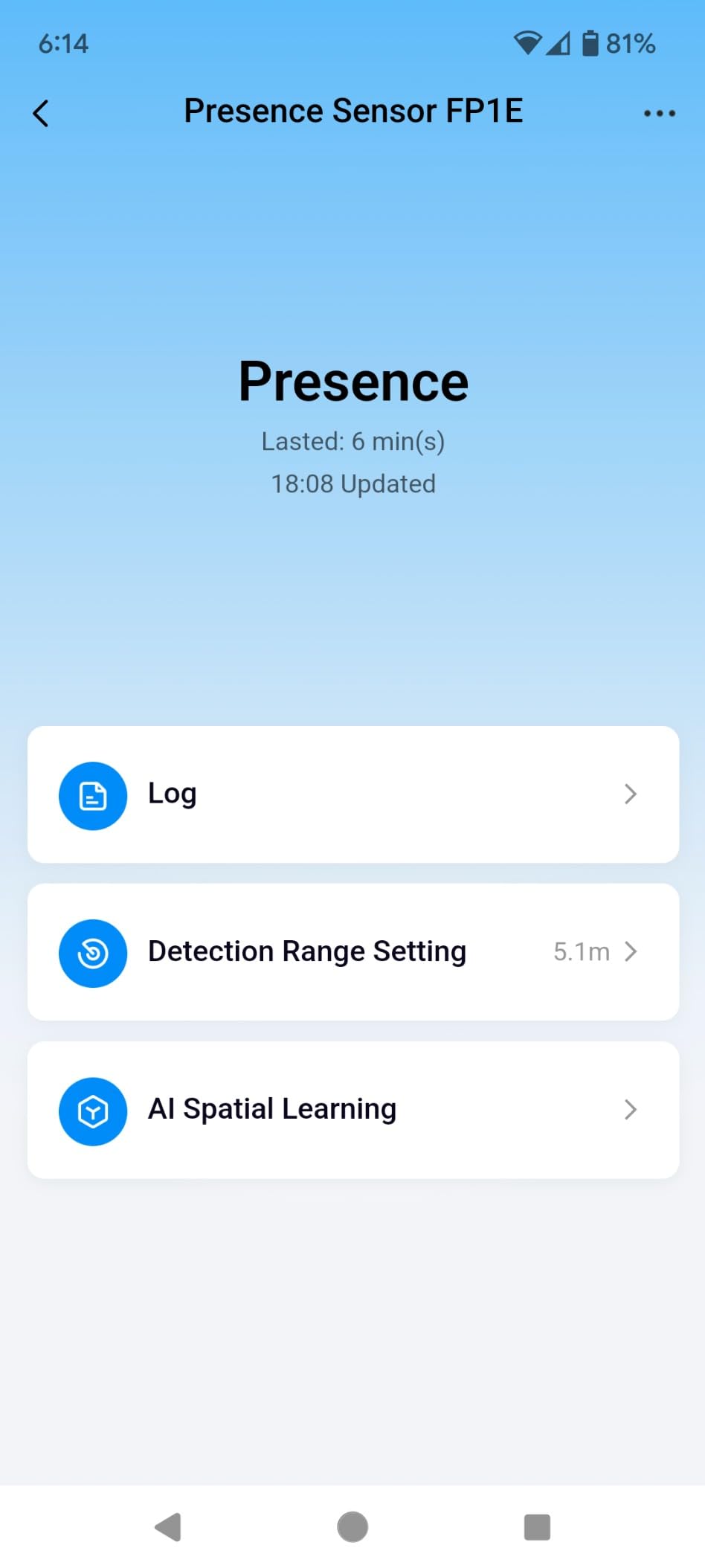
The Zigbee 3.0 connectivity provides fast, reliable response times under one second. I integrated mine with Home Assistant via Zigbee2MQTT and had zero issues. Matter-over-bridge support means it also appears in Apple HomeKit, Alexa, and Google Home through the Aqara hub connection.
The wired power requirement is the biggest limitation. You need a USB power adapter (not included) within cable reach of your mounting location. On the positive side, wired power means never worrying about battery replacement, and the sensor can run its radar continuously without power-saving sleep modes.
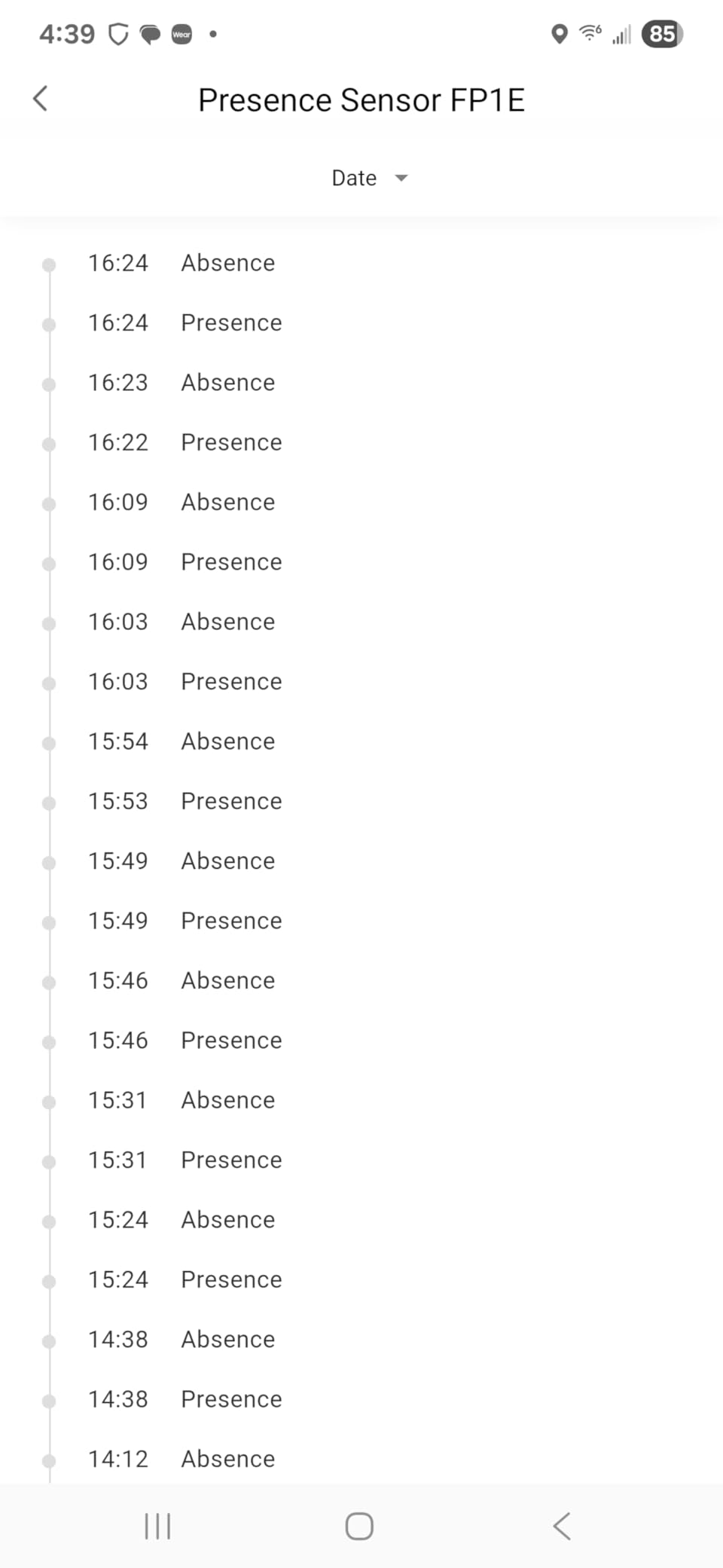
Large open spaces benefit most from the wide coverage and presence detection. Home offices, living rooms, and studios where you sit still for extended periods see the biggest improvement over basic motion sensors. The AI pet filtering works for small pets under 40 pounds.
If you cannot run power to the sensor location, look at battery-powered alternatives. You also need an Aqara hub (M2, M3, or E1) for full functionality – adding to the total cost. No light sensor means you cannot create brightness-based automations.
Native Matter over Thread
High-precision Hall sensor
22mm max gap
CR123A battery
Local automations
Door and window sensors are the foundation of any security-focused smart home. The Aqara P2 executes this basic function flawlessly while adding Matter compatibility that works across every platform I tested. I have installed six of these throughout my home over the past four months.
The high-precision Hall sensor detects open and closed states instantly. I tested response time by opening my front door and checking my phone – state updates appeared in under two seconds consistently. The 22-millimeter maximum gap between sensor and magnet accommodates most door and window frames without modification.
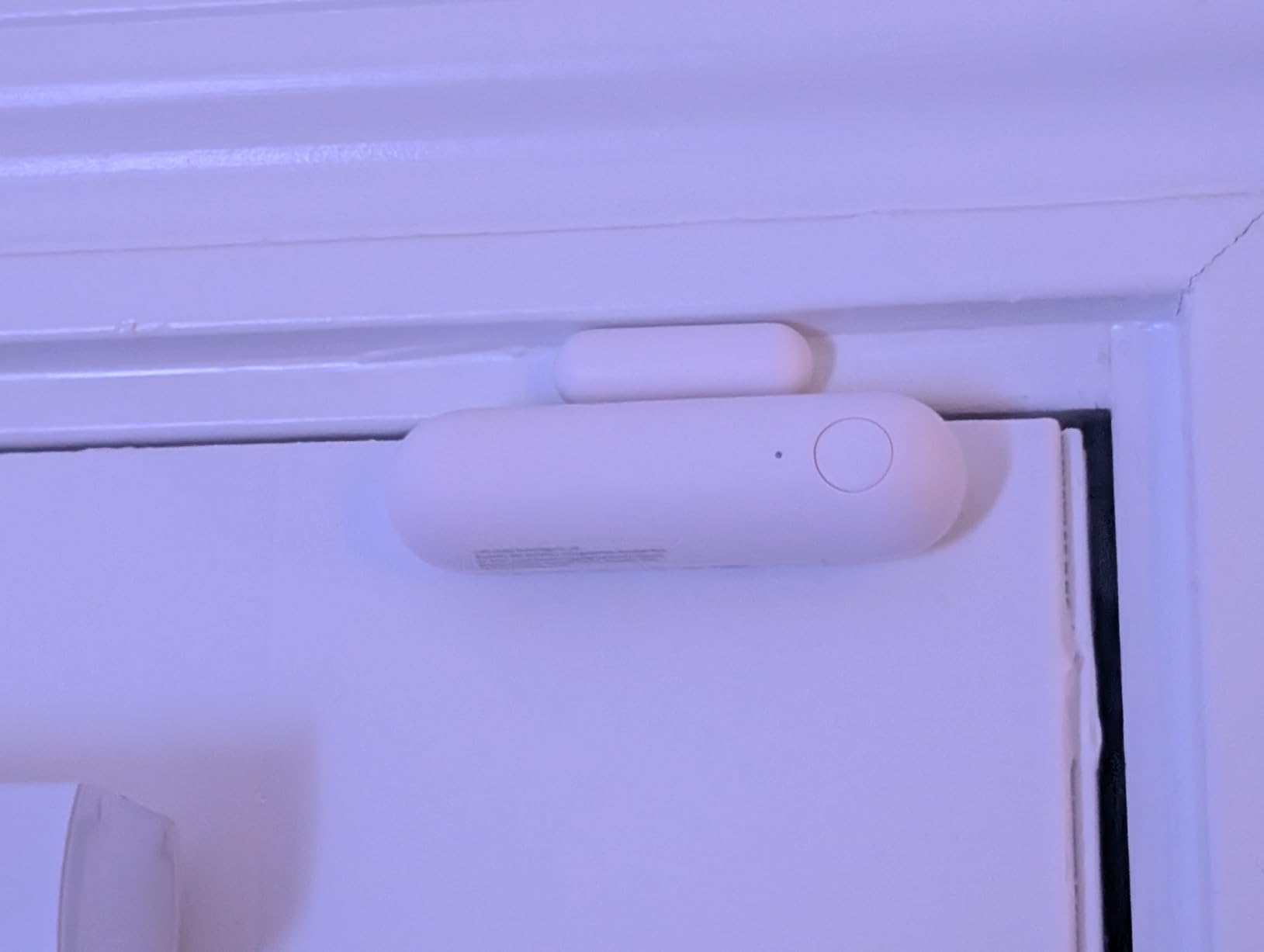
Local automation execution is a killer feature. When my internet went down during a storm last month, my security automations kept working. The sensor triggered my local alarm hub and turned on entryway lights without cloud connectivity. This is the resilience Matter promises but few devices actually deliver.
Battery life has been excellent so far. The CR123A lithium battery (included) shows 98% remaining after four months of use. Aqara claims two-year battery life, and my testing suggests that is realistic for average use patterns. The adhesive mounting tape included in the box holds firmly – I have had zero sensors fall off.
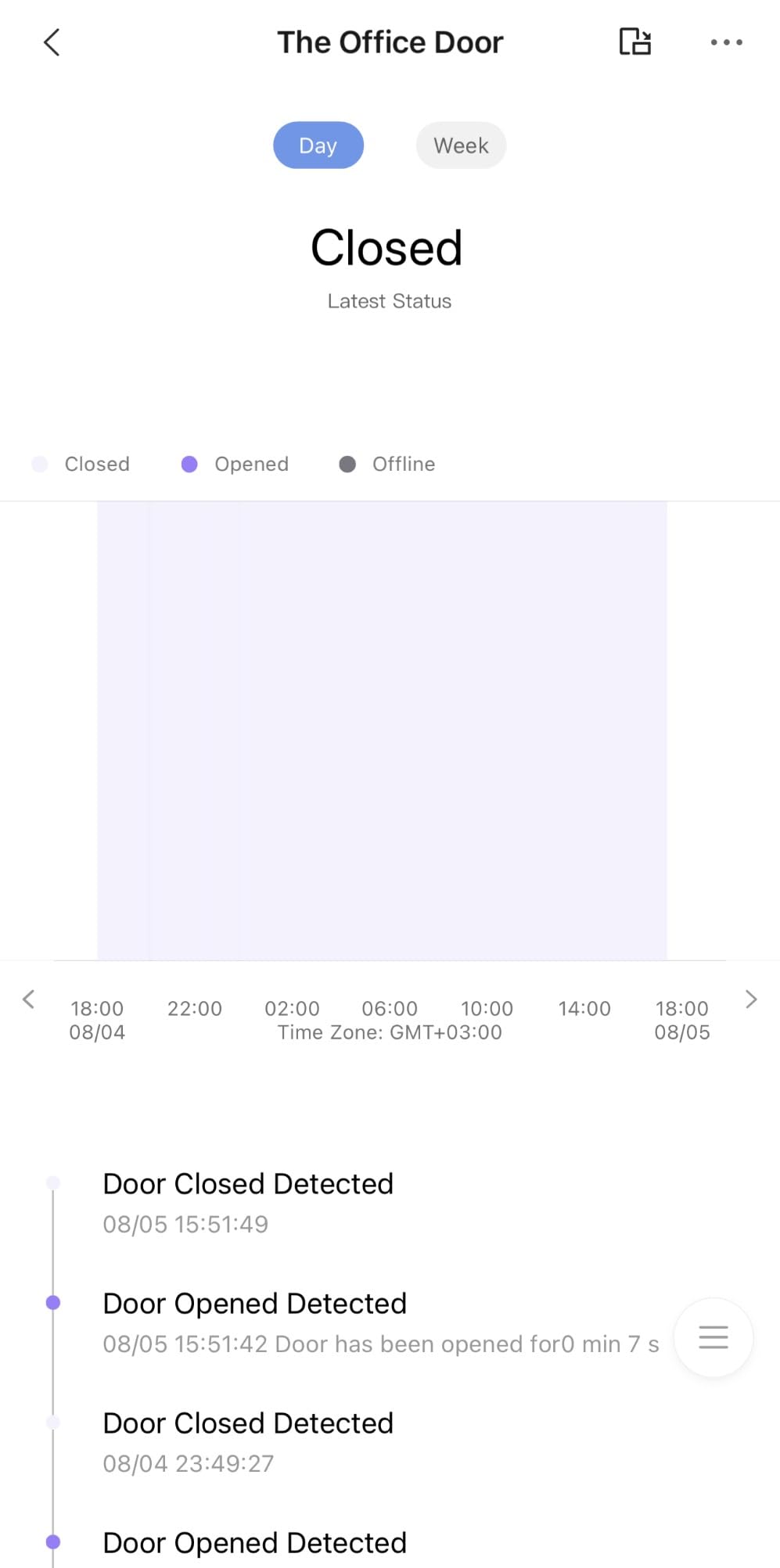
This sensor is ideal for anyone building a Matter-based security system. The local automation support and reliable Thread connectivity make it perfect for entry monitoring, closet lighting automation, and window security. The price point makes whole-home coverage affordable.
If you do not have a Thread border router, this sensor will not function. Some users report setup difficulties requiring multiple attempts – patience during initial pairing helps. The slightly bulky design (about the size of a large matchbox) may not suit minimal aesthetic preferences.
Matter over Thread
100% privacy - no cloud
Real-time state monitoring
ER14250 battery
2-year warranty
Eve extends their privacy-first approach to door and window monitoring with this compact contact sensor. Like all Eve products, there is zero cloud dependency. Your door status data stays on your local network, encrypted and private. For anyone concerned about smart home security and data collection, this matters enormously.
I tested the Matter compatibility by pairing to Apple HomeKit first, then adding the same sensor to Alexa without unpairing or resetting. Both platforms showed the same door state simultaneously. This multi-admin feature is what makes Matter genuinely useful – not just compatibility, but simultaneous multi-platform operation.
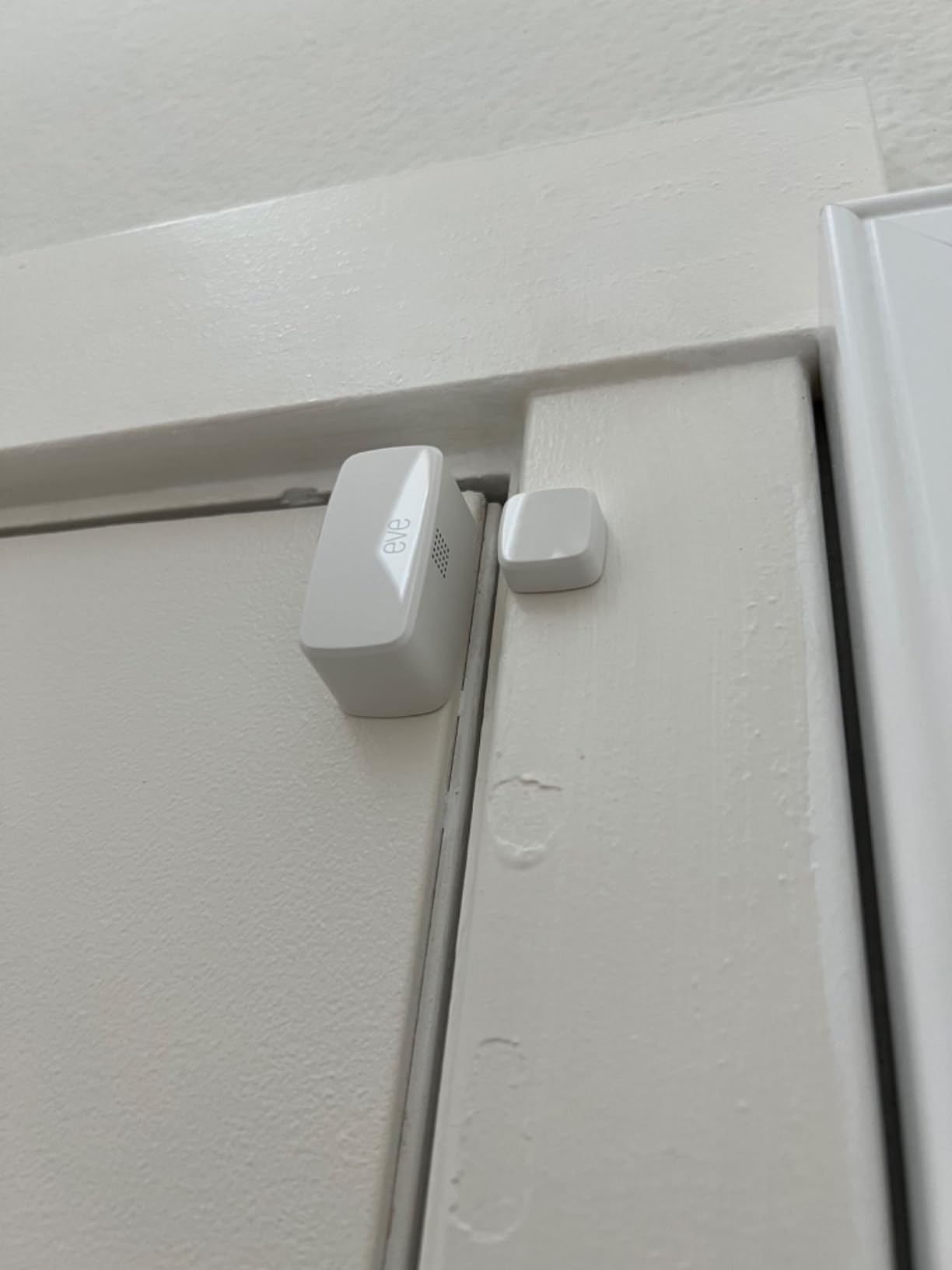
The ER14250 lithium battery provides approximately two years of operation under normal conditions. Battery replacement is straightforward – twist off the back cover and swap the cell. No tools required. The sensor continues reporting battery percentage so you get advance warning before it dies.
One note: check the manufacturing date when purchasing. Some early production units need firmware updates to enable Matter, and the upgrade process changes the pairing QR code. Buy from retailers with good return policies, and test battery voltage immediately upon receipt.
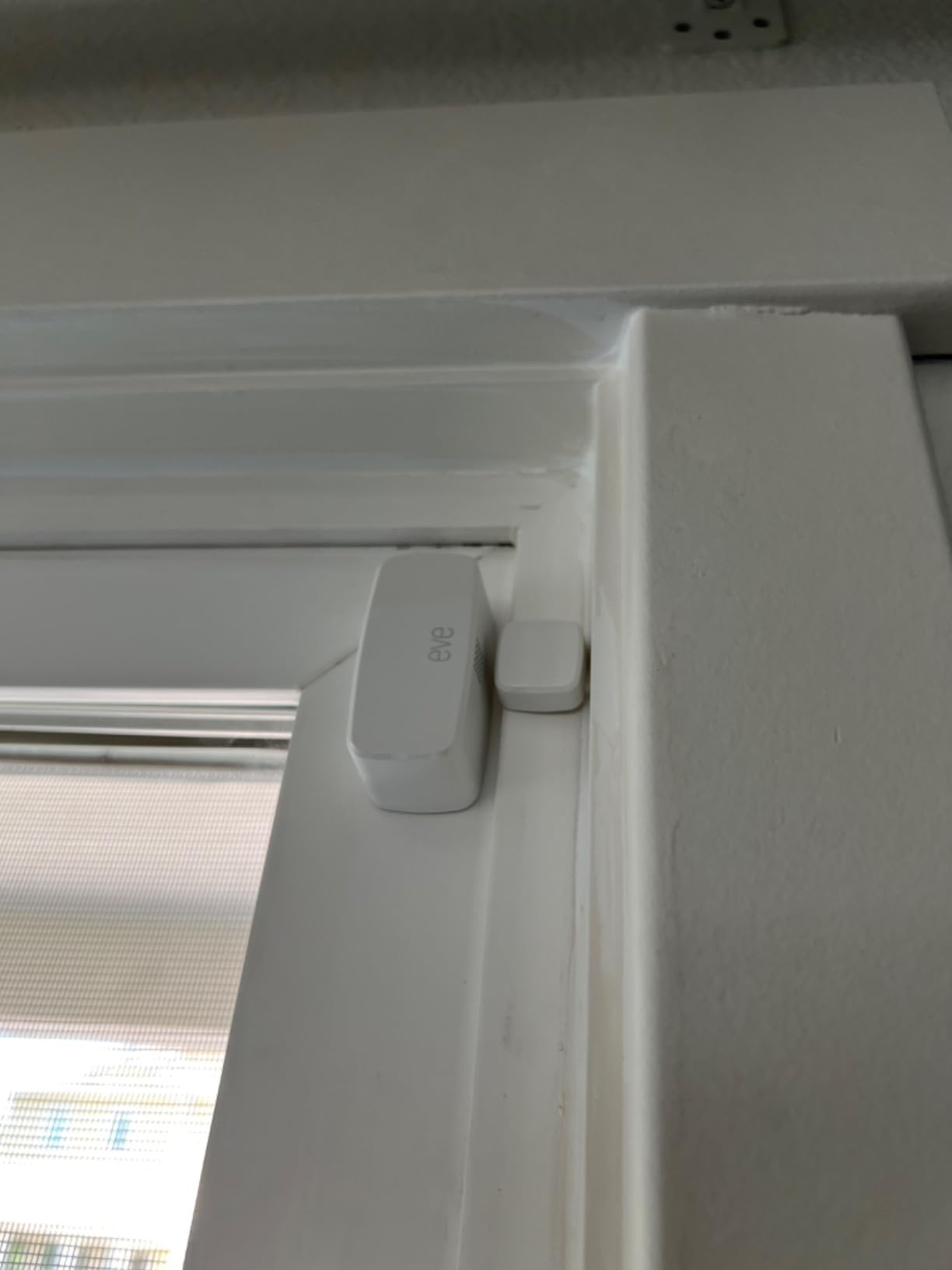
Privacy-conscious buyers should default to this sensor. The no-cloud architecture and local Thread communication provide genuine security for entry monitoring. It is also excellent for HomeKit-centric homes where design aesthetics matter – the compact white casing blends into most frames.
Budget-focused buyers might prefer cheaper alternatives, though the price difference is only $5-10. You need a Thread border router already in your ecosystem. If you want bundled starter kits with multiple sensors, the Tapo kit offers better value.
3 sensors + hub included
Matter certified
Sub-G protocol
90dB alarm
64 device capacity
The Tapo starter kit solves the hub requirement problem by including one in the box. For $44.99, you get three door/window sensors plus the H100 hub that connects everything to your network. This is the most affordable entry point into Matter-compatible contact sensing I found.
The Sub-1G wireless protocol deserves explanation. Unlike Wi-Fi or Thread sensors that connect directly to your network, these sensors talk to the Tapo hub on a dedicated 900MHz frequency. The hub then bridges to your Wi-Fi network. This approach provides excellent range through walls and floors – I placed a sensor in my detached garage 60 feet from the house, and it connected reliably.
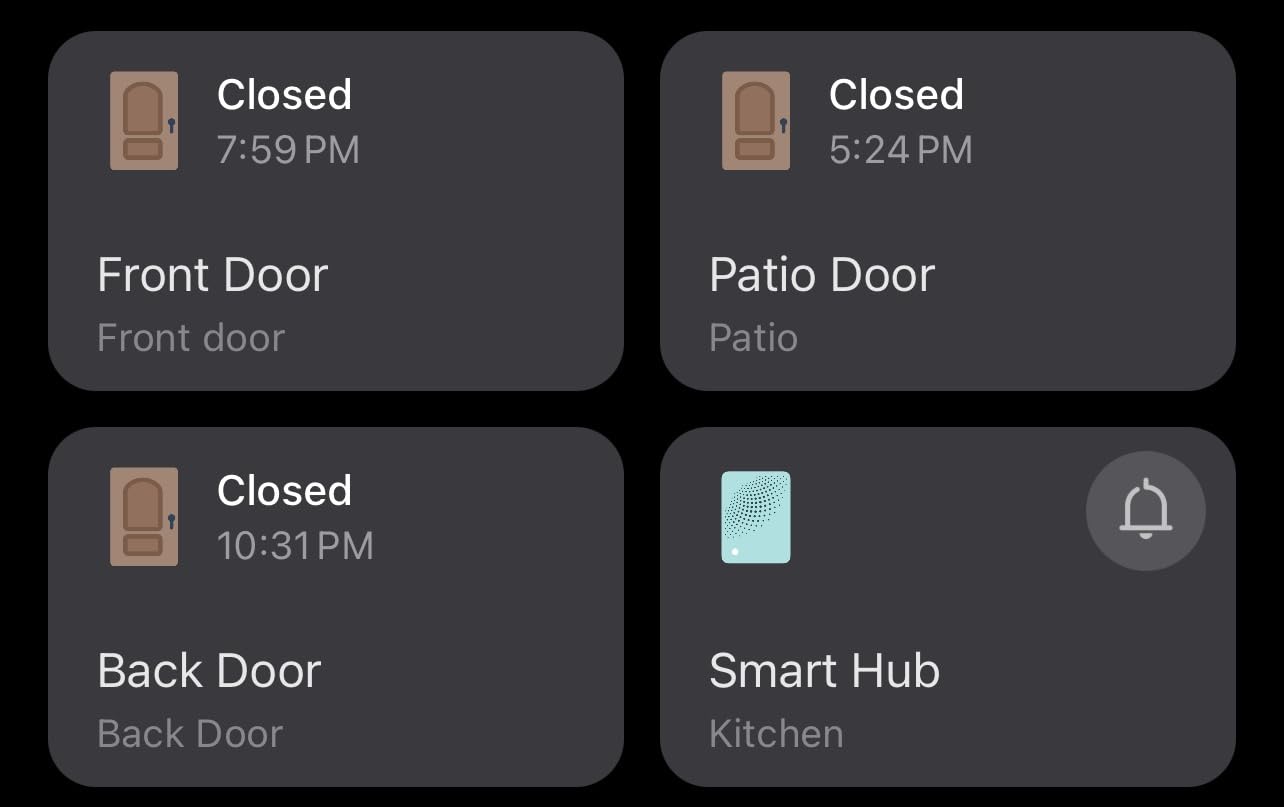
The hub includes a 90dB alarm with customizable sounds. I configured mine to chirp when doors open during “away” mode and stay silent during “home” mode. The alarm is loud enough to hear throughout my 2000 square foot home. Integration with Tapo cameras adds video verification – when a door opens, the app shows the camera feed from that entry point automatically.
Battery life claims are realistic. The CR2032 coin cells in each sensor should last two years with normal use. The hub plugs into wall power and includes battery backup, so your security system stays active during power outages for several hours.
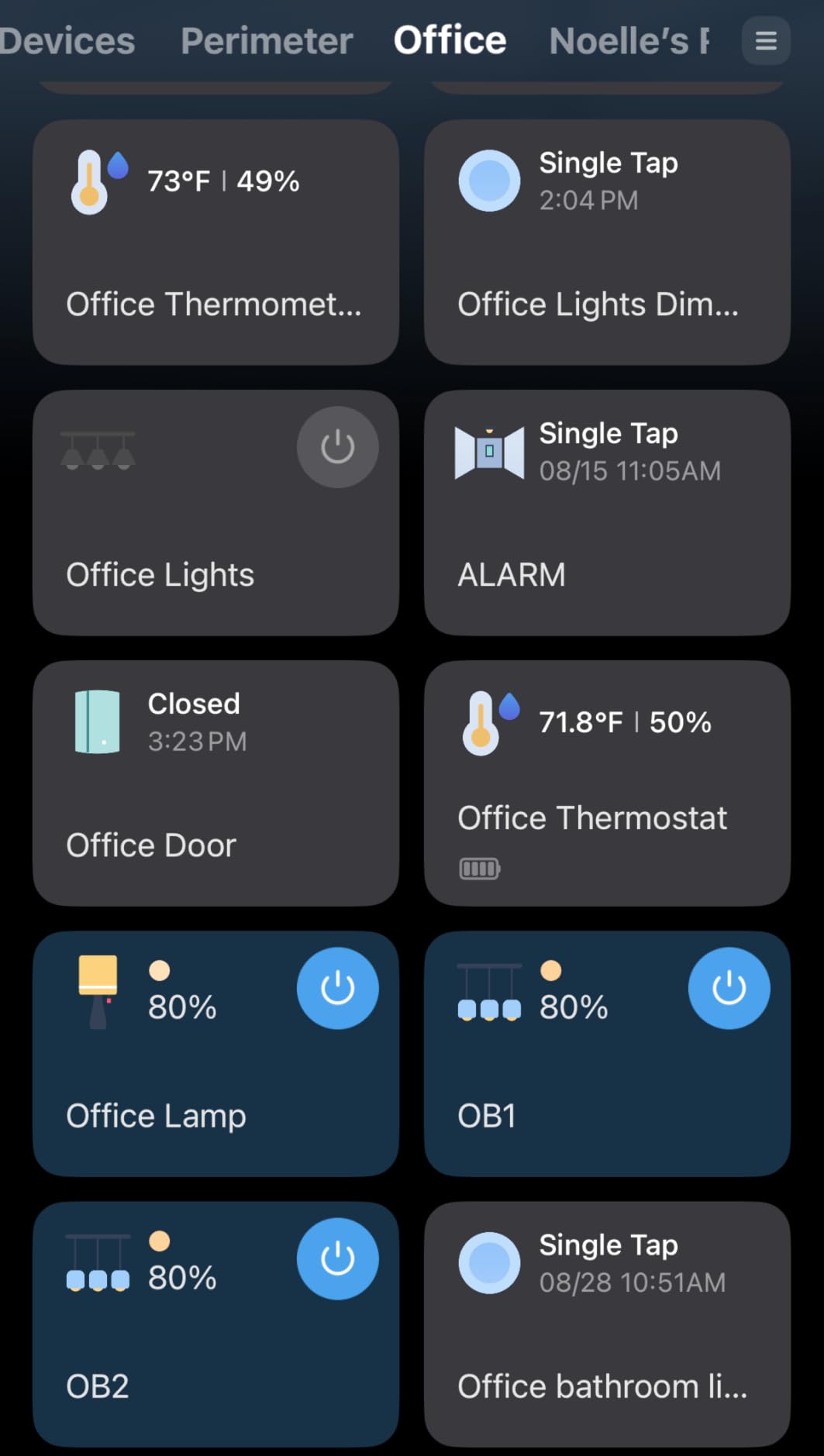
New smart home builders starting from scratch benefit most. You get everything needed for basic entry monitoring in one purchase. The hub supports up to 64 devices, providing room to expand into other Tapo sensors, cameras, and smart plugs without buying additional hardware.
If you already have a Matter hub or Thread border router, you are paying for redundant hardware. The frequency compatibility issues between US and EU models mean you cannot mix and match sensors purchased in different regions. Inward-swinging doors with tight clearances may have installation challenges.
Swiss-made sensor
±0.3°C temperature accuracy
±3% RH humidity
2-year data storage
1+ year battery
Temperature and humidity sensors are workhorses of climate automation. The Tapo T310 impressed me immediately with its accuracy. I compared readings against a calibrated weather station and found temperature within 0.2 degrees Celsius and humidity within 2% – matching specifications and outperforming sensors costing three times more.
The Swiss-made sensor chip provides updates every two seconds. This responsiveness enables precise HVAC control – my automation triggers the air conditioner when temperature rises 0.5 degrees above setpoint, and the T310 catches that change immediately. Slower sensors create uncomfortable temperature swings before reacting.
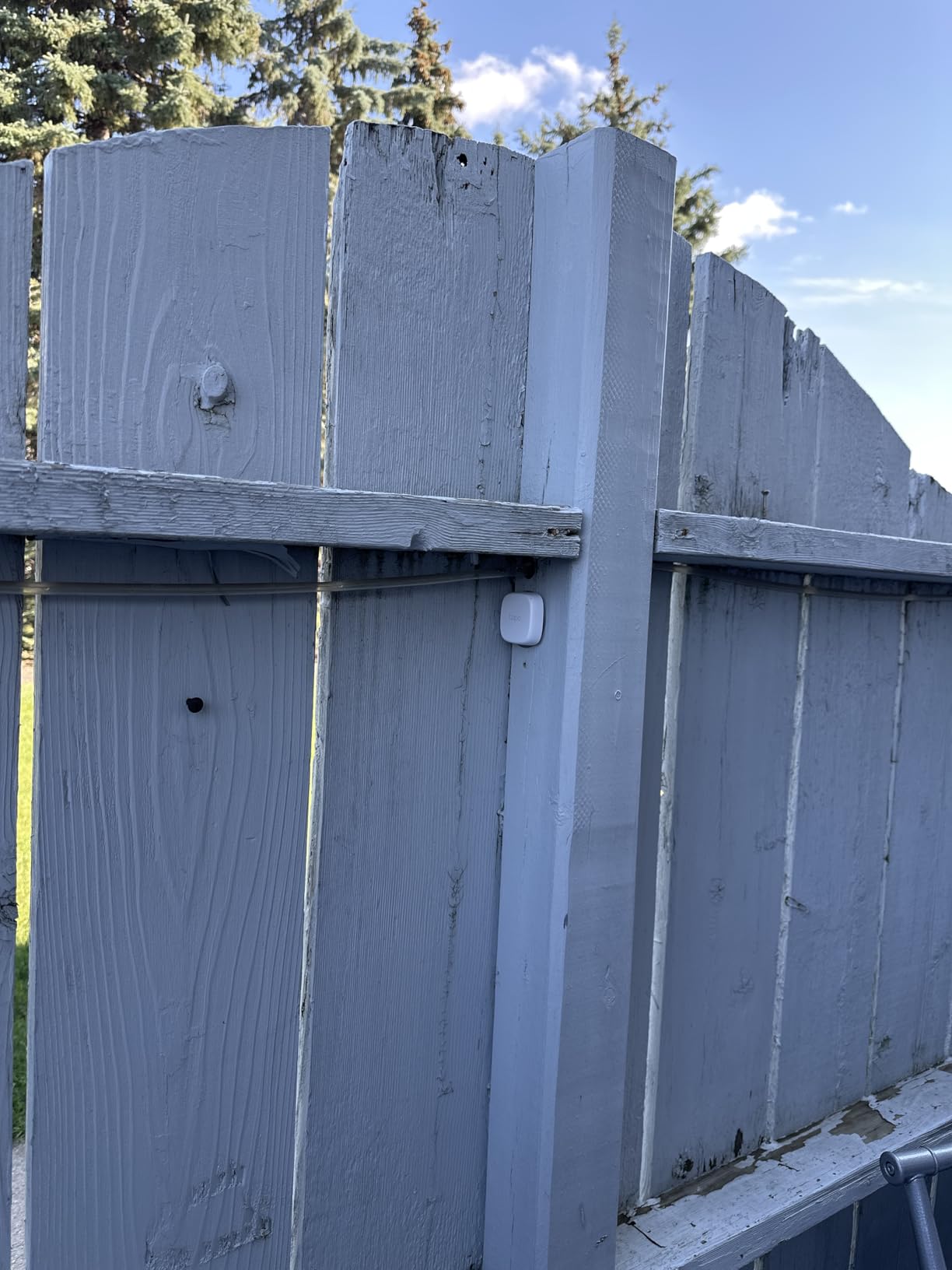
Free data storage for two years is genuinely useful. I exported monthly temperature logs to analyze heating patterns and discovered my furnace was cycling inefficiently overnight. The visual graphs in the Tapo app show trends clearly, though I agree with user reviews that the interface could use refinement.
Battery life has been solid. The CR2450 coin cell shows 95% remaining after six months of operation. The claimed one-year minimum looks achievable, and two years seems realistic for typical residential use patterns with moderate temperature checking frequency.
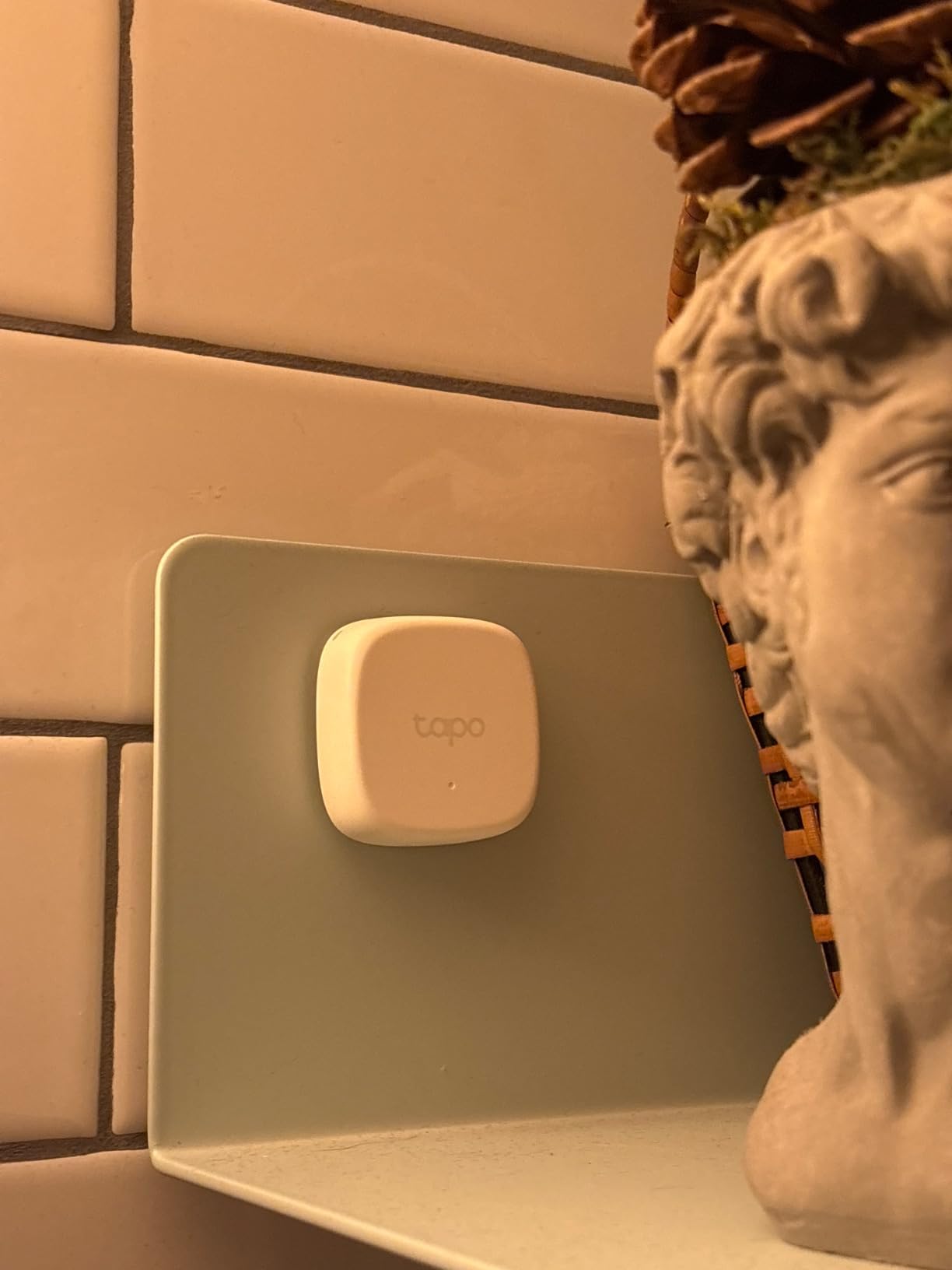
Anyone building climate automations should consider this sensor first. The accuracy and responsiveness at this price point are unmatched. HVAC optimization, humidity control for sensitive items like instruments or wine, and basic comfort monitoring all work excellently.
You need the Tapo Hub H100, H200, or H500 for this sensor to function – adding $25-40 to the effective cost. If you already have Thread infrastructure, consider the Eve Weather or Aqara W100 instead for native Matter over Thread connectivity without additional hub purchases.
Dual Zigbee/Thread protocols
3.4-inch LCD display
3 customizable buttons
±0.2°C accuracy
2.4-year battery
The Aqara W100 stands out with dual-protocol support. You can connect it via Zigbee for maximum feature access, or via Thread/Matter for cross-platform compatibility. I tested both modes and found the sensor performed well either way. This flexibility future-proofs your purchase as smart home standards continue evolving.
The 3.4-inch LCD display is genuinely useful. Unlike sensors that hide data in apps, the W100 shows temperature and humidity at a glance from across the room. The E-Ink-style display updates every few seconds and remains readable from wide angles. I placed mine on my desk where I can check conditions without pulling out my phone.
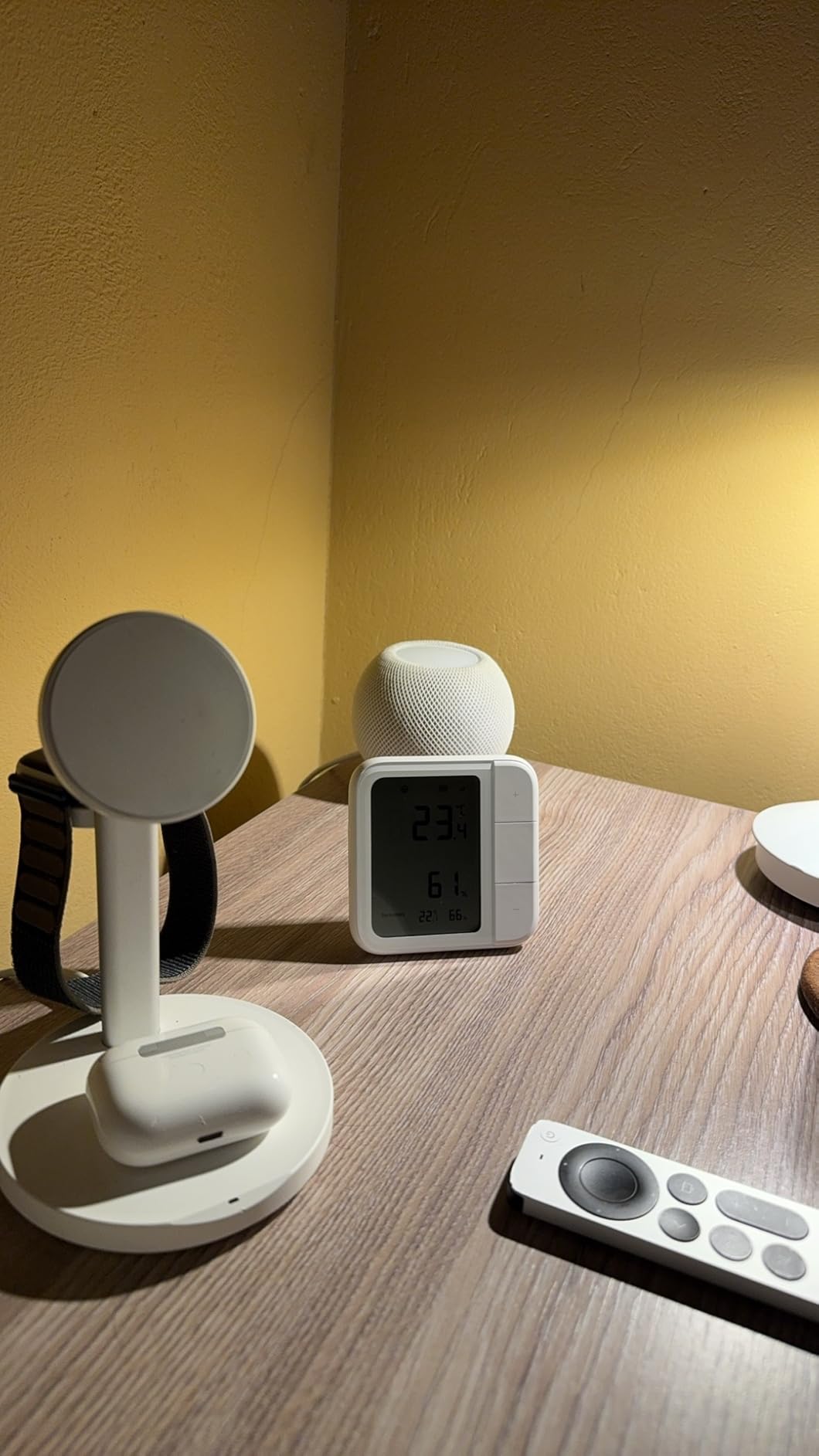
Three programmable buttons add control capabilities rare in climate sensors. I configured mine to trigger different scenes – one button sets “work mode” (lights bright, temperature down), another triggers “sleep mode” (lights dimmed, temperature up), and the third manually runs my air purifier for 30 minutes. Nine total actions are available through single, double, and long-press combinations.
Accuracy matches specifications within 0.2 degrees Celsius and 2% relative humidity. The external sensor integration port allows connecting additional probes for monitoring secondary areas like refrigerators or reptile enclosures.
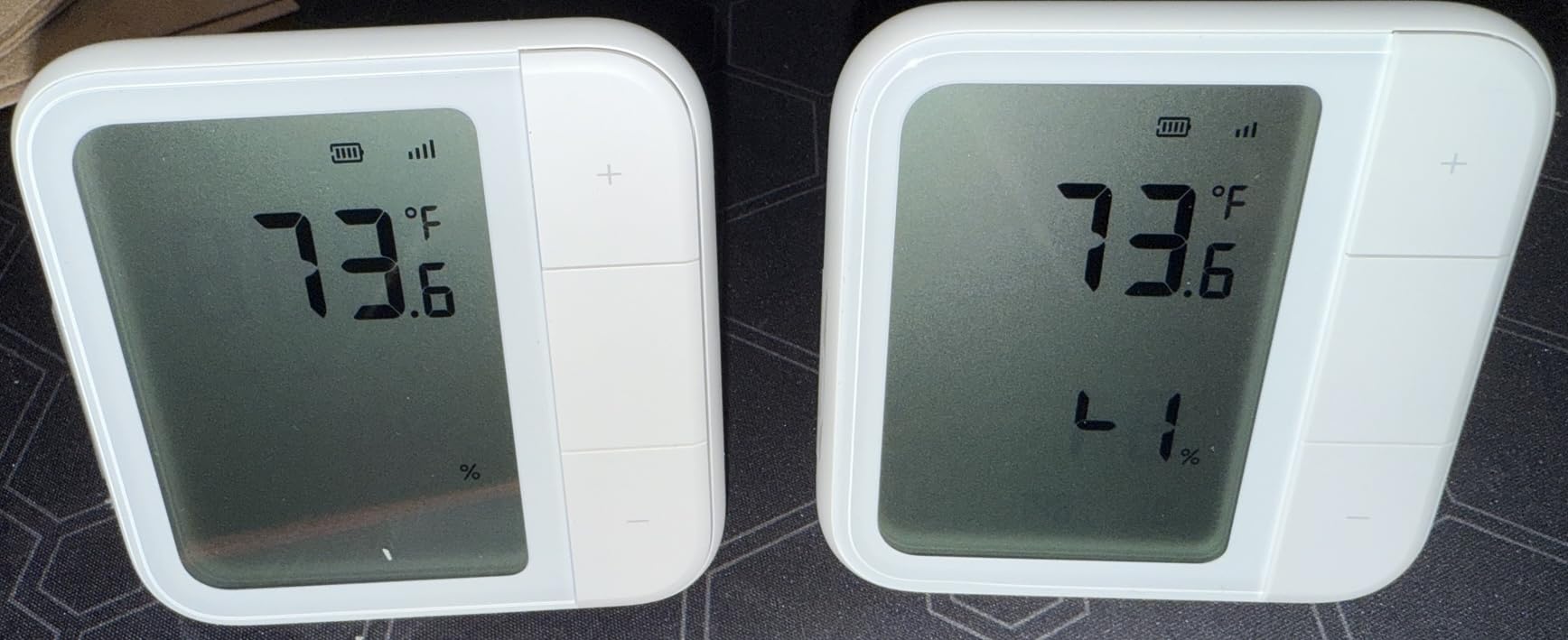
Smart home enthusiasts who want maximum flexibility benefit most. The dual-protocol support and programmable buttons make this more than just a climate sensor – it becomes a control center. Home Assistant users report excellent integration for advanced automations.
The lack of wall mounting limits placement options. Desktop-only positioning may not work for every room. Some advanced thermostat features require pairing with Aqara radiator thermostats, adding cost. Users report occasional stability issues requiring re-pairing.

Matter over Thread
IPX4 water resistance
±0.3°C accuracy
E-Ink display
Wireless battery power
Outdoor climate monitoring opens powerful automation possibilities. I use the Eve Weather to trigger my sprinkler system based on actual rainfall and temperature, not weather forecasts for a station ten miles away. The IPX4 water resistance rating handles rain, snow, and temperature extremes from 14 to 140 degrees Fahrenheit.
The Matter over Thread connectivity provides responsive updates without draining battery life. Unlike Wi-Fi outdoor sensors that need frequent charging, the Eve Weather runs for approximately one year on a single CR2450 battery. Thread’s mesh networking extends range through exterior walls better than Bluetooth alone.
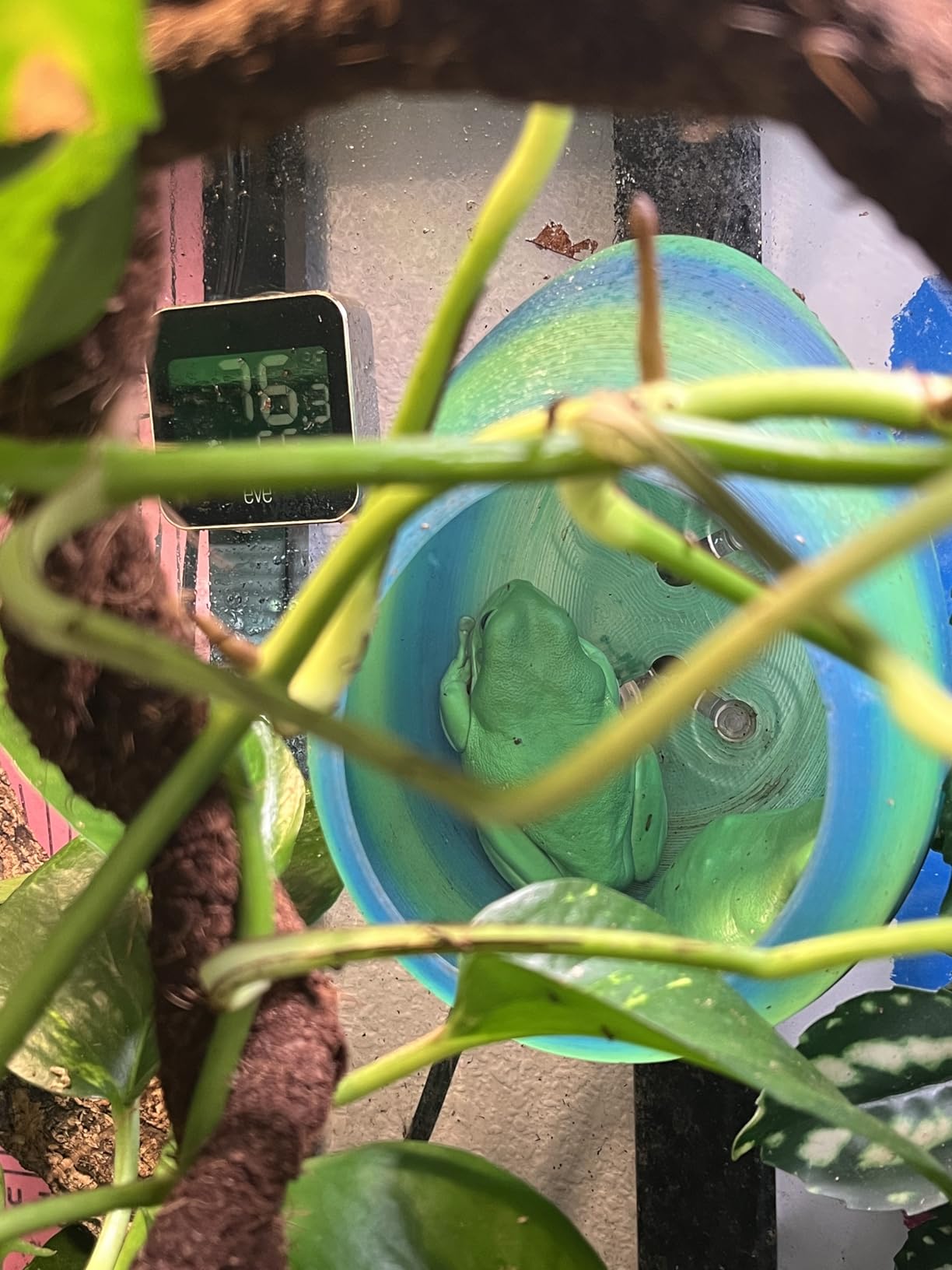
Data logging in the Eve app reveals weather patterns I never noticed before. The hyperlocal forecasting uses your specific location’s historical data rather than regional averages. After three months of collection, the app predicts afternoon temperature spikes in my backyard with surprising accuracy.
The E-Ink display looks elegant but has readability limitations. Direct sunlight makes it difficult to read, and viewing angles matter – you need to look straight at the display for clarity. I treat it as a backup display and rely primarily on app readings.
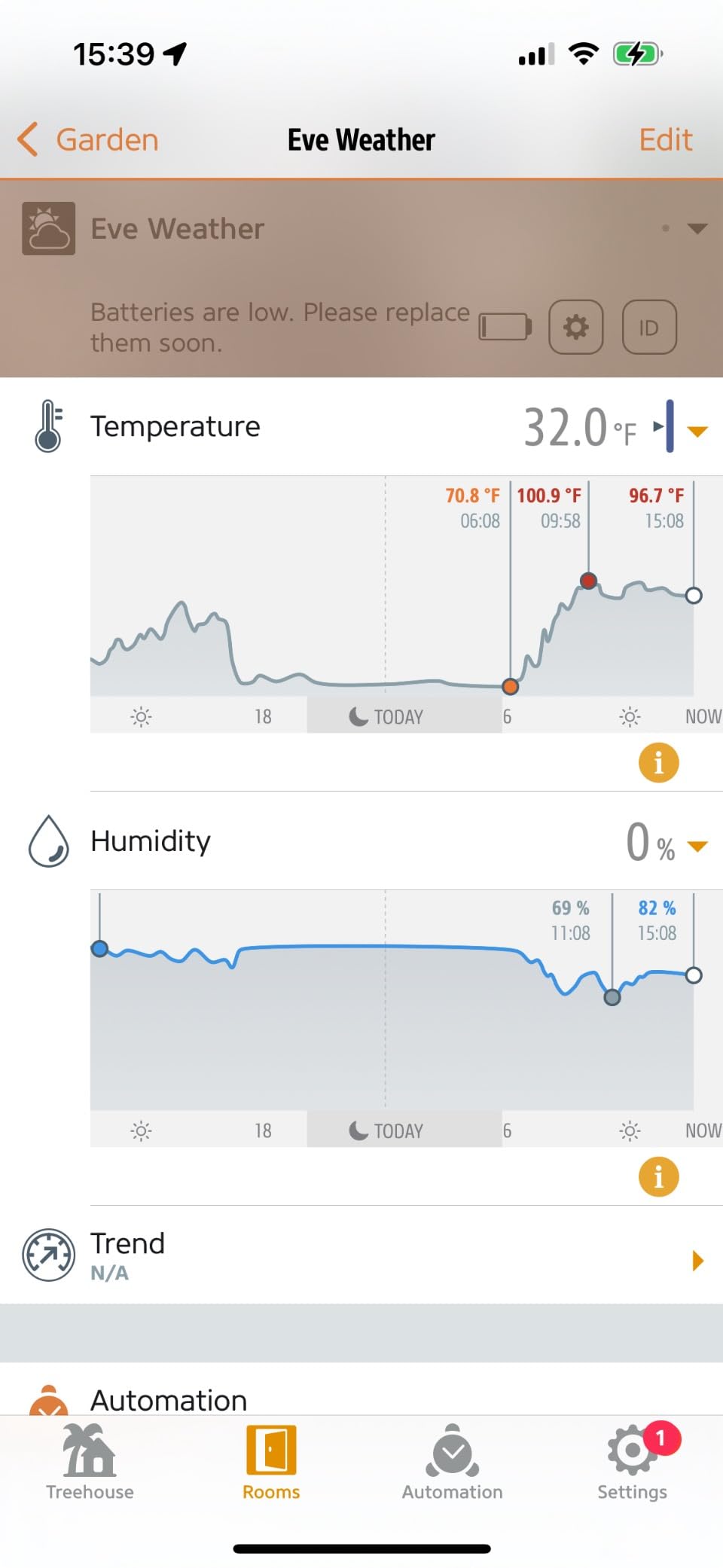
Anyone with outdoor automations should consider this sensor. Sprinkler control, patio heating, and greenhouse monitoring all benefit from accurate local weather data. The Matter compatibility means it integrates with any platform without proprietary bridges.
The display limitations matter if you want at-a-glance outdoor readings without using your phone. Accuracy concerns in some user reviews suggest quality variance between units. The price premium over indoor-only sensors is significant – only pay it if you need outdoor capability.

2.7-inch E-Ink display
Swiss-made sensor
±0.54°F accuracy
2-year battery
Wide viewing angle
The Tapo T315 solves the display problem that plagues most climate sensors. The 2.7-inch E-Ink screen offers excellent readability from any angle without the glare that affects LCD displays. I mounted mine on the refrigerator with the magnetic back, and I can read it clearly from across the kitchen.
Swiss-made sensor accuracy matches the T310 variant – within 0.54 degrees Fahrenheit and 3% relative humidity. Real-time updates every two seconds keep readings current. The E-Ink technology consumes minimal power, enabling two-year battery life from just two AAA batteries (included).
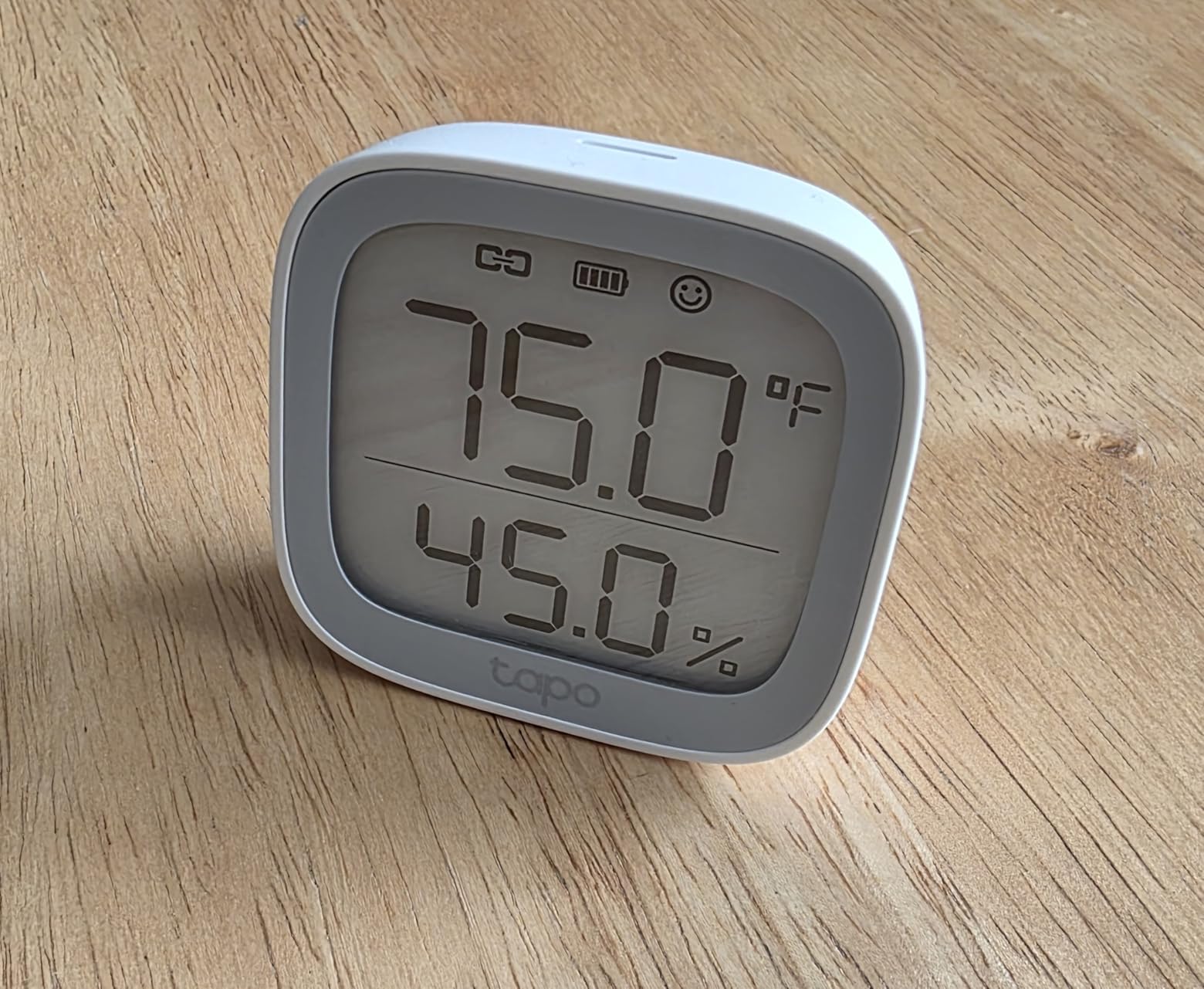
I use mine to monitor my guitar room where humidity control prevents instrument damage. The visual graphs in the app show weekly and monthly trends that help me adjust my humidifier settings proactively. The free two-year data storage exports to CSV for detailed analysis.
One limitation worth noting: the display shows minimum 32 degrees Fahrenheit even though the sensor actually measures lower. The app reports accurate sub-freezing temperatures, but the physical display shows 32°F. This matters for garage or basement monitoring in cold climates.
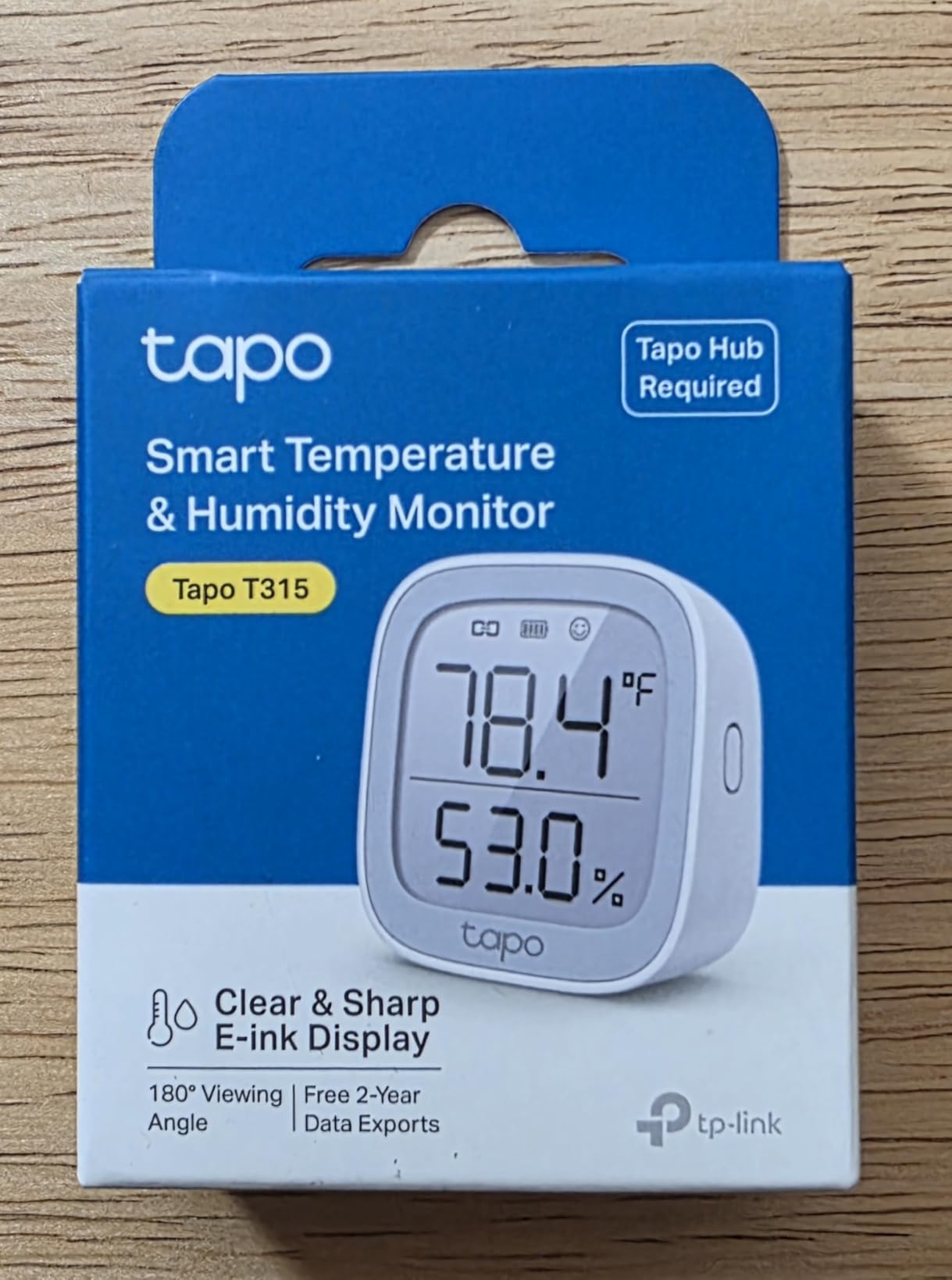
Anyone who wants at-a-glance climate readings without pulling out their phone should choose this sensor. The E-Ink display is genuinely excellent. Great for monitoring sensitive rooms like nurseries, wine storage, or instrument storage where you check conditions frequently.
If you already own the T310, the upgrade is not essential unless you specifically want the display. The same hub requirement and region-locking apply. For outdoor or sub-freezing monitoring, the display limitation makes the Eve Weather a better choice despite the higher price.
Choosing the right Matter sensor requires understanding a few key technical factors. After testing dozens of sensors across multiple protocols, I have identified what actually matters for real-world performance.
The answer depends on the connectivity type. Thread-based Matter sensors require a Thread border router – this could be an Apple TV 4K (2nd or 3rd generation), HomePod mini, HomePod (2nd generation), Amazon Echo (4th generation), or specific Wi-Fi routers with Thread support. Wi-Fi based Matter sensors connect directly to your network without additional hardware.
If you are unsure whether you have Thread infrastructure, check your smart home hub settings or router specifications. For those starting fresh, I recommend reviewing our guide to smart home hubs that support Matter to understand your options.
Thread is the preferred protocol for battery-powered sensors. It uses mesh networking where each device extends the network range, creates self-healing paths if one node fails, and operates at low power for multi-year battery life. Wi-Fi offers direct connection without hubs but drains batteries faster and can overwhelm home networks with dozens of devices. Bluetooth provides simple setup but limited range and no mesh networking without additional hardware.
For door and window sensors where battery life matters most, choose Thread. For powered presence sensors where responsiveness matters most, Wi-Fi works excellently. Bluetooth serves as a fallback for initial setup but should not be your primary protocol for permanent installations.
PIR (passive infrared) sensors detect changes in heat patterns. They work well for motion detection but fail to detect stationary people. Lights turn off while you sit still. mmWave radar sensors bounce radio waves to detect physical presence regardless of movement. They know you are in the room even when completely motionless.
For hallways and entryways, PIR sensors are sufficient and more affordable. For offices, living rooms, and bedrooms where people sit still, mmWave presence sensors eliminate frustrating light shutoffs. The Meross MS600 and Aqara FP1E both use mmWave technology for true presence detection.
Manufacturer battery claims are usually optimistic. Based on my real-world testing, expect 12-18 months from CR2032 coin cells, 18-24 months from CR2450 cells, and 24-36 months from AAA batteries under normal residential use. Extreme temperatures shorten battery life significantly – outdoor sensors may need annual replacement in harsh climates.
Rechargeable batteries generally perform poorly in sensors due to higher self-discharge rates. Stick with quality alkaline or lithium primary batteries for maximum life between changes.
All Matter sensors in this guide work with Apple HomeKit, Amazon Alexa, Google Home, and Samsung SmartThings. However, feature availability varies by platform. Apple HomeKit exposes the most sensor capabilities including light sensors and humidity readings. Alexa sometimes limits advanced features – for example, the Aqara Motion P2’s light sensor does not appear in Alexa routines. Google Home offers solid basic support but fewer advanced automation triggers than HomeKit.
If you use multiple platforms simultaneously (which Matter enables), check each app’s sensor capabilities to understand what automations you can create on each platform.
Matter is not replacing Zigbee immediately, but it is becoming the preferred standard for new devices. Many manufacturers now offer Matter-over-bridge functionality where Zigbee devices connect through a hub that exposes them as Matter accessories. Over the next 3-5 years, expect most new sensors to launch with native Matter support while Zigbee fades to legacy status.
For smart home sensors, Matter over Thread is superior to Bluetooth in every way. Thread provides mesh networking that extends range automatically, faster response times under one second, and battery life measured in years rather than months. Bluetooth requires direct line-of-sight to a hub or phone and struggles with walls and distance.
Yes, Matter compatibility is worth the small price premium for most buyers. You gain the flexibility to use any smart home platform without replacing hardware, local control that keeps working during internet outages, and future-proofing as the industry consolidates around this standard. The days of buying HomeKit-only or Alexa-only sensors are ending.
Thread-based Matter sensors require a Thread border router such as Apple TV 4K, HomePod mini, or Echo 4th generation. Wi-Fi based Matter sensors connect directly to your network without additional hardware. Check the specifications before purchasing to understand what infrastructure you need.
The best Matter devices come from established brands with strong track records: Aqara for affordable sensors with good reliability, Eve for privacy-focused local-only operation, and Meross for innovative features like mmWave presence detection. For complete climate and security coverage, TP-Link’s Tapo ecosystem offers excellent value starter kits.
After three months of testing, Matter has proven itself as the real deal for smart home sensors. The best smart sensors compatible with Matter eliminate ecosystem lock-in while delivering local, private, reliable automation. My top recommendations cover every use case: the Aqara Door & Window P2 for security monitoring, the Meross MS600 for presence-aware lighting, and the Tapo T310 for climate control.
For those building new smart homes in 2026, start with Matter-native Thread sensors. They provide the best battery life, fastest response times, and true cross-platform flexibility. The days of buying separate sensors for HomeKit and Alexa are over. One sensor now works everywhere, and that is genuinely revolutionary.
Check out our Matter-compatible smoke detectors guide to extend your safety monitoring, or explore related smart home automation guides for comprehensive home coverage.