

Every guitarist who has chased the perfect tone knows the frustration. You spend weeks dialing in your amp, find the sweet spot where your guitar sings, and then you plug in an overdrive pedal that completely wrecks everything you built. The midrange humps, the bass disappears, and your carefully crafted sound now belongs to the pedal instead of your rig.
That is exactly why transparent overdrive pedals exist. A transparent overdrive pedal adds warmth, saturation, and volume to your guitar’s natural tone without significantly altering its EQ character or coloring the original sound of your guitar and amplifier. Instead of stamping its own voice over everything, a good transparent drive enhances what you already have.
Our team spent three months comparing 10 of the best transparent overdrive pedals on the market. We tested each one with single-coil Strats, humbucker-loaded Les Pauls, clean Fender amps, and pushed Marshall-style circuits. We ran them as standalone drives, stacked them behind Tube Screamers, and pushed them into already-broken-up amps. This guide covers what we found, who each pedal suits best, and which ones earned a permanent spot on our boards.
Top 3 Transparent Overdrive Pedals for 2026

JHS Morning Glory V4
- Bluesbreaker circuit
- Dual gain levels
- Bright cut switch
- True transparent tone

EHX Soul Food
- Klon-inspired circuit
- Under $100
- Selectable bypass modes
- Includes power supply

These three pedals represent the best of what transparent overdrives can do across different price tiers. The JHS Morning Glory V4 takes our editor’s choice spot for its unmatched Bluesbreaker-circuit transparency and dual gain switching. The EHX Soul Food delivers Klon-inspired tone at a fraction of boutique pricing. And the Wampler Tumnus V2 earns the highest user rating in our lineup at 4.8 stars.
Best Transparent Overdrive Pedals in 2026
| Product | Specifications | Action |
|---|---|---|
|
JHS Morning Glory V4
|
|
Check Latest Price |
|
Wampler Tumnus V2
|
|
Check Latest Price |
 MXR Timmy Overdrive
|
|
Check Latest Price |
|
EHX Soul Food
|
|
Check Latest Price |
 JHS 3 Series Overdrive
|
|
Check Latest Price |
 Wampler Euphoria V2
|
|
Check Latest Price |
 Greer Lightspeed
|
|
Check Latest Price |
 MXR Sugar Drive
|
|
Check Latest Price |
 DOD Looking Glass
|
|
Check Latest Price |
 MXR GT-OD Overdrive
|
|
Check Latest Price |
The table above gives you a quick scan of all 10 pedals we tested. Now let us dig into each one with hands-on impressions, technical breakdowns, and specific use-case recommendations.
1. JHS Morning Glory V4 – The Bluesbreaker Standard
JHS Pedals Morning Glory V4 Overdrive Guitar Effects Pedal, Gold
Bluesbreaker circuit
Dual gain levels
Bright cut switch
9V operation
Limited lifetime warranty
Pros
- Extremely transparent tone that preserves amp character
- Dual gain levels for on-the-fly switching
- Side-mounted bright cut switch tames bright rigs
- Increased headroom works as full-frequency boost
Cons
- Premium pricing at the boutique tier
- Requires quality power supply for best performance
The JHS Morning Glory V4 is the pedal I keep coming back to no matter what else lands on my bench. Based on the legendary Marshall Bluesbreaker circuit, this pedal does exactly what a transparent overdrive should do. It adds grit, warmth, and touch response without coloring the fundamental voice of your guitar and amp.
I tested the V4 with a Stratocaster through a clean Fender Deluxe Reverb, and the results were striking. The gain control sweeps from completely clean to a satisfying rock-and-roll crunch, and at no point did my Strat stop sounding like a Strat. Single coils retained their bell-like clarity, and the treble response stayed open and musical rather than harsh or fizzy.
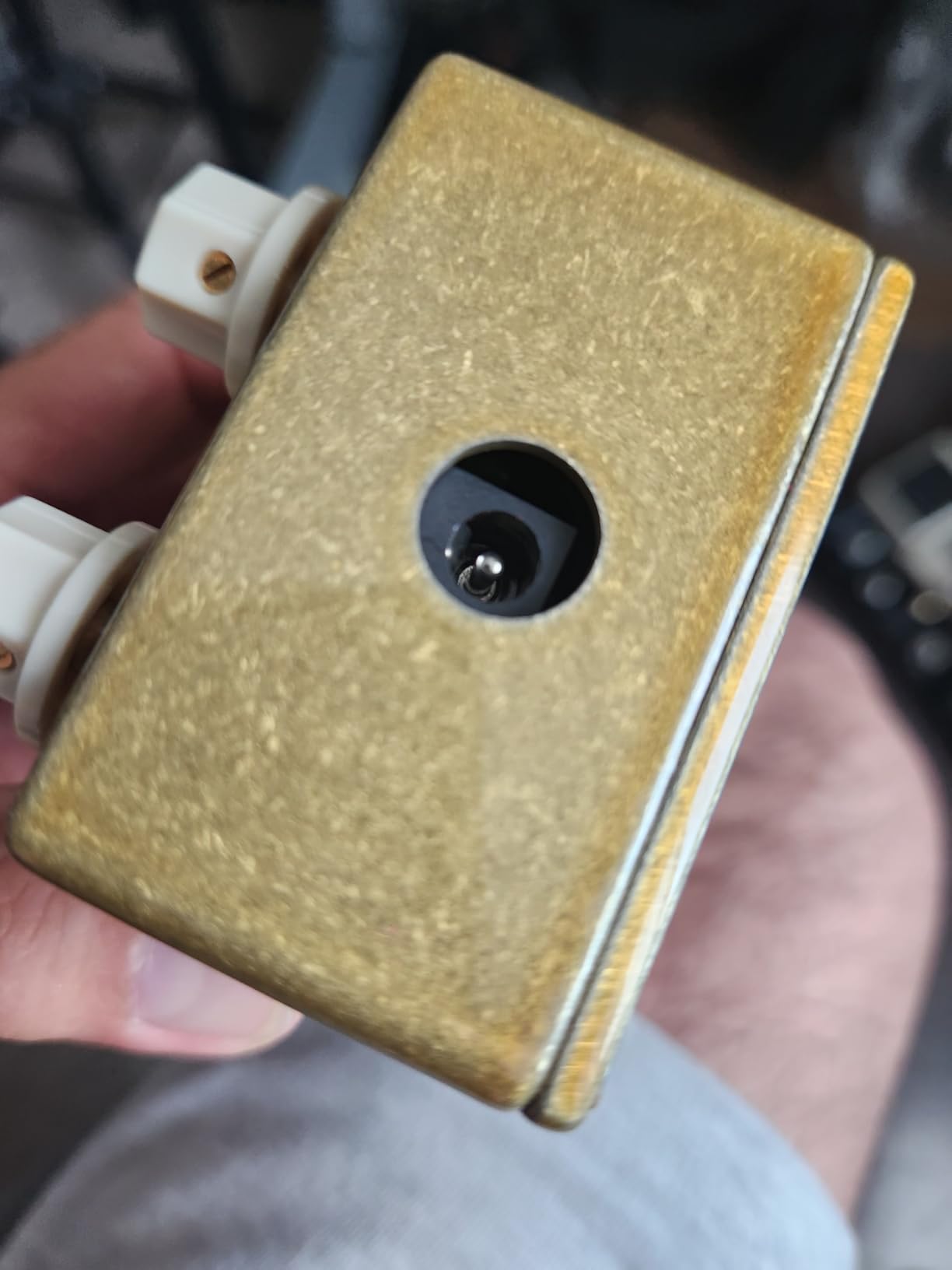
The dual gain feature is what separates the V4 from earlier Morning Glory versions. A side-mounted toggle lets you switch between two preset gain levels on the fly, which is incredibly useful for moving from rhythm to lead without tap-dancing on multiple pedals. The bright cut switch, also side-mounted, tames the high end on brighter rigs without choking the overall tone.
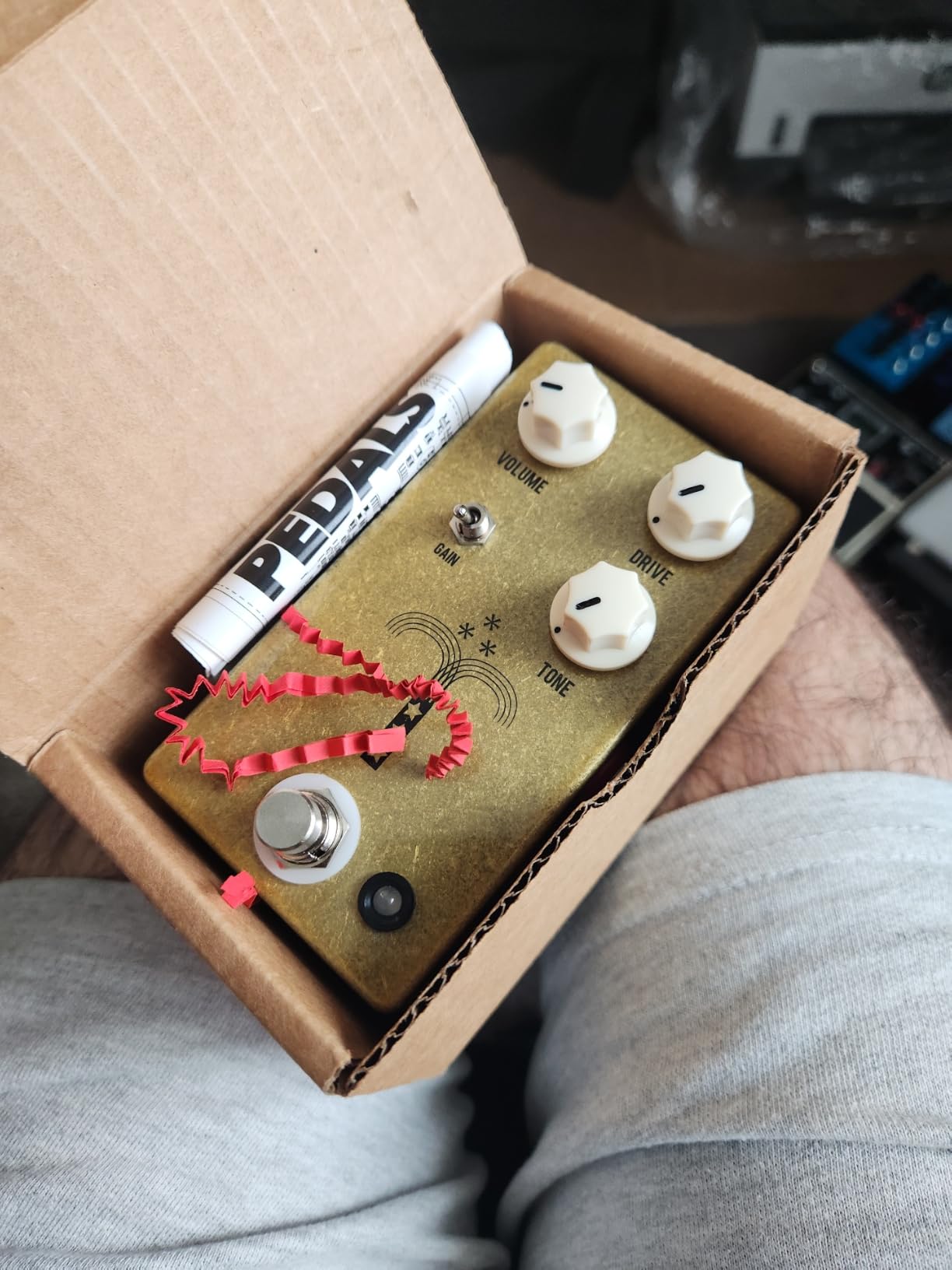
With 515 reviews and an 85% five-star rate, the community consensus matches my experience. Users consistently praise the Morning Glory for its touch sensitivity and tube-like feel. The limited lifetime warranty from JHS adds confidence for a pedal you will likely keep for decades.
The Morning Glory uses a Bluesbreaker-style soft clipping circuit that preserves the full frequency range of your signal. Unlike Tube Screamer circuits that deliberately cut bass and boost mids, the Morning Glory lets everything through. That makes it an exceptional always-on tone enhancer for players who want their amp to sound bigger without sounding different.
Who Should Buy the Morning Glory V4
If you play blues, country, or roots rock through a clean or edge-of-breakup amp, the Morning Glory is arguably the gold standard. It pairs beautifully with single coils but has enough headroom to handle humbuckers without getting muddy. Players who stack drives will find it plays well as a base layer underneath higher-gain pedals.
The Morning Glory is also ideal for guitarists who want one pedal that can cover clean boost, low-gain crunch, and mid-gain lead tones. The dual gain switching means you get two sounds in one box, reducing the need for a second drive pedal on your board.
What to Watch Out For
The Morning Glory sits at the premium price tier, which may give budget-conscious players pause. It also needs a quality isolated power supply to perform at its best. Some users on Reddit have noted that running it at 12V changes the headroom and feel, so experiment with voltage if you want maximum clean output.
Because it is so transparent, the Morning Glory will not fix a bad-sounding amp or guitar. It enhances what is already there, which means you need to be happy with your core tone before adding it to the chain.
2. Wampler Tumnus V2 – The Compact Klon Contender
Wampler Tumnus V2 Overdrive & Boost Guitar Effects Pedal
Klon-style circuit
Buffered bypass
3-knob layout
Compact design
5-year warranty
Pros
- Sweet midrange character inspired by Klon Centaur
- Versatile as drive boost or buffer
- Compact size fits any pedalboard
- Impressive volume output
- Excellent stacked behind lighter drives
Cons
- Buffered bypass not ideal for all signal chains
- Blue LED may not match gold aesthetic
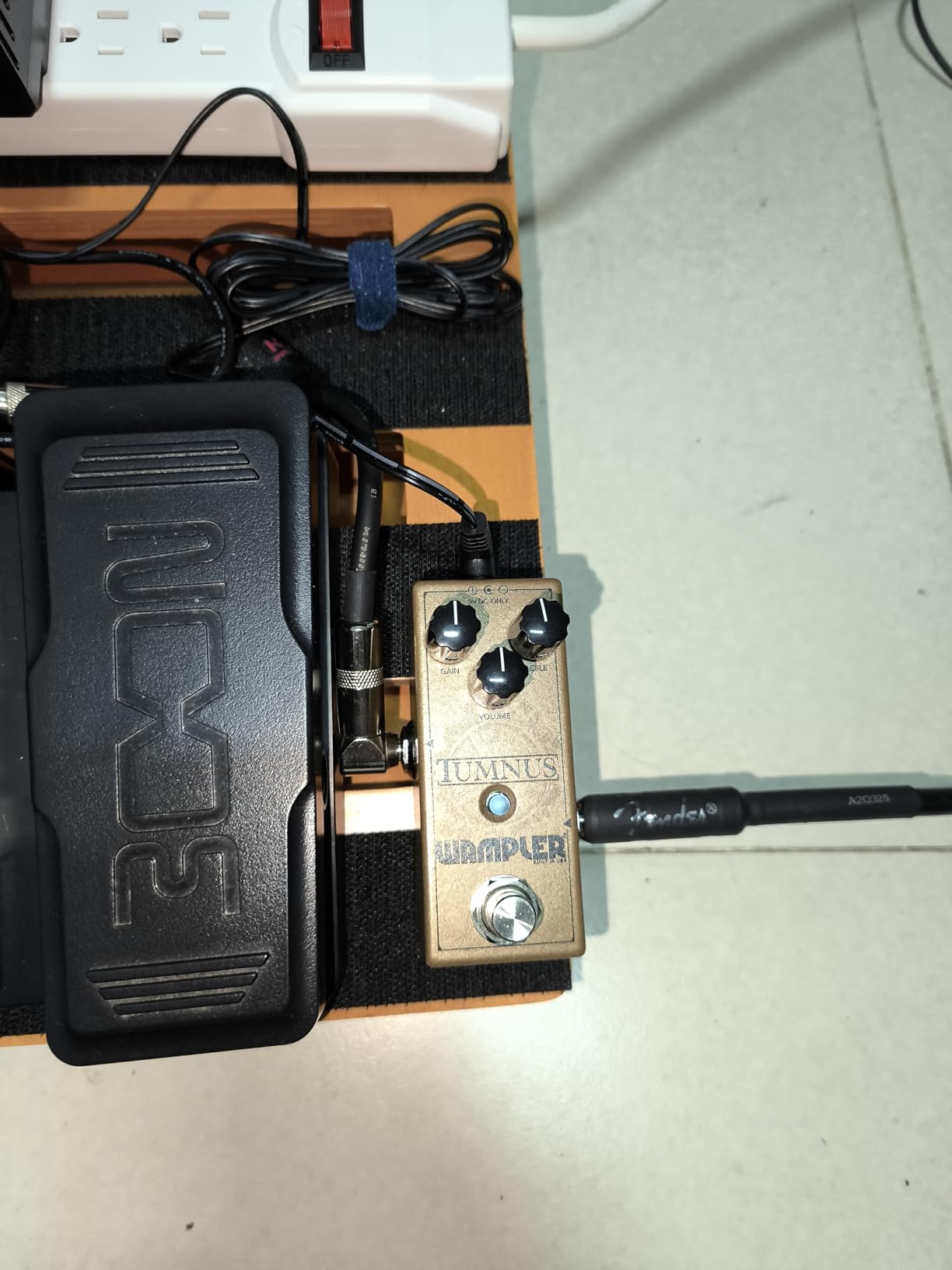
The Wampler Tumnus V2 earned the highest rating in our entire test pool at 4.8 stars from 356 reviews, and after spending weeks with it I understand why. This pedal captures the sweet, slightly mid-forward character of the legendary Klon Centaur in a compact enclosure that fits on any pedalboard.
What surprised me most about the Tumnus V2 is how versatile it is. Brian Wampler designed it as a Klon-inspired circuit, but it functions beautifully as a standalone overdrive, a slightly dirty boost, or even a buffer thanks to its buffered bypass. I ran it into a clean Twin Reverb and got rich, singing lead tones. I stacked it behind a Timmy for a two-stage lead sound and it pushed the front end of my amp with authority.
The three-knob layout of Volume, Gain, and Tone is refreshingly simple. You can dial in a great sound in under a minute, which is not always the case with more complex overdrives. The buffered bypass is a genuine feature rather than a compromise. Many players on r/guitarpedals specifically praise the Tumnus buffer quality as being among the best in any compact pedal.
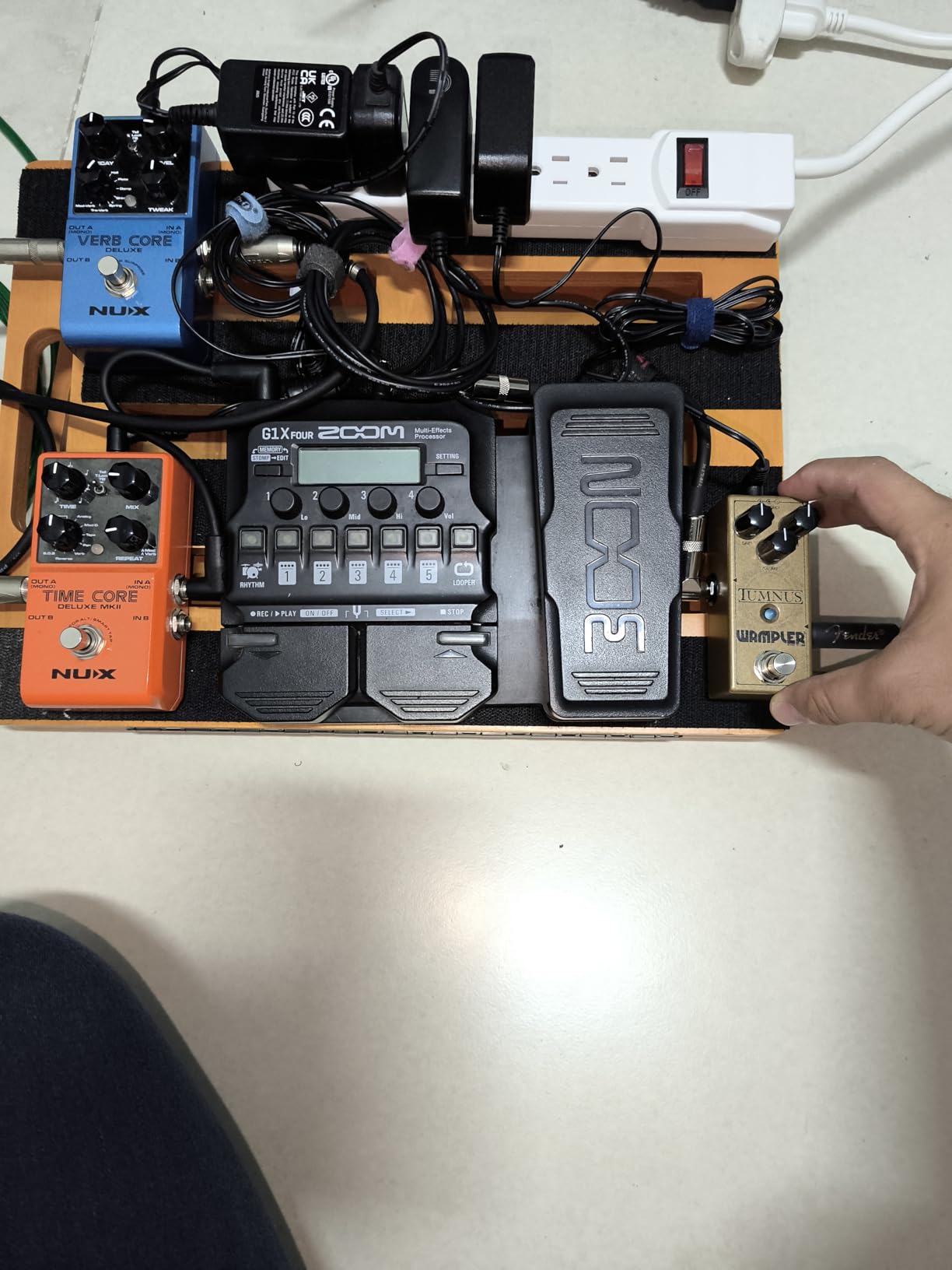
From a technical standpoint, the Tumnus V2 uses a charge pump circuit to increase internal headroom, which contributes to its impressive volume output. Even at moderate gain settings, this pedal gets loud. That makes it outstanding for pushing an already-cooking amp into sustain without adding excessive distortion of its own.
The 86% five-star rate speaks volumes. Users consistently mention that the Tumnus makes even cheap amps sound significantly better, which is high praise for a pedal at this price point. The 5-year warranty from Wampler provides solid long-term protection.
Who Should Buy the Tumnus V2
The Tumnus V2 is perfect for players who want Klon character without spending Klon money or dealing with Klon-sized enclosures. It is ideal for lead guitarists who need a pedal that cuts through a mix with midrange presence. Stackers will love it as a second-stage drive behind a cleaner, lower-gain pedal.
If board space is tight, the Tumnus is one of the most tone-per-dollar efficient pedals available. Its compact size means you can fit it alongside other essentials without restructuring your entire rig.
What to Watch Out For
Some users note that the Tumnus lacks the exact magic of the original Klon Centaur diodes. If you are chasing a pixel-perfect Klon clone, you may want to explore higher-priced alternatives. The buffered bypass, while excellent, may not suit players who specifically need true bypass in their signal chain.
The pedal has a pronounced midrange character that some might argue makes it more of a mid-hump pedal than a truly transparent one. In my testing, it sits in a gray area between transparent and colored, which is actually what makes it so versatile.
3. MXR Timmy Overdrive – The Industry Standard Transparent Dirt
MXR® Timmy® Overdrive
Paul Cochrane design
3 clipping styles
Bass/Treble controls
MXR mini housing
9V operation
Pros
- Designed with legendary builder Paul Cochrane
- Three clipping styles for tonal variety
- Ingenious Bass and Treble cut-only controls
- Preserves fundamental rig character
- Compact MXR housing
Cons
- Mini housing controls may feel cramped
- Controls less intuitive than larger format pedals
The Paul Cochrane Timmy has been called the industry standard for transparent dirt for over a decade. MXR partnered with Cochrane to bring his legendary circuit into a production MXR mini housing, and the result is one of the most respected transparent overdrives you can buy.
What makes the Timmy special is its approach to EQ. Instead of a traditional tone knob, it uses separate Bass and Treble controls that are configured as cut-only. This means you can only reduce frequencies, not boost them, which prevents the phase shift and artificial coloration that standard tone controls introduce. The result is a drive that genuinely preserves your core tone.
I tested the Timmy through a Vox AC30 with a Les Paul and was impressed by how little it changed the fundamental character of the amp. The drive added harmonic richness and sustain without altering the Vox chime that defines that amplifier. The three clipping styles, accessible via internal DIP switches, let you choose between compressed, open, and asymmetric clipping characteristics.
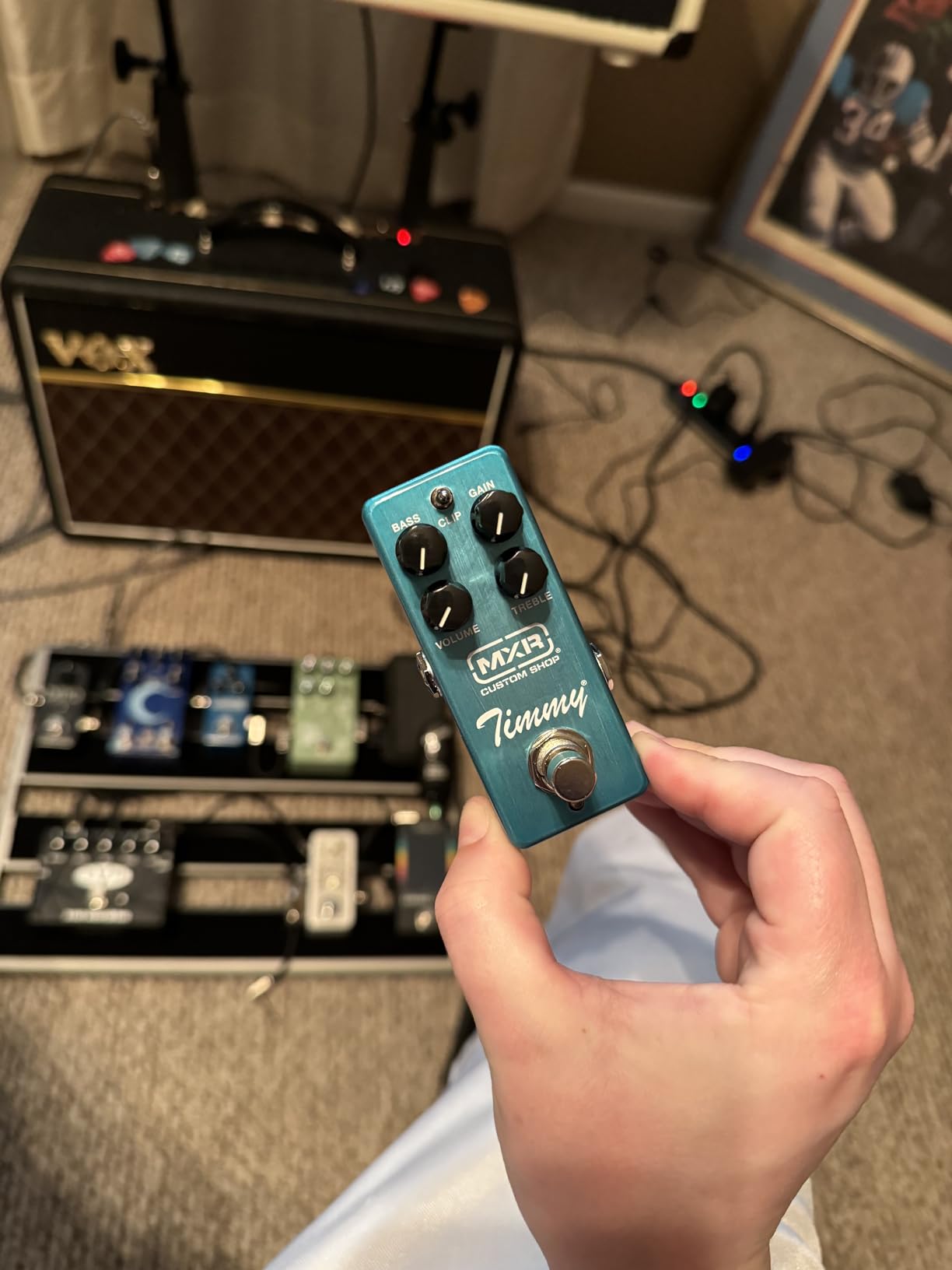
The 71% five-star rate from 250 reviews is slightly lower than some pedals in this lineup, but that reflects the Timmy’s specialized nature rather than any quality issue. This is a pedal for players who understand gain staging and want surgical control over their tone. It is not a plug-and-play pedal for beginners.
The MXR mini housing is both a blessing and a curse. It saves enormous pedalboard space, but the small knobs are harder to adjust mid-performance. For studio use or set-and-forget applications, this is a non-issue. For players who like to tweak on the fly, the compact controls can be frustrating.
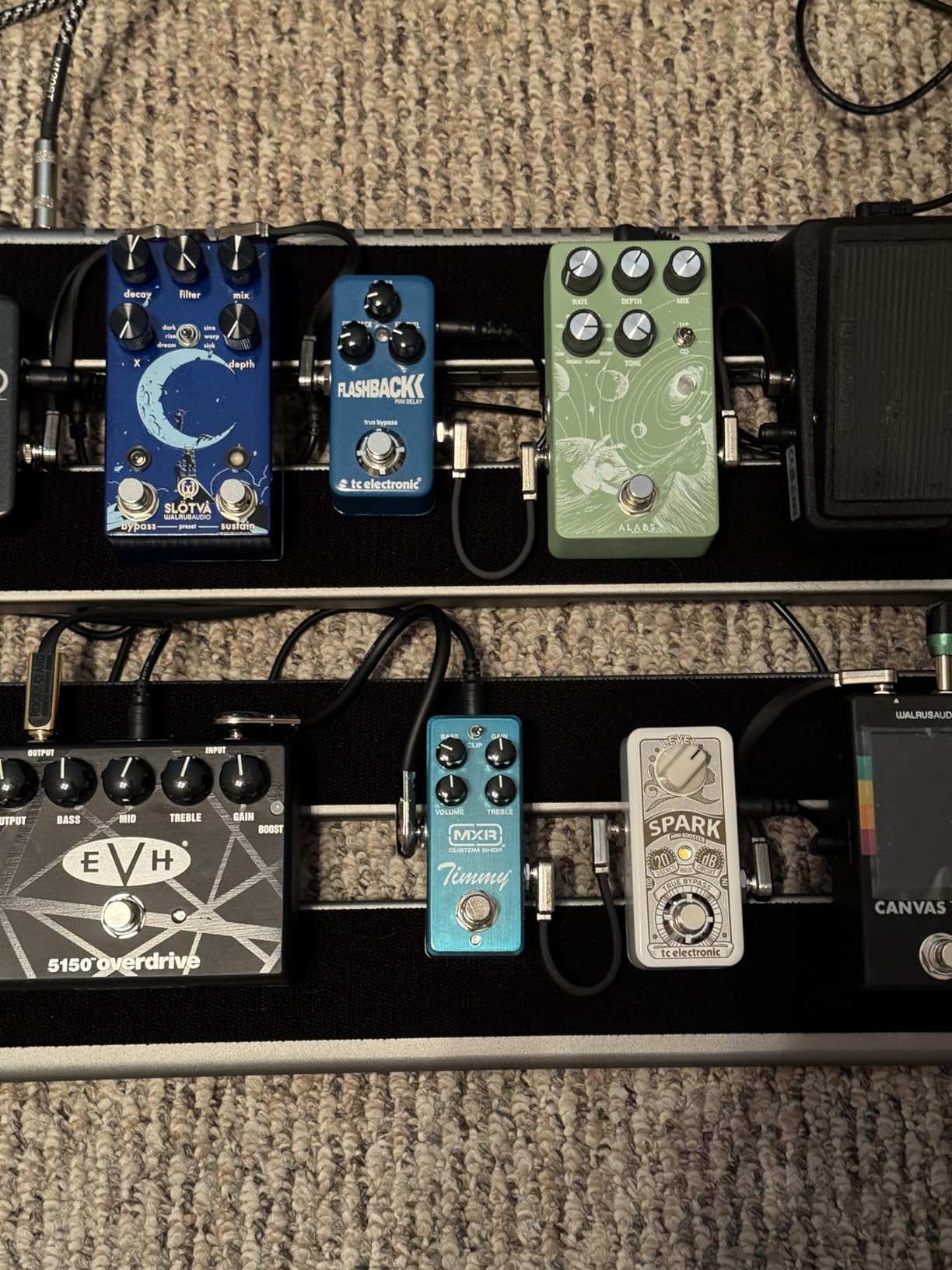
Who Should Buy the MXR Timmy
The Timmy is ideal for experienced players who want maximum transparency and are willing to learn the pedal’s control system. It shines as an always-on tone enhancer that adds just enough grit and harmonic content to make a clean amp feel more alive. Country pickers and blues players who need their guitar’s natural voice to come through will love it.
If you already have a mid-hump drive like a Tube Screamer and want something transparent to stack underneath it, the Timmy is an excellent choice. It provides the foundation layer that fills out your tone without competing for the same frequency space.
What to Watch Out For
The cut-only EQ system means you cannot boost frequencies you feel are missing. If your rig is inherently dark or mid-scooped, the Timmy will not fix that. You need a fundamentally good-sounding base tone for the Timmy to enhance.
The mini housing requires patience for dialing in settings, and the internal DIP switches for clipping style are not accessible without opening the pedal. Plan to spend time setting it up before a gig rather than tweaking at the venue.
4. Electro-Harmonix Soul Food – Best Budget Transparent Overdrive
Electro-Harmonix Soul Food Transparent Overdrive Pedal
Klon Centaur-inspired circuit
Selectable true or buffered bypass
Includes power supply
Compact rugged design
Extended headroom
Pros
- Klon-inspired tone at a budget price point
- Extremely transparent with minimal coloration
- Impressive headroom for full note expression
- Selectable true bypass or buffered bypass
- Power supply included
Cons
- Noticeable pop when engaging pedal with drive up
- Limited EQ options compared to premium pedals
The Electro-Harmonix Soul Food is the pedal that made Klon-inspired transparent overdrive accessible to working musicians. At roughly half the price of boutique alternatives, it delivers the core Klon Centaur sound with remarkable accuracy and has become one of the most popular transparent overdrives ever made.
I have recommended the Soul Food to more students and fellow guitarists than any other pedal on this list. It is the transparent overdrive that most people should buy first. The boosted power rails provide extended headroom that lets notes bloom naturally across the entire drive range, and the transparency is genuine rather than marketing hype.
The drive range goes from a completely clean boost to a crunchy overdrive that works for blues, rock rhythm, and even early hard rock. With 621 reviews and an 84% five-star rate, the community verdict is overwhelmingly positive. EHX even includes a power supply, which is unusual at this price point and a welcome touch.
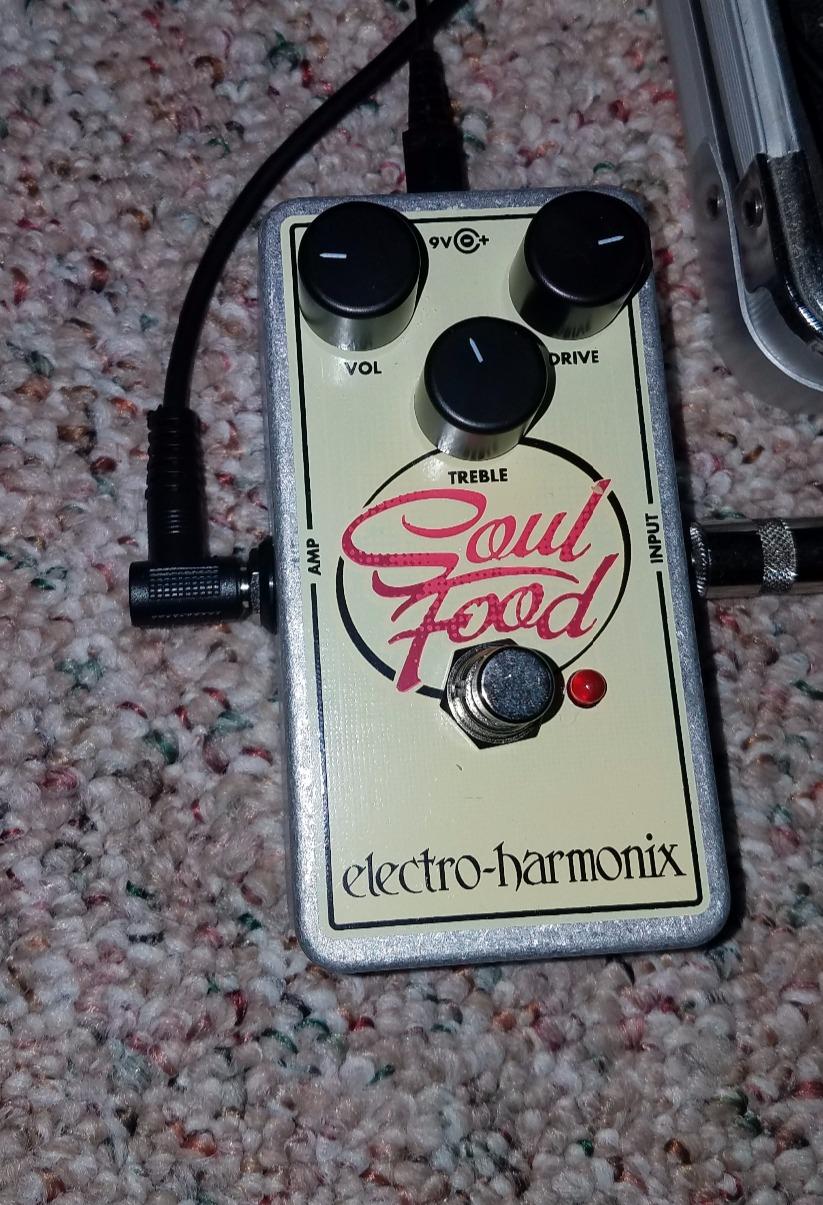
From a circuit perspective, the Soul Food uses a Klon-style topology with soft clipping and a charge pump for increased headroom. The selectable true bypass or buffered bypass modes give you flexibility depending on your signal chain needs. I preferred the buffered mode for long cable runs and true bypass for short chains.
The treble control is useful for dialing in bright or dark sounds, though some users wish for a full three-band EQ. For most players, the single tone control is sufficient, especially since the pedal is designed to preserve your existing tone rather than reshape it.
Who Should Buy the Soul Food
If you are buying your first transparent overdrive, the Soul Food is the obvious choice. It delivers 90% of the Klon experience at a fraction of the cost, giving you a reference point for what transparent drive should sound like. From there, you can decide whether to upgrade to a boutique option.
It is also ideal for players on a budget who refuse to compromise on tone quality. Many gigging musicians use the Soul Food as their primary drive pedal and never feel the need to upgrade.
What to Watch Out For
Some users report a noticeable pop when engaging the pedal with the drive turned up. This is a known characteristic and not a defect, but it can be annoying in quiet passages or studio situations. The lack of bass and mid controls limits your ability to shape the EQ, so you are relying on your amp’s tone stack for fine adjustments.
Stock availability can be intermittent since this is a popular pedal. If you see it in stock, grab it.
5. JHS 3 Series Overdrive – Boutique Heritage at Entry-Level Pricing
JHS 3 Series Overdrive
Made in Kansas City USA
Gain toggle switch
Body/EQ control
9V DC operation
4-year warranty
Pros
- Wide range from boost to medium overdrive
- Gain toggle for two distinct dynamic responses
- Made in the USA with boutique heritage
- Excellent value for a JHS pedal
- Highly responsive to playing dynamics
Cons
- Limited stock availability
- Fewer controls than premium JHS pedals
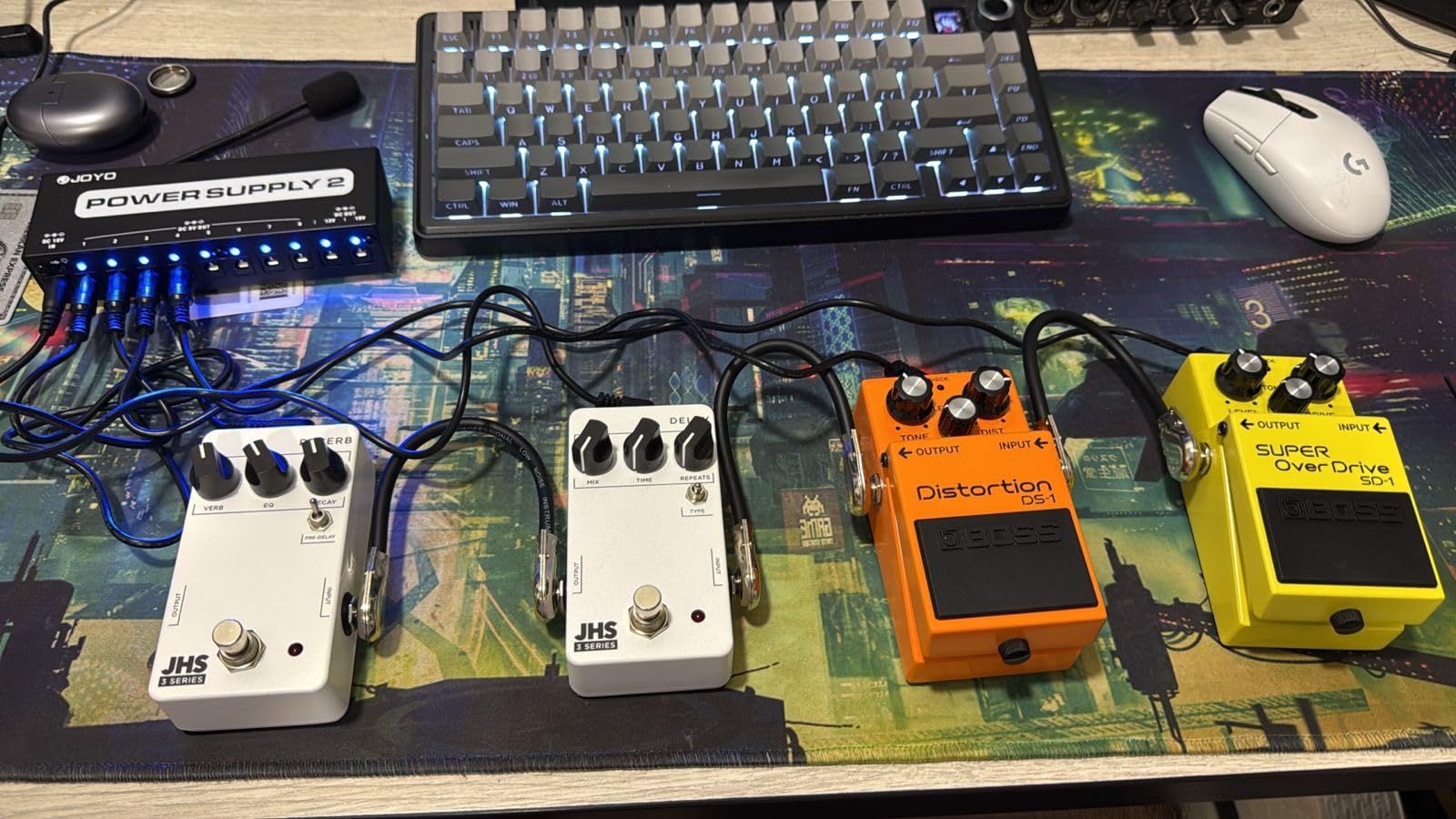
The JHS 3 Series Overdrive brings boutique build quality and design philosophy to an entry-level price point. Made in Kansas City with the same attention to detail as JHS pedals costing twice as much, this is the most reviewed pedal in our lineup at 1,403 reviews with an 80% five-star rate.
What impressed me most during testing is the gain toggle switch. It provides two distinct dynamic responses, one more saturated and compressed, the other more open and crunchy. This effectively gives you two pedals in one, covering both low-gain transparent drive and a more pushed, amp-like character.
The three-knob layout of Volume, Body (EQ), and Drive is intuitive and easy to dial in. I had a great tone within two minutes of plugging it in, which is a refreshing change from pedals that require an engineering degree to operate. The Body control is particularly useful for matching the pedal to different guitars and amps.
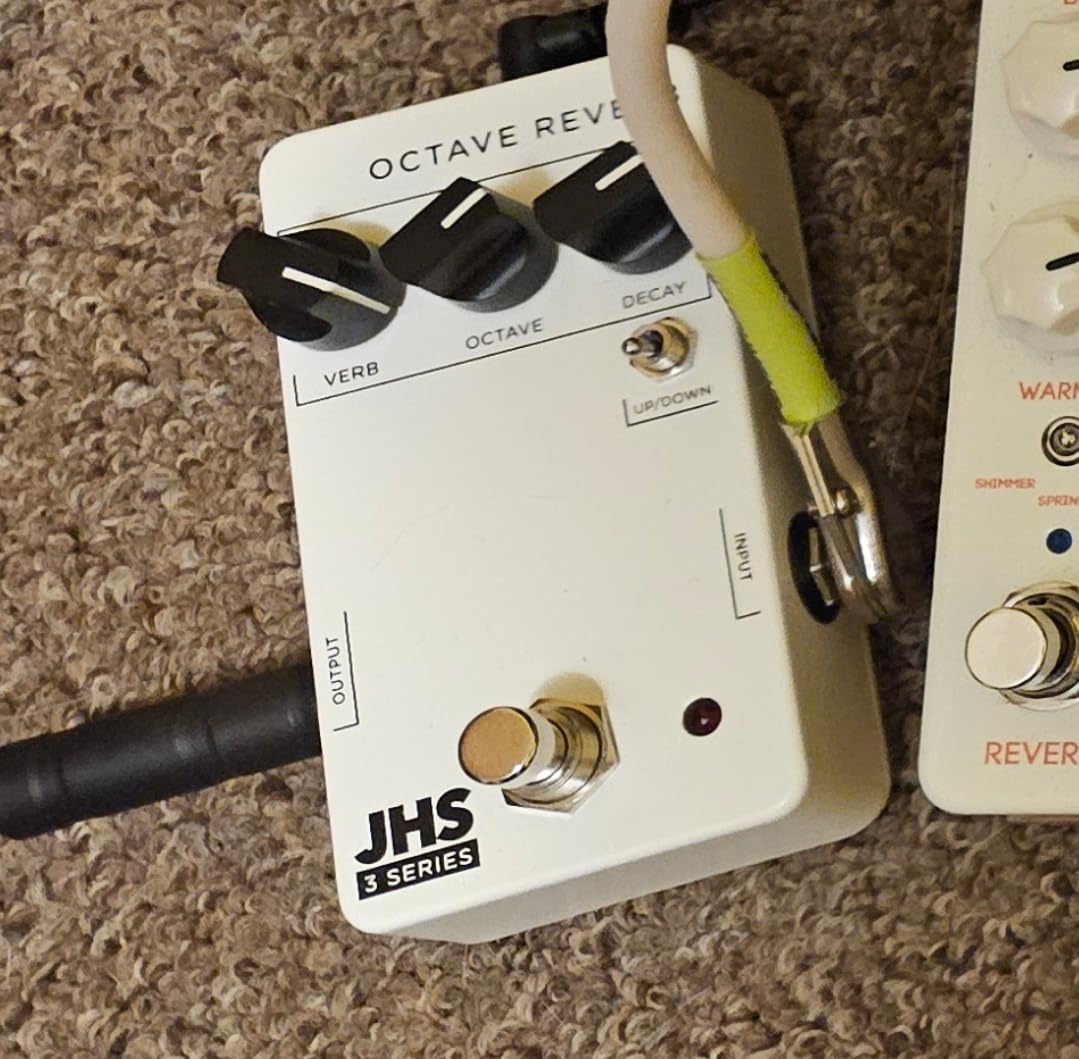
The 3 Series Overdrive is a genuine best-seller, ranking at #2,385 in Musical Instruments and #23 in Guitar Distortion and Overdrive Effects on Amazon. Those numbers reflect real-world satisfaction from thousands of players, not just review-bubble enthusiasm.
JHS offers a 4-year non-transferable warranty with registration, which is exceptional at this price point. The pedal runs on standard 9V DC negative center power and draws only 12mA, making it friendly to any power supply setup.
Who Should Buy the JHS 3 Series Overdrive
This pedal is perfect for players who want JHS quality without paying boutique prices. It is an excellent first overdrive for intermediate players and a reliable workhorse for gigging musicians who need a dependable, great-sounding drive that will not break the bank.
If you are building a pedalboard on a budget and want a transparent drive from a respected builder, the 3 Series Overdrive should be at the top of your list. The gain toggle gives you enough versatility to cover most musical situations.
What to Watch Out For
Stock availability is frequently limited, which speaks to demand but can be frustrating if you need one quickly. The control set is intentionally minimal compared to higher-end JHS pedals, so players who want deep EQ shaping may need to look elsewhere.
While the 3 Series Overdrive is transparent-leaning, it has slightly more character and coloration than the Morning Glory V4. If absolute transparency is your goal, the Morning Glory remains the superior choice within the JHS lineup.
6. Wampler Euphoria V2 – Three Drives in One Boutique Pedal
Wampler Euphoria V2 Natural Transparent Overdrive Guitar Effects Pedal
3 separate gain stages
Pre-gain bass control
Amp-like dynamics
Boutique build
5-year warranty
Pros
- Three completely separate gain stages for versatility
- Dynamic response reacts to volume knob like a tube amp
- Pre-gain bass control adds warmth and sustain
- Easily adds grit without changing core tonality
- Boutique build quality
Cons
- Limited stock availability
- Premium pricing tier
The Wampler Euphoria V2 is the most versatile transparent overdrive in this guide. With three completely separate gain stages, it effectively gives you three distinct overdrive pedals in one enclosure. That versatility, combined with its amp-like dynamics, makes it a favorite among players who need one pedal to cover multiple roles.
The standout feature for me is the pre-gain bass control. Unlike standard tone controls that shape the output, this control shapes the input to the clipping stage. The result is a warmth and sustain that feels organic and tube-like rather than artificially EQ’d. Rolling back your guitar’s volume knob cleans up the drive just like a cranked tube amp, which is the hallmark of a well-designed transparent circuit.
With a 4.7-star rating from 32 reviews and a 77% five-star rate, the Euphoria V2 has fewer reviews than some competitors but maintains excellent user satisfaction. The smaller review count reflects its premium pricing and niche appeal rather than any quality concern.
The three gain stages are accessed via a toggle switch, and each one offers a genuinely different character. One position delivers an open, slightly compressed clean-ish tone. The second adds more grit and sustain. The third pushes into fat, rich overdrive territory that works for solos and heavier rhythm parts.
Who Should Buy the Euphoria V2
The Euphoria V2 is ideal for players who want maximum versatility from a single drive pedal. If you play multiple genres and need one pedal that can cover clean boost, low-gain rhythm, and singing lead tones, this is the most flexible option in our lineup. The amp-like dynamics make it especially appealing for players who use their guitar’s volume knob as a tone control.
Boutique buyers who appreciate quality components and thoughtful circuit design will find the Euphoria V2 rewarding. The 5-year warranty from Wampler provides long-term confidence.
What to Watch Out For
Stock availability is frequently limited, often with only a handful of units available at any time. The premium pricing puts it at the top of the budget range for most players. If you only need one type of drive sound, the Euphoria’s versatility may be overkill.
The pre-gain bass control has a learning curve. It interacts with the gain stage in ways that take time to fully understand, so plan to spend several hours experimenting before gigging with it.
7. Greer Lightspeed Organic Overdrive – The Modern Classic
Greer Amps Lightspeed Organic Overdrive Guitar Pedal
Organic overdrive circuit
True bypass switching
Rich harmonics
Compact size
Lifetime warranty to original owner
Pros
- Very natural sounding overdrive that blends with amp tone
- Rich harmonics with smooth clipping
- Highly sensitive to pick attack
- Stacks well with other drive pedals
- Excellent clean boost capabilities
Cons
- Premium pricing for a 3-knob pedal
- Control interplay requires learning the pedal
- Subtle effects may be replicated by cheaper alternatives
The Greer Lightspeed has achieved modern-classic status among transparent overdrive enthusiasts. Frequently recommended on r/guitarpedals as the most transparent drive available, it is known for adding grit and density to your tone without covering up the character of your amp.
My first impression of the Lightspeed was how organic it feels. The overdrive blends with your guitar and amp tone in a way that makes it difficult to tell when the pedal is on. That is exactly what a transparent drive should do. Rich harmonics fill out the sound, and the smooth clipping feels musical rather than artificial.
The Lightspeed is exceptionally sensitive to pick attack. Light picking produces a nearly clean tone, while digging in reveals the drive character. This dynamic response makes it feel like an extension of your amp rather than a separate effect. Many users run it as an always-on pedal for exactly this reason.
With a 4.7-star rating from 28 reviews and an 82% five-star rate, the Lightspeed has a smaller but highly enthusiastic user base. It stacks beautifully with boost and drive pedals, and cranking the output control turns it into an excellent clean boost.
Who Should Buy the Greer Lightspeed
The Lightspeed is for tone purists who want the most natural-sounding overdrive available. It is ideal for players who run their amp at the edge of breakup and want a pedal that simply enhances that sound. Country, blues, and jazz players who need absolute clarity and note definition will love it.
If you are building a pedalboard around an always-on transparent foundation, the Lightspeed is one of the best choices you can make. It pairs with virtually any guitar and amp combination without imposing its own character.
What to Watch Out For
The Lightspeed is the most expensive pedal in this lineup on a per-feature basis. Some reviewers feel the price is steep for a 3-knob pedal with no toggles or extra features. The control interplay is touchy and requires time to master, since the three knobs interact in complex ways.
The subtle nature of the Lightspeed means some players question whether cheaper alternatives can achieve similar results. If you need dramatic, obvious overdrive, this is not the right pedal. The Lightspeed excels at nuance, not aggression.
Some users have noted that the pedal housing reportedly changed from die-cast aluminum to bent sheet aluminum in recent production runs. This does not affect the sound but may impact long-term durability perceptions.
8. MXR Sugar Drive – Compact Klon Character With a Built-In Buffer
MXR® Sugar Drive™ Pedal
Klon-style circuit
Built-in clean buffer
Compact MXR enclosure
Blend control
9V operation
Pros
- Diverse tonal range from boost to overdrive
- Built-in clean buffer circuit
- Dead quiet circuit operation
- Compact size perfect for pedalboards
- Versatile across multiple genres
Cons
- Does not sound exactly like a Klon Centaur
- Can be bright with certain dark amps
- Some users find it redundant with existing drives
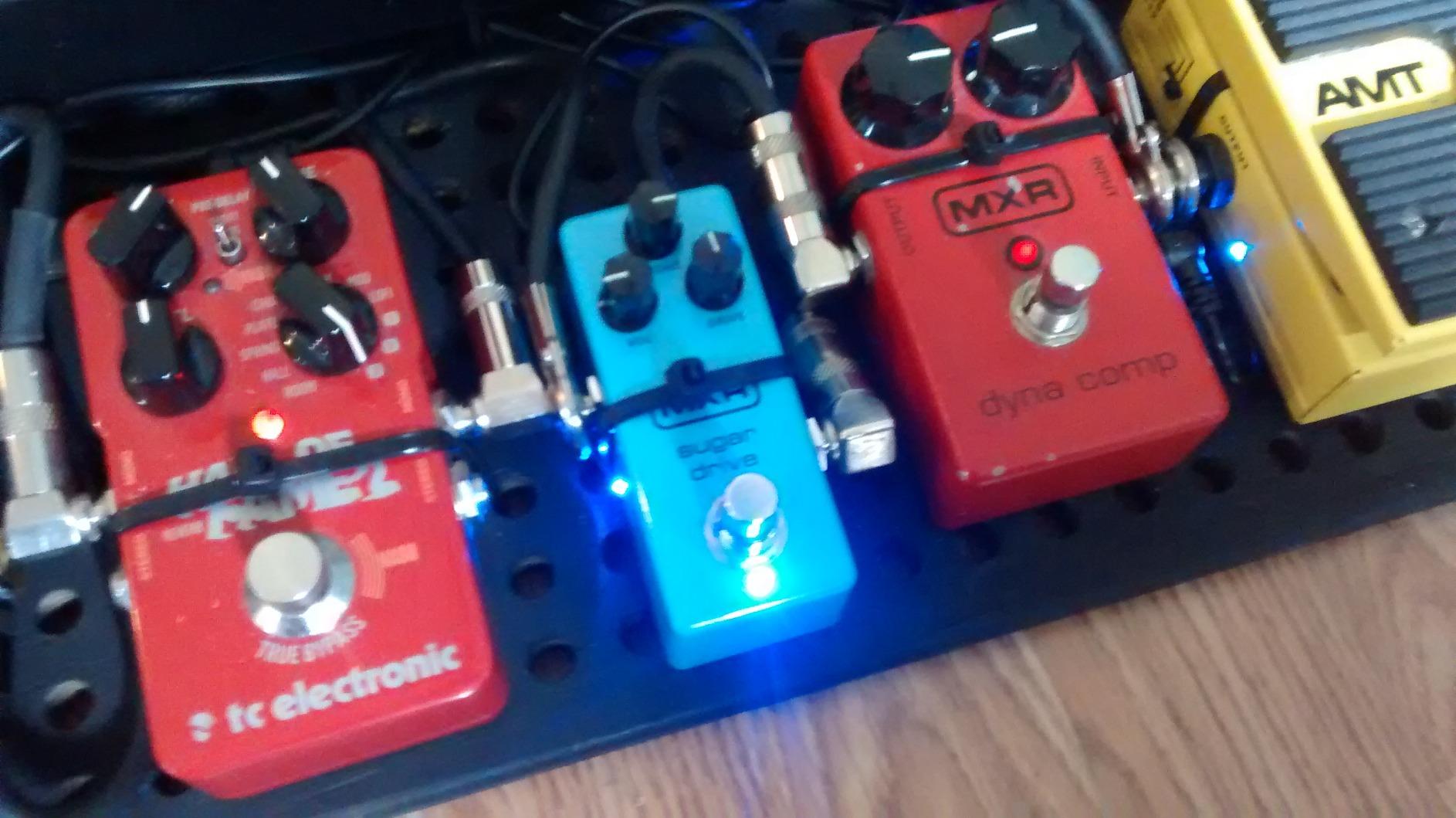
The MXR Sugar Drive is based on a rare and elusive overdrive circuit, and MXR has packed it into their compact mini enclosure with a built-in buffer. With 127 reviews and a 76% five-star rate, it has earned a strong reputation as a versatile, transparent drive that works across genres from death metal to worship music.
I tested the Sugar Drive with a Telecaster through a slightly crunchy amp and was impressed by how well it blended with the existing tone. The clean signal blend maintains your guitar’s personality while adding just enough drive to push the amp into sustain. The built-in buffer keeps your signal strong through long cable runs, which is a genuine feature rather than a compromise.
The circuit is dead quiet, which is a refreshing change from some drives that introduce hiss or noise. This makes the Sugar Drive suitable for studio use and recording situations where noise floor matters. The compact size means it fits on even the most crowded pedalboards.
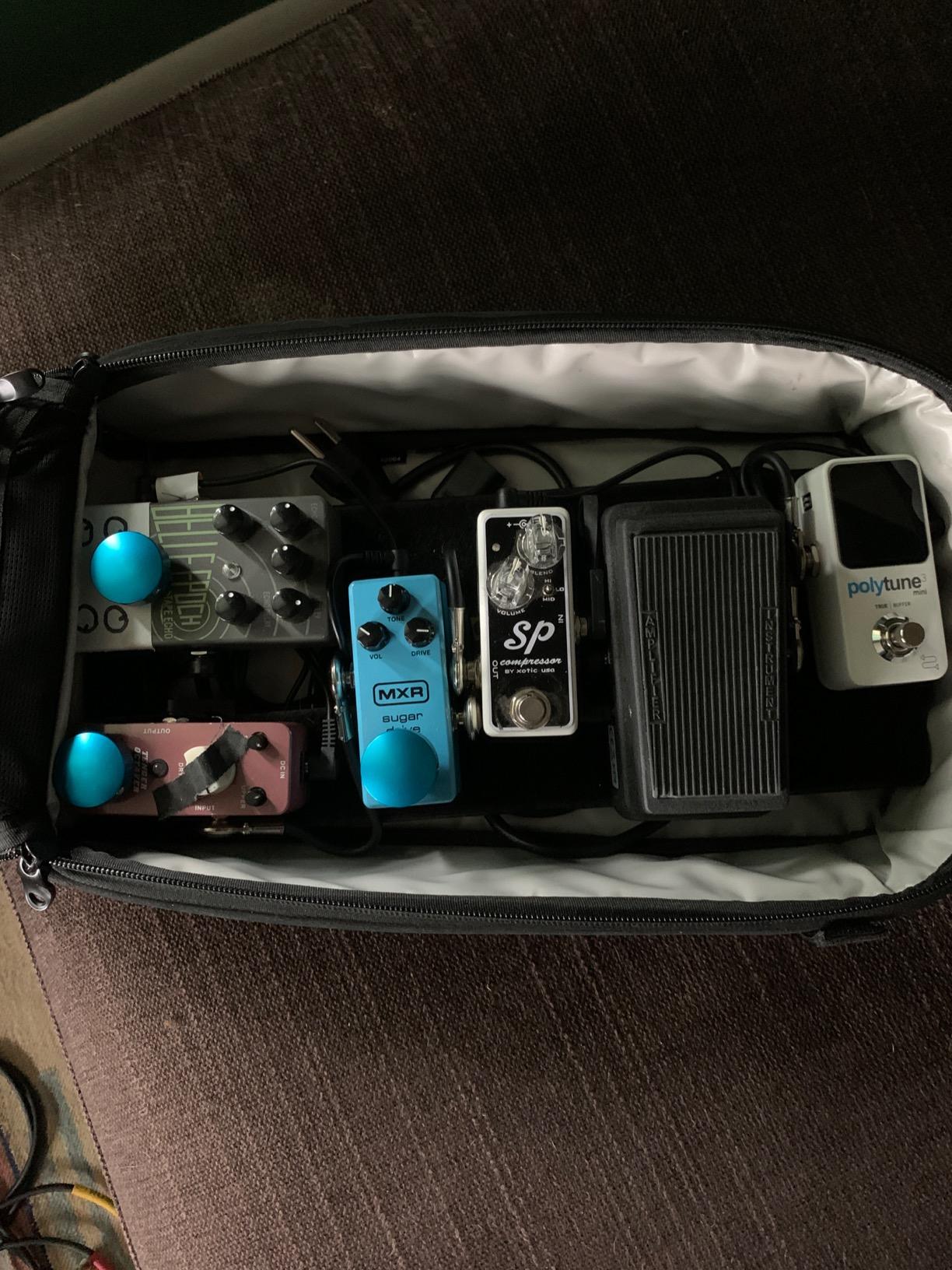
From a tonal perspective, the Sugar Drive sits somewhere between the Tumnus and the Timmy. It has more midrange character than the Timmy but less than the Tumnus, making it a versatile middle-ground option. The creamy breakup works particularly well for blues and rock lead playing.
One thing to note is that the Sugar Drive is not a pure Klon Centaur clone. Some users expected exact Klon replication and were disappointed. However, most agree that it stands on its own as an outstanding drive pedal with its own distinct character.
Who Should Buy the Sugar Drive
The Sugar Drive is ideal for players who want Klon-inspired character in a compact, pedalboard-friendly enclosure. The built-in buffer makes it especially useful for players with long signal chains or multiple true-bypass pedals. It works well across genres, making it a great choice for gigging musicians who play diverse setlists.
If you play worship music, blues, or rock and need one versatile drive that can cover multiple roles, the Sugar Drive is an excellent option. The clean blend ensures your core tone always comes through.
What to Watch Out For
The Sugar Drive can sound bright with certain dark amps, so you may need to adjust your amp’s tone controls to compensate. Some users find it redundant if they already own a Tumnus or Soul Food, since there is tonal overlap between these Klon-inspired circuits.
The compact housing means fewer controls than full-sized alternatives. Players who want deep EQ shaping should look at the Timmy or Euphoria V2 instead.
9. DOD Looking Glass – Unique EQ Architecture for Tone Shapers
Digitech DOD-LOOKINGGLASS Looking Glass Overdrive Pedal
Circuit by Christopher Venter
Dual gain stages
Input filter control
Hybrid bass and treble controls
Glassy transparent tone
Pros
- Glassy transparent tone with beautiful high-end ring
- Dual gain stages via toggle switch
- Hybrid pre and post gain bass and treble controls
- Input filter tames overly-bright guitars
- Sensitive to playing dynamics
Cons
- Potential noise issues with some power supplies
- Lower average rating than competitors
- Limited stock availability
The DOD Looking Glass is the most unique pedal in this lineup. Designed by Christopher Venter of Shoe Pedals, it features a hybrid EQ architecture with pre-gain and post-gain bass and treble controls, plus an input filter that lets you tame overly-bright guitars before they hit the drive circuit.
The glassy transparent tone is the Looking Glass’s signature. Highs ring beautifully without becoming harsh or fizzy. I tested it with a bright Stratocaster and found the input filter genuinely useful for dialing back ice-pick treble before it ever reaches the drive stage. That is a feature no other pedal in this lineup offers.
Dual gain stages are selectable via a toggle switch, giving you two distinct overdrive characters. The range goes from clean boost to vintage amp breakup, covering most low-to-medium gain applications. The pedal stacks well with other drives, making it a flexible addition to an existing pedalboard.
With a 4.2-star rating from 47 reviews and a 64% five-star rate, the Looking Glass has the lowest average rating in this batch. This reflects its specialized nature and some reported quality issues rather than fundamental tone problems. Most negative reviews cite noise or hiss that may be power-supply related, and one reviewer reported a defective footswitch.
Who Should Buy the DOD Looking Glass
The Looking Glass is ideal for tone shapers who want deep EQ control and unique features not found on other transparent drives. The input filter makes it especially useful for players with bright guitars like Telecasters or Stratocasters who need to tame harshness before adding drive.
If you enjoy experimenting with gain staging and want a pedal that rewards careful tweaking, the Looking Glass offers more tonal sculpting options than any other pedal in this lineup. The dual gain stages and hybrid EQ give you enormous flexibility.
What to Watch Out For
The 4.2-star average rating is the lowest in our test pool, and some users have reported noise or hiss issues that appear to be related to power supply compatibility. Use a quality isolated power supply to minimize these problems. One reviewer reported a defective footswitch, though this appears to be an isolated incident.
Stock availability is extremely limited, often with only one unit available at a time. The pedal does not produce heavy distortion, so players seeking higher-gain tones should look elsewhere. The learning curve for the hybrid EQ system is steeper than simpler three-knob designs.
10. MXR GT-OD Overdrive – Classic American Tone at a Working Price
MXR® GT-OD
Classic MXR green overdrive
Made in USA
Analog circuit
9V operation
Traditional voicing
Pros
- Classic MXR green overdrive tone
- Made in the United States
- Versatile control layout
- Good value at entry pricing
- Solid analog circuit design
Cons
- Less transparent than boutique alternatives
- Some users find it too mid-focused
- Limited stock availability
The MXR GT-OD is the most affordable pedal in this lineup and offers classic MXR overdrive tone in a road-tested package. Made in the United States with an analog circuit design, it delivers a more traditional overdrive voicing compared to the transparent boutique options in this guide.
I want to be transparent about where the GT-OD fits in the transparent overdrive conversation. It is less transparent than the Morning Glory, Timmy, or Lightspeed. The GT-OD has a mid-focused character that some players love and others find too colored for true transparent applications. However, at this price point, it offers excellent value and a versatile sound that works for a wide range of musical styles.
With 63 reviews and a 71% five-star rate, the GT-OD has earned solid user satisfaction. Reviewers consistently praise its classic green MXR tone, solid construction, and versatility. The 4.6-star average rating matches or exceeds pedals costing twice as much.
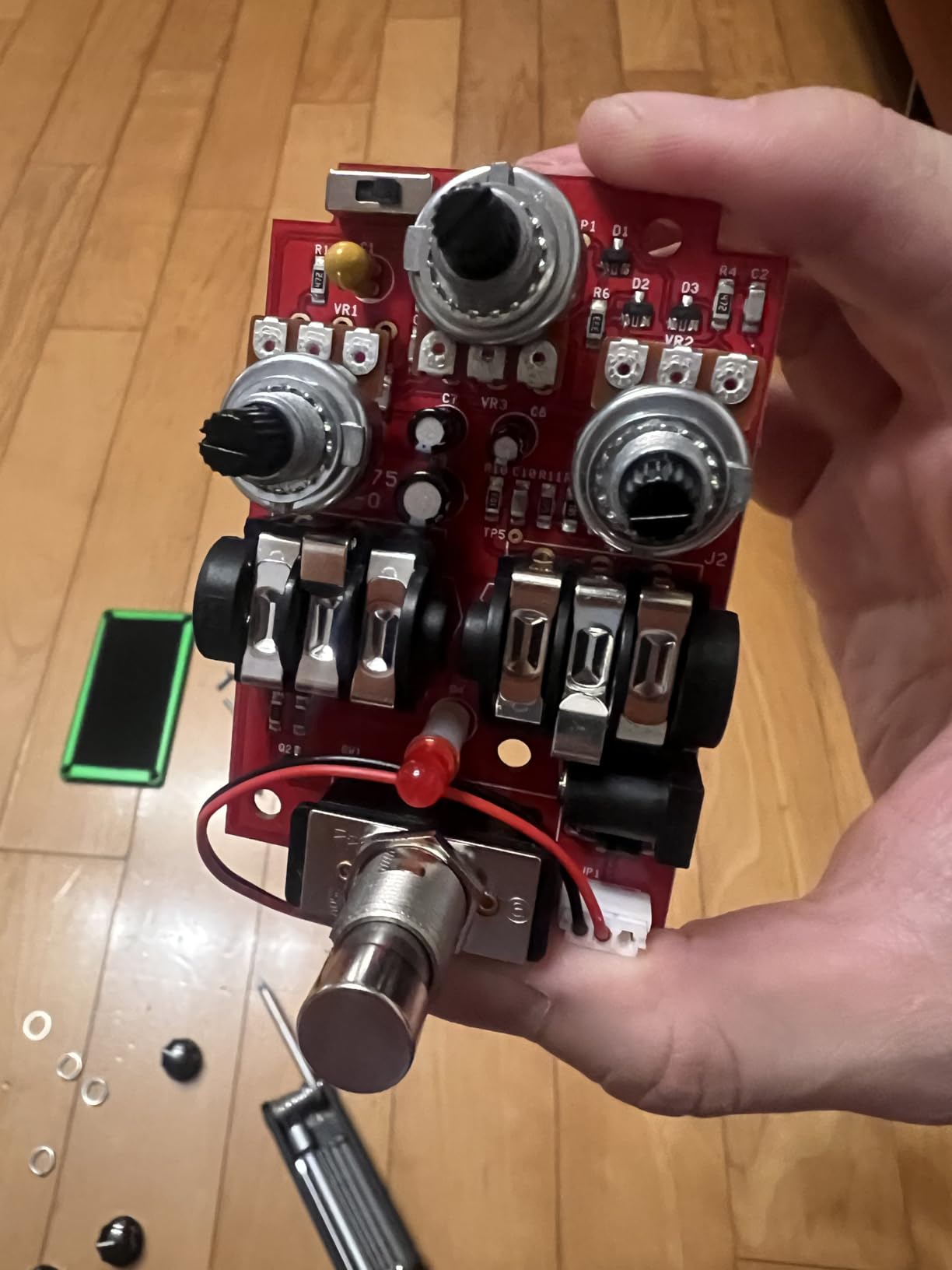
The control layout includes Volume, Tone, and Drive knobs plus a toggle switch for different clipping characteristics. This gives you more tonal variety than a basic three-knob design. The pedal can be powered by battery or adapter, providing flexibility for different gigging situations.
For players seeking an entry point into overdrive pedals without committing to boutique pricing, the GT-OD is a sensible choice. It may not satisfy tone purists who demand absolute transparency, but it delivers a genuinely useful and musical overdrive sound.
Who Should Buy the MXR GT-OD
The GT-OD is ideal for beginners and intermediate players who want a quality overdrive pedal without spending boutique money. It is also a great choice for guitarists who actually prefer some midrange character in their drive rather than pure transparency. The made-in-USA build quality adds value at this price point.
If you play blues, rock, or country and need a dependable workhorse drive pedal, the GT-OD covers all the basics. It is the kind of pedal you can gig with for years without feeling the need to upgrade.
What to Watch Out For
The GT-OD is not a truly transparent overdrive in the strictest sense. It has a mid-focused character that colors your tone more than the other pedals in this guide. If absolute transparency is your goal, look at the Timmy, Lightspeed, or Morning Glory instead.
Stock availability is limited, often with only a handful of units available. Some users may find the midrange focus too pronounced for certain genres or amp combinations.
How to Choose the Right Transparent Overdrive Pedal
Choosing the best transparent overdrive pedal for your rig depends on several factors. Let us break down the key considerations that should guide your decision.
Understanding Circuit Types
Transparent overdrive pedals generally fall into three circuit families. Klon-inspired circuits like the Soul Food, Tumnus, and Sugar Drive offer a sweet midrange character with extended headroom. Bluesbreaker-style circuits like the Morning Glory provide exceptional clarity and chime. Timmy-style circuits with cut-only EQ offer maximum transparency with minimal coloration.
Each circuit type has its own personality. Klon circuits tend to be slightly more colored but cut through mixes beautifully. Bluesbreaker circuits are the most transparent but may not push an amp as hard. Timmy circuits give you surgical control but require patience to dial in.
True Bypass vs Buffered Bypass
This is one of the most debated topics in the pedal community. True bypass means the pedal’s circuit is completely removed from your signal chain when bypassed, preserving tone purity. Buffered bypass means a buffer circuit remains active when bypassed, which preserves signal strength over long cable runs.
For transparent overdrives, the choice matters. If you have a long signal chain with many true-bypass pedals, a buffered bypass pedal like the Tumnus V2 can actually improve your overall tone by maintaining signal strength. If you have a short chain with quality cables, true bypass pedals like the Lightspeed ensure zero coloration when bypassed.
Some pedals, like the Soul Food, offer switchable bypass modes so you can choose based on your specific needs. This is an underrated feature that adds genuine flexibility.
Soft Clipping vs Hard Clipping
Soft clipping circuits produce a smoother, more compressed overdrive that mimics the sound of a tube amp being pushed into saturation. Hard clipping circuits produce a more aggressive, distorted sound with sharper edges. Transparent overdrives almost universally use soft clipping for their smooth, musical character.
All 10 pedals in this guide use soft clipping to varying degrees. The Morning Glory and Lightspeed are among the smoothest, while the Looking Glass and Euphoria V2 can get slightly more aggressive in their higher gain modes.
Dialing in Transparent Tone Step by Step
Here is the process I recommend for setting up a transparent overdrive. Start with all controls at noon. Set your amp to the edge of breakup, where it is just starting to distort when you play hard. Set the pedal’s drive to minimum and the volume to match your bypassed volume. Gradually increase the drive until you hear the pedal enhancing your tone rather than replacing it. Finally, adjust the tone or EQ controls to compensate for any brightness or darkness.
The goal is to make the pedal sound like your amp, just more of it. If you can hear the pedal’s own voice prominently, you have too much gain or the wrong EQ settings for your rig.
Guitar Type Pairings
Single-coil guitars like Stratocasters and Telecasters pair beautifully with Bluesbreaker-style circuits like the Morning Glory, which preserves their bell-like clarity. Humbucker-equipped guitars like Les Pauls work well with Klon-style circuits like the Tumnus and Soul Food, which add midrange presence and cut.
For dark-sounding guitars or amps, look for pedals with brightness controls or input filters like the Looking Glass. For bright rigs, the Morning Glory’s bright cut switch or the Timmy’s treble control can tame harshness effectively.
Stacking Transparent Overdrives
Stacking two transparent overdrives is a popular technique for building complex, layered gain tones. The general approach is to use a lower-gain transparent pedal as your foundation and a higher-gain or more colored pedal on top. The Morning Glory into a Tumnus is a classic combination that provides everything from clean boost to saturated lead tones.
When stacking, set the first pedal to provide your base rhythm tone and the second to push that tone into lead territory. Keep the gain on both pedals moderate to avoid muddying the signal. The goal is additive gain staging, not multiplicative distortion.
Signal Chain Placement
Transparent overdrives typically go after your tuner and wah but before modulation effects like chorus and delay. If you use multiple drives, place lower-gain pedals first and higher-gain pedals later in the chain. Boost pedals should generally go last in your drive section.
If you are using a transparent overdrive to push your amp into breakup, place it as close to the beginning of your chain as practical. This ensures the cleanest possible signal hits the pedal before it shapes and boosts the output.
FAQs
What is the best transparent overdrive pedal?
The JHS Morning Glory V4 is our top pick for the best transparent overdrive pedal, thanks to its Bluesbreaker circuit that preserves your amp’s natural character while adding warmth and touch response. The Wampler Tumnus V2 and Greer Lightspeed are also excellent choices depending on your budget and tonal preferences.
What is a good budget friendly transparent overdrive pedal?
The Electro-Harmonix Soul Food is the best budget transparent overdrive pedal, offering Klon Centaur-inspired tone at a fraction of boutique pricing. At under $100 with an included power supply and 621 positive reviews, it delivers exceptional value. The JHS 3 Series Overdrive is another excellent budget option with boutique heritage.
What is the most transparent overdrive pedal?
The Greer Lightspeed is widely considered the most transparent overdrive pedal available, with many users on Reddit describing it as adding grit and density without covering up the character of the amp. The MXR Timmy, with its cut-only EQ controls, is also regarded as one of the most transparent options on the market.
Are Boss overdrive pedals transparent?
The Boss BD-2 is often called transparent, but many players on forums note that its gain has its own fuzzy character that colors tone. While it is more transparent than a Tube Screamer, most players agree it is not truly transparent in the same way as a Morning Glory, Timmy, or Lightspeed. It sits in a gray area between transparent and colored overdrive.
Best transparent overdrive that can also do high gain?
The Wampler Euphoria V2 is the best transparent overdrive for high-gain applications, thanks to its three separate gain stages that cover everything from clean boost to fat, rich overdrive. The DOD Looking Glass with its dual gain stages and the JHS Morning Glory V4 with its dual gain levels are also versatile options for players who need more than just low-gain drive.
Can I use a transparent overdrive as a clean boost?
Yes, most transparent overdrive pedals work excellently as clean boosts. Set the drive control to minimum or near-zero and increase the volume to push the front end of your amp harder. The Morning Glory V4, Soul Food, Tumnus V2, and Lightspeed all function as outstanding clean boosts while preserving your core tone.
Where should I place a transparent overdrive in my signal chain?
Place your transparent overdrive after your tuner and wah but before modulation effects like chorus, delay, and reverb. If you use multiple drive pedals, put lower-gain transparent drives first and higher-gain or more colored drives later in the chain. Boost pedals should go last in your drive section.
Do I need true bypass or buffered bypass for a transparent overdrive?
It depends on your signal chain. If you have many true-bypass pedals and long cables, a buffered bypass pedal like the Wampler Tumnus V2 can preserve signal strength and improve overall tone. If you have a short chain with quality cables, true bypass pedals like the Greer Lightspeed ensure zero coloration when bypassed. Some pedals like the EHX Soul Food offer switchable modes.
Final Thoughts on the Best Transparent Overdrive Pedals
Finding the best transparent overdrive pedals comes down to understanding what your rig needs and matching it to the right circuit type. The JHS Morning Glory V4 remains our editor’s choice for its unmatched Bluesbreaker transparency and versatile dual-gain design. The EHX Soul Food is the smartest budget purchase you can make, delivering Klon-inspired tone at a price any working guitarist can afford.
For tone purists who demand absolute transparency, the Greer Lightspeed and MXR Timmy are the top contenders. For players who want one pedal to cover multiple roles, the Wampler Euphoria V2 and its three gain stages offer unmatched versatility. And for board-space-conscious musicians, compact options like the Tumnus V2, Sugar Drive, and MXR Timmy deliver big tone in small enclosures.
Whatever you choose, remember that a transparent overdrive should enhance your sound, not replace it. Spend time dialing in your amp first, then add the pedal to complement what you already have. That is the path to a tone that is genuinely yours.