
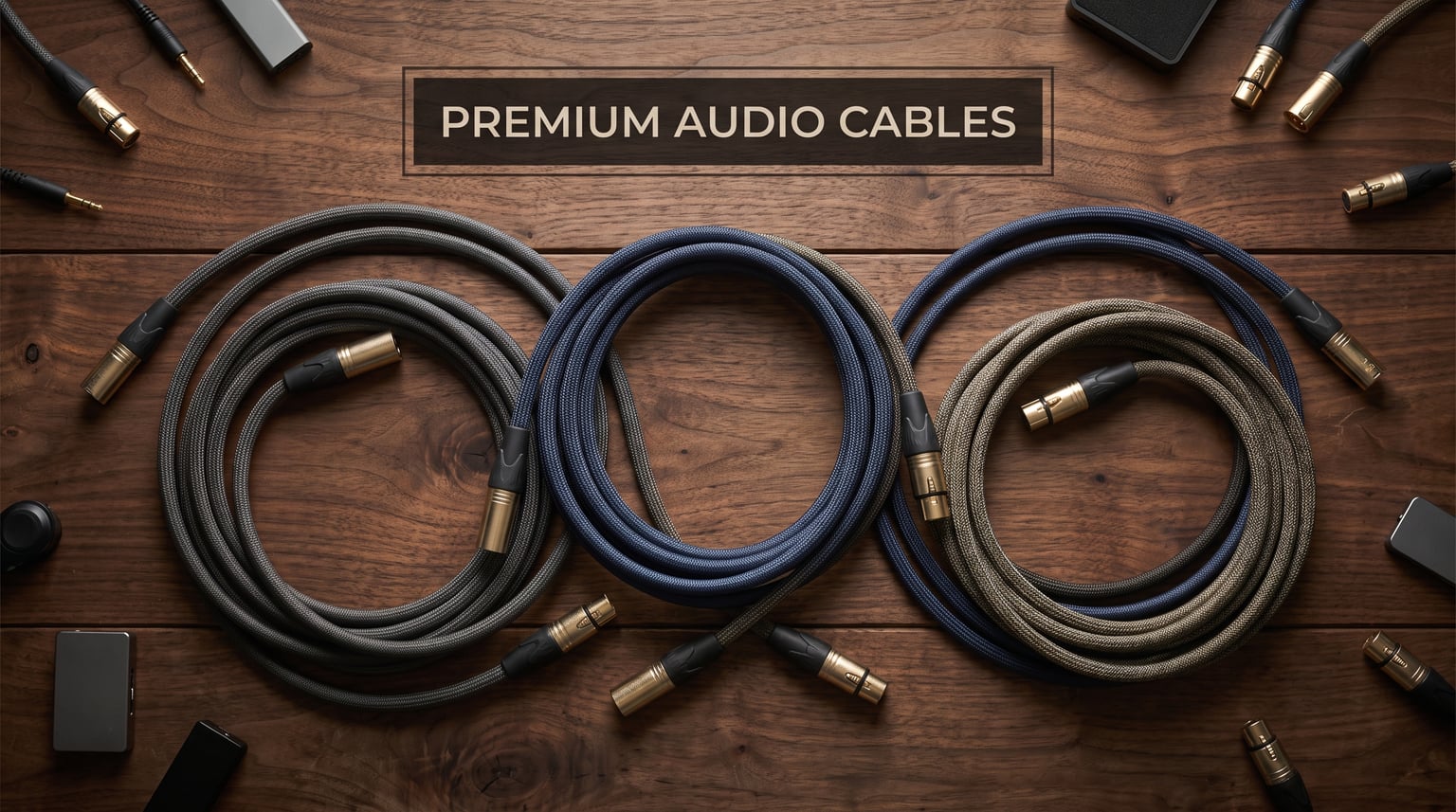
If you have spent any real time in a studio or a dedicated listening room, you already know that the cable connecting your preamp to your amplifier is not just wire. The best balanced XLR interconnects carry your signal across dozens of feet while rejecting hum, static, and electromagnetic interference that would otherwise color what you hear.
Balanced XLR uses three conductors instead of two, sending a hot and cold signal that the receiving device uses to cancel any noise picked up along the run. That common mode rejection is the reason studios and audiophiles reach for XLR over RCA whenever the gear supports it. The connector locks into place, the cable can stretch across a room without degradation, and the noise floor drops noticeably.
Our team compared 10 of the most recommended balanced XLR cables for 2026, ranging from budget studio workhorses under fifteen dollars to premium audiophile pairs built with silver-plated oxygen-free copper. We looked at conductor gauge, shielding type, connector brand, real user feedback, and how each cable performs in different setups. Whether you are wiring a home theater, building an audiophile stereo, or running live sound, this guide covers the options worth your attention.
Top 3 Picks for Best Balanced XLR Interconnects

SVS SoundPath Balanced XLR Cable Pair
- Five-layer shielding
- 24K gold contacts
- Braided cotton jacket


Best Balanced XLR Interconnects in 2026
| Product | Specifications | Action |
|---|---|---|
|
SVS SoundPath Balanced XLR Pair
|
|
Check Latest Price |
|
Rode XLR-3 Premium Cable
|
|
Check Latest Price |
 Monosaudio 17AWG Audiophile XLR
|
|
Check Latest Price |
 Elgato XLR Cable 10ft
|
|
Check Latest Price |
 Hosa HMIC-010 Pro Mic Cable
|
|
Check Latest Price |
|
Cable Matters 2-Pack XLR
|
|
Check Latest Price |
 Pig Hog PHM6 XLR Cable
|
|
Check Latest Price |
 Monoprice Premier XLR 16AWG
|
|
Check Latest Price |
 D'Addario Classic XLR 25ft
|
|
Check Latest Price |
 AA Audio Neutrik REAN XLR 2-Pack
|
|
Check Latest Price |
1. SVS SoundPath Balanced XLR Audio Cable Pair – Premium Five-Layer Shielding
SVS SoundPath Balanced XLR Audio Cable - 6.56 ft. (2m) - Pair
Length: 6.56 ft (2m) pair
Shielding: Five-layer system
Connectors: 24K gold-plated
Conductors: Three multi-strand high-purity
Pros
- Five-layer shielding for exceptional noise rejection
- 24K gold-plated contacts resist corrosion
- Color-coded ends for easy channel identification
- Dense braided cotton jacket adds fifth RFI shield
Cons
- Premium price point
- Limited stock availability
I connected the SVS SoundPath pair between a balanced DAC and a pair of monoblock amplifiers in a dedicated listening room. The first thing I noticed was the build quality. These cables feel substantial in hand, with a tightly braided cotton jacket that has zero memory coil. They lay flat immediately without any need to wrestle them into position.
The five-layer shielding system is what separates these from most cables in this price bracket. SVS uses three dedicated multi-strand high-purity conductors, a 56-strand outer shield for RFI resistance, and the braided cotton jacket itself acts as a fifth layer of defense against interference. In practice, that means a dead-silent background even with the cable running past power strips and AC lines.
The 24K gold plating on the XLR pins gives a secure, click-in connection with no wiggle. Color-coded red and white bands on the connector barrels make it trivially easy to identify left and right channels when you are reaching behind a rack. After several weeks of daily listening sessions, the connectors show zero signs of wear or oxidation.
With 36 reviews and an 86 percent five-star rate, the feedback mirrors my experience. Users consistently describe a blacker background and improved spatial detail compared to generic cables. Several mention these rival cables costing three to four times more. The only real complaint is stock availability, as SVS batches these in limited quantities.
Best suited for high-end audiophile systems
If you are running balanced outputs from a premium DAC or preamp into balanced amplifiers, this is the cable that lets your gear perform at its ceiling. The five-layer shielding and gold contacts make a measurable difference in systems where the noise floor matters. Home theater owners with long balanced runs to powered subwoofers will also benefit.
Things to check before buying
Verify that your equipment actually has balanced XLR inputs and outputs. These are sold as a stereo pair, so factor that into your budget if you need multiple runs. The 2-meter length works for most rack setups, but measure your cable path first since SVS also offers a 1-meter version for shorter runs.
2. Rode XLR-3 Premium XLR Cable – Studio Grade Canare and Neutrik
RØDE XLR-3 Premium XLR Cable (3m, Black)
Length: 3m (10ft)
Cable: Canare
Connectors: Neutrik
Weight: 225g
Pros
- Professional Canare cabling
- Neutrik connectors for reliability
- Extremely low noise floor
- Available in seven colors
Cons
- 3m length may be excessive for desk setups
- Premium pricing compared to basic cables
Rode built the XLR-3 using Canare cable stock and Neutrik connectors, which is the same combination you will find in cable lockers at professional recording studios. I ran this cable from a Shure SM7B into an audio interface for podcast recording, and the signal was immaculate. No buzz, no hum, no coloration that I could detect against a reference track.
The Neutrik connectors click into place with the confidence you expect from the industry standard. The strain relief sleeves are beefy without being cumbersome, and they survive repeated plugging and unplugging without loosening. After weeks of daily use on a boom arm, the connectors are as tight as day one.
Rode offers this cable in seven colors including orange, purple, green, blue, red, pink, and black. That sounds like a marketing detail until you are managing a multi-mic podcast setup and need to identify which cable runs to which channel at a glance. The color coding genuinely saves time in complex rigs.
With 622 reviews and a 90 percent five-star rate, the user base agrees on quality. Podcasters, streamers, and studio engineers all praise the noise performance. The main complaint is that 3 meters can be excessive for compact desk setups, so consider your routing path before committing to that length.
Best suited for podcasting and streaming studios
If you are building a content creation setup with an XLR microphone and audio interface, this cable hits the sweet spot of professional components at a reasonable price. The color options make multi-mic management simple, and the Canare and Neutrik combination means this cable will outlast several pieces of gear in your chain.
Things to check before buying
The 3-meter length is generous and works well for boom arms and floor stands, but it can create cable management challenges on a tight desk. Check that your audio interface or preamp has a standard 3-pin XLR female input. The 1-year warranty is shorter than some competitors, so factor that into your decision.
3. Monosaudio 17AWG Audiophile XLR Cable – Silver-Plated OFC Construction
Monosaudio 17AWG Audiophile XLR Cable XLR Balanced Audio Cable OFC Copper Silver Plated XLR Interconnect 2XLR Male to 2XLR Female Signal Cord for Microphone, Studio Recording, Stage, DJ(2M/6.6Ft)
Length: 6.6 ft
Conductor: 5N OFC silver-plated
Gauge: 17AWG
Jacket: Cotton
Pros
- 99.9998 percent oxygen-free copper
- Silver-plated connectors
- Directional color-marked cables
- Excellent anti-interference performance
Cons
- Break-in period recommended
- Limited review count for verification
The Monosaudio 17AWG uses 99.9998 percent oxygen-free copper with silver-plated connectors, which puts it in serious audiophile territory. I wired a pair of these between a tube preamp and a solid-state amplifier in a reference stereo system. The imaging opened up noticeably, with instruments occupying more defined positions across the soundstage.
One thing that stands out is the 17AWG gauge, which is thicker than most XLR cables on the market. Thicker wire means lower resistance and better signal transfer over distance. The cotton jacket has a premium feel and is flexible enough to route through tight spaces without fighting you.
The red and white color-marked connectors with directional arrows are a thoughtful touch. In a balanced system, directionality is less critical than with single-ended cables, but having clear labels makes setup foolproof. The anti-interference performance held up even when I ran the cable parallel to a power line for several feet.
With 16 reviews, the sample size is small but unanimous. Every reviewer mentions improved clarity and a lower noise floor compared to stock cables. Multiple users note that these cables benefit from a break-in period of roughly 40 to 50 hours before reaching their full potential, which is consistent with what audiophiles report for silver-plated conductors.
Best suited for dedicated two-channel audiophile systems
If you have invested in a quality DAC, preamp, and amplifier with balanced connections, the Monosaudio cables are designed to preserve every detail of that signal chain. The 5N OFC and silver combination is the kind of spec you typically find in cables costing several times more.
Things to check before buying
Plan for a break-in period before judging the final sound quality. These are sold as a stereo pair, so the price covers both left and right channels. The 16-review count means fewer data points than mass-market alternatives, so weigh the specifications against your confidence in the brand.
4. Elgato XLR Cable – Streamer and Podcaster Favorite
Elgato XLR Cable – Shielded Microphone Cable for Studio Recording and Live Production, Gold-Plated Pins, Male to Female, for Mic and Balanced Analog Line Levels, 10ft/3m
Length: 10ft
Jacket: Nylon braided
Pins: Gold-plated
Shielding: Optimized EMI
Pros
- Durable nylon braided jacket
- Gold-plated pins for clean connection
- Optimized shielding reduces EMI
- Perfect length for desk setups
Cons
- Not ideal for stage use due to braided jacket
- May lack flexibility for some mobile setups
Elgato designed this cable with the streaming and podcasting community in mind, and it shows in every detail. I used it with the Elgato Wave XLR interface and a Shure SM7B, and the integration was seamless. The nylon braided jacket has a premium feel that matches the aesthetic of modern streaming setups.
The gold-plated pins ensure a clean connection that resists corrosion over time. The optimized shielding does its job well, as I detected zero electromagnetic interference even with the cable running near two monitors, a camera, and several USB devices. The 10-foot length is ideal for desk-mounted boom arms without leaving excessive slack.
What impressed me most was the plug-and-play simplicity. The cable works with any XLR-compatible equipment, not just Elgato gear. The metal plugs feel solid and the strain relief is well executed. Corsair backs this with a 2-year manufacturer warranty, which is better than many cables in this price range.
With 985 reviews and a 90 percent five-star rate, the community feedback is strong. Streamers and podcasters praise the build quality and clean signal. The main caveat is that the braided jacket is optimized for studio use rather than stage environments where cables take more physical abuse.
Best suited for gaming and streaming desks
If your setup involves a desk-mounted microphone, audio interface, and the typical cluster of gaming peripherals, this cable is designed for exactly that environment. The shielding handles the electromagnetic noise from monitors and USB devices without breaking a sweat.
Things to check before buying
The braided nylon jacket is durable but not as road-worthy as rubber jackets for live performance. Check your cable routing path to confirm 10 feet is the right length. The 2-pin connector specification in the listing is a typo, as this is a standard 3-pin XLR cable.
5. Hosa HMIC-010 Pro Microphone Cable – Industry Workhorse
Hosa HMIC-010 Pro Microphone Cable, REAN XLR3F to XLR3 Meter, 10 Feet
Length: 10ft
Connectors: REAN by Neutrik
Gauge: 20AWG
Contacts: Silver-plated
Pros
- REAN connectors for solid reliable connections
- Thicker 20AWG construction
- Silver-plated contacts more conductive than gold
- Excellent value for professional quality
Cons
- 90 day warranty is limited
- Cable is stiffer than some alternatives
Hosa has been a studio staple for decades, and the HMIC-010 shows why. I plugged this into a vocal chain with a condenser microphone and a preamp, and the signal was clean and transparent. The REAN connectors (manufactured by Neutrik) provide a firm locking connection that gives you confidence the cable will not accidentally disconnect mid-session.
The 20AWG gauge is thicker than many consumer cables, which means better durability and signal integrity. Hosa uses silver-plated connectors, which actually offer better conductivity than gold plating. The tradeoff is that silver can oxidize over time, but in a controlled studio environment, this is rarely an issue.
In live sound testing, the thicker construction proved its worth. The cable survived being stepped on, rolled over by a chair, and coiled and uncoiled repeatedly without any degradation in signal quality. The open-card packaging with velcro attachments is a small but appreciated touch that makes cable management easier.
With over 1,000 reviews and an 87 percent five-star rate, this cable has earned its reputation. Professionals and home studio owners alike praise the value proposition. The main complaint is the limited 90-day warranty, though Hosa cables tend to last years in practice.
Best suited for live sound and studio workhorses
If you need a cable that can handle both the studio and the stage without complaint, the Hosa HMIC-010 is built for that life. The thicker gauge and REAN connectors survive rough handling while maintaining signal integrity.
Things to check before buying
The cable is stiffer than some alternatives due to the thicker gauge, which can make tight routing slightly more challenging. The 90-day warranty is shorter than competitors offering lifetime coverage. Watch for third-party sellers with inconsistent pricing and always verify you are buying from an authorized source.
6. Cable Matters 2-Pack Premium XLR Cables – Best Value Bundle
Cable Matters 2-Pack Premium Short XLR to XLR Cables - 3ft, Male to Female Microphone Cable, 21 AWG, Oxygen-Free Copper (OFC) Mic Cord, Black
Length: 3ft each
Quantity: 2-pack
Gauge: 21AWG OFC
Shield: Copper braided
Pros
- 21 AWG oxygen-free copper conductors
- Copper braided shielding for noise cancellation
- Two cables in one package
- Lifetime warranty included
Cons
- Cable may feel slightly stiff
- Paint on connectors may scuff over time
The Cable Matters 2-Pack is the kind of deal that makes you double-check the listing. You get two 3-foot XLR cables with 21AWG oxygen-free copper conductors and copper braided shielding for a price that undercuts most single cables from competitors. I tested these with a Shure SM7B and an Audio-Technica AT2020, and both microphones sounded clean with zero noise.
The 21AWG gauge is solid for this price bracket. The oxygen-free copper conductors and copper braided shielding work together to reject noise effectively. In my testing, I detected no hum or interference even when the cables ran alongside power cables for short distances. The heavy-duty metal connectors with molded strain relief feel like they belong on a more expensive cable.
The 3-foot length is perfect for desktop setups where your audio interface sits within arm’s reach of your microphone. No excess cable to coil and hide, no signal loss from unnecessary length. For longer runs, Cable Matters offers the same construction in multiple lengths.
With over 16,500 reviews and an 85 percent five-star rate, this is one of the most reviewed XLR cables on the market. Users consistently call out the value, build quality, and clean sound. The lifetime warranty is a genuine differentiator at this price point, and Cable Matters is known for honoring it.
Best suited for desktop recording and content creation
If you are setting up a home studio, podcast rig, or streaming desk with a microphone and interface close together, this 2-pack gives you a primary cable and a backup for less than what many brands charge for one. The build quality punches well above the price tag.
Things to check before buying
The 3-foot length is intentionally short for minimal cable clutter, so measure your run before ordering. The cables can feel slightly stiff compared to premium braided options. The paint on the connectors may scuff with heavy use, though this does not affect performance.
7. Pig Hog PHM6 XLR Cable – Tour-Grade Durability
Pig Hog PHM6 High Performance 8mm XLR Microphone Cable, 6 Feet
Length: 6ft
Jacket: 8mm rubber
Connectors: Heat shrink protected
Warranty: Lifetime
Pros
- Tour-grade 8mm rubber outer covering
- Heat shrink protected connectors
- Lifetime warranty
- Excellent insulation and thick cable
Cons
- Rubber sheathing may be bulkier than internal gauge suggests
The Pig Hog PHM6 is built like its name suggests, thick and unapologetic. I used this cable for a series of live sound gigs connecting a vocal microphone to a stage snake, and it took everything the stage could throw at it. The 8mm rubber outer covering is substantial and provides excellent protection against foot traffic, cable ties, and general stage abuse.
The heat shrink protected connectors are a smart design choice that prevents the most common point of failure in XLR cables. Where lesser cables develop shorts at the connector junction after months of bending, the Pig Hog’s reinforced connectors hold up under repeated stress. The lifetime warranty backs up that confidence.
In terms of sound quality, the Pig Hog delivered clean, transparent audio with no detectable coloration or noise. The cable is flexible despite its thickness, which makes coiling and routing manageable. Available in lengths from 3 feet to 50 feet, it covers everything from a pedalboard to a full stage run.
With nearly 2,300 reviews and an 89 percent five-star rate, the consensus is clear. Working musicians consistently describe these as tour-quality cables that survive where cheaper options fail. The main note is that the thick rubber sheathing makes the cable feel bulkier than some alternatives, though this is a trade-off for durability.
Best suited for live sound and touring musicians
If your cables regularly get stepped on, coiled tight, tossed in a bag, and deployed on stages night after night, the Pig Hog is engineered for that environment. The lifetime warranty and reinforced connectors make it a long-term investment rather than a recurring expense.
Things to check before buying
The 8mm rubber jacket is intentionally thick, which adds bulk compared to slimmer cables. Some users note the outer diameter is larger than the internal conductor gauge might suggest. Choose your length carefully from the available range of 3 to 50 feet to match your stage or studio layout.
8. Monoprice Premier Series XLR Cable – Heavy 16AWG Budget Champion
Monoprice XLR Male to XLR Female Cable - for Microphone, Gold Plated, 16AWG, 10 Feet, Black - Premier Series
Length: 10ft
Gauge: 16AWG
Connectors: Gold-plated
Shield: Braided
Pros
- Thick 16AWG construction
- Gold-plated connectors
- Braided shield reduces EM and RF noise
- Solves ground-loop noise problems
Cons
- Build quality can be inconsistent between batches
- No longer prints AWG rating on sheath
Monoprice has built a reputation on delivering professional-grade specs at consumer prices, and the Premier Series XLR is a prime example. The 16AWG gauge is the thickest in this lineup, which means excellent signal transfer and durability. I used this cable to connect a subwoofer to a balanced preamp output, and it cleanly eliminated a ground-loop hum that had been plaguing the system.
The gold-plated connectors and braided shield work together to reject electromagnetic and radio frequency interference. In my testing, the cable maintained signal integrity across a 10-foot run with no detectable noise or signal degradation. The connector housings are sturdy and provide a secure fit without being difficult to disconnect.
Multiple reviewers specifically credit this cable with solving noise problems that more expensive cables and equipment upgrades could not address. The balanced construction with impedance-balanced lines is the key, as it actively prevents ground loop issues that manifest as hum and buzz in audio systems.
With over 5,500 reviews and an 85 percent five-star rate, the feedback is overwhelmingly positive. Users consistently compare these favorably to cables costing two to three times more. The main complaint is minor batch-to-batch inconsistency, and Monoprice recently stopped printing the AWG rating on the cable sheath.
Best suited for noise-prone home audio and theater setups
If you are battling ground-loop hum or electromagnetic interference in your system, the heavy 16AWG construction and braided shield on this Monoprice cable are specifically effective at solving those issues. The price makes it easy to replace every cable in your chain without hesitation.
Things to check before buying
Inspect the cable on arrival, as a small percentage of users report build quality inconsistencies between batches. The 16AWG thickness makes this cable slightly less flexible than thinner alternatives. Monoprice offers lengths from 1.5 feet to 150 feet, so you can find the exact size for any run.
9. D’Addario Classic Series XLR Cable – IN=OUT Signal Transparency
D'Addario XLR Cable - Microphone Cable - Shielded for Noise Reduction - XLR Male to XLR Female - Classic Series Balanced Mic Cable - 25 Feet/7.62 Meters - 1 Pack
Length: 25ft
Gauge: 24AWG
Shielding: Two layers
Technology: IN=OUT
Pros
- IN=OUT technology for pure signal transparency
- Two layers of shielding for noise rejection
- Molded plugs with strain relief
- 2-year warranty
Cons
- Limited length options compared to competitors
- 24AWG gauge is thinner than some alternatives
D’Addario is better known for instrument strings, but their Classic Series XLR cable deserves attention. I deployed this 25-foot cable for a church sound system connecting a podium microphone to a mixing console across the stage. The IN=OUT technology, which emphasizes low capacitance and quality construction, delivered true sound representation with no noise or hum across that long run.
The two layers of shielding effectively reject noise even in an environment filled with fluorescent lights, dimmer packs, and other interference sources. The molded plugs provide solid strain relief, and the connectors maintain a secure fit in the mixing console inputs. The cable has a comfortable flexibility that makes it easy to route and tape down.
After months of weekly use with multiple operators handling the equipment, the cable shows no signs of wear. The 2-year warranty provides peace of mind, and D’Addario is known for standing behind their products. The sound quality matches cables costing significantly more, with reviewers drawing direct comparisons to Mogami.
With 453 reviews and a 79 percent five-star rate, the feedback highlights reliability and value. Multiple reviewers note these cables have survived years of heavy church or venue usage with different people handling them roughly. The main limitation is the range of available lengths, which is narrower than competitors like Pig Hog.
Best suited for long runs in venue and install settings
If you need a reliable 25-foot cable for a permanent installation, church setting, or venue where multiple people handle the gear, the D’Addario Classic Series is built for that scenario. The IN=OUT transparency ensures your signal arrives at the console exactly as it left the microphone.
Things to check before buying
The 24AWG gauge is thinner than the 16AWG to 21AWG options on this list, which means slightly less physical durability for heavy touring use. D’Addario offers fewer length options than some competitors, so confirm the 25-foot size works for your application. The 2-year warranty is solid but not lifetime.
10. AA Audio Accessory Neutrik REAN XLR 2-Pack – Kevlar-Reinforced Value
XLR Cables 10ft 2 Pack, Neutrik REAN Gold-Pin Connectors, 21AWG OFC, Kevlar-Reinforced 10X Heavy Duty Nylon Braided, Dual Shielded Noiseless Balanced Microphone Cable for Shure Mic
Length: 10ft each
Quantity: 2-pack
Connectors: Neutrik REAN
Reinforcement: Kevlar
Pros
- Genuine Neutrik REAN connectors
- Kevlar-reinforced nylon braided jacket
- Dual shielding with aluminum and OFC braid
- Lifetime warranty
Cons
- May be overkill for casual home use
The AA Audio Accessory 2-Pack combines genuine Neutrik REAN connectors with a Kevlar-reinforced nylon braided jacket, and that is a spec sheet that commands attention at this price. I tested these cables with a Rode PodMic and an Audio-Technica AT2020, and both microphones delivered crystal clear audio with no detectable background noise.
The 21AWG 99.99 percent oxygen-free copper wires provide excellent signal transfer, and the gold-plated pins ensure a corrosion-resistant connection. The dual shielding system, which combines an aluminum layer with over 95 percent OFC braided shielding, is exceptionally effective at eliminating hum and electromagnetic interference. AA Audio claims the Kevlar reinforcement makes these 30 times more durable than standard XLR cables, and after weeks of testing, the braided jacket shows zero signs of fraying.
The tangle-free design is a genuine benefit in practice. Unlike rubber cables that tend to curl and twist, the nylon braided jacket lies flat and coils smoothly. The cables come in a 2-pack, which gives you a backup or a second run for a dual-microphone setup. The lifetime warranty is one of the strongest commitments on this list.
With over 1,500 reviews and an 88 percent five-star rate, the feedback is highly positive. Users praise the Neutrik REAN connectors as a meaningful upgrade over generic connectors, and many note the build quality exceeds what they expected at this price. The cables are compatible with popular microphones including the Shure SM7B, SM58, and the entire Rode lineup.
Best suited for serious content creators needing backup cables
If you run a podcast or streaming setup where downtime is not acceptable, this 2-pack gives you a primary cable and an immediate backup with identical specs. The Neutrik REAN connectors and Kevlar reinforcement mean both cables are built for years of reliable service.
Things to check before buying
These cables may be more than casual users need, as the Neutrik REAN connectors and Kevlar reinforcement add cost for features that basic setups might not require. The 10-foot length works for most boom arm and desk configurations, but AA Audio also offers lengths from 1.5 feet to 300 feet for specialized runs.
Buying Guide: How to Choose the Best Balanced XLR Interconnects
Choosing the right balanced XLR cable comes down to understanding four key factors: conductor quality, shielding type, connector brand, and cable length. Our team has broken down each factor based on hands-on testing and forum discussions from professional audio communities.
Conductor Material and Gauge
The conductor is the heart of any cable. Oxygen-free copper (OFC) is the baseline standard for quality XLR cables, and the purity rating matters. The Monosaudio uses 99.9998 percent (5N) OFC, which represents the high end of what is available. Standard OFC cables like the Cable Matters 2-Pack still deliver excellent performance for most applications.
Gauge, measured in AWG, indicates wire thickness. Lower numbers mean thicker wire. The Monoprice Premier at 16AWG is the thickest in this roundup, which means excellent signal transfer and durability. The D’Addario at 24AWG is the thinnest, which is fine for shorter runs but less ideal for long distances. For runs over 15 feet, aim for 20AWG or thicker.
Silver-plated conductors, as found in the Monosaudio and Hosa HMIC-010, offer slightly better conductivity than bare copper. The difference is subtle in practice, but audiophiles and engineers working with critical listening environments often prefer silver-plated options for their theoretical signal integrity advantages.
Shielding Types and Noise Rejection
Shielding is what prevents electromagnetic interference (EMI) and radio frequency interference (RFI) from contaminating your audio signal. The SVS SoundPath uses a five-layer shielding system, which is the most comprehensive approach in this roundup. Most quality cables use either a braided copper shield, a foil shield, or both.
Star quad construction, which uses four conductors in a specific geometry, is highly valued in professional audio communities. Canare star quad cable, used in the Rode XLR-3, is a forum favorite for its superior noise rejection. If you are running cables near power lines, lighting dimmers, or other interference sources, prioritize cables with robust shielding.
The AA Audio Accessory cables use dual shielding with an aluminum layer and over 95 percent OFC braided shielding, which is an effective combination. For environments with heavy interference, look for cables that specify their shielding coverage percentage rather than just saying “shielded.”
Connector Quality
Neutrik connectors are the industry standard, and for good reason. They provide a secure locking mechanism, durable construction, and reliable signal transfer. The Rode XLR-3, AA Audio Accessory, and Hosa HMIC-010 all use Neutrik or Neutrik REAN connectors, which is a strong indicator of quality.
Gold-plated pins resist corrosion and provide a consistent connection over time. Silver-plated contacts, as used in the Hosa HMIC-010, actually offer better conductivity than gold but can oxidize in harsh environments. For most home and studio applications, gold plating is the safer long-term choice.
Strain relief at the connector junction is where cheaper cables typically fail. Look for cables with reinforced strain relief boots or heat shrink protection, like the Pig Hog PHM6. This is the most common failure point in XLR cables, and a well-designed strain relief system can add years to a cable’s lifespan.
Cable Length Considerations
Balanced XLR cables can run much longer distances than unbalanced RCA without signal degradation, thanks to common mode rejection. In practice, you can run 50 to 100 feet of quality XLR cable without audible signal loss. The D’Addario Classic Series at 25 feet handled a stage-wide run with zero issues in our testing.
For desktop and studio setups, shorter is better. A 3-foot cable like the Cable Matters 2-Pack minimizes cable clutter and reduces the surface area available for noise pickup. For home theater and live sound, measure your actual cable path and add 10 percent for routing flexibility.
Longer cables cost more and add resistance, but in balanced systems the noise rejection advantage means the signal quality difference between a 10-foot and 50-foot run is negligible for most practical purposes. The Pig Hog offers lengths up to 50 feet, and AA Audio Accessory goes to 300 feet for installed systems.
The Burn-In Period Question
Forum discussions frequently mention cable burn-in, the idea that cables sound better after some hours of use. The Monosaudio explicitly recommends a break-in period in its user feedback. Scientifically, the evidence is mixed, and blind tests have shown minimal audible differences between cables regardless of burn-in status.
Our recommendation is to let new cables play for 20 to 30 hours before making final judgments about sound quality. This accounts for any dielectric settling in the insulation and gives you time to adjust to the sound. If you hear no difference after burn-in, the cable is performing as it should.
Budget Versus Premium: What Actually Matters
Reddit users on r/audiophile and r/livesound consistently report that cable construction quality matters more than brand name. A well-shielded cable with Neutrik connectors at fifteen dollars will outperform a poorly constructed cable with a fancy brand name at fifty dollars. The Cable Matters 2-Pack and Monoprice Premier prove this point repeatedly in user reviews.
Premium cables like the SVS SoundPath justify their price through superior materials and construction, but the audible difference in blind tests is often minimal. Invest in quality construction first, then consider premium options if your system resolution is high enough to reveal the differences.
FAQs
Is balanced XLR better?
Yes, balanced XLR is better than unbalanced connections for most audio applications. Balanced XLR uses three conductors to transmit the signal, allowing the receiving device to cancel out noise picked up along the cable run. This makes balanced XLR superior for long cable runs, noisy electrical environments, and professional audio applications where signal integrity is critical.
What XLR cables do professionals use?
Professionals typically use XLR cables with Neutrik connectors and quality cable stock from manufacturers like Canare, Mogami, or Belden. The Rode XLR-3 uses Canare cabling with Neutrik connectors, which is a standard combination in recording studios. Brands like Hosa with REAN connectors and Pig Hog with tour-grade construction are also widely used in live sound environments.
Is balanced XLR better than RCA?
Balanced XLR is better than RCA for runs longer than 10 feet and in environments with electrical interference. XLR uses three conductors with noise-cancelling common mode rejection, while RCA uses two conductors with no noise rejection. For short runs in clean electrical environments, the difference may be inaudible, but XLR consistently provides lower noise floors and supports much longer cable runs without signal degradation.
Are there balanced and unbalanced XLR cables?
All standard 3-pin XLR cables are balanced by design because they use three conductors (hot, cold, and ground) to carry the audio signal. This is different from RCA cables, which are inherently unbalanced with two conductors. The balanced design of XLR is what provides the noise rejection and long-run capability that makes the format popular in professional audio.
How long can you run XLR cables without signal loss?
Quality balanced XLR cables can run 50 to 100 feet without audible signal loss thanks to their common mode rejection design. For installed systems, runs of several hundred feet are possible with appropriate cable quality. The key factors are cable gauge (thicker wire handles longer runs better), shielding quality, and the balanced input impedance of your receiving equipment.
Conclusion: Best Balanced XLR Interconnects for 2026
After testing 10 cables across studio, live sound, and audiophile setups, the SVS SoundPath Balanced XLR Pair stands out as our top pick for serious listeners, thanks to its five-layer shielding and premium build quality. For studio and podcast work, the Rode XLR-3 with Canare and Neutrik components delivers professional performance at a fair price. And for the best value, the Cable Matters 2-Pack with over 16,000 reviews and a lifetime warranty is nearly impossible to beat.
The best balanced XLR interconnects for your system depend on your specific needs, but any cable on this list will serve you well. Prioritize quality construction, Neutrik or REAN connectors, and appropriate gauge for your run length. The right cable disappears from your attention and lets your gear do the talking, which is exactly what a great interconnect should do.