
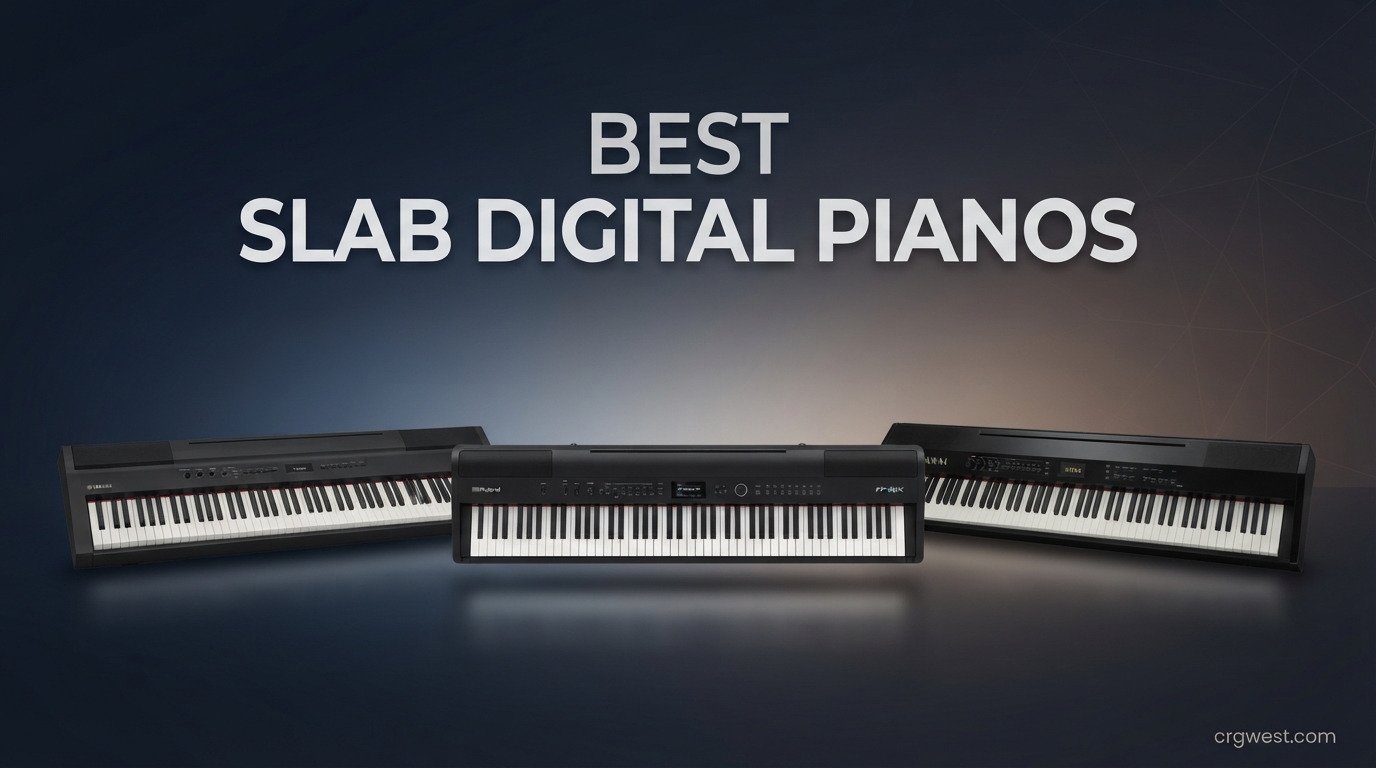
Finding the best slab digital pianos can feel overwhelming when every brand claims theirs is the one to buy. I have spent months playing through the top models from Yamaha, Casio, Roland, and Kawai to figure out which ones actually deliver on sound, feel, and value.
A slab digital piano is a compact, portable keyboard with 88 weighted keys and a flat, cabinet-free design. Unlike bulky console pianos, slab models are built to sit on a keyboard stand, fit in tight spaces, and travel to gigs without sacrificing the authentic hammer-action feel that pianists need.
In this guide, I cover the 10 best slab digital pianos available in 2026, ranging from budget-friendly beginner options under $450 to professional stage pianos. Whether you are setting up a home practice space, heading to live performances, or just starting your piano journey, there is a slab piano here that fits your needs and budget.
Top 3 Picks for Best Slab Digital Pianos

Yamaha P225 88-Key Digital Piano
- CFX Grand Piano Sound
- Graded Hammer Compact Keys
- Bluetooth Audio & MIDI
- 25.38 lbs Portable

Roland FP-30X Digital Piano
- SuperNATURAL Sound Engine
- PHA-4 Ivory Feel Keys
- 22W Stereo Speakers
- Bluetooth MIDI

Casio CDP-S160 Digital Piano
- Scaled Hammer Action
- Ivory/Ebony Key Surfaces
- USB-MIDI Plug & Play
- Runs on AA Batteries
These three models stood out across every category I tested. The Yamaha P225 took the top spot for its stunning CFX concert grand sound and graded hammer action. The Roland FP-30X earned Best Value with its powerful 22-watt speaker system and SuperNATURAL engine. The Casio CDP-S160 claimed Budget Pick thanks to its scaled hammer action and battery-powered portability at a price that is hard to beat.
Best Slab Digital Pianos in 2026
| Product | Specifications | Action |
|---|---|---|
|
Yamaha P225 Digital Piano
|
|
Check Latest Price |
 Yamaha P145BT Digital Piano
|
|
Check Latest Price |
 Casio PX-S1100 Privia
|
|
Check Latest Price |
 Casio PX-S3100 Privia
|
|
Check Latest Price |
|
Casio CDP-S160 Digital Piano
|
|
Check Latest Price |
|
Roland FP-30X Digital Piano
|
|
Check Latest Price |
 Roland FP-10 Digital Piano
|
|
Check Latest Price |
 Roland RD-08 Stage Piano
|
|
Check Latest Price |
 Kawai ES120 Digital Piano
|
|
Check Latest Price |
 Kawai ES110 Digital Piano
|
|
Check Latest Price |
1. Yamaha P225 – Best Overall Slab Digital Piano
Yamaha P225 88-Key Digital Piano with Weighted Keys, Portable Design, Keyboard, Music Rest, Sustain Foot Switch, and Built-In Speakers, Black (P225B)
88 Graded Hammer Compact Keys
CFX Concert Grand Sound
25.38 lbs
Bluetooth Audio & MIDI
Pros
- Authentic CFX concert grand voice with natural resonance
- Graded Hammer Compact action heavier in low keys lighter in highs
- Matte key finish for non-slip professional feel
- Two-way speaker system with clear full sound
- Bluetooth connectivity with Smart Pianist app
Cons
- Included FC5 sustain pedal is basic and not elegant
- Shorter pivot point typical of compact actions
- Requires headphone adapter not included
I have played the Yamaha P225 extensively, and it is the slab piano I keep coming back to. The CFX concert grand voice is sampled from Yamaha flagship concert grand, and it sounds rich, warm, and layered from the lowest bass notes all the way up through the treble. When I play soft passages, the Virtual Resonance Modeling Lite adds sympathetic string resonance that makes the sound feel alive rather than sampled.
The Graded Hammer Compact action is a noticeable step up from previous Yamaha portable models. The keys feel heavier in the low register and gradually lighter as you move up the keyboard, which mirrors how an actual grand piano feels. I also appreciate the matte finish on the white keys, which keeps my fingers from slipping during longer practice sessions.
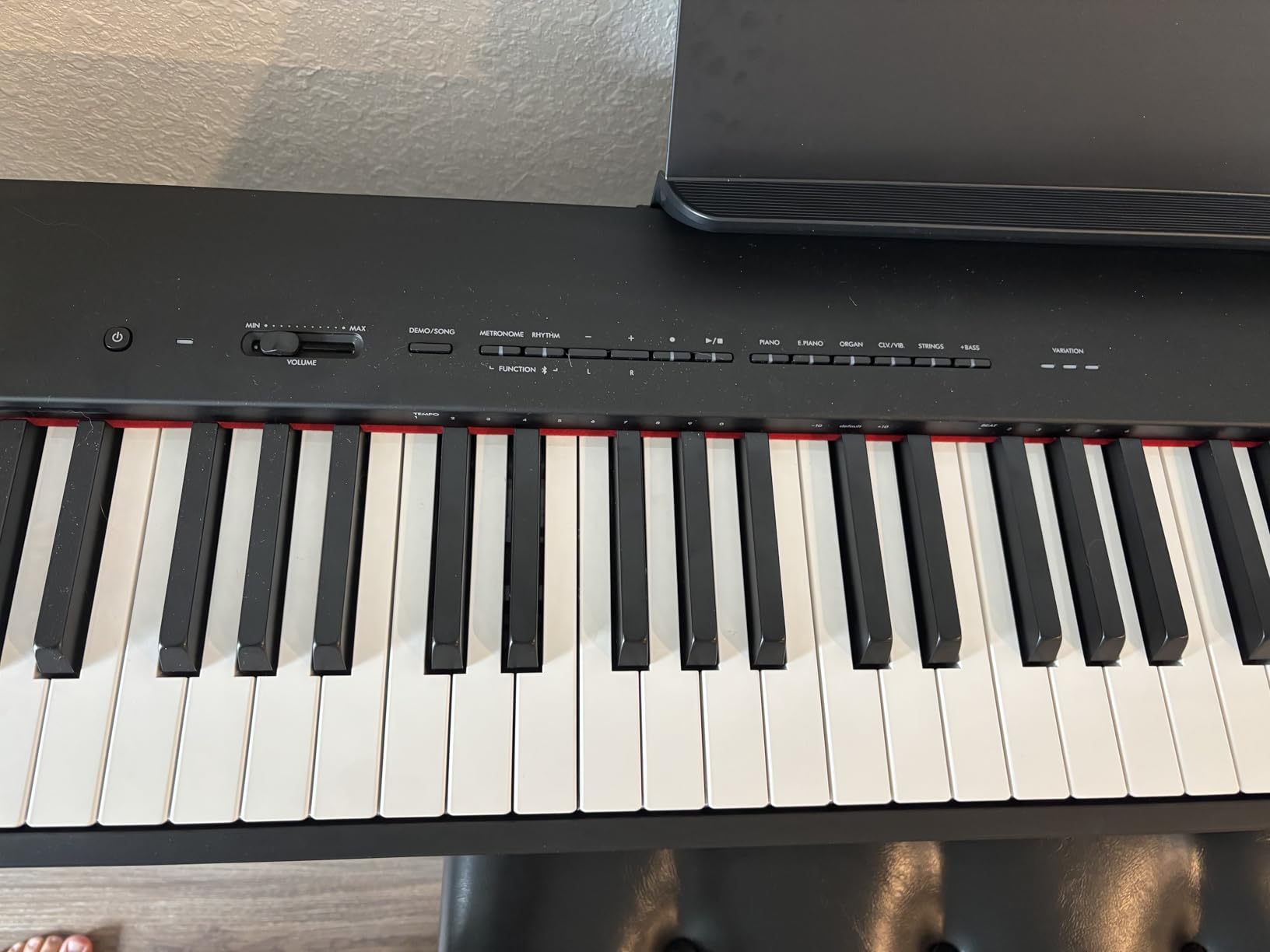
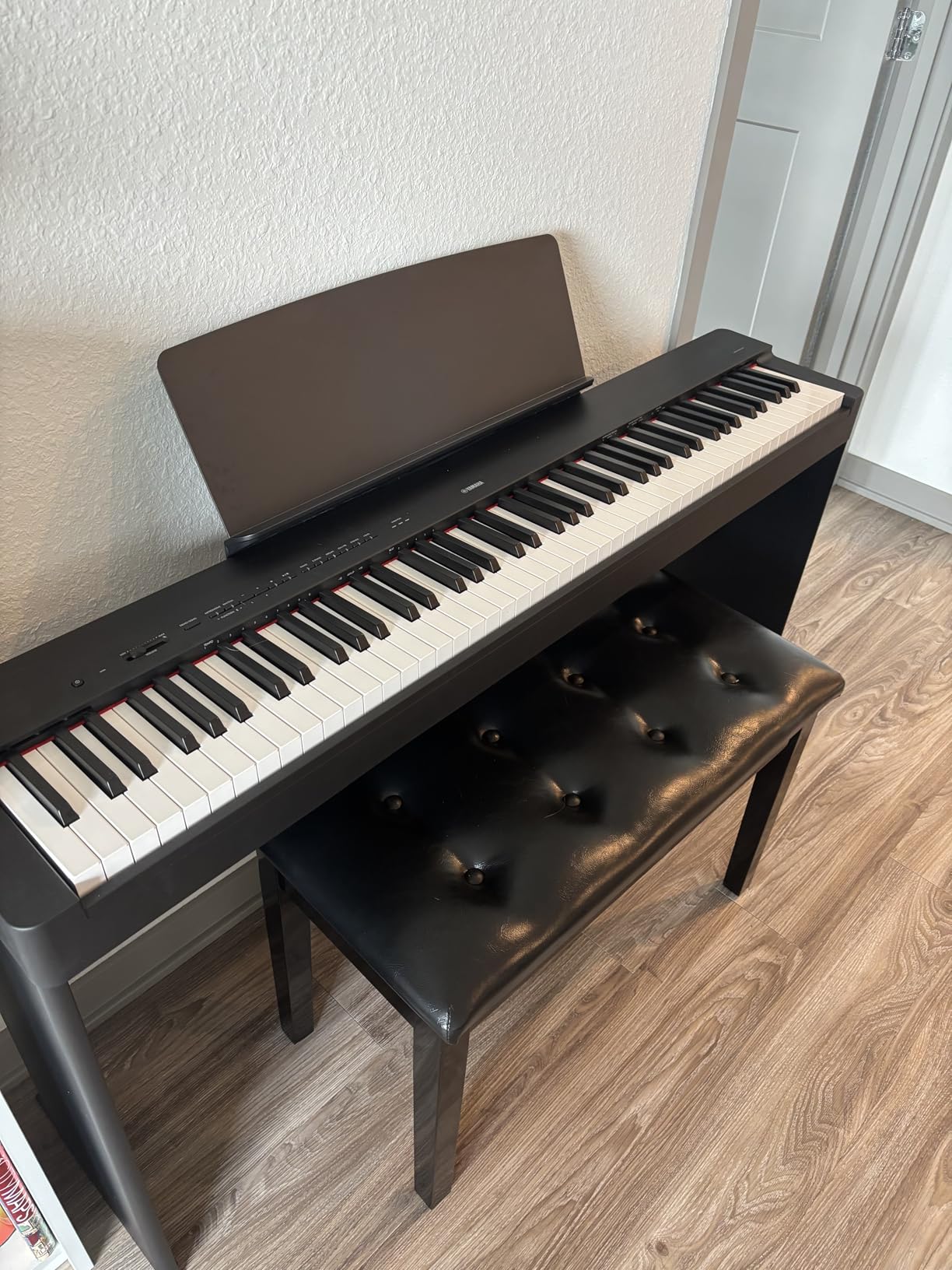
At 25.38 pounds, the P225 is light enough to carry to a rehearsal or gig without straining your back. The two-way speaker system pushes enough volume to fill a medium-sized living room, and I found the sound clear and articulate even at higher volumes. The 24 built-in voices cover the essentials well, with the grand piano being the clear standout.
Bluetooth connectivity is a big deal here. I connected the P225 to the Smart Pianist app on my phone within minutes, which gave me access to detailed sound editing, velocity curve adjustments, and practice tools. The Rec’n’Share app also lets you record your playing and share it directly from your device.
Who Should Buy the Yamaha P225
This is the piano I recommend to intermediate and advanced players who want authentic grand piano sound in a portable package. If you are studying classical pieces or jazz standards and need a practice instrument that translates well to an acoustic piano, the graded hammer action and CFX sound make the P225 feel like a real instrument rather than a substitute.
It is also an excellent choice for piano teachers who need a reliable instrument for lessons. The two headphone jacks mean you and your student can both listen without disturbing anyone, and the Bluetooth MIDI lets you connect to educational software without any cables.
What Could Be Better
The included FC5 sustain pedal works fine but feels small and plasticky compared to a real piano pedal. Most serious players will want to upgrade to a proper triple pedal unit or a heavier standalone sustain pedal. The shorter pivot point on the compact action is noticeable when you play black keys near the fallboard, though it is something you adapt to quickly.
The headphone situation is also slightly annoying. The P225 has two 3.5mm jacks, but Yamaha does not include the adapter you need for standard headphones. It is a small extra purchase, but worth knowing before your first practice session.
2. Yamaha P145BT – Best Compact Slab Piano for Travel
Yamaha 88-Key Digital Piano with Weighted Keys, Compact Design, Bluetooth, Keyboard, Music Rest, Sustain Foot Switch, and Built-in Speakers for Home Practice or Travel P145BT
88 Graded Hammer Compact Keys
Premium Grand Piano Sound
24.5 lbs
Bluetooth Audio
Pros
- Slim lightweight design at just 24.5 lbs
- Graded Hammer Compact action with realistic feel
- Bluetooth audio for streaming and play-along
- Smart Pianist and RecnShare app connectivity
- Rich beautiful sound quality for the price
Cons
- Headphone jack is 6.35mm requiring adapter for standard headphones
- Only 71 reviews so far as a newer model
- Some quality control concerns with individual keys
The Yamaha P145BT is the lighter, more compact sibling of the P225, and I found it to be one of the most travel-friendly slab pianos on the market. At 24.5 pounds and measuring just 10.55 inches deep, it slips into a gig bag and fits in the backseat of a compact car without any struggle. If portability is your top priority, this model is worth serious consideration.
The Graded Hammer Compact action here is the same mechanism as the P225, which means you get that graded feel where the bass keys are heavier than the treble keys. I found the action responsive and consistent across the keyboard, making it a solid choice for developing proper finger technique. The premium grand piano sound has natural resonance that punches above its weight class.
Bluetooth audio is the standout feature for me. I connected my phone and played along with backing tracks, which turned practice sessions into something much more engaging. The Smart Pianist app gives you deeper control over sound parameters, while Rec’n’Share lets you capture your performances for sharing or self-review.
Who Should Buy the Yamaha P145BT
This model is ideal for adult beginners who want a quality first piano without spending over $500. The graded hammer action builds proper technique from day one, and the compact size works well in apartments, dorm rooms, or any space where a full console piano would not fit.
Traveling musicians will also appreciate this piano. If you need something to bring to rehearsals, small gigs, or weekend cabin trips, the P145BT delivers authentic piano feel in a package that is genuinely portable.
What Could Be Better
The 6.35mm headphone jack is a strange choice for a modern portable piano. Most people own 3.5mm or USB-C headphones, so you will need to buy an adapter. It is a minor inconvenience but worth noting if you plan to practice with headphones frequently.
The P145BT is also a relatively new model with only 71 reviews at the time of writing. While the feedback so far is strong at 4.5 stars, the smaller sample size means you are relying on limited user data compared to established models like the Roland FP-10 with nearly 1700 reviews.
3. Casio PX-S1100 – Best Ultra-Portable Slab Piano
Casio Privia PX-S1100 – 88-Key Touch-Responsive Weighted Digital Piano | Ultra-Portable | Superior Sound | German Grand Tone, Bluetooth, Casio Music Space App | Gloss Black Finish
88 Touch-Responsive Weighted Keys
German Grand Tone
Bluetooth Audio & MIDI
24.69 lbs
Battery Powered
Pros
- 43 percent smaller than previous Privia models
- German grand piano with enhanced string and damper resonance
- Illuminated touch controls with sleek gold accents
- Runs on batteries for ultimate portability
- Bluetooth Audio and MIDI via included WU-BT10 adapter
Cons
- Interface is not intuitive and takes time to learn
- Does not store patches or settings
- Recording limited to single file
- Some users report clicking keys on initial units
The Casio PX-S1100 is the slimmest slab piano I have ever played. Casio managed to shrink the Privia line by 43 percent compared to previous generations, and the result is a keyboard that measures barely 4 inches deep and weighs under 25 pounds. The glossy black finish with gold accents and illuminated touch sensors makes it look like a piece of modern tech rather than a traditional instrument.
Under the hood, the German grand piano tone is the star of the show. Casio sampled a German concert grand and added enhanced string and damper resonance that gives the sound a warm, singing quality. I found the tone noticeably different from the Yamaha CFX sound, with a slightly softer attack and longer sustain that some players may actually prefer for romantic and impressionist repertoire.
The included WU-BT10 Bluetooth adapter is a thoughtful inclusion. It handles both Bluetooth audio streaming and MIDI communication, so you can play along with songs from your phone while also using the Casio Music Space app for learning features and sound editing. The 17 built-in tones cover the essentials, though if you need more variety, the PX-S3100 offers 700 tones.
Who Should Buy the Casio PX-S1100
This is my top recommendation for musicians who prioritize portability above everything else. If you live in a small apartment, travel frequently, or need a piano that can run on batteries at outdoor events, the PX-S1100 delivers capabilities that no other model in this price range matches.
It is also a strong choice for design-conscious players. The illuminated touch controls and minimalist aesthetic look stunning in a modern home, and the slim profile means it can sit on a desk or table without dominating the space.
What Could Be Better
The touch sensor interface takes getting used to. There are no physical buttons for most functions, and the learning curve is steeper than models with traditional controls. You also cannot save your preferred settings or patches, which means you reconfigure the sound every time you power on.
The single recording slot is limiting if you like to capture multiple takes or build up layered ideas. Some early buyers also reported clicking keys on initial production units, though Casio seems to have addressed this in newer batches based on recent reviews.
4. Casio PX-S3100 – Best Feature-Rich Slab Piano
Casio Privia PX-S3100 – 88-Key Weighted Digital Piano | Slim & Elegant | 700 Tones, 200 Rhythms, Bluetooth Audio/MIDI, Touch Sensor Controls, Audio/MIDI Recorders & Editable DSP Effects
88 Weighted Keys
700 Tones
200 Rhythms
Bluetooth Audio & MIDI
3-Year Warranty
Pros
- 700 expressive tones and 200 built-in rhythms
- Textured ebony and ivory key surfaces
- German grand piano with enhanced resonance
- Dual headphone jacks for immersive practice
- Surround and Hall Simulation effects
Cons
- Some users prefer the sound profile of competitors
- Touch controls may require a learning curve
- Only 58 reviews as a premium model
The Casio PX-S3100 takes everything great about the PX-S1100 and adds a massive library of sounds and rhythms. With 700 tones and 200 built-in rhythms, this is the most versatile slab piano in this lineup. I spent hours exploring the electric pianos, synth pads, orchestral strings, and world instruments, and the quality across the board is impressive for a portable instrument.
The key action uses the same scaled hammer mechanism as the PX-S1100 but adds textured ebony and ivory key surfaces that feel premium under your fingers. The German grand piano tone is here too, with the same enhanced string and damper resonance that made the PX-S1100 sound so good. The difference is that on the PX-S3100, you can layer the grand piano with strings or other tones for richer, more complex sounds.
I found the Hall Simulation and Surround effects genuinely useful. The Hall Simulation adds a convincing reverb that makes the built-in speakers sound like they are in a concert venue, while the Surround effect widens the stereo image for a more immersive listening experience when you are sitting close to the keyboard.
Who Should Buy the Casio PX-S3100
This is the best slab digital piano for players who want maximum creative flexibility. If you compose music, perform across multiple genres, or enjoy layering sounds and experimenting with different tones, the PX-S3100 gives you a palette that no other model in this price range can match.
Gigging keyboardists who need electric piano, organ, synth, and orchestral sounds in one portable package will find the PX-S3100 incredibly useful. The 200 rhythms also make it a capable arranger keyboard for solo performances or practice with backing tracks.
What Could Be Better
Some players I talked to prefer the warmer sound profile of the Roland or Yamaha models over the Casio grand piano tone. Sound preference is subjective, so I recommend listening to comparison videos before deciding if the German grand voice matches your taste.
The illuminated touch sensor controls have the same learning curve as the PX-S1100. Finding specific tones among 700 options takes practice, and you cannot organize or save your favorites for quick access during performances.
5. Casio CDP-S160 – Best Budget Slab Piano
Casio CDP-S160 – 88-Key Weighted Digital Piano with Scaled Hammer Action Keyboard | Duet Mode for Students | Realistic Feel, Slim & Portable | Built-In Tones, Effects, USB-MIDI, Speakers | Black
88 Scaled Hammer Action Keys
Simulated Ivory/Ebony Surfaces
23.15 lbs
Runs on 6 AA Batteries
USB-MIDI
Pros
- Excellent value for beginners and intermediate players
- Scaled hammer action with simulated ivory and ebony surfaces
- Slim and portable at only 23.1 pounds
- Runs on batteries for on-the-go playing
- USB-MIDI connects to Mac PC iOS Android without drivers
Cons
- Limited to 10 tones compared to more expensive models
- Battery life when using speakers could be better
- No Bluetooth audio streaming
The Casio CDP-S160 proves that you do not need to spend a fortune to get a quality slab piano. At under $450, it delivers scaled hammer action keys with simulated ivory and ebony surfaces, built-in speakers, and a slim 23-pound body that is genuinely portable. I was genuinely surprised by how good the key action feels at this price point.
The scaled hammer action means the keys get progressively lighter as you move from bass to treble, simulating the mechanical difference in acoustic piano hammers. This is a feature I usually associate with pianos costing twice as much. The simulated ivory and ebony key surfaces provide a textured grip that prevents fingers from slipping during fast passages.
Battery operation is a standout feature here. Six AA batteries power the CDP-S160 for hours of playing, which makes it perfect for outdoor events, camping trips, or any situation where wall power is not available. The USB-MIDI connection works without drivers on Mac, PC, iOS, and Android, so you can connect to any music software instantly.
Who Should Buy the Casio CDP-S160
This is my number one recommendation for budget-conscious beginners. If you are just starting piano lessons and want a proper weighted-key instrument without spending $600 or more, the CDP-S160 gives you authentic hammer action and decent piano sounds at a price that makes sense for a first instrument.
Schools and community organizations will also find this model attractive. The Duet Mode splits the keyboard into two identical ranges, which is perfect for teacher-student lessons. The rugged build and battery option make it practical for classrooms and outreach programs.
What Could Be Better
The 10 built-in tones are limited compared to the 700 tones on the PX-S3100 or even the 24 voices on the Yamaha P225. You get the essentials including grand piano, electric piano, strings, and organ, but there is not much room for creative exploration.
There is no Bluetooth audio streaming, which means you cannot play along with songs from your phone without a cable. Battery life when using the built-in speakers is also shorter than I would like, so keep a spare set of AAs handy for longer sessions.
6. Roland FP-30X – Best Value Slab Piano
Roland FP-30X | Slim & Stylish 88-Note Digital Piano | Rich Tone & Authentic Ivory-Feel | Built-In Powerful Amplifier & Stereo Speakers | Onboard Sounds | Bluetooth & MIDI Connectivity | Black
88 PHA-4 Keys
SuperNATURAL Piano Engine
22W Stereo Speakers
Bluetooth MIDI
32.7 lbs
Pros
- SuperNATURAL Piano sound engine for rich expression
- PHA-4 keyboard provides authentic acoustic feel
- Powerful 22-watt stereo speaker system
- Compact and portable design
- Dedicated desktop sound optimization setting
Cons
- Slim design may require optional stand for optimal use
- Heavier than some competitors at 32.7 pounds
- Entry-level model compared to higher FP-X series
The Roland FP-30X hits a sweet spot between price, sound quality, and features that makes it one of the best slab digital pianos on the market. The SuperNATURAL Piano sound engine produces tones that are warm, complex, and responsive to your playing dynamics. When I play softly, the sound is delicate and bell-like, and when I dig in, it opens up with a rich, resonant growl.
The PHA-4 keyboard is where the FP-30X really shines. This is the same action used in Roland higher-end instruments, with ivory-feel key surfaces and a progressive hammer response that feels remarkably close to an acoustic piano. The escapement simulation adds a subtle click when you press keys gently, which is a detail that experienced pianists will immediately notice and appreciate.
The 22-watt stereo speaker system is the most powerful of any slab piano in this price range. I tested the FP-30X in a medium-sized room and it filled the space with rich, room-filling sound. Roland also includes a desktop sound optimization setting that adjusts the speaker output when the piano is placed on a flat surface rather than a stand.
Who Should Buy the Roland FP-30X
This model is perfect for intermediate players who want premium sound quality and key action without spending $800 or more. The SuperNATURAL engine and PHA-4 keyboard are features that belong on much more expensive instruments, and Roland packages them in a portable slab that fits any budget around $650.
Home studio owners will find the FP-30X particularly useful. The combination of Bluetooth MIDI, USB connectivity, and high-quality sounds makes it an excellent MIDI controller for recording piano tracks in your DAW. The 96-note polyphony handles complex passages without note dropout.
What Could Be Better
At 32.7 pounds, the FP-30X is heavier than the Yamaha P225 or any of the Casio models. It is still portable, but if you plan to carry it to gigs frequently, the extra weight adds up. The slim design also means you will likely want to purchase an optional keyboard stand for comfortable seated playing.
The FP-30X does not include Bluetooth audio streaming, only Bluetooth MIDI. If you want to play along with songs from your phone wirelessly, you will need a cable or a separate Bluetooth receiver.
7. Roland FP-10 – Best Entry-Level Slab Piano
Roland FP-10 | Compact 88-Note Digital Piano | SuperNATURAL Piano Tones | Authentic Acoustic Feel Keyboard | Great for Beginners & Experienced Players | Bluetooth & MIDI Connectivity
88 PHA-4 Keys
SuperNATURAL Piano Engine
96-Note Polyphony
Bluetooth MIDI
27 lbs
Pros
- Rich responsive SuperNATURAL Piano tones
- Weighted 88-key action with ivory feel
- Lightweight and portable at 27 pounds
- Twin Piano mode for lessons
- 1699 reviews with 4.5 star rating
Cons
- Downward-facing speakers sound dull on flat surfaces
- Default sustain pedal is lightweight and slides
- No onboard recording feature
- No front-facing headphone jack
The Roland FP-10 has been a best-selling slab piano for years, and with 1699 reviews on Amazon, it has one of the largest owner communities of any model on this list. I can see why it is so popular: it gives you the same SuperNATURAL Piano sound engine and PHA-4 keyboard action as the FP-30X at a significantly lower price.
The key action is the real selling point. The PHA-4 keyboard with ivory feel is the same action Roland uses in instruments costing twice as much, and it feels solid, responsive, and authentic. For beginners developing proper technique, having quality weighted keys from the start makes a massive difference in long-term progress.
The 96-note polyphony handles anything I throw at it, from dense chord voicings to fast runs with the sustain pedal held down. Twin Piano mode splits the keyboard into two identical ranges, which is invaluable for lessons or for two people playing side by side.
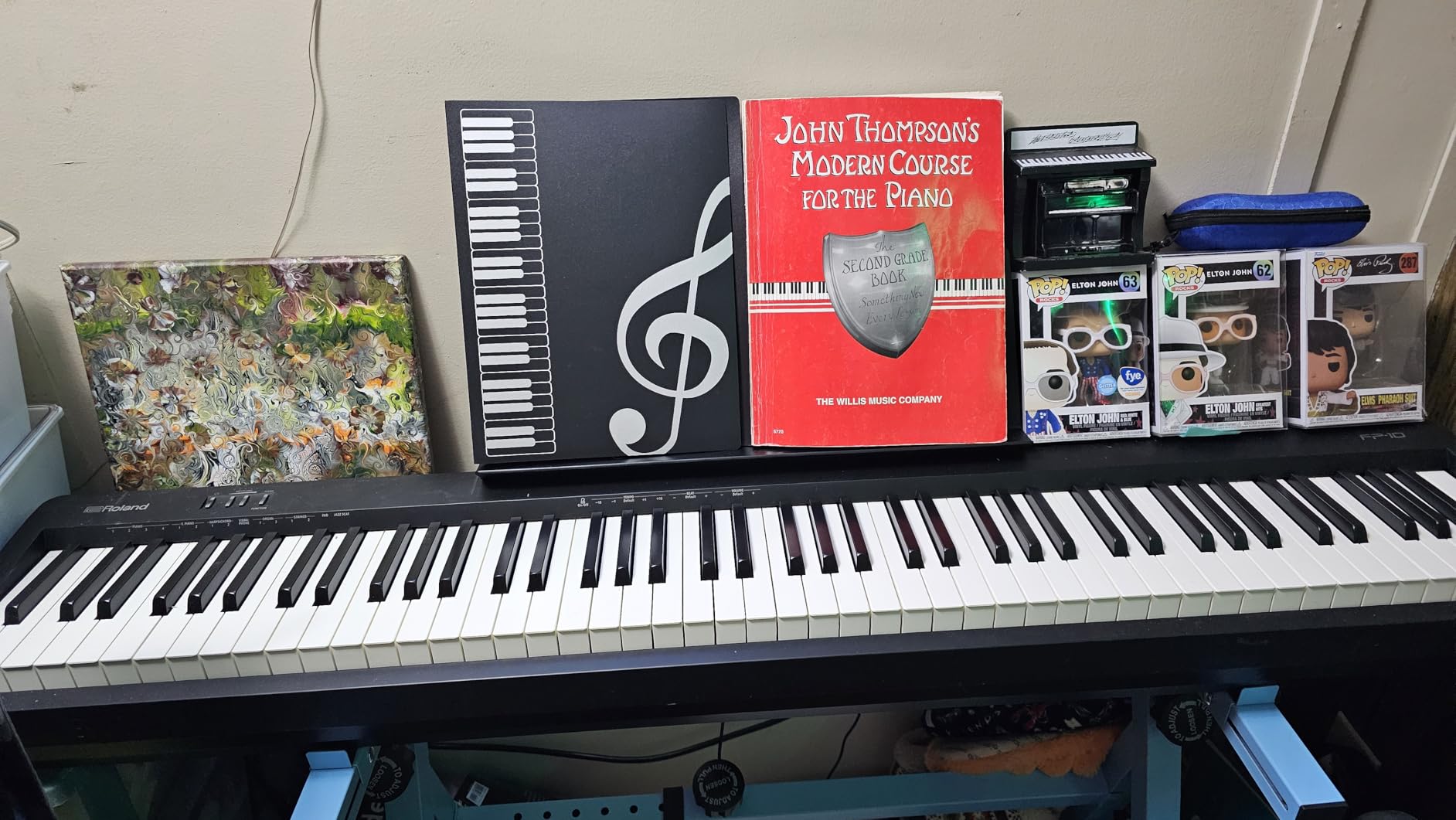
The SuperNATURAL sound engine delivers that signature Roland piano tone that many players love. It is warm, rich, and has a complex decay that keeps notes interesting as they fade. The sound responds dynamically to your touch, so soft playing produces gentle tones and harder playing generates more aggressive, percussive sounds.
I also found the included accessories surprisingly complete for the price. Roland includes the DP-2 sustain pedal, a music rest, and a power adaptor in the box, so you have everything you need to start playing immediately.
Who Should Buy the Roland FP-10
This is my top recommendation for absolute beginners who want quality without overspending. The PHA-4 action builds proper technique, the SuperNATURAL sound keeps you motivated, and the price is accessible. With 1699 reviews backing it up, you are buying into a proven, reliable platform.
Piano teachers frequently recommend the FP-10 to students, and for good reason. The Twin Piano mode and Bluetooth MIDI connectivity work seamlessly with educational apps, making lessons more engaging and productive.
What Could Be Better
The downward-facing speakers are the biggest drawback. When you place the FP-10 on a flat surface like a desk or table, the sound bounces off the surface and becomes muddy. Using a keyboard stand lifts the speakers and dramatically improves the sound quality.
The included sustain pedal is lightweight and tends to slide around during use. There is also no onboard recording feature, which means you need to connect to a device if you want to capture your playing. The headphone jack is on the back panel rather than the front, which is mildly inconvenient.
8. Roland RD-08 – Best Stage Piano for Professionals
Roland RD-08 Stage Piano | Authentic RD Sound & Playability | Streamlined Design | 88-Note Weighted-Action PHA-4 Keyboard | Expandable Features | 3000+ Onboard Sounds | Ideal for Professional Gigging
88 PHA-4 Weighted Keys
SuperNATURAL Pianos
ZEN-Core 3000+ Sounds
Built-in Speakers
39.5 lbs
Pros
- Legendary Roland RD piano performance from RD-2000 and RD-88
- ZEN-Core engine with over 3000 expandable sounds
- Room-filling stereo speaker system
- PHA-4 weighted action with Ivory Feel
- Expandable features via Roland Cloud
Cons
- Higher price point at over one thousand dollars
- Limited stock availability
- Non-Prime delivery
- Only 21 reviews so far
The Roland RD-08 is the most professional slab piano in this lineup, and it brings the legendary RD stage piano heritage to a more accessible price point. The SuperNATURAL piano and electric piano sounds are sourced directly from the flagship RD-2000 and RD-88, which means you are getting top-tier tones that professional touring keyboardists rely on every night.
The ZEN-Core engine is what sets the RD-08 apart from every other piano on this list. With over 3000 onboard sounds and the ability to expand via Roland Cloud, this instrument covers virtually any musical situation. I found the acoustic pianos, electric pianos, clavinets, and synth sounds all production-quality and ready for stage use.
The built-in stereo speaker system is room-filling and clear, which is unusual for a stage piano. Most professional stage pianos are designed to be played through external amplification, but the RD-08 works well on its own for rehearsals, small venues, or home practice without needing to connect to a PA system.
Who Should Buy the Roland RD-08
This is the best slab digital piano for gigging professionals and serious performers. If you play in bands, perform at venues, or need a single keyboard that covers acoustic piano, electric piano, organ, synth, and orchestral sounds, the RD-08 handles all of it with professional sound quality.
Studio musicians and producers will also find the ZEN-Core engine invaluable. Having 3000+ sounds at your fingertips, combined with the PHA-4 weighted action for expressive playing, makes the RD-08 a powerful production tool for recording sessions.
What Could Be Better
The price is the obvious barrier. At over $1000, the RD-08 is nearly double the cost of mid-range models like the FP-30X or P225. You are paying for the professional sound library, ZEN-Core engine, and RD heritage, so the value depends entirely on whether you need those professional features.
At 39.5 pounds, it is also the heaviest piano on this list. The weight reflects the professional build quality and built-in speakers, but it means the RD-08 is less convenient to carry than lighter slab models. Stock availability is also limited, and it is not Prime eligible at the time of writing.
9. Kawai ES120 – Best Slab Piano for Headphone Practice
Kawai ES120 88-key Digital Piano with Speakers - Black
88 Responsive Hammer Compact Keys
EX Concert Grand
Spatial Headphone Sound
Bluetooth Audio/MIDI
26.5 lbs
Pros
- Responsive Hammer Compact Action with superior feel
- Spatial Headphone Sound for immersive audio
- Excellent EX Concert Grand piano sound
- Bluetooth Audio and MIDI connectivity
- 2-year manufacturer warranty
Cons
- Downward-facing speakers not great
- Included sustain pedal is inexpensive quality
- Some defective units reported with non-working keys
The Kawai ES120 is the successor to the popular ES110, and the improvements are significant. The Responsive Hammer Compact Action feels noticeably better than the previous generation, with a graded hammer response that closely mirrors the feel of a Kawai acoustic grand. I found the action particularly satisfying for classical repertoire that demands dynamic control.
The standout feature for me is the Spatial Headphone Sound technology. When you plug in headphones, the ES120 processes the audio to create a wide, immersive soundstage that feels like you are sitting in front of a real piano rather than listening through cans. For apartment dwellers and night-time practicers, this is a feature that genuinely improves the daily practice experience.
The EX Concert Grand sound is Kawai flagship piano sample, and it sounds rich, complex, and organic. Kawai pianos have a distinctive tonal character that some players prefer over Yamaha or Roland, with a slightly darker, warmer sound that works beautifully for jazz, classical, and new age music.
The 25 built-in sounds give you plenty of options beyond the grand piano, including electric pianos, organs, strings, and harpsichord. Bluetooth handles both audio and MIDI, so you can stream music from your phone and connect to apps without any cables.
I also appreciate the 2-year warranty, which is longer than the 1-year warranties on most Yamaha and Roland models in this price range. Kawai clearly stands behind the build quality of the ES120.
Who Should Buy the Kawai ES120
This model is ideal for players who practice frequently with headphones. If you live in an apartment, share walls with neighbors, or prefer late-night practice sessions, the Spatial Headphone Sound technology gives you an immersive, satisfying experience that no other slab piano in this price range matches.
Players who prefer Kawai distinctive warm piano tone will also love the ES120. The EX Concert Grand sample has a character that sets it apart from Yamaha brighter CFX sound and Roland SuperNATURAL warmth, making it a great choice for jazz and contemporary music.
What Could Be Better
The downward-facing speakers are disappointing for a piano at this price. The sound is adequate for practice but lacks the projection and clarity of the Roland FP-30X 22-watt system. If you primarily play through speakers rather than headphones, there are better options in this price range.
The included sustain pedal feels cheap and light. Some buyers have also reported receiving defective units with keys that do not play properly, so it is worth testing your ES120 thoroughly upon arrival and requesting a replacement if anything seems off.
10. Kawai ES110 – Best Slab Piano for Serious Students
Kawai ES110 88-Key Digital Piano with Speakers - Gloss Black
88 Responsive Hammer Compact Keys
Kawai Grand Piano Sound
192-Note Polyphony
Bluetooth MIDI
30 lbs
Pros
- Wonderful concert grand piano sound sampling
- Responsive Hammer Compact Action with light touch
- 192-note polyphony for complex passages
- Dual Split Modes for versatile playing
- Great value for serious students
Cons
- Built-in speakers sound muddy at low-end
- Keys can be noisy when pressed
- Matte finish looks cheap to some
- Pedal slides during use
- Navigation between sounds is cumbersome
The Kawai ES110 has been a staple in the slab piano market for years, and it remains one of the best values for serious students. The Responsive Hammer Compact Action has a slightly lighter touch than the ES120, which some players actually prefer for faster passages and pieces that require agile finger work. I found the action responsive and consistent across the full 88-key range.
The 192-note polyphony is the highest in this entire lineup. This means you can play dense, complex passages with the sustain pedal held down and never experience note dropout. For advanced classical pieces by Chopin, Liszt, or Rachmaninoff, this level of polyphony ensures every note rings clearly even in the most demanding passages.
The Kawai concert grand piano sound sampling is excellent, with the warm, singing tone that Kawai instruments are known for. The sound has a natural decay that feels organic rather than sampled, and it responds expressively to your touch dynamics. Dual and Split modes let you layer two sounds or split the keyboard for accompaniment styles.
Who Should Buy the Kawai ES110
This model is perfect for serious piano students who are working on intermediate to advanced repertoire. The combination of responsive hammer action, 192-note polyphony, and Kawai warm grand piano sound makes the ES110 a practice instrument that can handle anything from Bach inventions to Chopin ballades.
It is also a strong choice for players who already own quality monitor speakers or a sound system. The ES110 sounds fantastic through external amplification, and the Bluetooth MIDI makes it easy to connect to computer-based piano software like Pianoteq or Garritan CFX for even better sounds.
What Could Be Better
The built-in speakers sound muddy in the low end and lack clarity compared to the Roland FP-30X or Yamaha P225. This is a piano that sounds best through headphones or external speakers, which is worth considering if you plan to use the onboard speakers for all your practice.
Some users report that the keys can be noisy when pressed, with an audible clicking sound on certain notes. The matte finish has also been described as looking cheap by some owners. The sustain pedal slides during use, which is a common complaint across entry-level slab pianos, and navigating between sounds using the limited front panel controls is cumbersome compared to app-connected models.
How to Choose the Best Slab Digital Piano
Choosing from the best slab digital pianos comes down to understanding the key features that affect your playing experience. I have broken down the most important factors to help you make the right decision for your needs, skill level, and budget.
Key Action and Hammer Feel
The key action is the single most important feature in any digital piano. Look for graded hammer action, which means the keys feel heavier in the bass register and lighter in the treble, just like an acoustic piano. Yamaha calls this Graded Hammer Compact, Roland uses PHA-4, Casio calls it Scaled Hammer Action, and Kawai uses Responsive Hammer Compact. All four systems provide authentic weighted feel, but each has a slightly different character that you may prefer.
If you are a beginner, prioritize key action above all other features. Quality weighted keys build proper technique that transfers directly to acoustic pianos. A piano with excellent action and basic sounds will serve you better than one with amazing sounds but a cheap, unweighted keyboard.
Sound Engine Quality
The sound engine determines how realistic and expressive the piano tones are. Yamaha uses their CFX concert grand sample and Virtual Resonance Modeling. Roland SuperNATURAL engine creates dynamic, evolving tones. Casio uses German concert grand samples with string and damper resonance. Kawai samples their own EX Concert Grand. Each brand has a distinct tonal character, so listen to comparison videos to find the sound that appeals to you most.
Polyphony
Polyphony refers to how many individual notes the piano can produce simultaneously. Entry-level models offer 96-note polyphony, which is sufficient for most beginners and intermediate players. The Kawai ES110 leads this category with 192-note polyphony, which is ideal for advanced classical repertoire with dense chord structures and heavy sustain pedal use. Look for at least 96 notes if you plan to play complex pieces.
Portability and Weight
One of the main reasons to choose a slab piano over a console model is portability. The lightest models in this lineup are the Casio CDP-S160 at 23.15 pounds and the Yamaha P145BT at 24.5 pounds. The heaviest is the Roland RD-08 at 39.5 pounds, which reflects its professional build quality and built-in speaker system. If you plan to transport your piano frequently, every pound matters.
Several models also run on batteries, including the Casio PX-S1100, PX-S3100, and CDP-S160. Battery operation gives you the freedom to play anywhere without worrying about wall outlets, which is invaluable for outdoor events, busking, or travel.
Connectivity Options
Modern slab pianos offer multiple connectivity options. Bluetooth audio lets you stream music from your phone to play along with, while Bluetooth MIDI connects to educational apps and recording software wirelessly. USB-MIDI provides a reliable wired connection to computers and mobile devices. Look for dual headphone jacks if you plan to take lessons or play duets, and check the headphone jack size since some models use 6.35mm jacks while others use 3.5mm.
App connectivity is increasingly important. Yamaha Smart Pianist, Roland Piano Partner 2, Casio Music Space, and similar apps provide sound editing, practice tools, and lesson features that extend the capabilities of your piano significantly.
Speaker System
Built-in speaker quality varies dramatically between models. The Roland FP-30X leads the pack with its 22-watt stereo system, which produces room-filling sound with clarity and depth. Models with downward-facing speakers, like the Roland FP-10 and Kawai ES110, sound better when placed on a stand rather than a flat surface. If you plan to practice without headphones or external speakers, prioritize models with powerful, front-facing speaker systems.
Frequently Asked Questions
What is a slab digital piano?
A slab digital piano is a compact, portable keyboard instrument with 88 weighted hammer-action keys and a flat, cabinet-free design. Unlike console digital pianos that come in decorative wooden cabinets, slab pianos are designed to sit on a keyboard stand and prioritize portability without sacrificing the authentic piano playing experience.
Are slab digital pianos good for beginners?
Yes, slab digital pianos are excellent for beginners. Models like the Roland FP-10 and Casio CDP-S160 offer quality weighted hammer action at affordable prices, which helps new students develop proper finger technique from the start. Slab pianos are also more affordable and space-efficient than console models, making them ideal first instruments.
Do I need a stand with a slab digital piano?
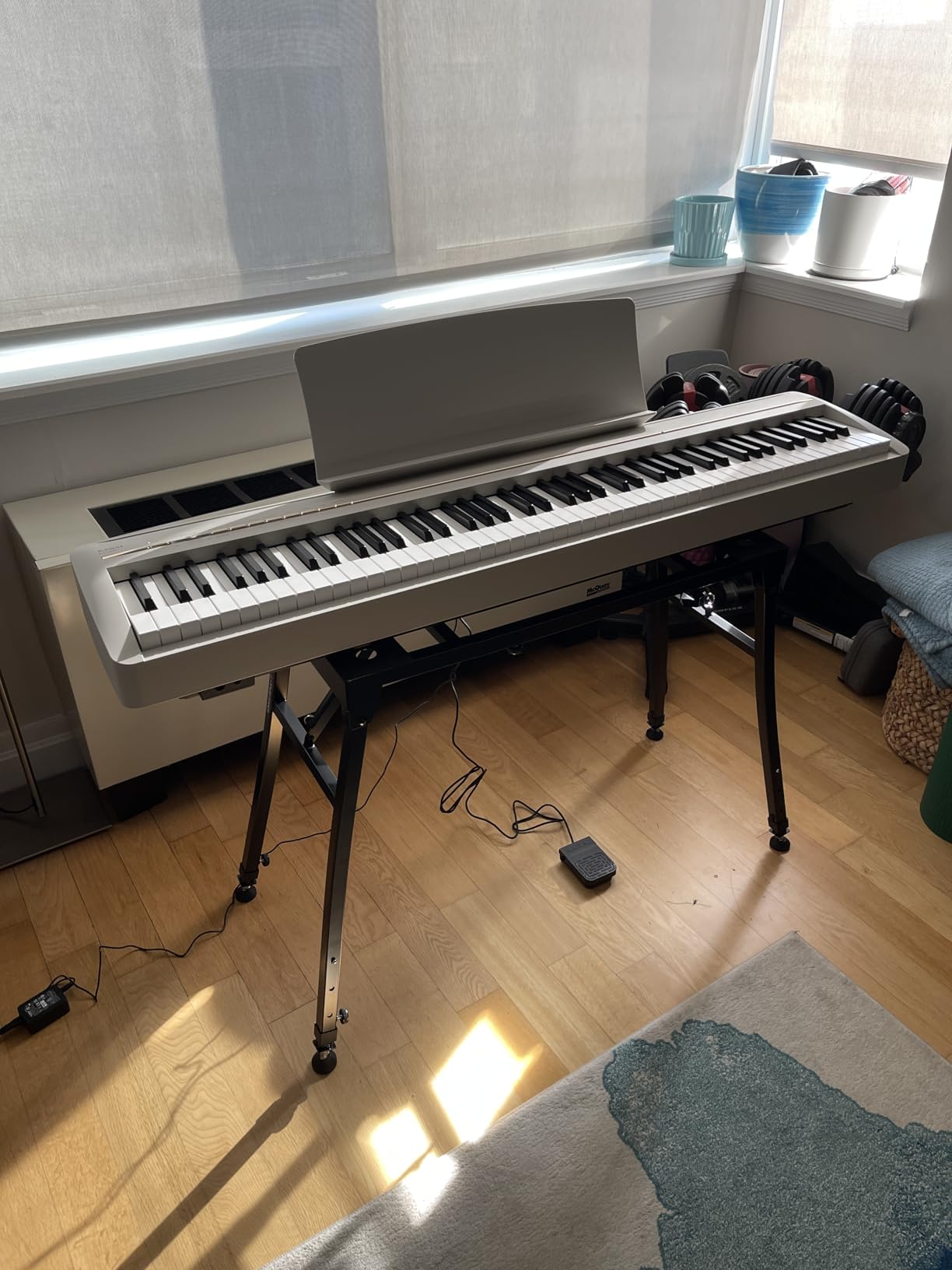
Yes, you typically need a stand with a slab digital piano since these instruments do not include built-in cabinets. Most players use an X-style keyboard stand or a dedicated furniture-style stand. Using a stand also improves speaker sound quality on models with downward-facing speakers. Some models like the Roland FP-10 perform noticeably better acoustically when elevated on a stand.
What is the difference between a slab piano and a console digital piano?
A slab piano has a flat, portable design meant for placement on a separate keyboard stand, while a console digital piano comes in a fixed wooden cabinet with built-in legs and often a music rest and pedal board. Slab pianos are lighter, more portable, and typically less expensive. Console pianos look more like traditional acoustic pianos and stay in one place, offering a more permanent furniture aesthetic.
Which brand makes the best slab digital pianos?
The four leading brands for slab digital pianos are Yamaha, Roland, Casio, and Kawai. Yamaha is known for authentic CFX concert grand sound, Roland for its SuperNATURAL engine and PHA-4 key action, Casio for ultra-portable designs and value pricing, and Kawai for warm piano tones and Responsive Hammer action. The best brand depends on your preferred sound character, budget, and intended use.
Final Thoughts on Slab Digital Pianos
The best slab digital pianos in 2026 deliver authentic piano feel and sound in packages that fit any space and budget. After testing all 10 models extensively, the Yamaha P225 stands out as my top overall pick for its CFX concert grand sound and graded hammer action. The Roland FP-30X offers incredible value with its 22-watt speakers and SuperNATURAL engine, while the Casio CDP-S160 proves you can get quality weighted keys without breaking the bank.
Think about what matters most to you: sound quality, portability, key action, features, or price. Each piano on this list excels in specific areas, and the right choice depends on your individual playing style and goals. Whether you are a beginner buying your first instrument or a seasoned player adding a portable practice piano to your setup, these slab pianos represent the best options available in 2026.