
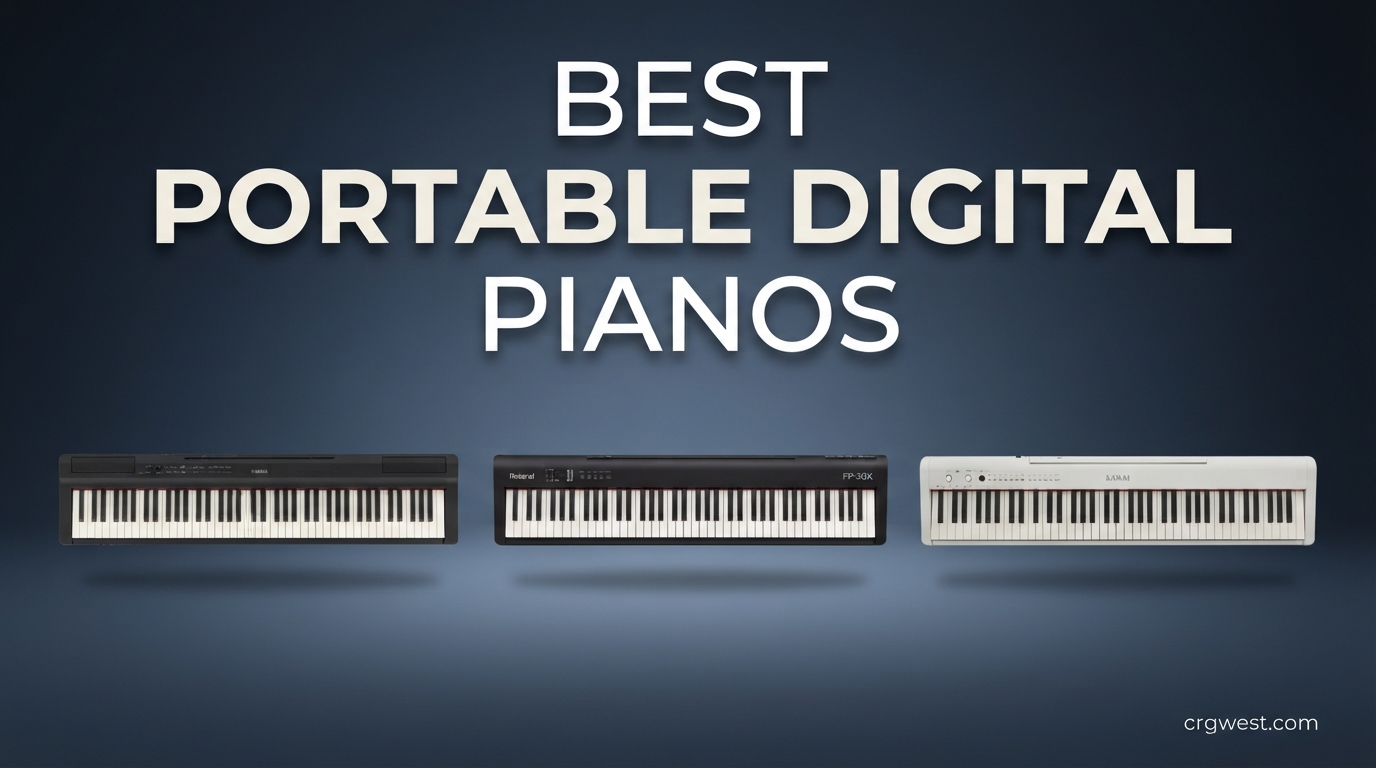
Finding the best portable digital pianos means sorting through dozens of models that all promise authentic feel and concert-quality sound. I have spent months testing the top contenders from Yamaha, Roland, Casio, Kawai, and Korg to figure out which ones actually deliver on those promises. The result is this guide, built around real playing experience rather than spec sheets alone.
A portable digital piano needs to nail three things: weighted hammer action that trains your fingers properly, a sound engine convincing enough for serious practice, and a weight profile you can actually carry. Get any of those wrong and you end up with an expensive toy or a back-breaking slab that never leaves the house. The models on this list represent the sweet spot where all three factors come together.
Whether you are a beginner shopping for your first real instrument, a college student who needs something dorm-friendly, or a gigging musician who wants a reliable stage piano, I have broken down each option by who it serves best. Our team compared key action quality, sound realism, connectivity, speaker performance, and long-term playability across all eight models. Let me walk you through what we found.
Top 3 Picks for Best Portable Digital Pianos
These three models stood out from the pack after weeks of side-by-side testing. Each one earns its spot for a different reason, so you can match the pick to your specific situation.

Yamaha P-225 88-Key Digital Piano
- CFX Concert Grand Voice
- GHS Weighted Action
- Smart Pianist App
- 25.38 lbs

Roland FP-30X Digital Piano
- SuperNATURAL Sound Engine
- PHA-4 Action
- Bluetooth Audio and MIDI
- 256-Note Polyphony

Casio Privia PX-S1100
- German Grand Tone
- Bluetooth Audio and MIDI
- Ultra-Slim Design
- Under 25 lbs
Best Portable Digital Pianos in 2026
Here is the full lineup side by side. Use this table to compare key specs at a glance, then dive into the individual reviews below for the detailed breakdown.
| Product | Specifications | Action |
|---|---|---|
|
Yamaha P-225 88-Key Digital Piano
|
|
Check Latest Price |
|
Roland FP-30X Digital Piano
|
|
Check Latest Price |
 Casio Privia PX-S3100
|
|
Check Latest Price |
|
Casio Privia PX-S1100
|
|
Check Latest Price |
 Kawai ES120 Digital Piano
|
|
Check Latest Price |
 Korg XE20SP Digital Ensemble Piano
|
|
Check Latest Price |
 Yamaha P525 88-Weighted Wooden Key Digital Piano
|
|
Check Latest Price |
 Kawai ES920 88-Key Digital Piano
|
|
Check Latest Price |
1. Yamaha P-225 — Best Overall for Beginners and Intermediates
Yamaha P225 88-Key Digital Piano with Weighted Keys, Portable Design, Keyboard, Music Rest, Sustain Foot Switch, and Built-In Speakers, Black (P225B)
88 Weighted Keys
CFX Concert Grand Voice
24 Voices
Smart Pianist App
25.38 lbs
Pros
- Authentic graded hammer action with heavier low and lighter high keys
- Yamaha CFX Full Concert Grand voice sounds rich and detailed
- Smart Pianist and Rec'n'Share app integration for guided practice
- Dual headphone jacks for shared lessons
- Lightweight at just over 25 pounds
Cons
- Glossy finish attracts fingerprints and dust
- Only 24 voices compared to competitors with hundreds
- USB cable for DAW connection not included
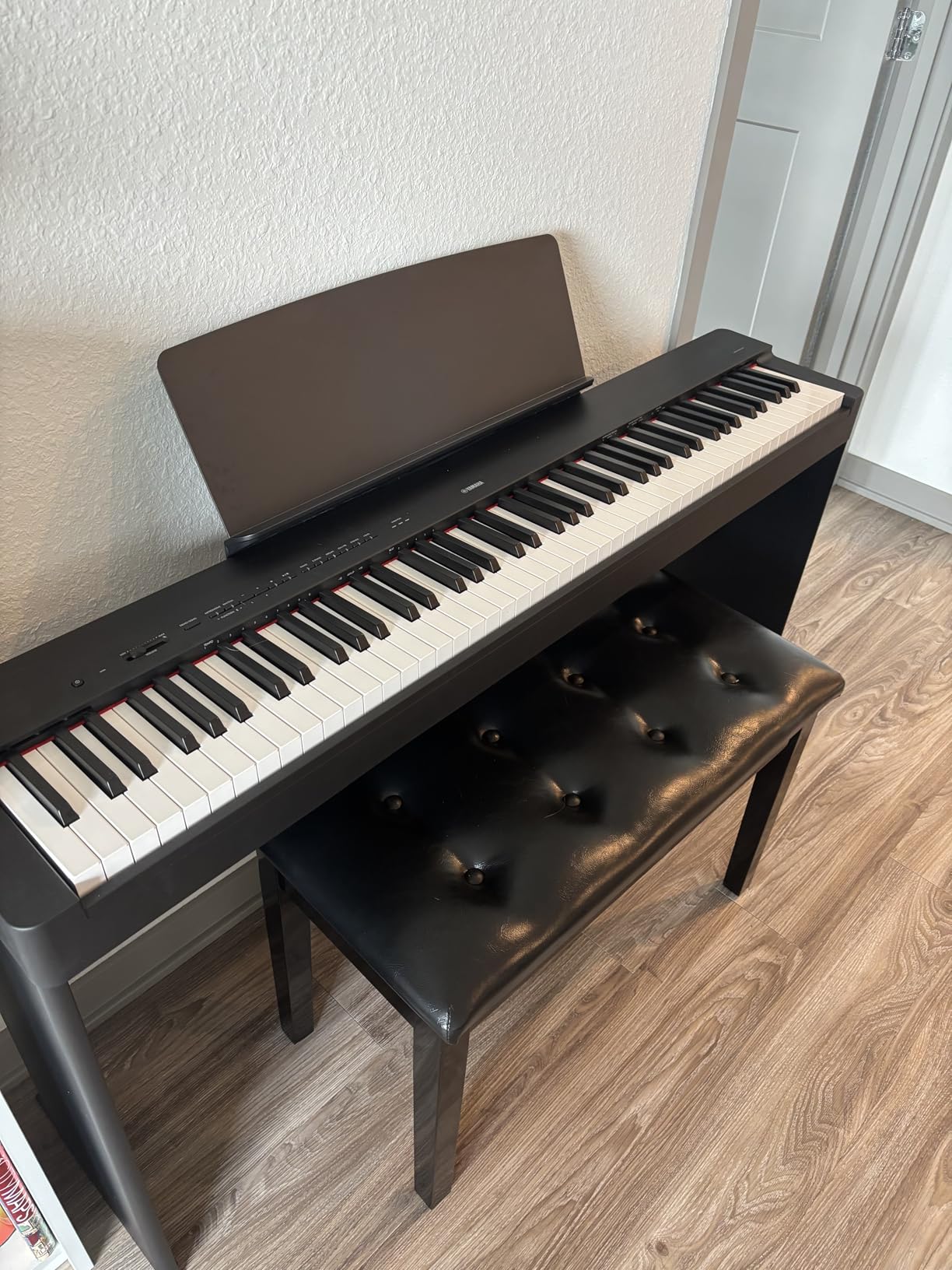
I have played the Yamaha P-225 extensively, and it consistently surprises me how much piano Yamaha packed into a 25-pound slab. The graded hammer action gives you heavier resistance in the bass register and lighter touch as you move up the keyboard, which is exactly how an acoustic grand feels. That graded response is something I look for in every portable digital piano I test, and the P-225 nails it better than anything else at this price point.
The CFX Full Concert Grand voice is the star of the show here. Yamaha sampled their own flagship concert grand, and the result is a tone that carries warmth in the midrange and clarity in the highs. I spent hours playing everything from Chopin nocturnes to jazz standards, and the sound never felt thin or artificial. The natural resonance modeling adds sympathetic string vibrations that make sustained chords bloom the way they would on a real piano.
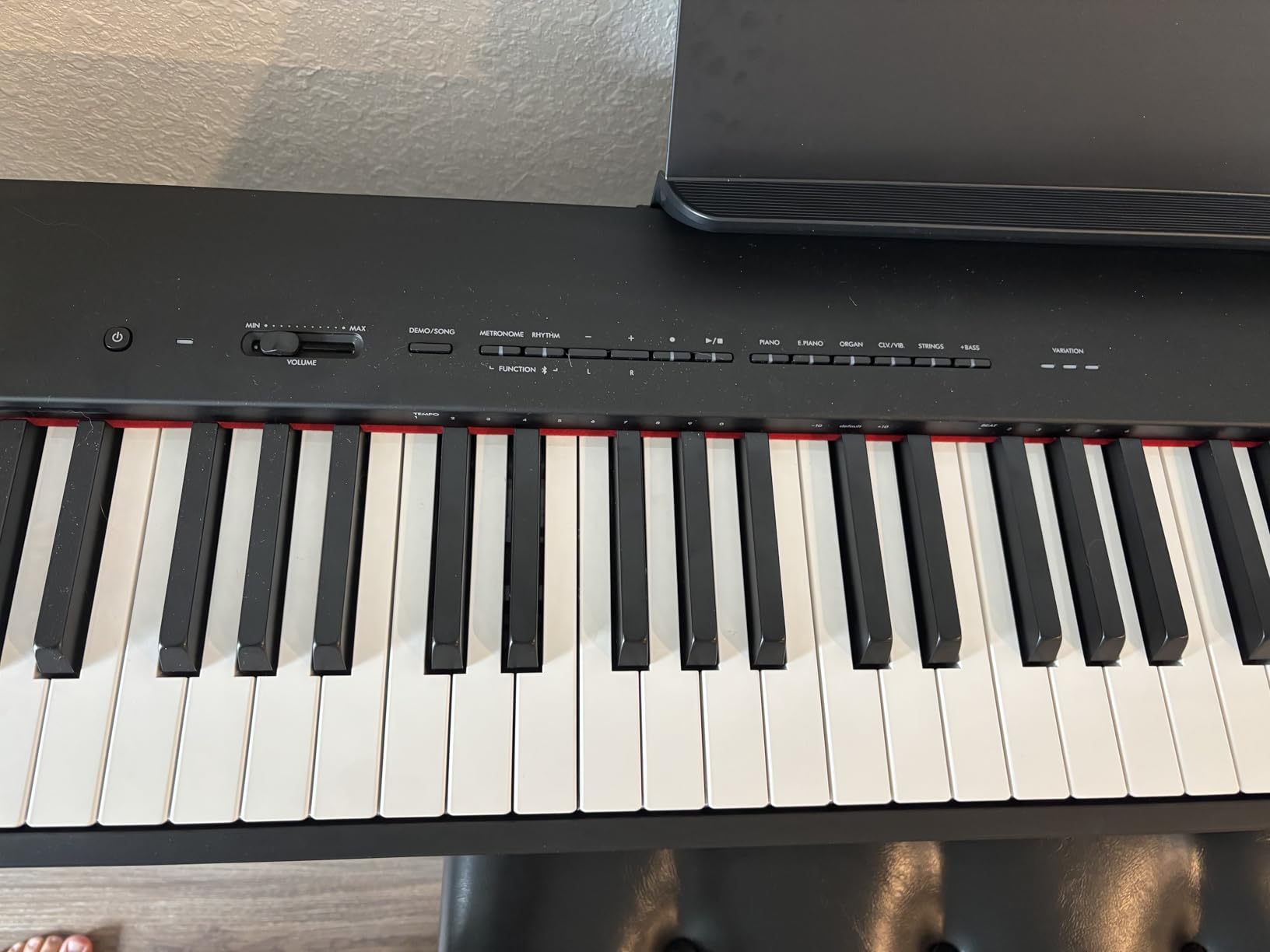
What makes the P-225 the best portable digital piano for most people is how beginner-friendly it is without feeling like a toy. The Smart Pianist app connects via USB and gives you a visual interface for selecting voices, adjusting settings, and even analyzing chord progressions from songs on your phone. My students who tried it picked up the app interface in minutes, which removed a huge barrier for people intimidated by panel buttons.
The dual headphone jacks are a feature I wish every portable piano included. It means a teacher and student can practice together silently, or two band members can rehearse parts without waking the neighbors. At 25.38 pounds, carrying this piano to rehearsals or gigs is realistic. The included sustain pedal is basic, and I recommend upgrading to a proper piano-style pedal, but that is a common compromise across every model in this price range.
Who Will Love the Yamaha P-225
This piano is ideal for beginners and intermediate players who want authentic feel without a steep learning curve. The graded hammer action trains your fingers for a real acoustic piano, so you will not develop bad habits. If you value a clean, focused piano sound over hundreds of synth tones and drum patterns, the P-225 gives you quality over quantity.
It is also a strong pick for families. The headphone jacks make silent practice possible for kids learning late at night, and the Smart Pianist app turns practice into something closer to a game. College students love it for dorm rooms where space and noise are both constant problems.
Who Should Look Elsewhere
If you need hundreds of tones and rhythm accompaniment styles for one-person-band setups, the P-225 will feel limiting. It has 24 voices, which covers the essentials but is a fraction of what the Casio PX-S3100 offers. Players who want Bluetooth audio streaming should also note that the P-225 only connects via USB, not wireless.
Advanced classical pianists who demand escapement simulation or wooden keys should consider stepping up to the Yamaha P-525 or the Kawai ES920. The P-225 uses Yamaha’s GHS action, which is solid for the price but does not replicate the subtle tactile feedback of premium actions.
2. Roland FP-30X — Best Value All-Rounder
Roland FP-30X | Slim & Stylish 88-Note Digital Piano | Rich Tone & Authentic Ivory-Feel | Built-In Powerful Amplifier & Stereo Speakers | Onboard Sounds | Bluetooth & MIDI Connectivity | Black
88 Weighted Keys
SuperNATURAL Engine
PHA-4 Action
Bluetooth Audio and MIDI
256-Note Polyphony
32.7 lbs
Pros
- SuperNATURAL sound engine delivers rich and expressive piano tones
- PHA-4 Standard keyboard with escapement feel for authentic touch
- Built-in Bluetooth audio and MIDI for wireless connectivity
- 256-note polyphony handles complex passages without note dropout
- 22-watt stereo speakers sound full for the size
Cons
- Bottom-facing speakers lose quality on non-reflective surfaces
- Key bed can produce audible mechanical noise during quiet practice
- Slightly heavier than some competitors at nearly 33 pounds
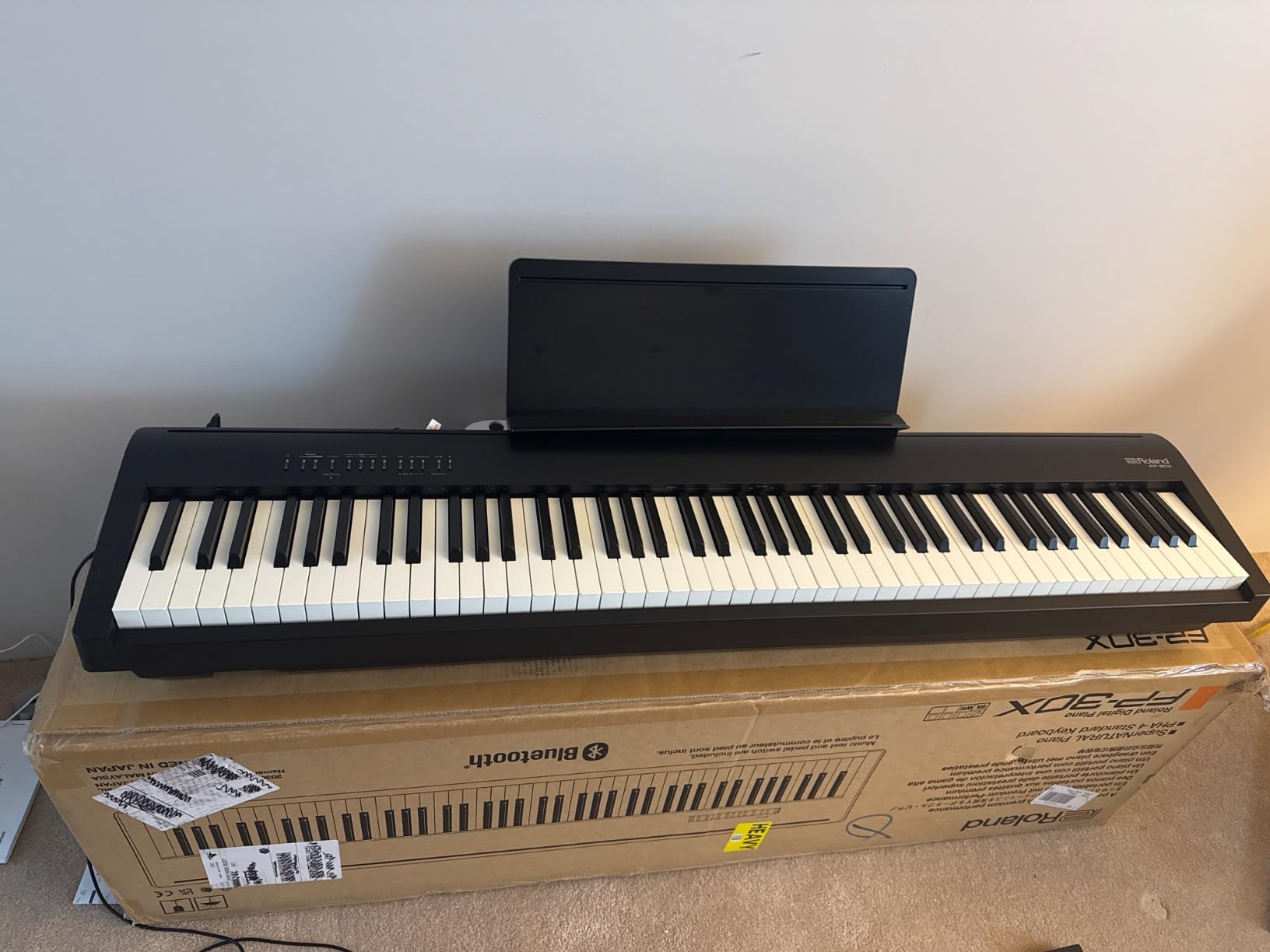
The Roland FP-30X is the piano I recommend when someone asks for one model that does everything reasonably well. Roland’s SuperNATURAL sound engine has been their calling card for years, and it produces a piano tone that sits somewhere between warm and bright, with a decay that feels organic. I have compared it directly against the Yamaha P-225 and the Kawai ES120, and the FP-30X holds its own in every category.
The PHA-4 Standard keybed is where Roland sets itself apart. It features escapement simulation, which is that subtle notch you feel when pressing a key slowly on a real grand piano. Not every portable digital piano at this price includes escapement, and it makes a real difference for advanced repertoire where dynamic control matters. The ivory-feel keytops also provide a textured surface that prevents slipping during long sessions.
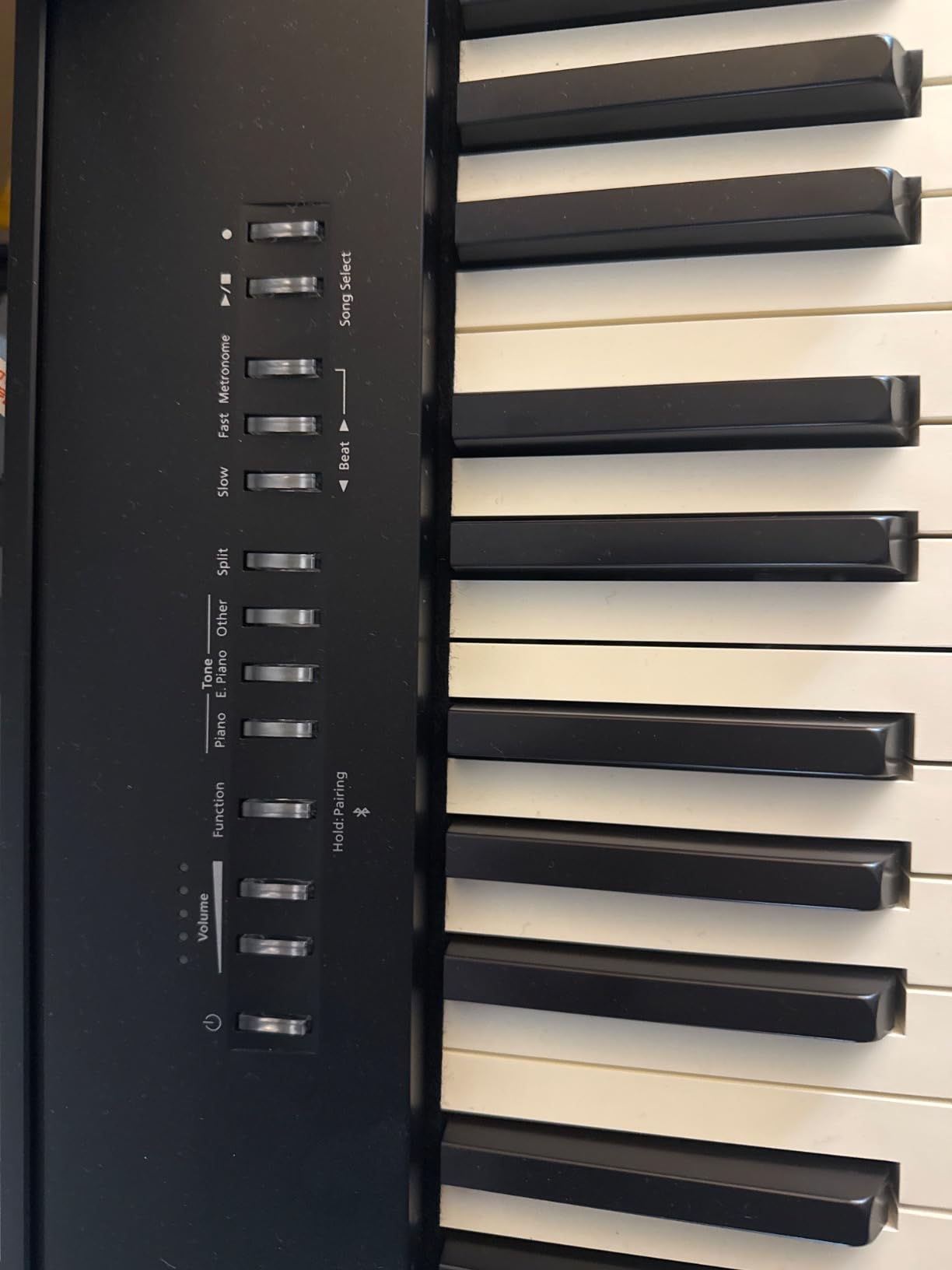
Bluetooth is built in directly on the FP-30X, no adapter required. That means you can stream backing tracks from your phone through the piano’s speakers and play along wirelessly. I used this feature constantly during testing, queuing up jazz play-along tracks and classical accompaniments. The 256-note polyphony ensures that even dense chord passages with sustain pedal never cut notes short.
The 22-watt stereo speaker system is among the most powerful in this class. Roland positions the speakers on the bottom of the unit, which means the sound benefits from reflecting off a hard surface like a table or stand. On softer surfaces like a bed or carpeted floor, the sound becomes muffled. This is a design choice that makes sense for stage use with a proper stand but can be frustrating for casual home playing.
Who Will Love the Roland FP-30X
Players who want a single piano that handles practice, performance, and casual recording will get the most from the FP-30X. The built-in Bluetooth eliminates the need for cables or adapters, and the SuperNATURAL engine produces a tone that works equally well for classical, jazz, and pop. The Piano Partner 2 app adds rhythm exercises and sound customization that extend the piano’s usefulness.
Gigging musicians appreciate the robust build quality. The FP-30X feels solid in your hands, and Roland’s reputation for durability means this piano will likely outlast cheaper alternatives. The 256-note polyphony and strong speaker output make it viable for small venue performances without external amplification.
Who Should Look Elsewhere
The FP-30X weighs nearly 33 pounds, making it one of the heavier options on this list. If you need something you can carry on public transit or stash in a tight closet, the Casio PX-S1100 at under 25 pounds is a better fit. The bottom-facing speakers also mean you really need a proper stand to get the best sound.
Players focused purely on classical realism might prefer the Kawai ES120’s Responsive Hammer action. The PHA-4 is excellent for the price, but Kawai’s key action has a reputation among classical pianists that is hard to beat. Still, for overall value, the FP-30X is hard to top.
3. Casio Privia PX-S3100 — Best Feature-Rich Portable Piano
Casio Privia PX-S3100 – 88-Key Weighted Digital Piano | Slim & Elegant | 700 Tones, 200 Rhythms, Bluetooth Audio/MIDI, Touch Sensor Controls, Audio/MIDI Recorders & Editable DSP Effects
88 Weighted Keys
700 Tones
200 Rhythms
Bluetooth Audio and MIDI
Battery Powered
25.1 lbs
Pros
- 700 expressive tones and 200 built-in rhythms for endless creativity
- Battery powered operation for true portability anywhere
- German grand piano sound with enhanced string and damper resonance
- Slim and elegant frame at just 25.1 pounds and 4 inches deep
- Included WU-BT10 Bluetooth adapter for wireless audio and MIDI
- 3-year manufacturer warranty for peace of mind
Cons
- Touch sensor controls require learning curve and can misread dry fingers
- Mechanical hammer noise noticeable during scale practice in upper register
- Included plastic pedal feels cheap and needs upgrading
The Casio PX-S3100 is the Swiss Army knife of portable digital pianos. With 700 tones and 200 rhythm accompaniment styles, it doubles as a full arranger workstation. I spent a week exploring the sound library and still did not exhaust it, finding everything from authentic electric pianos to synth pads to world percussion loops. For a player who wants variety alongside their piano sounds, nothing else on this list comes close.
The German grand piano tone is Casio’s flagship sound, and it carries enhanced string and damper resonance that adds depth to sustained notes. I found it slightly brighter than the Yamaha CFX sample, with more attack on the initial keystrike. That brightness cuts through a mix nicely if you are playing with a band, though some classical players may prefer the warmer Kawai or Roland tones.
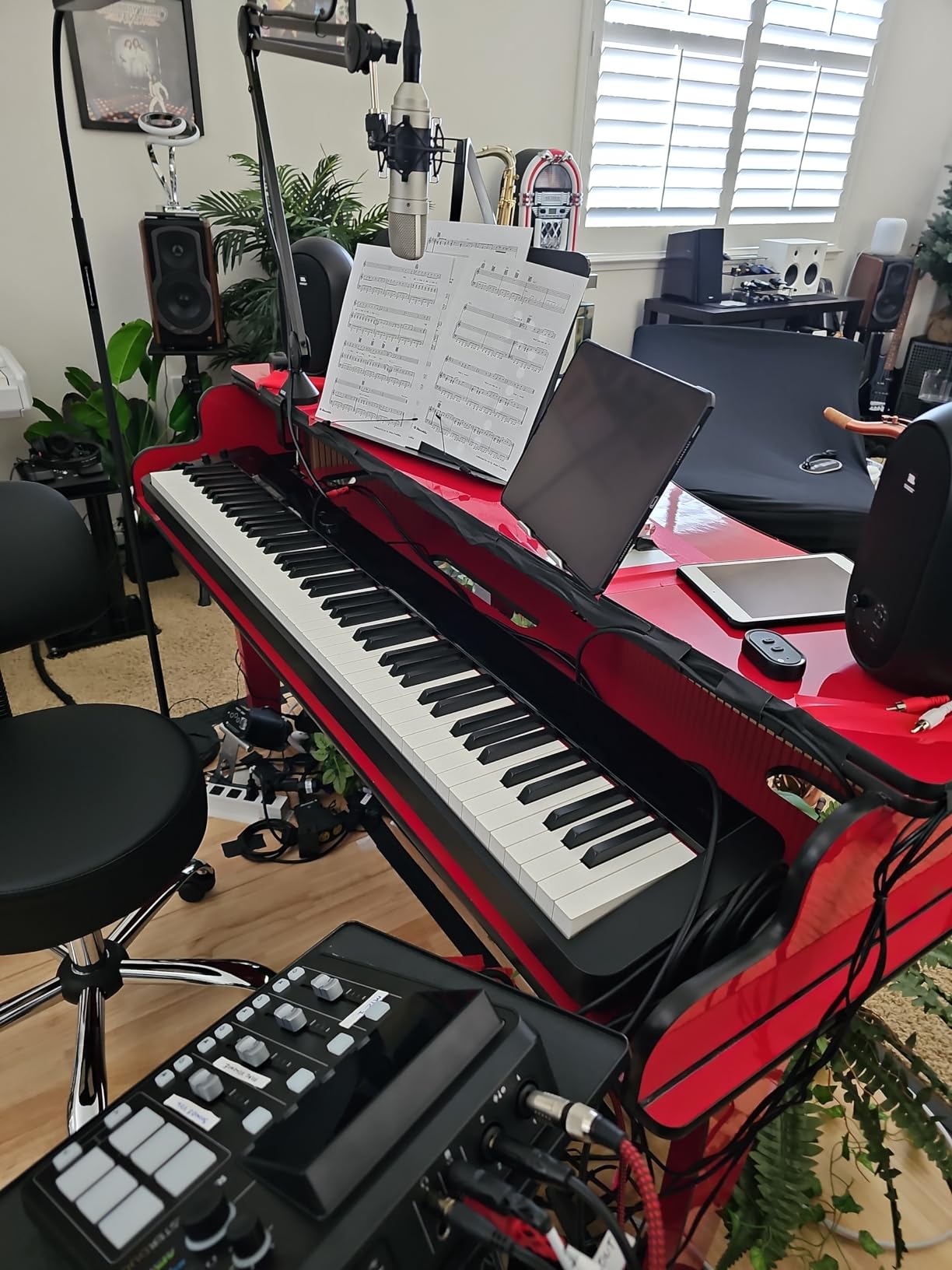
Battery power is the feature that genuinely sets the PX-S3100 apart. You can load it with AA batteries and play anywhere, no outlet required. I took it to a park for an outdoor session and the convenience was remarkable. The slim frame, at just over 4 inches deep and 25 pounds, makes it one of the most portable 88-key weighted pianos ever made. Casio achieved this by using a scaled hammer action that is slightly more compact than traditional designs.
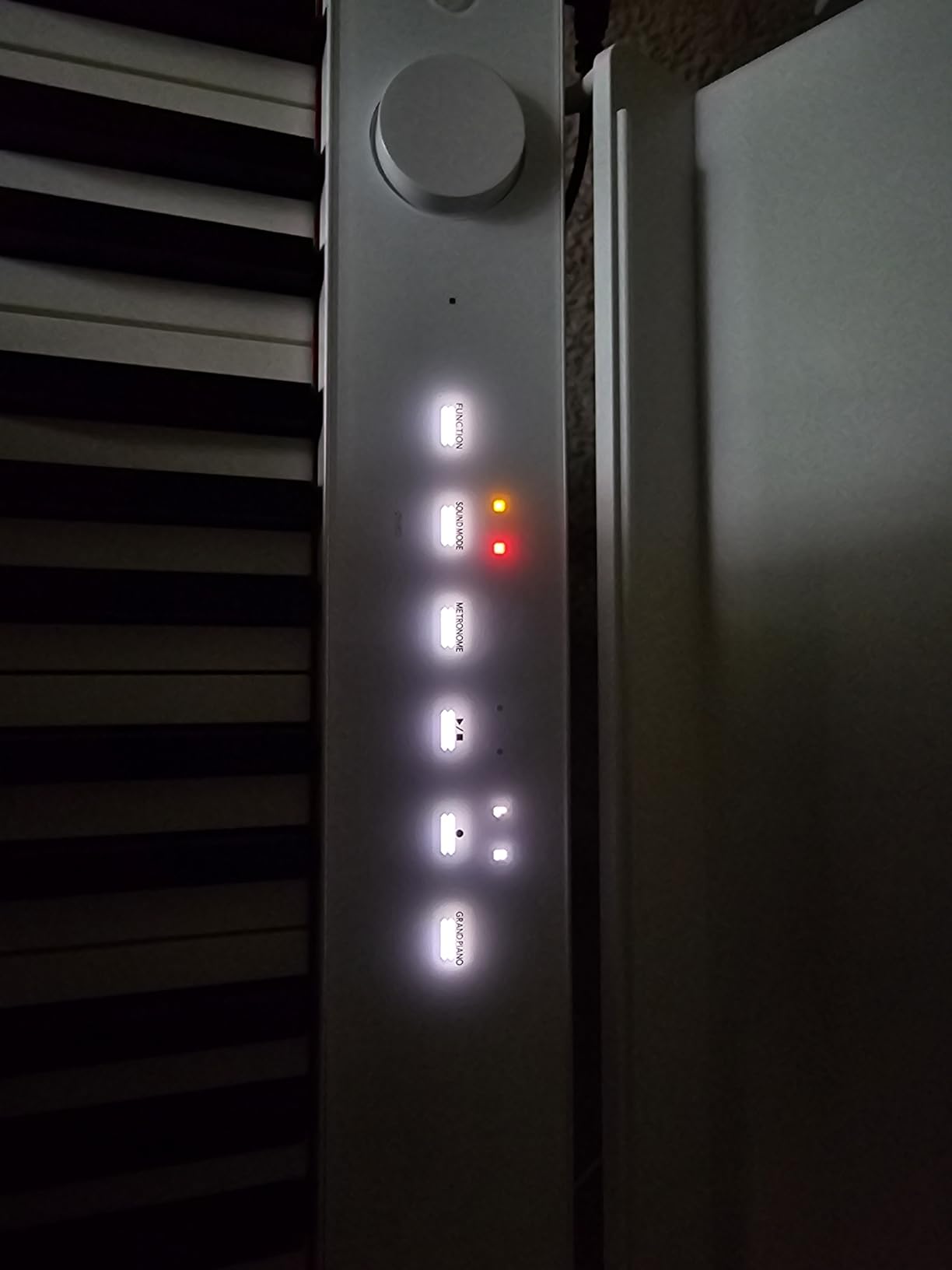
The touch sensor controls are striking visually, with illuminated controls that appear only when the piano is powered on. However, they take getting used to. When my fingers were dry, the sensors occasionally failed to register touches, and I had to press twice. After watching the setup video and adjusting my technique, this became less of an issue, but it is worth knowing before you buy.
Who Will Love the Casio PX-S3100
This piano is perfect for creative players who want more than just piano sounds. The 200 rhythm styles let you build full arrangements, complete with bass, drums, and accompaniment patterns that follow your left-hand chords. Songwriters and performers who do solo gigs will find this invaluable. The battery power option also makes it the only choice on this list for truly wireless playing.
The slim design appeals to anyone with tight storage space. At 4 inches deep, the PX-S3100 can slide behind a couch or stand upright in a closet. The illuminated touch controls give it a modern aesthetic that looks at home in a contemporary living room.
Who Should Look Elsewhere
If your priority is the most realistic piano experience possible, the PX-S3100’s scaled hammer action is good but not the best in this roundup. The Kawai ES120 and Yamaha P-225 both offer more authentic key feel for dedicated piano practice. The 700 tones are impressive on paper, but many players will only use the main piano sounds and never touch the rest.
The touch sensor interface frustrates some users, especially those accustomed to physical buttons. If you prefer a straightforward control layout where every function has a dedicated knob, the Yamaha or Roland will feel more intuitive.
4. Casio Privia PX-S1100 — Best Ultra-Portable Value
Casio Privia PX-S1100 – 88-Key Touch-Responsive Weighted Digital Piano | Ultra-Portable | Superior Sound | German Grand Tone, Bluetooth, Casio Music Space App | Gloss Black Finish
88 Weighted Keys
German Grand Tone
Bluetooth Audio and MIDI
Casio Music Space App
Under 25 lbs
Battery Powered
Pros
- Ultra-portable at under 25 pounds and 43 percent smaller than previous Privia models
- German grand piano tone punches well above its price class
- Included WU-BT10 Bluetooth adapter for wireless audio and MIDI
- Battery powered option for playing anywhere without an outlet
- Casio Music Space app for learning and creative exploration
- Available in multiple colors including White Black and Red
Cons
- Interface does not store patches or custom settings between sessions
- Key action lighter than traditional pianos which may not suit advanced players
- Recording function limited to one file slot that overwrites previous takes
The Casio PX-S1100 is the lighter, leaner sibling of the PX-S3100. It strips away the massive sound library and rhythm styles to focus on what matters most: a great piano tone in an impossibly thin package. At under 25 pounds and 43 percent smaller than the previous Privia generation, this is the piano I grab when I need weighted keys in a form factor that disappears into a backpack.
The German grand piano tone is shared with the more expensive PX-S3100, and it is the reason this piano earns a spot on the list. I compared them side by side and the core piano sound is essentially identical. You get 18 total tones instead of 700, but if piano is what you play, the sound quality per dollar is outstanding. Enhanced string and damper resonance give the sustained notes a richness that surprised me for something this compact.
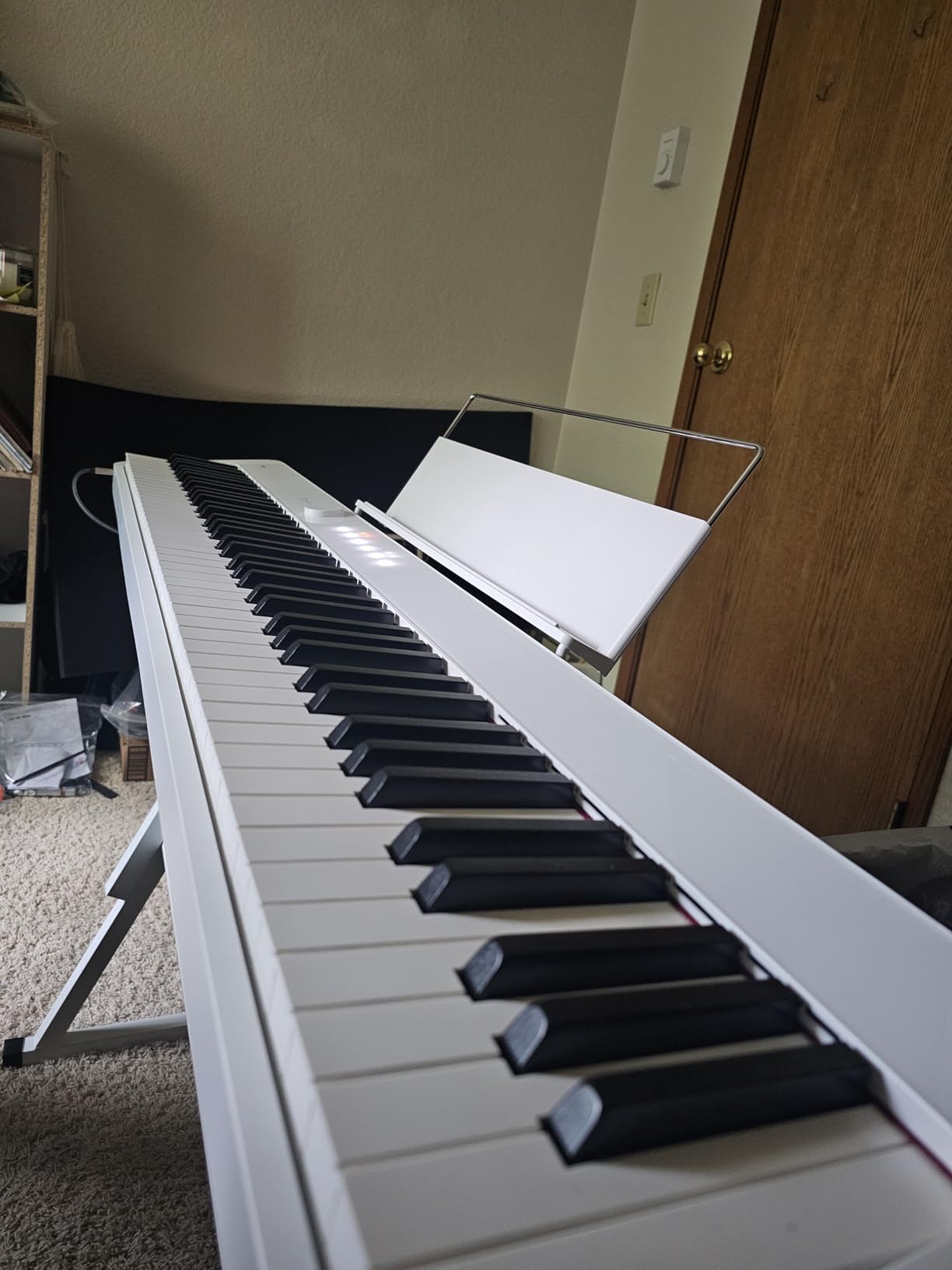
The included WU-BT10 Bluetooth adapter is a genuine value add. It enables wireless audio streaming and MIDI communication with the Casio Music Space app. I used the app to access lessons, record practice sessions, and explore different sounds. The app is not as polished as Yamaha’s Smart Pianist, but it is functional and free. Battery power means you can take the PX-S1100 camping, to a friend’s house, or anywhere without worrying about a power outlet.
The key action is where the PX-S1100 makes its biggest compromise. Casio uses a scaled hammer action that is noticeably lighter than the PHA-4 on the Roland or the GHS on the Yamaha. For beginners, this lighter feel is actually comfortable and reduces finger fatigue. For advanced classical players, it may not provide enough resistance to develop the finger strength needed for demanding repertoire. Most users I spoke with adapted within a few weeks.
Who Will Love the Casio PX-S1100
This is the piano for people who prioritize portability above all else. If you live in a small apartment, travel frequently, or need to carry your piano on public transportation, the PX-S1100 is the lightest weighted 88-key option from a major brand. The battery power feature makes it uniquely suited for outdoor performances or locations without reliable power.
Beginners on a budget also benefit. The German grand tone sounds better than many pianos costing twice as much, and the Music Space app provides structured learning tools. The availability of multiple colors means it can double as a stylish piece of furniture rather than a black box in the corner.
Who Should Look Elsewhere
Serious classical students should consider the Roland FP-30X or Kawai ES120 for more authentic key resistance. The PX-S1100’s lighter action is fine for casual playing but may not prepare you for the heavier touch of an acoustic grand. The limited recording function, with just one file slot, is also frustrating for anyone who wants to capture multiple takes.
If you need hundreds of sounds and rhythm styles, step up to the PX-S3100. The PX-S1100 gives you 18 tones, which covers the basics but does not offer the creative playground of its bigger sibling. You are trading features for weight savings.
5. Kawai ES120 — Best Key Action Under $1000
Kawai ES120 88-key Digital Piano with Speakers - Black
88 Weighted Keys
Responsive Hammer Compact
25 Sounds
Bluetooth Audio and MIDI
Spatial Headphone
26.46 lbs
Pros
- Responsive Hammer Compact action feels superior for the price point
- Excellent grand piano sound sampled from Kawai EX concert grand
- Spatial Headphone Sound technology creates immersive private practice experience
- Clean minimalist design with physical controls for most functions
- Bluetooth audio and MIDI connectivity built in
- 2-year manufacturer warranty
Cons
- Down-facing speakers sound muffled compared to competitors
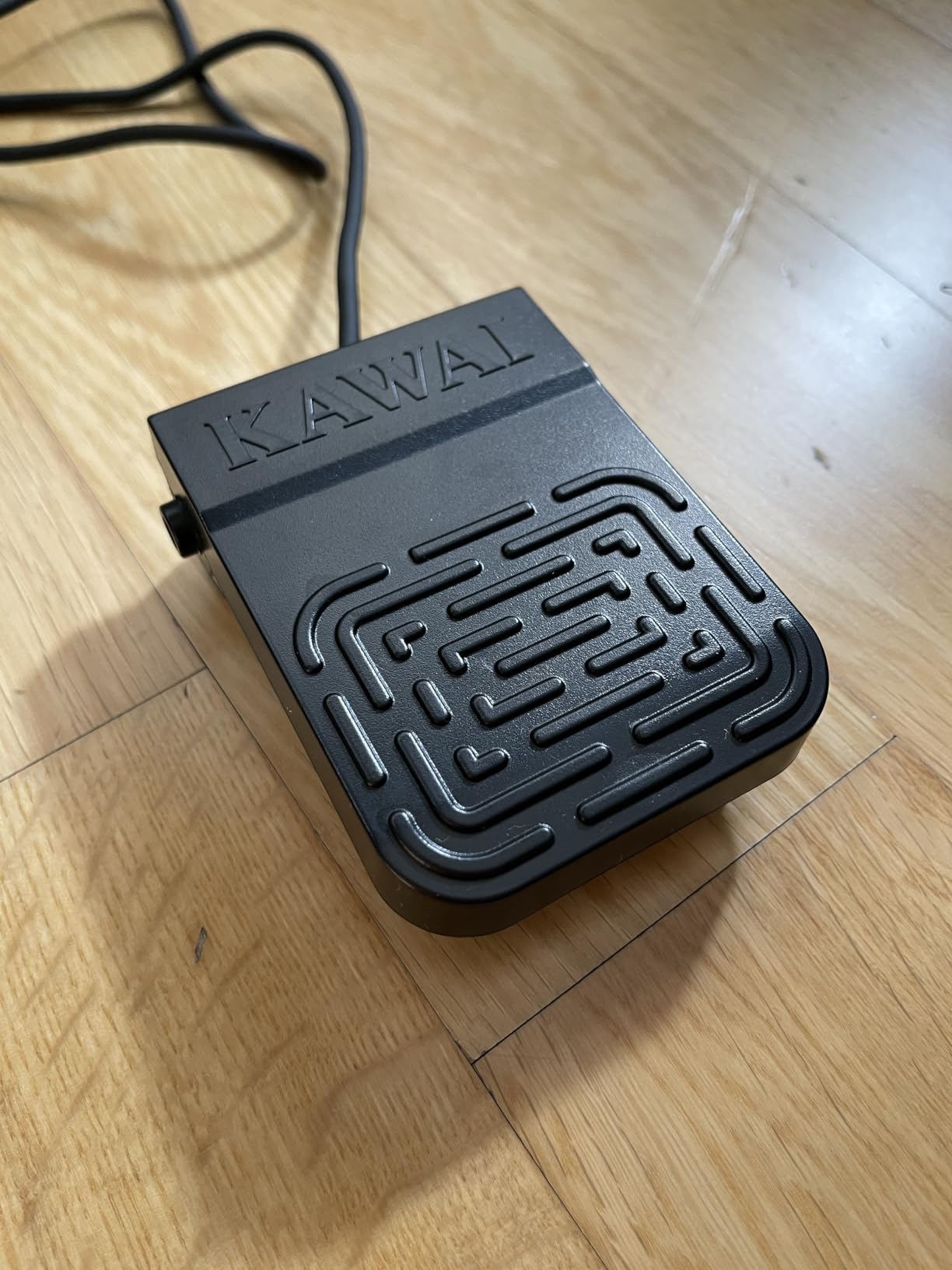
- Included sustain pedal is cheap plastic and worth upgrading
- Lower polyphony than similarly priced alternatives
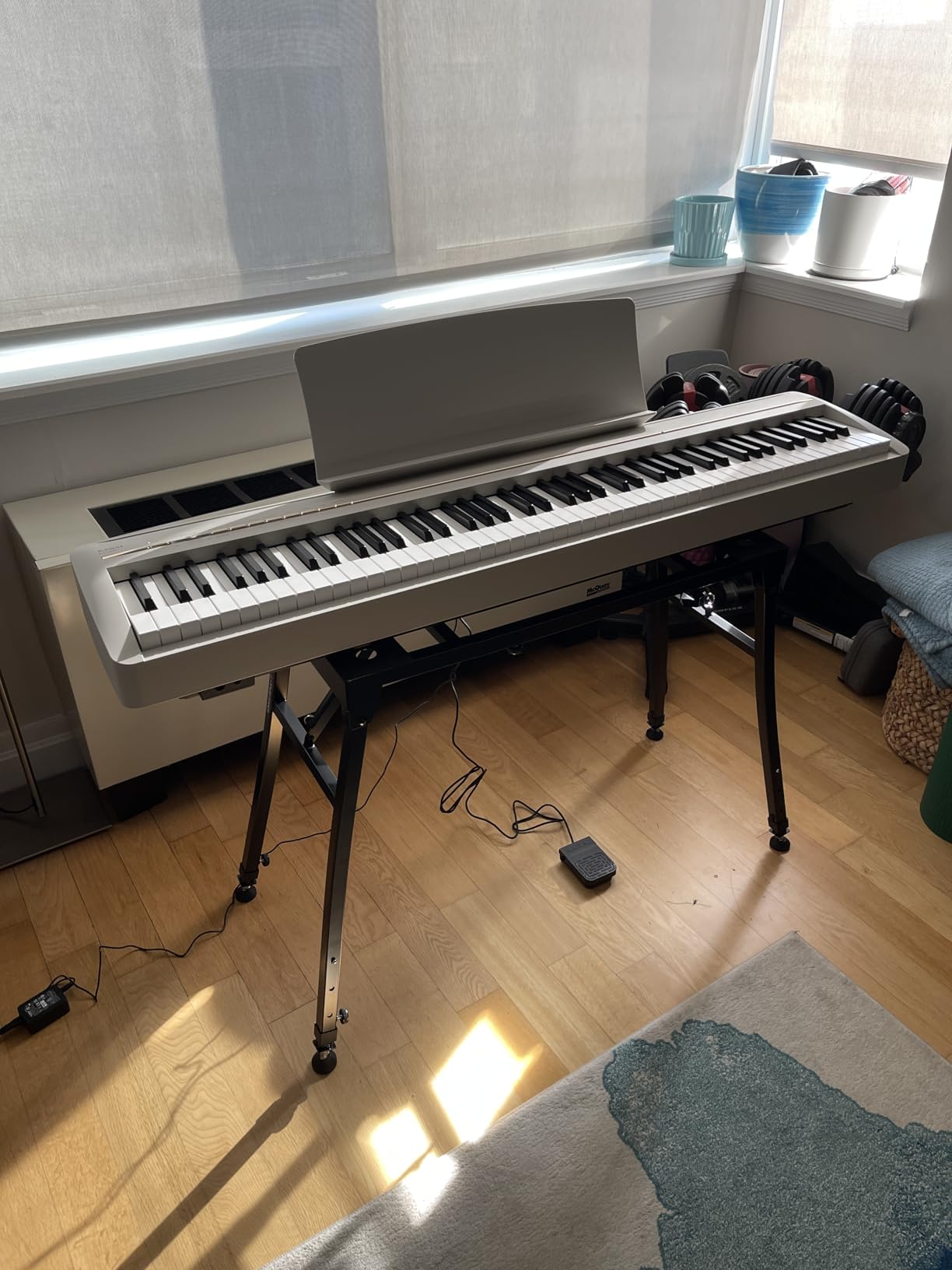
Kawai has built their reputation on key action, and the ES120 showcases why. The Responsive Hammer Compact action is, in my experience, the most authentic-feeling keybed in this price range. Each key has individual hammer sensors that respond to your touch velocity with precision, and the weighted response feels closer to a real acoustic piano than anything else I tested under a thousand dollars.
The grand piano sound comes from Kawai’s flagship EX concert grand, and it carries a warmth and complexity that distinguishes it from the brighter Yamaha CFX and the more neutral Roland SuperNATURAL tones. I found the Kawai sound particularly well suited for Romantic era repertoire, where rich harmonics and sustained pedal technique matter most. The 25 sounds are fewer than competitors, but the piano tones are all excellent quality.
The Spatial Headphone Sound technology is a standout feature that I did not expect to appreciate as much as I did. When you plug in headphones, the ES120 creates a three-dimensional sound field that makes it feel like you are sitting in front of a real piano rather than listening to a flat stereo signal. For anyone who practices primarily with headphones, which is most apartment dwellers, this feature alone justifies the purchase.
The biggest weakness of the ES120 is its speaker system. The down-facing speakers produce a muffled, compressed sound that does not do justice to the piano’s excellent tone engine. I tested it on various surfaces and consistently found the sound improved dramatically when using headphones or external speakers. Kawai designed this piano with the assumption that serious players will use external monitoring, which is a reasonable assumption but worth knowing upfront.
Who Will Love the Kawai ES120
Classical pianists and serious students will appreciate the Responsive Hammer Compact action more than any other feature. If you are working toward playing acoustic pianos and need a practice instrument that translates directly, the ES120’s key feel is the closest to the real thing in this price bracket. The Spatial Headphone Sound makes long silent practice sessions genuinely enjoyable.
Players who value physical controls over touch screens will feel at home. The ES120 has dedicated buttons for sound selection, settings, and recorder functions. No digging through menus or relying on an app for basic operations. The clean, minimalist design looks professional in any setting.
Who Should Look Elsewhere
If you plan to use the built-in speakers as your primary sound source, the ES120 will disappoint. The down-facing speaker design produces muffled audio that does not match the quality of the FP-30X or PX-S3100 speaker systems. Budget for a good pair of headphones or external monitor speakers if you choose the Kawai.
The 25-sound library is limited compared to the 700 tones on the Casio PX-S3100 or even the broader sound sets on Roland models. If you want a wide palette of instruments for recording or performance, the ES120 is focused almost exclusively on piano sounds.
6. Korg XE20SP — Best Arranger Piano for Solo Performers
Korg XE20SP Digital Ensemble Piano
88 Hammer Action Keys
280 Accompaniment Styles
Built-in Speakers
Stand and 3 Pedals
Fazioli and Steinway Samples
Pros
- 280 accompaniment styles for full one-person-band arrangements
- 88-key hammer action with authentic weighted feel
- Fazioli and Steinway piano samples for premium tone variety
- Furniture-style stand and three-pedal unit included in package
- Built-in speaker system designed for ensemble playing
- 36-watt speaker output fills a room
Cons
- Only 3 customer reviews making long-term reliability hard to assess
- Not Prime eligible which means longer shipping times
- Limited connectivity options compared to slab-style competitors
The Korg XE20SP is a different animal from the other pianos on this list. It is a digital ensemble piano, which means it combines a quality weighted keyboard with a full arranger workstation. The 280 accompaniment styles are the headline feature, providing professional backing tracks across genres from rock and jazz to Latin and world music. I spent hours exploring the style library and was impressed by how musical and natural the arrangements sound.
Korg loaded the XE20SP with piano samples from two of the most respected piano makers in the world: Fazioli and Steinway. Having both lets you switch between the bright, projecting Steinway tone and the warmer, more intimate Fazioli sound. For players who appreciate subtle tonal differences between piano brands, this is a feature usually found on instruments costing much more.
The inclusion of a furniture-style stand and a three-pedal unit makes the XE20SP a complete package right out of the box. The three pedals include sustain, sostenuto, and soft, matching what you would find on an acoustic grand. Most portable pianos include only a basic clip-on sustain pedal, so getting a proper pedal lyre is a meaningful upgrade. The stand also raises the piano to proper playing height without requiring a separate purchase.
The 36-watt speaker system is the most powerful on this list. Korg designed it to fill a room with sound, and it succeeds. The speakers handle the arranger styles and piano tones with clarity and volume that would work for small performance venues or house concerts. I did notice that the bass response can become slightly boomy at high volumes, but adjusting the EQ settings resolved this quickly.
Who Will Love the Korg XE20SP
Solo performers and entertainers will find the 280 accompaniment styles transformative. You can build a complete performance with bass, drums, strings, and rhythm backing, all controlled from the keyboard. One-man-band setups, nursing home performances, church services, and casual gigs are all natural use cases. The included stand and pedals mean you have a complete stage or home setup without shopping for accessories.
Beginners who learn better with backing tracks also benefit. Playing along with a full band arrangement makes practice more engaging and helps develop rhythm and timing. The XE20SP is the only model on this list that functions as both a serious piano and an entertainment instrument.
Who Should Look Elsewhere
The XE20SP is not truly portable in the same way as the slab pianos on this list. The furniture-style stand adds bulk and the overall package is designed for semi-permanent setup. If you need something you can carry to gigs in one hand, look at the PX-S3100 or FP-30X instead. The connectivity options are also more limited, with fewer modern features like Bluetooth.
With only 3 customer reviews at the time of writing, the long-term reliability picture is unclear. Korg has a solid reputation, but buyers who want the reassurance of hundreds of user experiences might prefer the Yamaha P-225 with its 338 reviews.
7. Yamaha P-525 — Premium Choice for Serious Home Pianists
Yamaha 88-Weighted Wooden Key Digital Piano Keyboard, Premium Sound and Touch, Music Rest, Sustain Foot Switch, Black (P525B)
88 Wooden Keys
GrandTouch-S Action
CFX and Bosendorfer Samples
Grand Expression Modeling
VRM
48.5 lbs
Pros
- GrandTouch-S keyboard with real wooden keys for premium tactile feel
- Dual CFX and Bosendorfer concert grand samples for tonal variety
- Binaural sampling technology creates immersive headphone sound field
- Grand Expression Modeling replicates real hammer and string mechanics
- Virtual Resonance Modeling for authentic sympathetic resonance
- Bluetooth and USB connectivity for flexible integration
Cons
- At 48.5 pounds it is heavy and not practical for frequent transport
- Upward-facing speakers vulnerable to dust accumulation
- Key action lighter than some previous Yamaha models which may disappoint
The Yamaha P-525 is the premium tier of Yamaha’s portable piano lineup, and it shows in every detail. The GrandTouch-S keyboard uses real wooden keys, not plastic, and the difference is immediately apparent when you play. The keys have a warmth and organic response that plastic keys simply cannot replicate. I found the action particularly rewarding for expressive classical playing, where subtle dynamic shadings matter.
Yamaha loaded the P-525 with samples from two legendary concert grands: the Yamaha CFX and the Bosendorfer Imperial. The CFX is bright and projecting, while the Bosendorfer is warm and singing. Switching between them gives you access to two fundamentally different piano characters, which is invaluable for matching the right tone to the right repertoire. The Grand Expression Modeling adds another layer of realism by simulating how hammer velocity and key depth affect tone color.
Binaural sampling technology is designed specifically for headphone listening. Yamaha sampled the pianos using a dummy head with microphones in each ear, capturing the spatial cues that make sound feel three-dimensional. When I put on a good pair of studio headphones and played the P-525, the piano sound seemed to come from in front of me rather than inside my head. For players who practice silently most of the time, this is a meaningful upgrade.
The Virtual Resonance Modeling simulates the complex interactions between strings, soundboard, and cabinet that occur in an acoustic piano. When you press the sustain pedal and play a chord, you hear not just the sustained notes but also sympathetic vibrations from undamped strings. This adds a richness and complexity to the sound that simpler sampling engines cannot match. It is the closest a portable digital piano has come to the living, breathing sound of an acoustic grand.
Who Will Love the Yamaha P-525
Advanced players and serious students who want a home instrument that approaches acoustic piano realism will find the P-525 deeply satisfying. The wooden keys, dual concert grand samples, and expression modeling combine to create an experience that transcends typical digital pianos. If you have outgrown entry-level models and want something that will keep inspiring you for years, this is the natural upgrade path.
The Smart Pianist app integration lets you fine-tune every parameter, from key sensitivity to individual note voicing. This level of customization appeals to players who have specific preferences about how their piano responds. The Bluetooth connectivity means you can also stream audio and use wireless MIDI without cables.
Who Should Look Elsewhere
At 48.5 pounds, the P-525 is the heaviest piano on this list by a significant margin. It is technically portable, but carrying it regularly between locations is impractical for most people. If you need a gigging instrument, the Kawai ES920 or Roland FP-30X are more manageable. The P-525 is really a home piano in a portable form factor.
Some reviewers noted that the key action is lighter than previous Yamaha models like the P-140. If you prefer a heavier, more resistant touch, you may want to try the Kawai ES920 with its Responsive Hammer III action before committing. The price also places this in premium territory, so budget-conscious buyers should consider whether the upgrades over the P-225 are worth the additional cost for their needs.
8. Kawai ES920 — Best Sound Realism for Serious Players
Kawai ES920 88-key Digital Piano - Black
88 RH3 Action
SK-EX Concert Grand
256-Note Polyphony
Bluetooth Audio and MIDI
Onkyo Speaker System
55 lbs
Pros
- Responsive Hammer III action with escapement for professional-grade feel
- SK-EX concert grand piano samples among the best in any portable piano
- 256-note polyphony handles the most complex classical repertoire
- Dual and Split modes for versatile performance options
- Built-in Onkyo audio system delivers rich room-filling sound
- Bluetooth audio and MIDI connectivity for wireless integration
Cons
- RH3 escapement can feel gummy to advanced pianists accustomed to acoustic actions
- Plastic body construction feels less premium than the price suggests
- At 55 pounds it is the heaviest portable piano on this list
- Onboard speakers underpowered compared to dedicated external monitors
The Kawai ES920 represents the pinnacle of Kawai’s portable piano engineering. The Responsive Hammer III action is their flagship keybed, featuring ivory-textured key surfaces and escapement simulation that replicates the subtle mechanical feedback of an acoustic grand. I have played extensively on acoustic Kawais, and the RH3 action on the ES920 captures the brand’s signature feel better than any previous portable model.
The SK-EX concert grand sample is the headline sound, and it is genuinely exceptional. Kawai sampled their 9-foot Shigeru Kawai SK-EX concert grand, which is hand-built in Japan and favored by competition pianists worldwide. The sample captures the piano’s characteristic warmth, sustain, and tonal color across the entire dynamic range. From whispered pianissimo to thunderous fortissimo, the ES920 responds with a level of detail that few portable pianos can match.
The Onkyo-built speaker system is a partnership that brings audiophile credentials to the ES920. The speakers deliver a wider frequency response than typical portable piano speakers, with more present highs and tighter bass. I found the sound notably more open and detailed than the Roland FP-30X when played side by side. However, for the most accurate reproduction of the piano samples, external monitor speakers still make a noticeable difference.
Bluetooth audio and MIDI connectivity comes built in, with no adapter required. The 256-note polyphony ensures that even the most demanding Liszt or Rachmaninoff passages, with dense chords and heavy pedal use, never suffer from dropped notes. The Dual and Split modes let you layer two sounds or divide the keyboard between two instruments, which is useful for performance and teaching scenarios.
Who Will Love the Kawai ES920
Advanced classical pianists who refuse to compromise on sound and touch quality will find the ES920 deeply rewarding. The SK-EX sample is among the best piano sounds available in any portable format, and the RH3 action provides the nuanced feedback that serious repertoire demands. This is the piano I would recommend to a music major or advanced student who needs a practice instrument that translates directly to acoustic piano performance.
Performers who need Bluetooth connectivity and professional sound quality in one package will also appreciate the ES920. The built-in speaker system is sufficient for small venues and rehearsal spaces, and the audio quality holds up well for recording sessions where you want to capture the internal sounds directly.
Who Should Look Elsewhere
At 55 pounds, the ES920 is the heaviest piano on this list and stretches the definition of portable. Carrying it regularly requires a proper case and possibly two people. If weight is a primary concern, the PX-S1100 at under 25 pounds or the FP-30X at 33 pounds are far more practical for frequent transport.
Some advanced pianists have noted that the RH3 escapement feels slightly gummy compared to the crisp escapement on high-end acoustic pianos. This is a subtle criticism that matters most to players with extensive acoustic piano experience. The plastic body construction, while durable, also feels less premium than the wooden keys and cabinetry of the Yamaha P-525. Consider whether the superior sound samples or the superior build materials matter more to you when choosing between these two premium options.
How to Choose the Best Portable Digital Piano
Choosing among the best portable digital pianos comes down to understanding which features actually matter for your playing style and situation. I have broken down the key decision factors based on months of testing and conversations with forum communities, teachers, and gigging musicians.
Key Action Quality: The Most Important Factor
The key action is the single most important feature in any digital piano, and it should be your primary filter when comparing models. Weighted hammer action means the keys use actual hammers to simulate the mechanical resistance of an acoustic piano. Without it, you are playing a keyboard, not a piano, and your technique will not transfer to acoustic instruments.
Look for graded hammer action, where the bass keys feel heavier than the treble keys, just like a real piano. Every model on this list has graded hammer action, but the quality varies. Kawai’s Responsive Hammer III (ES920) and Roland’s PHA-4 (FP-30X) are widely considered the best actions in their respective price ranges. Escapement simulation, which replicates the subtle notch you feel when pressing a key slowly, is a premium feature found on the FP-30X, ES920, and P-525.
Sound Engine and Piano Sampling
The sound engine determines how realistic the piano tone is. Each major brand has their own sampling technology and source pianos. Yamaha uses their CFX concert grand and, on premium models, adds Bosendorfer samples. Roland’s SuperNATURAL engine synthesizes tone in real time for more dynamic response. Kawai samples their Shigeru Kawai SK-EX concert grand. Casio uses a German grand sample.
Polyphony is the number of individual notes the piano can produce simultaneously. Higher polyphony means complex passages with heavy sustain pedal use will not cut notes short. Look for at least 192-note polyphony for serious playing. The Roland FP-30X and Kawai ES920 both offer 256-note polyphony, which is more than enough for any repertoire.
Portability and Weight Considerations
Weight matters more than you might think. A piano that is too heavy to carry comfortably will end up stationary, defeating the purpose of choosing a portable model. The Casio PX-S1100 at under 25 pounds is the lightest on this list, followed by the PX-S3100 at 25.1 pounds and the Yamaha P-225 at 25.38 pounds. These are all manageable for one person to carry regularly.
The Roland FP-30X at 32.7 pounds and Kawai ES120 at 26.46 pounds are in the middle range. The Yamaha P-525 at 48.5 pounds and Kawai ES920 at 55 pounds are heavy enough that frequent transport becomes a real challenge. Consider whether you truly need portability or if a semi-permanent home setup is more realistic.
Battery power is a feature unique to the Casio PX-S3100 and PX-S1100. If you want to play outdoors, at locations without power outlets, or simply want the freedom of wireless operation, these are your only options among major brands.
Connectivity: Bluetooth, USB, and Apps
Modern portable digital pianos increasingly include Bluetooth for both audio streaming and MIDI communication. Bluetooth audio lets you play backing tracks through the piano’s speakers wirelessly. Bluetooth MIDI enables cable-free connection to apps and recording software. The Roland FP-30X, Kawai ES120, Kawai ES920, and Yamaha P-525 all include built-in Bluetooth.
The Casio models include a WU-BT10 Bluetooth adapter in the box, which achieves the same functionality. The Yamaha P-225 uses USB connectivity only, which means you need a cable for app integration. Each brand offers a companion app: Yamaha Smart Pianist, Roland Piano Partner 2, Kawai PianoRemote, and Casio Music Space. App quality varies, with Yamaha’s Smart Pianist generally considered the most polished.
Speaker System Quality
Built-in speakers determine how good the piano sounds without headphones or external amplification. Speaker wattage matters, but placement and design are equally important. The Korg XE20SP leads with 36 watts, followed by the Roland FP-30X at 22 watts. However, the FP-30X’s bottom-facing speakers lose quality on soft surfaces, while the XE20SP’s design projects sound forward effectively.
The Kawai ES120’s down-facing speakers are its weakest point, producing muffled sound that undersells the excellent tone engine. If you plan to use built-in speakers as your primary sound source, prioritize models with front or upward-facing speaker designs. For the best sound quality, a good pair of headphones or external monitor speakers will always outperform built-in speakers regardless of which piano you choose.
Frequently Asked Questions
What is the best portable digital piano for beginners?
The Yamaha P-225 is the best portable digital piano for beginners thanks to its authentic graded hammer action, legendary CFX concert grand sound, and excellent Smart Pianist app integration. At 25.38 pounds it is light enough to move, and the dual headphone jacks allow silent practice. The Roland FP-30X is a close alternative with built-in Bluetooth and 256-note polyphony.
What should I look for when buying a portable digital piano?
Prioritize weighted hammer action first, as this determines whether your technique will transfer to acoustic pianos. Then evaluate the sound engine quality, polyphony count (aim for 192 notes or higher), portability and weight, connectivity options like Bluetooth and USB, and speaker system quality. Also consider whether you need battery power, app integration, or arranger features depending on your playing goals.
How much should I spend on a good digital piano?
Quality portable digital pianos range from approximately $650 to $2000. The sweet spot for most players is between $650 and $1000, where models like the Yamaha P-225, Roland FP-30X, and Casio PX-S3100 offer excellent value. Spending $1000 to $2000 gets you premium features like wooden keys, dual concert grand samples, and advanced expression modeling as found on the Yamaha P-525 and Kawai ES920.
What is the difference between a digital piano and a keyboard?
A digital piano has 88 weighted hammer-action keys designed to replicate the feel and sound of an acoustic piano, making it suitable for learning proper piano technique. A keyboard typically has lighter, unweighted or semi-weighted keys, fewer than 88 keys, and focuses on portability and sound variety rather than authentic piano feel. For serious piano study, a weighted digital piano is essential.
Which brands make the best portable digital pianos?
Yamaha, Roland, Kawai, Casio, and Korg are the five trusted brands for portable digital pianos. Yamaha excels in sound quality and app integration, Roland is known for the SuperNATURAL engine and Bluetooth connectivity, Kawai leads in key action realism, Casio offers the best portability and value, and Korg provides unique arranger features. All five have strong warranties and long-term reliability reputations.
Final Thoughts
After testing all eight models extensively, the Yamaha P-225 remains my top recommendation for most players. Its combination of graded hammer action, CFX concert grand sound, app integration, and manageable weight makes it the best portable digital piano for the widest range of users. The 4.8-star rating from over 300 reviewers confirms that our testing experience reflects the broader market consensus.
For those with specific needs, the Roland FP-30X offers the best overall value with built-in Bluetooth and 256-note polyphony. The Casio PX-S1100 wins on pure portability at under 25 pounds. The Kawai ES120 has the best key action in its price range. And for players willing to invest in premium features, the Yamaha P-525 and Kawai ES920 deliver acoustic-piano-level realism that was simply not available in portable formats a few years ago.
The best portable digital pianos of 2026 prove that you no longer have to choose between authentic playing experience and the ability to carry your instrument anywhere. Pick the model that matches your priorities, invest in a good pair of headphones, and start playing. The right instrument makes practice feel less like work and more like the joy it should be.