
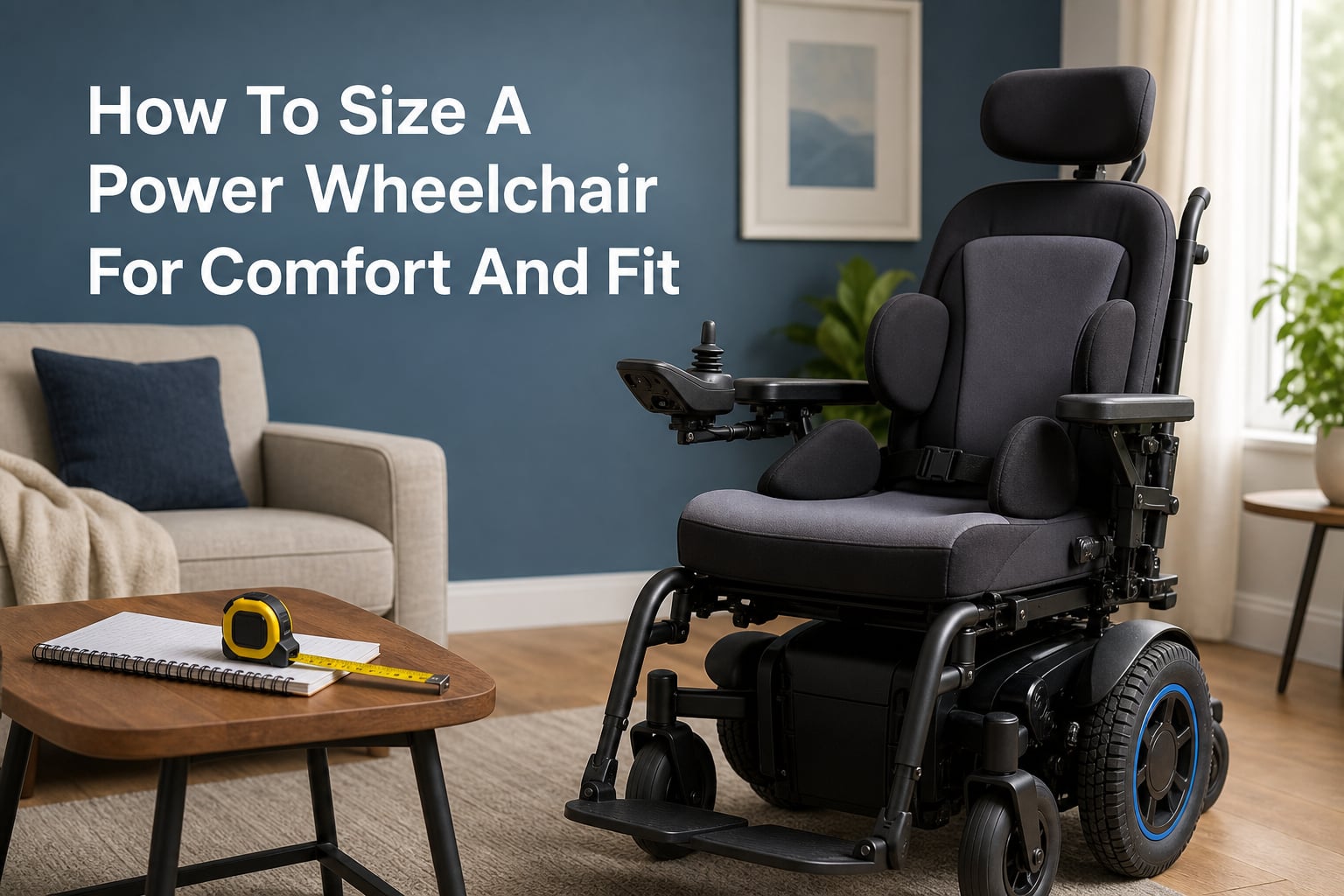
Finding the right power wheelchair size can feel overwhelming, but proper fit directly affects your comfort, health, and independence. I’ve seen too many people struggle with wheelchairs that cause pressure sores, back pain, or shoulder strain simply because they weren’t sized correctly. In this guide, I’ll walk you through exactly how to size a power wheelchair for optimal comfort and fit.
Whether you’re working with an Assistive Technology Professional (ATP) or gathering measurements before your fitting appointment, understanding these key dimensions helps you advocate for your needs. A properly fitted power wheelchair should feel like an extension of your body, not a constraint.
Why Proper Power Wheelchair Fit Matters
The stakes of proper wheelchair sizing extend far beyond comfort. An ill-fitting wheelchair can cause serious health complications that compound over time. I’ve talked with users who developed pressure ulcers, chronic back pain, and joint problems from chairs that were just slightly off in their measurements.
Pressure sores represent one of the most serious risks. When your body weight isn’t distributed properly across the seat cushion, specific points bear too much pressure. This reduces blood flow and damages tissue, sometimes before you even feel discomfort. Proper seat width, depth, and cushion selection directly prevent these dangerous pressure points.
Shoulder strain creates another common problem, especially for users who self-propel or frequently reach. A wheelchair that’s too wide forces your arms into an unnatural position, straining rotator cuffs and shoulder joints with every movement. Many users report shoulder pain after years in chairs that were just a few inches too wide.
Poor positioning also affects your breathing, digestion, and circulation. A seat that’s too deep can compress your abdomen. A backrest that’s too tall might limit shoulder movement. These subtle issues reduce quality of life and can lead to secondary health problems.
For full-time wheelchair users, even small fit issues create cumulative damage. Spending 12-14 hours daily in a poorly fitted chair means thousands of hours of strain on your body. The investment in proper sizing pays dividends in health outcomes and independence.
How to Size a Power Wheelchair: Key Measurements
Power wheelchair sizing involves several interconnected measurements that work together to create proper positioning. Each dimension affects the others, and getting one measurement wrong can cascade into fit problems. Here’s what you need to measure.
Seat Width Measurement
Seat width directly affects your stability, maneuverability, and shoulder health. To measure correctly, sit on a firm surface and measure the widest part of your hips or thighs. Add 1-2 inches to this measurement for clearance and clothing.
Most adults need a seat width between 16 and 20 inches. Bariatric wheelchairs typically range from 20 to 30 inches for users who need additional space. The goal is the narrowest width that still allows comfortable seating without hip compression.
A seat that’s too narrow causes hip compression and increases pressure sore risk on the outer thighs. A seat that’s too wide creates stability problems and forces your arms outward, straining shoulders during reaching and propulsion. Both extremes cause problems, so precision matters.
Seat Depth Measurement
Seat depth determines how well your thighs are supported without creating pressure behind your knees. Measure from the back of your hip to the back of your knee while seated, then subtract 1-2 inches for clearance.
The clearance matters because you need space behind your knees to prevent circulation problems. A common rule: you should fit approximately three fingers between the front edge of the seat and the back of your knee. This prevents pressure on the popliteal area where blood vessels run close to the surface.
Too much seat depth causes users to slide forward, creating poor posture and increasing pressure sore risk on the tailbone. Too little depth removes thigh support, concentrating pressure on the ischial tuberosities (sitting bones) and causing discomfort.
Seat-to-Floor Height
Seat-to-floor height affects your ability to reach the floor, fit under desks and tables, and maintain proper leg positioning. Standard measurements range from 18 to 22 inches, but this varies based on your lower leg length and knee angle.
This measurement connects directly to the 90-90-90 positioning rule. Your knees should bend at approximately 90 degrees when seated, with your thighs parallel to the ground. If your feet don’t reach the footplates, the seat is too high. If your knees rise above your hips, it’s too low.
Consider your typical activities when setting seat height. If you regularly work at desks or eat at tables, measure the clearance you need. Some power wheelchairs offer power seat elevation, allowing height adjustment throughout the day for different tasks.
Backrest Height and Width
Backrest height depends on your posture needs and upper body strength. Standard backrests measure 14-18 inches from the seat, providing support up to the mid-back. Higher backrests offer more support but may limit shoulder movement and self-propulsion.
To find your backrest height, measure from your hip bone (greater trochanter) to the top of your shoulder blades or desired support level. Users with limited trunk control often need higher backrests for stability. Active users who shift position frequently may prefer lower profiles.
Backrest width matters for comfort and positioning. The backrest should be slightly wider than your torso at the widest point of your chest, typically 14-18 inches. A backrest that’s too narrow feels restrictive, while one that’s too wide provides inadequate lateral support.
Armrest Height
Proper armrest height supports your forearms without raising your shoulders. When seated with your shoulders relaxed and elbows at approximately 90 degrees, the armrest should support your forearm about 1-2 inches below elbow level.
Armrests that are too high push your shoulders upward, creating tension and restricting circulation. Armrests that are too low force you to lean to reach them, causing poor posture and increasing fall risk.
Many power wheelchairs offer adjustable armrests that can be fine-tuned after delivery. Some models include flip-back armrests for easier transfers, while others offer desk-length or full-length options depending on your needs.
Leg Rest and Footrest Length
Leg rest length determines the angle of your lower legs and the position of your feet on the footplates. Measure from the back of your knee to the bottom of your heel while seated with your knee at 90 degrees.
Standard footrests position feet flat on the footplates with ankles at approximately 90 degrees. Elevating legrests raise your feet and knees for users who need circulation support or have limited knee flexibility. Some conditions require different angles, which an ATP can assess.
Footplate angle matters for stability. Your feet should rest securely without sliding forward or sideways. Calf straps help secure your lower legs, especially if you have limited sensation or movement in your feet.
Understanding the 90-90-90 Rule for Wheelchair Positioning
The 90-90-90 rule represents the ideal seated posture for wheelchair users. This positioning standard refers to three key 90-degree angles: at your hips, knees, and ankles. When properly positioned, your thighs should be level, your lower legs perpendicular to the floor, and your feet flat on the footplates.
At your hips, the 90-degree angle between your torso and thighs keeps your pelvis in a neutral position. This prevents sliding forward, which causes posterior pelvic tilt and increases pressure on your tailbone. A properly angled hip position distributes weight across your thighs and buttocks evenly.
The knee angle affects circulation and stability. With your knees bent at 90 degrees, blood flows freely through the popliteal area behind your knee. Compressing this area by having your knees bent too sharply or too extended can reduce circulation and cause swelling.
Ankle positioning at 90 degrees keeps your feet stable on the footplates. This provides a stable base for your entire body and prevents your feet from sliding into dangerous positions. Some users need slight variations due to contractures or limited range of motion, which an ATP can accommodate.
While the 90-90-90 rule provides an ideal baseline, individual needs vary. Users with certain medical conditions may require different angles. Tilt-in-space and recline functions allow position changes throughout the day while maintaining proper alignment.
DIY Measurement Techniques for Power Wheelchairs
Before your professional fitting appointment, gathering your own measurements helps you understand your needs and communicate effectively with your ATP. These home measurements don’t replace a clinical fitting, but they prepare you for productive conversations.
For accurate home measurements, you’ll need a flexible tape measure, a firm chair or bench, and ideally someone to help. Wear the type of clothing you typically use in your wheelchair. Sit on a firm surface that mimics a wheelchair seat.
Step 1: Measure Your Hip Width
Sit upright on a firm, flat surface. Have your helper measure the widest part of your hips or thighs while you’re seated. This typically occurs at your hip bones or outer thighs. Record this number and add 1-2 inches for clearance.
Step 2: Measure Your Seat Depth
While seated with your back against a firm surface, measure from the back of your hip to the back of your knee. Subtract 1-2 inches from this measurement for proper clearance. Verify by checking that you can fit 2-3 fingers behind your knee.
Step 3: Measure Your Lower Leg Length
From a seated position with your knee bent at approximately 90 degrees, measure from the back of your knee to the bottom of your heel. This determines your leg rest length. Add any shoe height you typically wear.
Step 4: Measure Your Backrest Height
While seated, measure from the surface you’re sitting on to your desired backrest position. For most users, this means measuring to the bottom of your shoulder blades. Users who need more support may measure to the top of their shoulders.
Step 5: Check Your Armrest Height
Sit with your shoulders relaxed and elbows at 90 degrees. Measure from the seat surface to the bottom of your forearm, approximately 1 inch below your elbow. This gives you a starting armrest height that won’t raise your shoulders.
Step 6: Note Your Weight
Weigh yourself accurately, as weight capacity directly affects wheelchair safety and durability. Choose a wheelchair rated for at least 20% more than your body weight to account for clothing, accessories, and daily variations.
The Professional Power Wheelchair Fitting Process
Professional fitting by an Assistive Technology Professional (ATP) remains essential for anyone who will use a power wheelchair regularly. ATPs have specialized training in complex rehabilitation technology and understand how body measurements translate to wheelchair specifications.
During a fitting appointment, the ATP assesses far more than basic measurements. They evaluate your range of motion, muscle tone, sensation, skin integrity, and functional abilities. This comprehensive assessment ensures your wheelchair supports your specific needs.
A typical fitting involves several phases. First, the ATP reviews your medical history and discusses your daily activities, home environment, and transportation needs. This context helps them recommend appropriate features and configurations.
The physical assessment follows. The ATP measures your body dimensions in various positions, checking for asymmetries or conditions that affect fit. They assess your posture, balance, and trunk control to determine seating and positioning needs.
Based on this assessment, the ATP recommends specific wheelchair configurations. They consider drive systems (front-wheel, mid-wheel, or rear-wheel drive), seating options, control systems, and accessories. Your input about preferences and lifestyle factors into these recommendations.
After delivery, a follow-up fitting fine-tunes the wheelchair to your actual experience. The ATP adjusts components, checks pressure distribution, and ensures all systems work correctly. This appointment typically occurs within a few weeks of delivery.
Annual reassessments catch fit issues before they cause problems. Changes in weight, health conditions, or functional abilities can shift your positioning needs over time. Regular check-ins with your ATP maintain optimal fit throughout your wheelchair’s lifespan.
Signs Your Power Wheelchair Doesn’t Fit Properly
Recognizing fit problems early prevents health complications and improves your comfort. Here are the most common signs that your wheelchair needs adjustment or replacement.
Physical Symptoms
Persistent pain in your back, shoulders, hips, or legs indicates positioning problems. Some discomfort during long periods of sitting is normal, but ongoing pain that worsens over time suggests improper fit. Pay attention to when pain occurs and what positions relieve it.
Pressure marks on your skin after sitting signal inadequate weight distribution. Check your hips, thighs, and lower back after extended sitting. Red marks that don’t fade within 30 minutes indicate excess pressure that could lead to tissue damage.
Numbness or tingling in your legs, feet, or buttocks suggests circulation problems. This often results from seat depth issues, improper leg rest angles, or inadequate cushion support. Report these symptoms to your ATP promptly.
Functional Signs
Difficulty reaching controls or surfaces indicates armrest or seat height problems. If you strain to reach your joystick or frequently used items, your positioning needs adjustment.
Instability when leaning or turning suggests inadequate lateral support. This increases fall risk and limits your independence in daily activities.
Steering problems or unintended drift might indicate that your positioning doesn’t allow proper control access. Your joystick position and arm support directly affect your ability to drive accurately.
Checklist: Signs of Poor Fit
Use this checklist to evaluate your current wheelchair fit:
You slide forward in the seat frequently
Your feet don’t rest flat on the footplates
You feel pressure behind your knees
Your shoulders feel raised or tense
You have difficulty reaching the joystick or controls
Red marks appear on your hips or thighs after sitting
You experience numbness in your legs or buttocks
Your back doesn’t contact the backrest properly
You feel unstable during turns or on uneven surfaces
The wheelchair feels too wide or too narrow
If you experience several of these signs, schedule an appointment with your ATP for evaluation.
Power Wheelchair Types and Size Considerations
Different wheelchair categories serve different needs, and size considerations vary accordingly. Understanding these categories helps you advocate for appropriate equipment.
Travel/Portable Power Wheelchairs
Travel power wheelchairs prioritize transportability over extensive positioning options. These typically feature narrower seats (14-18 inches), compact frames, and lighter weights under 50 pounds. They work well for occasional use but may not provide adequate support for full-time users.
Size trade-offs include less adjustability, smaller wheels, and limited cushion options. These wheelchairs work best for users with good trunk control who need mobility assistance primarily for outings.
Standard/Full-Size Power Wheelchairs
Standard power wheelchairs offer the most versatility for daily use. Seat widths range from 16-22 inches, with extensive adjustability and positioning options. These accommodate most users comfortably and work well for full-time use.
Full-size models support more customization, including different seating systems, control options, and accessories. They’re designed for all-day comfort and long-term durability.
Heavy-Duty/Bariatric Power Wheelchairs
Bariatric power wheelchairs serve users who need wider seats and higher weight capacities. Seat widths range from 20-30 inches, with weight capacities from 400-700+ pounds. Reinforced frames and heavy-duty motors handle increased loads.
These wheelchairs require wider doorways and larger turning radiuses. If you need a bariatric chair, measure your home’s doorways and hallways to ensure adequate clearance.
Complex Rehab Power Wheelchairs
Complex rehabilitation wheelchairs provide extensive customization for users with significant positioning needs. These include features like tilt-in-space, recline, power seat elevation, and custom seating systems. ATPs work closely with users to configure these systems.
These wheelchairs require professional fitting and often involve insurance documentation. The investment pays off for users who need specialized positioning support.
Insurance and Coverage for Properly Fitted Power Wheelchairs
Navigating insurance coverage for a properly fitted power wheelchair requires understanding documentation requirements and working effectively with your healthcare team.
Medicare Coverage
Medicare Part B covers power wheelchairs as durable medical equipment when certain conditions are met. You must have a mobility limitation that prevents you from performing activities of daily living, and you must need the wheelchair inside your home.
Medicare requires documentation from your doctor and a face-to-face examination. The process typically involves a physical therapist or ATP evaluation, prescription, and detailed documentation of medical necessity.
Documentation Requirements
Successful insurance claims require thorough documentation. Your doctor must prescribe the wheelchair and document your medical condition. An ATP or physical therapist must complete a detailed evaluation showing why a power wheelchair is necessary and why specific features are required.
The evaluation should explain how your condition affects mobility, why manual wheelchairs or scooters won’t meet your needs, and what specific features you require. Working with an ATP experienced in insurance documentation improves approval rates.
Working With Your ATP
Your ATP plays a crucial role in the insurance process. They understand documentation requirements and can advocate for appropriate equipment. Ask questions about the process and timeline so you understand what to expect.
If your claim is denied, you have appeal rights. Your ATP can help with appeals by providing additional documentation or clarifying medical necessity. Many denials are overturned on appeal when properly supported.
Private Insurance Considerations
Private insurance policies vary widely in coverage. Check your policy for durable medical equipment benefits and any pre-authorization requirements. Some plans require specific providers or limit equipment choices.
Even with coverage, you may face out-of-pocket costs. Understand your deductible, co-insurance percentage, and any annual limits before proceeding. Ask your ATP about cost estimates and payment options.
FAQs
How do I know what size wheelchair I need?
To determine your wheelchair size, measure your hip width (add 1-2 inches for clearance), seat depth (back of hip to back of knee minus 1-2 inches), lower leg length (back of knee to heel), and backrest height (seat to shoulder blade level). Professional fitting by an ATP ensures accurate measurements and proper configuration.
What is the 90 90 90 rule for wheelchairs?
The 90-90-90 rule describes ideal seated posture with 90-degree angles at your hips, knees, and ankles. Your thighs should be level, lower legs perpendicular to the floor, and feet flat on footplates. This positioning distributes weight evenly, promotes circulation, and prevents pressure sores and postural problems.
Do power wheelchairs need to be fitted to each individual person?
Yes, power wheelchairs should be fitted to each individual user. A proper fitting by an ATP (Assistive Technology Professional) ensures the wheelchair matches your body dimensions, supports your posture, prevents health complications, and accommodates your specific functional needs. Off-the-shelf wheelchairs rarely provide optimal fit without professional adjustment.
How to measure for power wheelchair?
Measure seat width at your widest hip point plus 1-2 inches. Measure seat depth from your hip back to behind your knee minus 1-2 inches. Measure leg rest length from knee back to heel bottom. Measure backrest height from seat to desired support level. Always have measurements verified by an ATP before purchase.
Conclusion: Getting the Right Fit for Your Power Wheelchair
Proper power wheelchair sizing requires attention to multiple measurements and understanding how they work together. From seat width and depth to backrest height and leg rest length, each dimension affects your comfort, health, and independence.
The 90-90-90 positioning rule provides a foundation for optimal posture, but individual needs vary. Working with an experienced ATP ensures your wheelchair is configured for your specific body and lifestyle. Professional fitting remains essential for anyone who uses a power wheelchair regularly.
Don’t ignore signs of poor fit. Pressure marks, pain, numbness, and functional difficulties all indicate that adjustments are needed. Addressing fit problems early prevents serious health complications.
If you’re navigating insurance coverage for a fitted wheelchair, work closely with your healthcare team and ATP to document medical necessity. Understanding the process and requirements improves your chances of approval.
Your power wheelchair should support your life, not limit it. With proper sizing and professional fitting, you gain comfort, independence, and protection from positioning-related health problems. Take the time to get it right.