
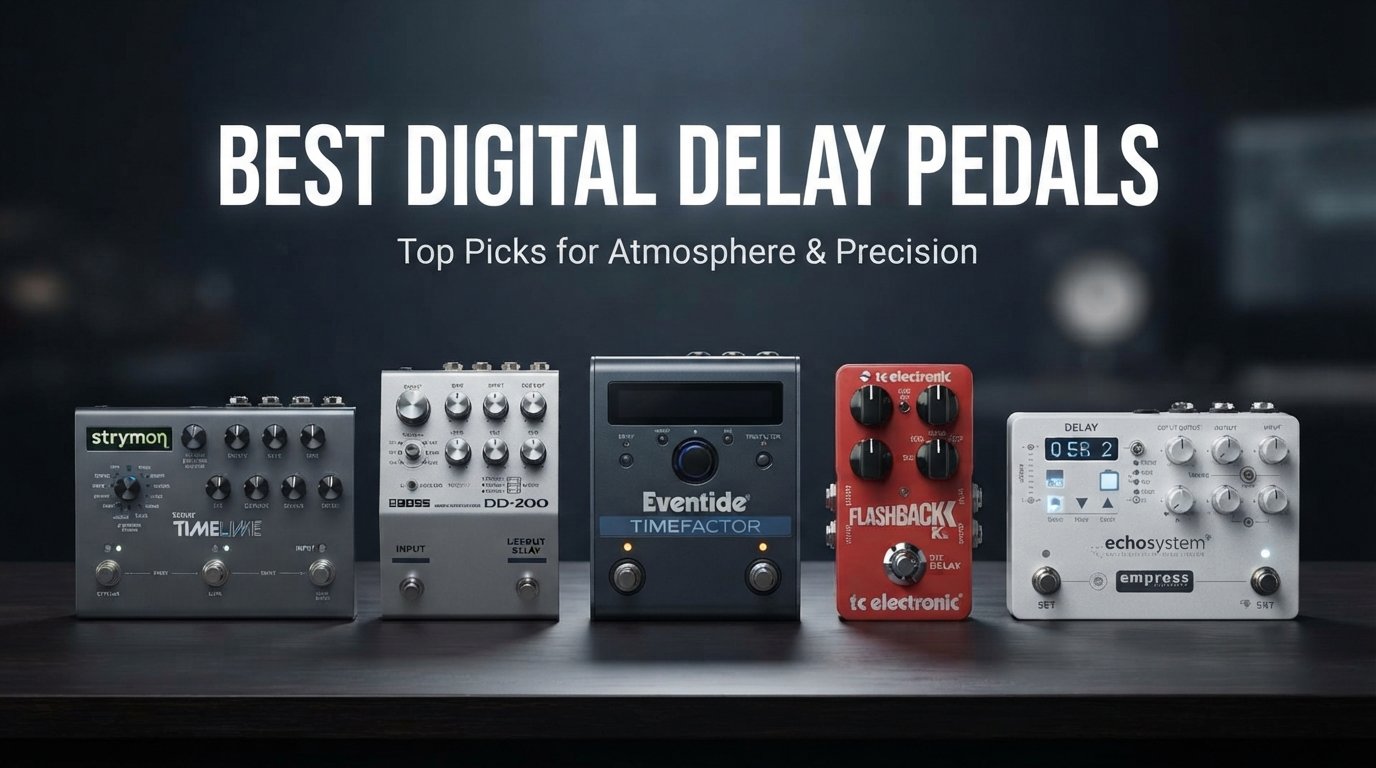
Finding the best digital delay pedals means cutting through dozens of options from Boss, TC Electronic, Strymon, and a growing field of boutique builders. I have spent the last several months running 10 of the most recommended digital delay pedals through clean amps, dirty amps, stereo rigs, and live sets to see which ones actually deliver. What I found surprised me.
Modern digital delay guitar pedals have closed the gap with analog units in ways that would have seemed impossible ten years ago. The crystal-clear repeats that once made digital delays sound sterile are now joined by warm emulations, tape character, modulation, reverse delays, and shimmer effects. Some of these pedals pack 11 delay modes into a compact stompbox the size of a sandwich.
This guide covers everything from a $38 budget pick to a $207 professional tape echo recreation. Whether you need a simple slapback for country, dotted-eighth textures for worship, or massive ambient washes for shoegaze, I will help you find the right delay pedal for guitar without wasting money on features you will never use.
Top 3 Digital Delay Pedals We Recommend
Best Digital Delay Pedals in 2026: Full Comparison
| Product | Specifications | Action |
|---|---|---|
 BOSS DD-8 Digital Delay
|
|
Check Latest Price |
 BOSS DD-3T Digital Delay
|
|
Check Latest Price |
 TC Electronic Flashback 2
|
|
Check Latest Price |
 JHS 3 Series Delay
|
|
Check Latest Price |
 Walrus Audio Fundamental Delay
|
|
Check Latest Price |
 Fender Hammertone Delay
|
|
Check Latest Price |
 JOYO Aquarius R-07
|
|
Check Latest Price |
 Donner Echo Square
|
|
Check Latest Price |
 JOYO JF-08 Digital Delay
|
|
Check Latest Price |
 Dunlop Echoplex Delay
|
|
Check Latest Price |
1. BOSS DD-8 Digital Delay – The Most Versatile Compact Delay
BOSS Digital Delay Guitar Effects Pedal (DD-8)
11 delay modes
Up to 10s delay
Tap tempo
40s looper
Stereo I/O
9V power
Pros
- Built like a tank with BOSS durability
- No volume drop when engaging effect
- Versatile 11 modes including shimmer and reverse
- 40-second looper with overdub capability
- Three new delay types: Warm
- Plus-RV
- and GLT
Cons
- Tape setting not as authentic as dedicated tape pedals
- Looper duration is relatively short at 40 seconds
The BOSS DD-8 sat on my pedalboard for three months straight, and I kept finding new sounds every week. This is the most advanced compact delay BOSS has ever built, packing 11 modes into the familiar indestructible compact housing. I ran it through a Fender Twin Reverb for clean work and a Marshall JCM800 for dirt, and the DD-8 never failed to deliver something inspiring.
What makes the DD-8 special is the three new delay types BOSS developed specifically for this pedal. The Warm mode gives you analog-style degradation on repeats. The Plus-RV mode adds reverb to your delay tails, which saved me from needing a separate reverb pedal on small gig stages. The GLT mode creates rhythmic gated delays that sound incredible for syncopated parts.
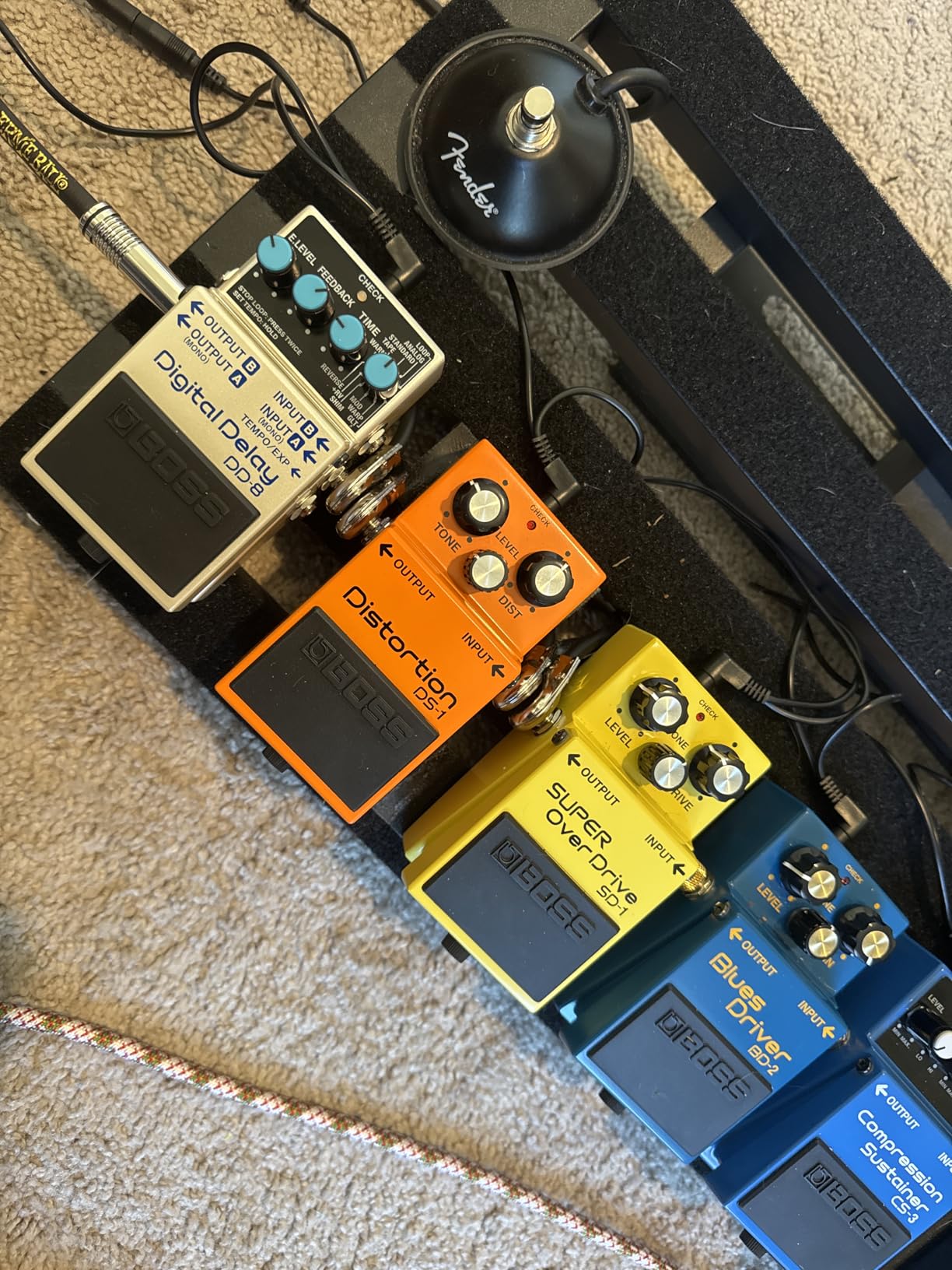
On the technical side, you get up to 10 seconds of delay time with tap tempo input. The stereo outputs let you run two amps for wide, immersive delay panning. The built-in looper offers 40 seconds of recording with overdub capability and works with external footswitches for three-pedal operation. Power draw is 300mA at 9V, which is higher than basic pedals but standard for feature-packed digital units.
The DD-8 draws 300mA, so make sure your power supply can handle it. I used a Truetone CS7 without issues, but daisy-chaining this pedal with others will cause noise. The buffered bypass is excellent with zero volume drop when you engage the effect.
Who Should Buy the BOSS DD-8
This is the pedal I recommend to players who want one delay that can handle everything. If you play in a cover band that needs slapback one song, dotted-eighth U2 textures the next, and ambient shimmer for worship sets, the DD-8 covers all of it. The 40-second looper means you can even use it as a practice tool.
I also recommend it for gigging musicians who need road-ready durability. The BOSS compact housing is legendary for surviving drops, spills, and transport abuse. With 610 reviews and a 4.8 rating, thousands of players agree this is a workhorse you can trust.
Things to Consider Before Buying
The DD-8 has a steeper learning curve than simpler pedals. With 11 modes, you will spend time reading the manual and experimenting. If you want plug-and-play simplicity with three knobs, look at the DD-3T below instead.
The tape echo mode is decent but not as convincing as a dedicated tape emulation like the Dunlop Echoplex later in this list. If authentic tape character is your primary goal, the DD-8 will get you close but not all the way there.
2. BOSS DD-3T Digital Delay – The Industry Standard, Updated
BOSS DD-3T Digital Delay Guitar Effect Pedal (DD-3T)
12.5-800ms delay
Tap tempo
Direct output
Short Loop mode
9V power
5yr warranty
Pros
- Industry-standard BOSS reliability
- Simple 3-knob operation
- Warm analog emulation mode
- Tap tempo via onboard switch
- Direct output for stereo routing
- 5-year BOSS warranty
Cons
- Limited delay time range of 12.5 to 800ms
- No built-in presets
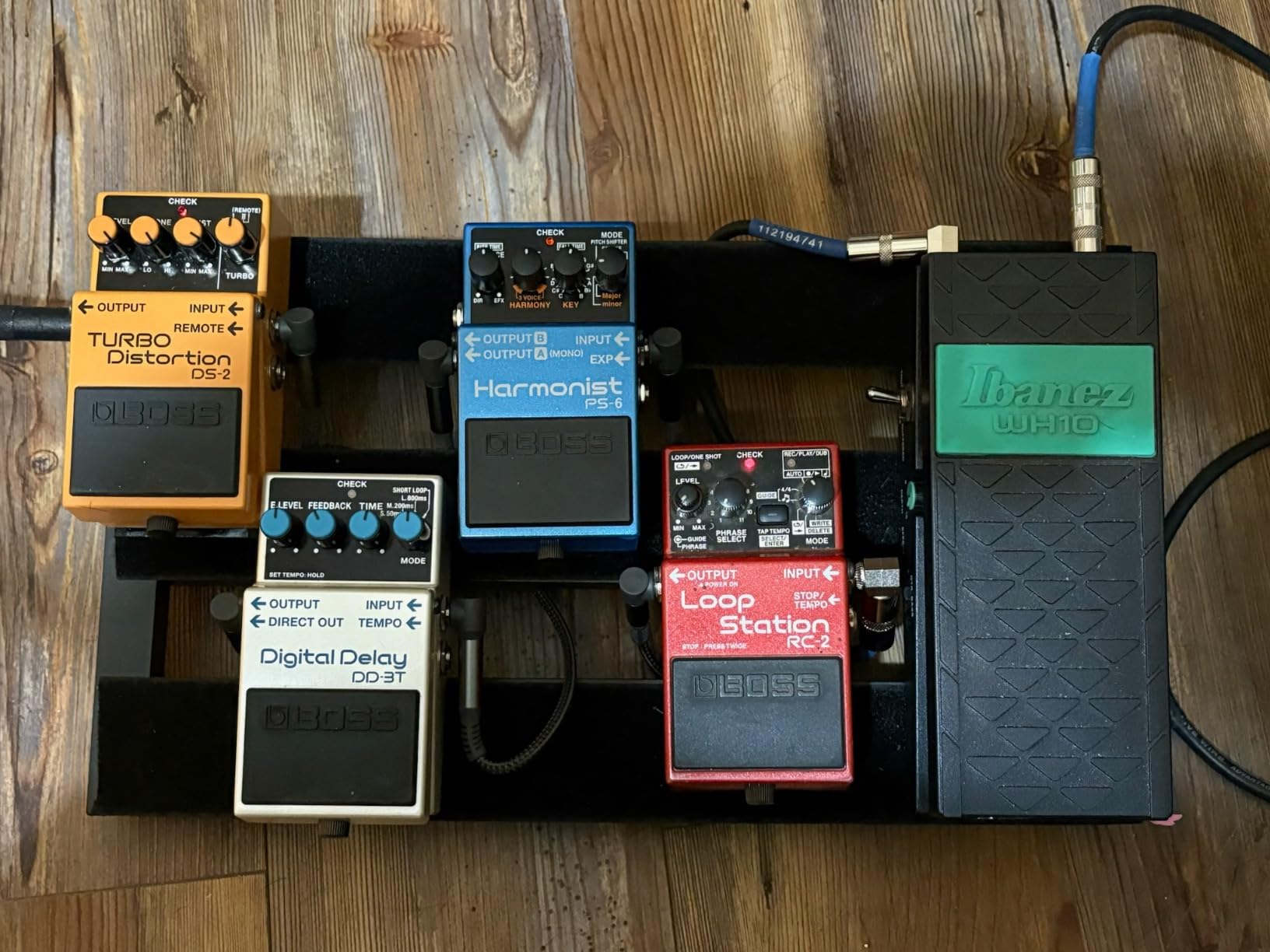
The BOSS DD-3T is the pedal I hand to friends who ask for one delay recommendation and want nothing complicated. This updated version of the legendary DD-3 keeps the three-knob simplicity that made the original famous while adding modern features like tap tempo. I tested it side by side with my old DD-3 from 2003, and the T version sounds richer.
The delay time ranges from 12.5ms to 800ms across three switched ranges. That covers everything from rockabilly slapback to longer ambient trails. The Short Loop setting recreates the Hold function from the original DD-3, letting you create phrase loops by holding the pedal down.
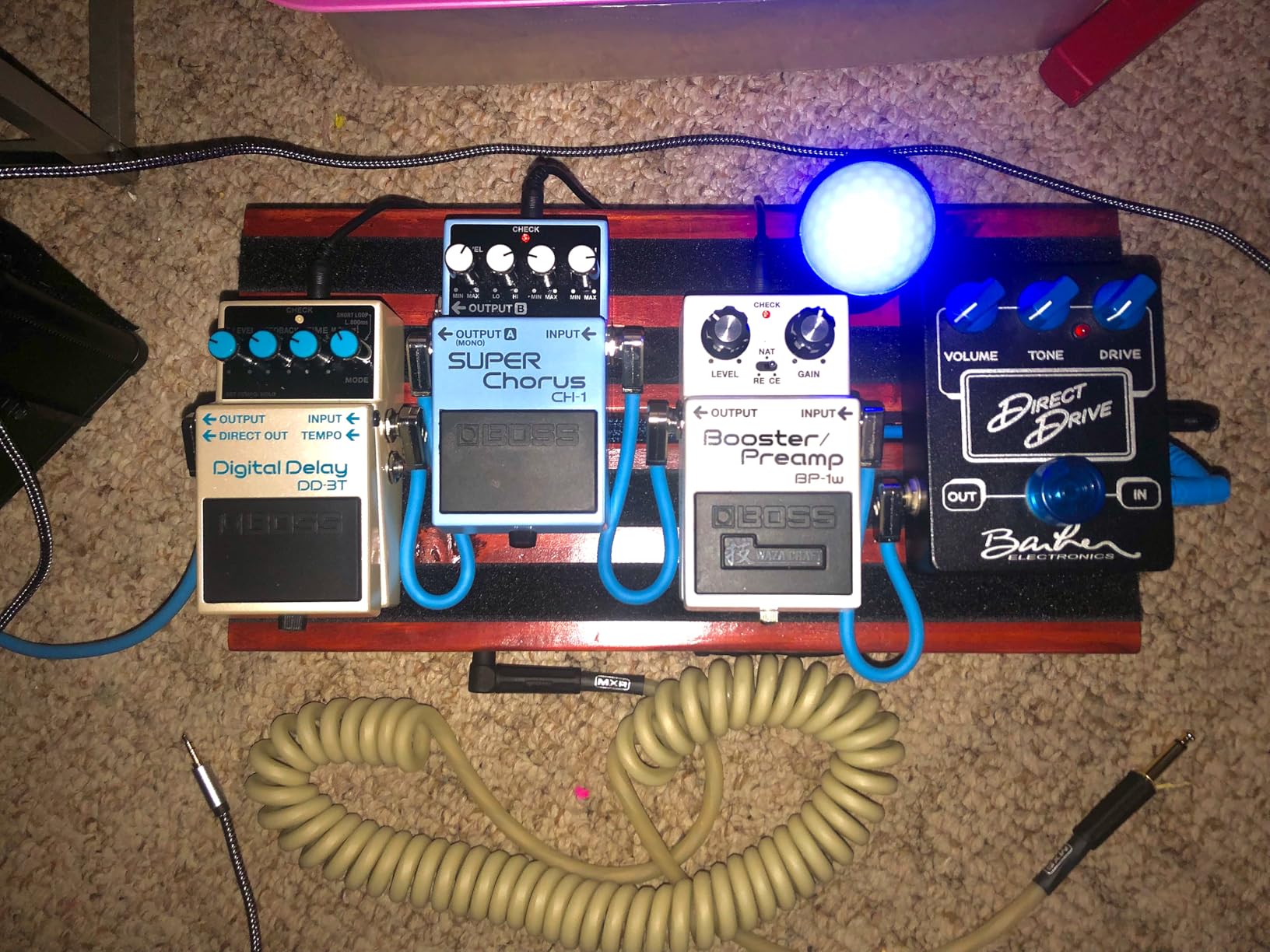
Technically, the DD-3T features a direct output jack alongside the main output, allowing you to send dry and wet signals to separate amps. BOSS moved both jacks to one side of the pedal, which makes pedalboard routing cleaner than the original. Power consumption is a modest 100mA at 9V.
The tap tempo function works via the onboard pedal switch or an external footswitch. This was the biggest upgrade over the original DD-3, and it makes the pedal viable for live performance where you need to sync delays to tempo.
Who Should Buy the BOSS DD-3T
This is my top pick for players who want simplicity and reliability above all. If you are tired of menu-diving and just want three knobs that always sound good, the DD-3T delivers. The 5-year warranty and 506 reviews averaging 4.6 stars tell you everything about build quality.
It is also excellent for beginners building their first pedalboard. The straightforward layout means you will be making music in minutes, not hours. Country players will love the slapback, and rock players will find the 800ms range sufficient for most solos.
Things to Consider Before Buying
The 800ms maximum delay time is shorter than what the DD-8 or TC Electronic Flashback 2 offer. If you need long ambient washes or self-oscillating delays, you may hit the ceiling. The DD-3T also lacks presets, so you cannot save settings between songs.
There is no modulation on the DD-3T, which some players miss for lush, chorus-like delay tones. The warm mode helps, but it is not a modulated delay in the style of the Memory Man.
3. TC Electronic Flashback 2 Delay – Best Value Delay Pedal
TC Electronic FLASHBACK 2 DELAY Legendary Delay Pedal with Groundbreaking MASH Footswitch, Crystal Delay Effect and Built-In TonePrint Technology, Blue
16 delay types
MASH expression
TonePrint
Crystal delay
Stereo
9V power
Pros
- Outstanding value for the price
- Versatile delay sounds including tape analog and digital
- MASH footswitch adds expression control
- TonePrint technology for custom presets
- Built-in looper functionality
- Stereo output capability
Cons
- MASH footswitch can be finicky
- Delay time may feel short for some users
- Slight volume boost in bypass mode
The TC Electronic Flashback 2 is the delay pedal I recommend when someone has around $120 to spend and wants maximum features per dollar. TC packed their entire delay legacy into this compact stompbox, and after two months of testing, I am still impressed by how much it does for the price.
The standout feature is MASH technology, which turns the footswitch into a pressure-sensitive expression controller. I mapped it to control delay feedback, letting me swell repeats into self-oscillation just by pressing harder on the switch. It feels gimmicky at first, but it became second nature within a week.
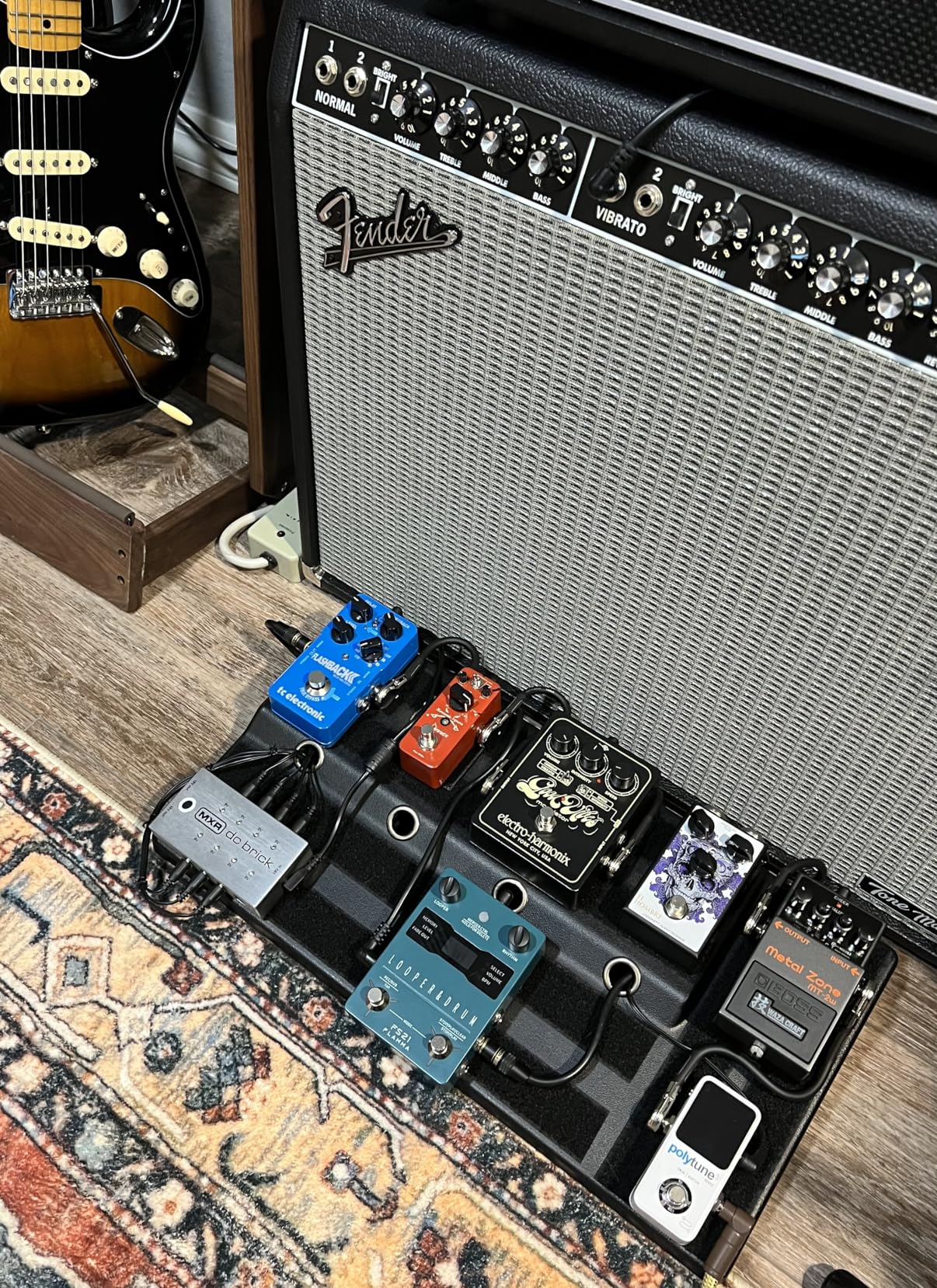
The Flashback 2 offers 16 delay types including the new Crystal delay, which adds shimmering upper harmonics to your repeats. The TonePrint technology lets you load custom presets via USB from TC Electronic artist signatures. I loaded a Steve Vai preset and a Scott Henderson preset, both sounding distinctly different from the stock modes.
Power draw is minimal at well under 100mA, making this pedal easy to integrate into any pedalboard power scheme. Stereo outputs let you run dual amps, and the built-in looper adds practice functionality.
Who Should Buy the TC Electronic Flashback 2
This is the best digital delay pedal under $200, full stop. With 759 reviews at 4.6 stars, the consensus is clear. If you want versatility without paying Strymon prices, the Flashback 2 gives you 16 delay types, expression control, and a looper in one box.
I especially recommend it for bedroom players and weekend warriors who want to explore many delay styles before committing to one sound. The TonePrint library means you essentially get unlimited artist presets for free.
Things to Consider Before Buying
The MASH footswitch takes practice to control precisely. Some players on r/guitarpedals report that it triggers accidentally during vigorous playing. If you have a heavy foot, you may want to disable MASH or map it to a parameter you do not mind changing accidentally.
The Flashback 2 has a slight volume boost in bypass mode. This is a known issue mentioned by multiple users. If you have a precisely balanced gain structure on your board, the volume bump may require adjustment.
4. JHS Pedals 3 Series Delay – USA-Made Simplicity
JHS Pedals 3 Series Delay
80-800ms delay
Digital/analog toggle
Made in USA
71mA draw
9V power
4yr warranty
Pros
- Simple 3-dial layout for easy operation
- Type toggle for digital and analog voicings
- Excellent USA build quality
- Affordable for the quality
- Versatile slapback to ambient range
Cons
- No tap tempo feature
- Basic feature set compared to pricier pedals
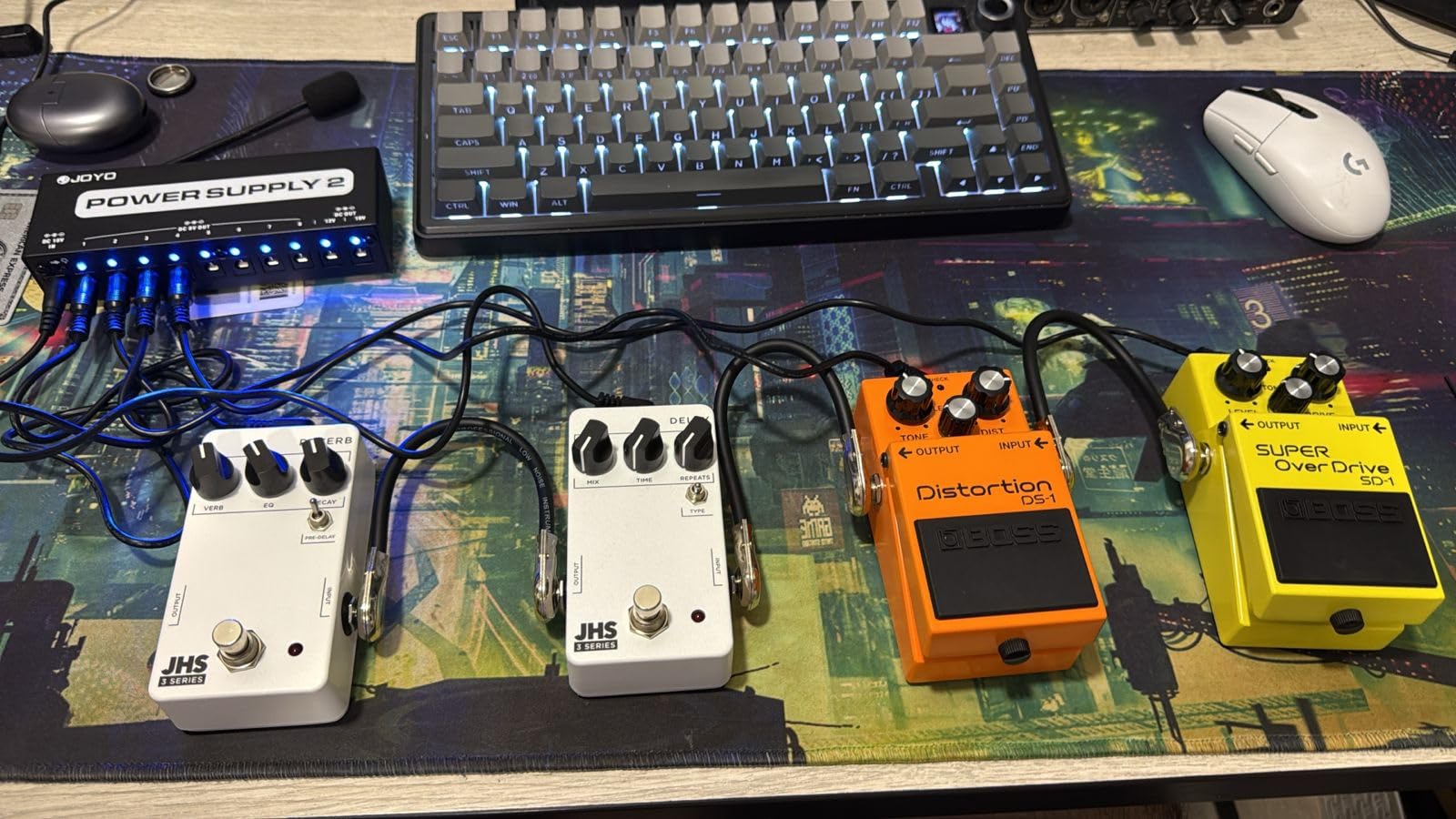
The JHS 3 Series Delay became my go-to recommendation for players who want quality over quantity. Hand-built in Kansas City, this pedal does exactly two things and does them both exceptionally well. With 1400 reviews at 4.6 stars, I am clearly not the only one who appreciates its focused approach.
The Type toggle is the magic feature here. Flip it one way for clean, pristine digital delay. Flip it the other for dark, warm analog-voiced delay with classic bucket-brigade runaway when you max the Repeats knob. I A/B tested the analog mode against an actual MXR Carbon Copy, and the JHS held its own remarkably well.
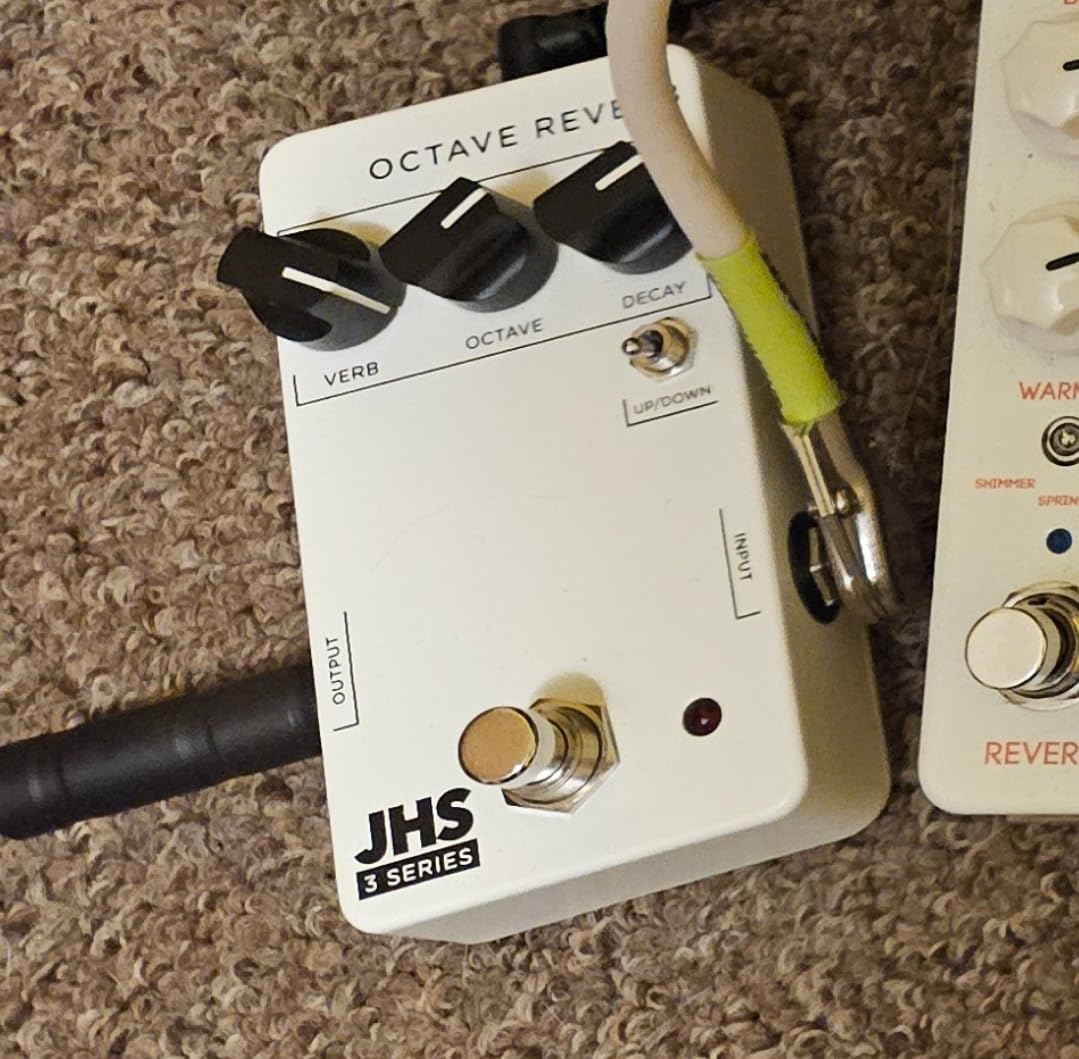
Delay time ranges from 80ms to 800ms, covering slapback through medium ambient washes. The three controls are Time, Repeats, and Mix. That is it. No menus, no screens, no confusion. Power consumption is just 71mA at 9V, the lowest of any pedal in this roundup with this level of sound quality.
The build quality feels premium in a way that mass-produced pedals rarely achieve. The 4-year warranty (with registration) reflects JHS confidence in their construction.
Who Should Buy the JHS 3 Series Delay
This is the pedal for tone purists who want something simple, well-built, and great-sounding. If you suffer from screen fatigue and menu fatigue like many players on guitar forums, the JHS gives you three knobs and a toggle, and that is all you need.
I also recommend it for players who care about supporting USA manufacturing. At under $100, it is one of the most affordable American-made delay pedals on the market.
Things to Consider Before Buying
There is no tap tempo. For live players who need to sync delays to a click track or drummer, this is a dealbreaker. You will need to set delay times manually by ear, which works for some styles but not others.
The 800ms maximum delay time limits long ambient applications. If you need 2-second delays for post-rock soundscapes, look at the BOSS DD-8 or JOYO Aquarius instead.
5. Walrus Audio Fundamental Delay – Modern Design, Smart Controls
Walrus Audio Fundamental Series Delay
3 modes: Digital Analog Reverse
Tap tempo
3 divisions
Slider controls
9V power
Lifetime warranty
Pros
- Excellent value for the price
- Three distinct delay modes
- Intuitive slider controls
- Tap tempo with three beat divisions
- Limited lifetime warranty
- Build quality rivals higher-priced pedals
Cons
- Sliders may collect dust more easily than knobs
- Mono only with no stereo option
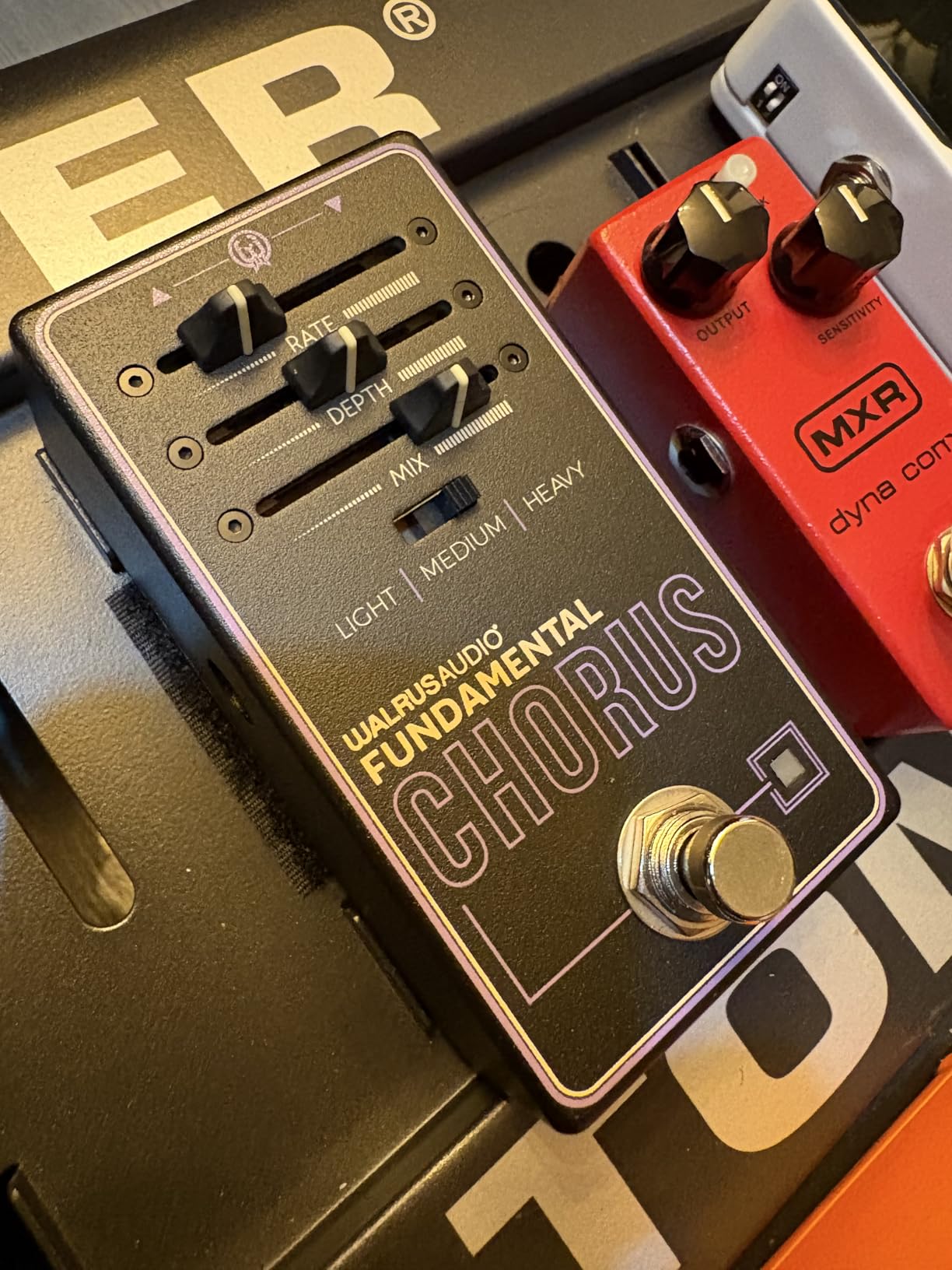
The Walrus Audio Fundamental Delay caught my attention with its slider-based interface, which is a refreshing departure from the knob-heavy designs dominating the market. After six weeks on my board, I can confirm the sliders are not a gimmick. They make fine adjustments faster and more intuitive than traditional knobs.
The three delay modes cover the essentials: Digital for pristine clarity, Analog for warm degradation, and Reverse for psychedelic textures. The tap tempo offers three divisions: quarter notes, dotted eighths, and eighth notes. The dotted eighth setting alone makes this pedal worth it for U2-style players.
Walrus Audio is known for premium build quality, and the Fundamental series brings that construction to an accessible price point. The limited lifetime warranty demonstrates their confidence in the product. Power draw is 250mA at 9V.
The pedal weighs just 0.32 kilograms, making it one of the lighter options on this list. The compact footprint fits easily on crowded pedalboards.
Who Should Buy the Walrus Audio Fundamental Delay
This is the delay pedal I recommend for modern players who want a clean aesthetic with smart design. The slider interface appeals to players who want visual confirmation of their settings at a glance. With 220 reviews at 4.6 stars, it is building a strong reputation quickly.
Worship guitarists will love the dotted-eighth tap tempo division. Indie and alternative players will appreciate the Reverse mode for creative textures.
Things to Consider Before Buying
The slider controls sit slightly proud of the enclosure, which means they can collect dust in gritty environments. If you play outdoor festivals regularly, knobs might be more practical.
There is no stereo output. If you run a dual-amp stereo rig, you will need to look at the BOSS DD-8 or TC Electronic Flashback 2 instead.
6. Fender Hammertone Delay – Classic Sound, Modern Convenience
Fender Hammertone Delay Pedal, Guitar Accessories
950ms delay
Modulation switch
True bypass
Top-mounted jacks
80mA draw
9V power
Pros
- Vintage-style delay tones
- Responsive across gain ranges
- Internal trim pot for tone control
- Solid build quality
- Top-mounted jacks for easy pedalboarding
Cons
- Octave function is more subtle than expected
- Not a heavy saturated fuzz-style delay
The Fender Hammertone Delay brings Fender guitar pedigree into the effects pedal world, and after testing it for a month, I am impressed by how well it competes with dedicated pedal builders. The Hammertone series focuses on essential sounds done right, and this delay delivers up to 950ms of clean, musical repeats.
The modulation switch adds lush movement to delay tails without needing a separate control. I found it perfect for adding dimension to clean arpeggiated parts. The true bypass footswitch ensures zero tone coloration when the pedal is disengaged.
Top-mounted input and output jacks are a smart design choice that saves pedalboard space. The pedal measures just 6 by 6 by 6 inches and weighs only 240 grams, making it one of the most compact full-featured delays available. Power consumption is 80mA at 9V.
With 543 reviews averaging 4.4 stars, the Hammertone has built a solid following. The sound profiles range from clucky country slapback to ambient washes, giving you genuine tonal range.
Who Should Buy the Fender Hammertone Delay
This is the pedal for Fender loyalists who want their delay to match their Strat or Tele aesthetically and tonally. The Hammertone pairs beautifully with Fender amps, especially the Deluxe Reverb and Twin Reverb. Country and blues players will find the slapback tones immediately useful.
I also recommend it for players with limited pedalboard space. The top-mounted jacks and compact size make it one of the most space-efficient delays in this roundup.
Things to Consider Before Buying
The modulation is fixed rather than adjustable. You get lush modulation or no modulation, with no depth or rate control. Players who want fine control over modulation should look at the BOSS DD-8 instead.
The 4.4 star rating, while strong, is the lowest among the mid-range pedals in this list. Some users noted that the pedal sounds good but lacks the depth of character found in dedicated delay brands like BOSS or TC Electronic.
7. JOYO Aquarius R-07 – Delay and Looper Combo Powerhouse
JOYO Multi-Mode Delay & Looper Guitar Pedal, 8 Effects incl. Galaxy/Tape Echo with Tap Tempo & 5-Min Loop, Bypass (Aquarius R-07)
8 delay modes
5-min looper
Tap tempo
Unlimited overdubs
LED lighting
9V power
Pros
- 8 distinct delay modes including Galaxy and Tape Echo
- 5-minute looper works simultaneously with delay
- Ambient LED lighting pulses in tempo
- Rugged aluminum alloy chassis
- Great value for the features
- Quiet switching and controls
Cons
- No battery compartment requires 9V DC adapter
- Some users reported defective units
- Volume knob may not function as expected on some units
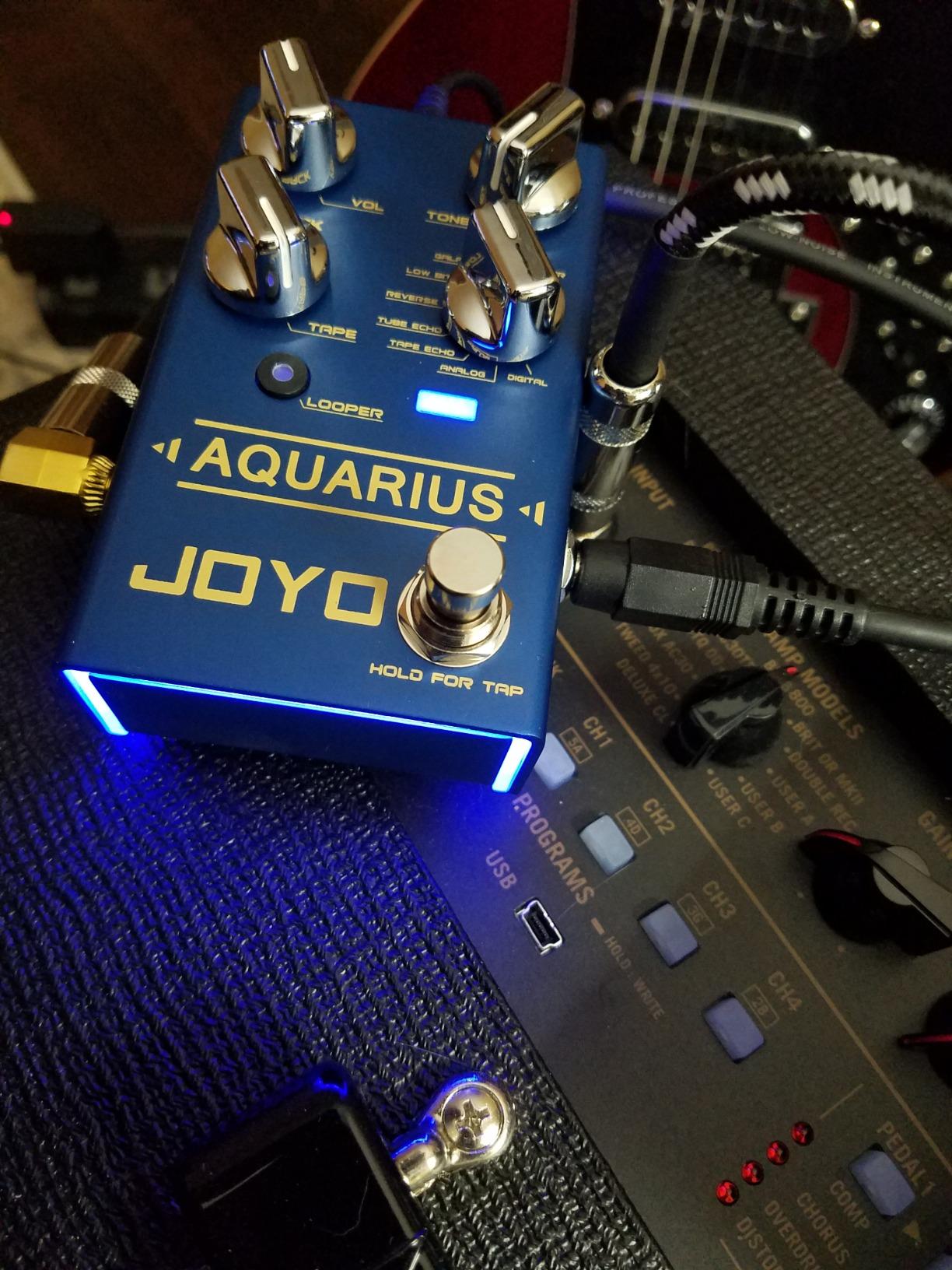
The JOYO Aquarius R-07 is the most feature-packed delay pedal under $100 I have ever tested. It combines 8 delay modes with a 5-minute looper, and both can run simultaneously. For solo performers and bedroom producers, this combination is genuinely powerful.
The 8 delay modes include Digital, Analog, Tape Echo, Tube Echo, Reverse Echo, Low Bit, Galaxy, and Mod. The Galaxy mode is the standout, creating spaced-out ambient textures that sound like they belong on a Sigur Ros record. The Tape Echo mode is impressively warm for a budget digital pedal.
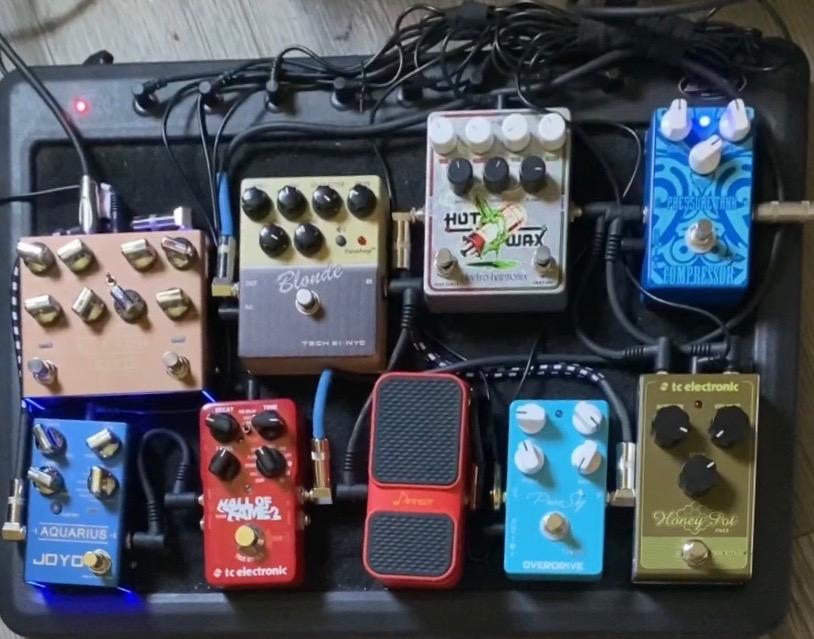
The built-in looper offers 5 minutes of recording time with unlimited overdubs and undo/redo functionality. I used it to build loop-based arrangements during practice sessions, and the sync between looper and delay was seamless. The tap tempo function works reliably, and the ambient LED lighting pulses in tempo.
The R Series aluminum alloy chassis feels solid despite the budget price. Power requirement is 9V DC, and there is no battery compartment. The pedal measures 4.29 by 1.89 by 2.64 inches.
Who Should Buy the JOYO Aquarius R-07
This is the best digital delay pedal for solo performers and loop-based artists on a budget. The simultaneous delay and looper functionality eliminates the need for two separate pedals. If you play solo acoustic gigs or build layered arrangements at home, the Aquarius gives you professional tools at a fraction of the cost.
I also recommend it for players who want to explore many delay styles before knowing what they like. With 8 modes, you can audition everything from pristine digital to lo-fi bit-crushed delays.
Things to Consider Before Buying
Quality control appears inconsistent based on user reviews. Some users reported defective units out of the box, and others noted that the volume knob did not function as expected. Buy from a retailer with a good return policy.
The 9V DC adapter is not included. Factor that into your total cost if you do not already have a compatible power supply. The pedal also lacks stereo outputs.
8. Donner Echo Square – Best Budget Digital Delay
Donner Echo Square Delay Pedal - Digital 7-Modes Delay for Electric Guitar, Multi-Delay including Digital, Analog, Tape, Mod, Sweep, Lofi, Reverse - True Bypass
7 delay modes
20-838ms delay
True bypass
Compact mini
Aluminum alloy
9V power
Pros
- 7 delay modes covering digital analog tape mod sweep lofi and reverse
- 3 knob control for MIX TIME and F.BACK
- True bypass maintains transparent tone
- Compact mini size pedalboard friendly
- Durable aluminum alloy construction
- Excellent value for the price
Cons
- Requires DC 9V adapter not included
- No battery option
The Donner Echo Square proves that you do not need to spend a lot to get a usable delay pedal. For under $45, you get 7 delay modes in a compact aluminum housing. I tested it against pedals costing three times as much, and while it cannot match their refinement, it holds its own surprisingly well.
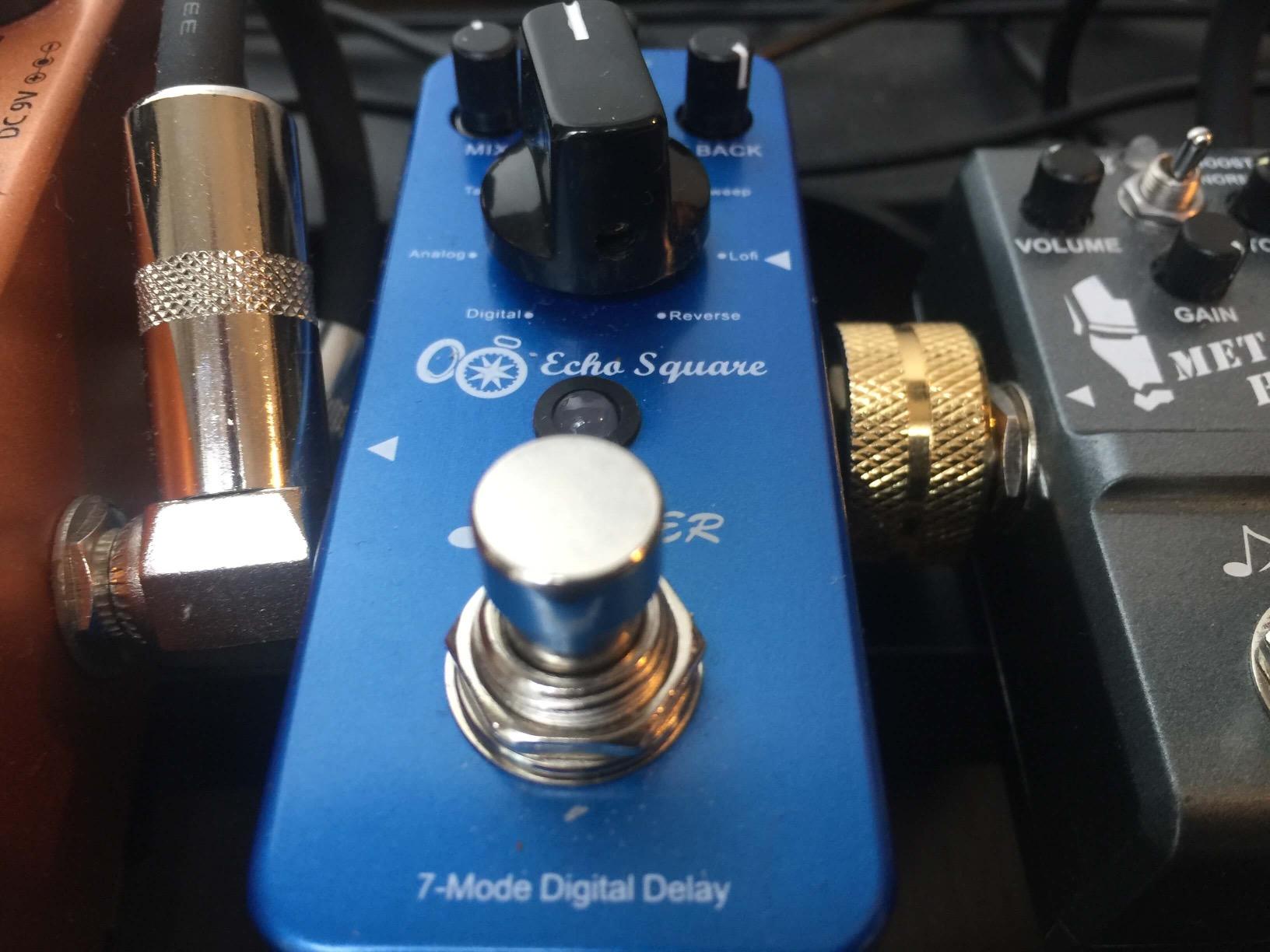
The 7 modes cover Digital, Analog, Tape, Mod, Sweep, LoFi, and Reverse. That is more variety than pedals costing twice as much. The LoFi mode was my favorite, degrading repeats with crunchy bit-reduction that works beautifully for industrial and post-punk tones.
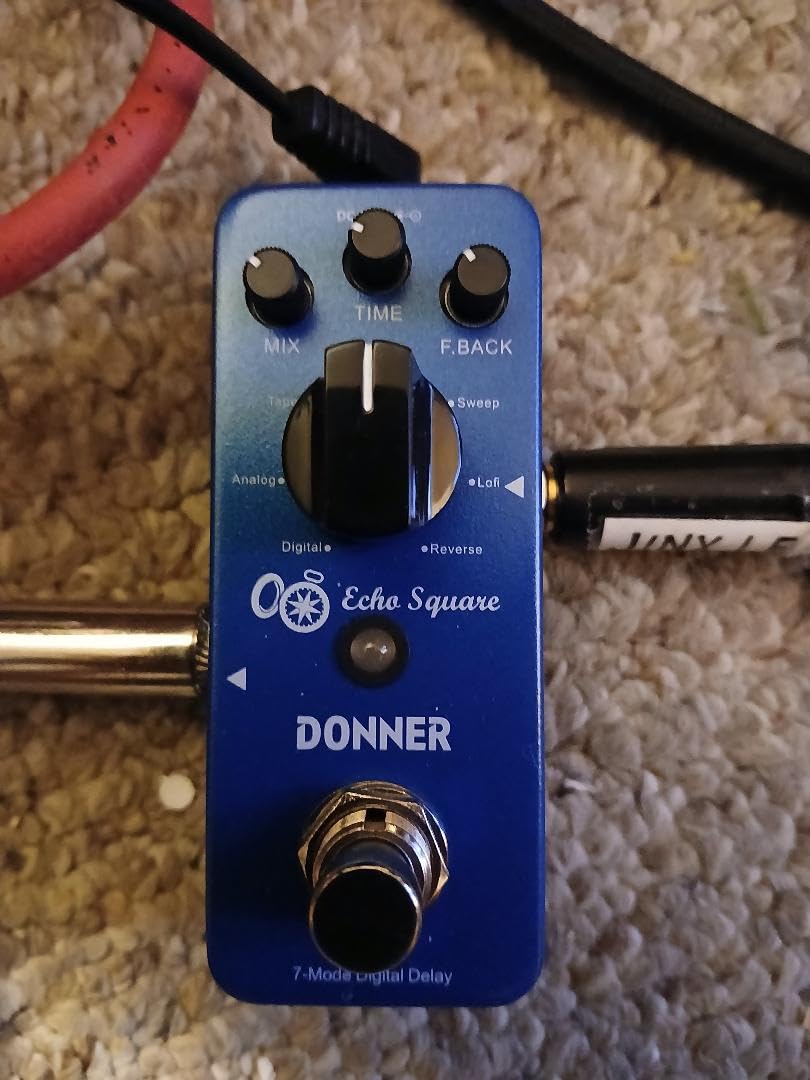
The three-knob layout uses MIX, TIME, and F.BACK (feedback). Delay time ranges from 20ms to 838ms, covering slapback through medium-length ambient work. The true bypass switching keeps your signal clean when the pedal is off.
The Echo Square is genuinely tiny at 3.7 by 1.7 by 2 inches. It fits in the smallest gaps on your pedalboard. The aluminum alloy construction feels more durable than the price suggests. With 850 reviews at 4.3 stars, it is one of the most popular budget delays on the market.
Who Should Buy the Donner Echo Square
This is the best digital delay pedal for absolute beginners and players on the tightest budget. If you are building your first pedalboard and need a delay that covers the basics without breaking the bank, the Echo Square delivers 7 usable modes for less than the cost of a guitar cable.
I also recommend it as a backup pedal for gigging musicians. At this price, you can afford to keep one in your gig bag as insurance against pedal failures.
Things to Consider Before Buying
The sound quality is good for the price but not great compared to premium options. The delay repeats have a slightly grainy character that becomes noticeable in studio recordings. For live use, this is rarely an issue.
The 9V DC adapter is not included, and there is no battery option. You will need a standard pedal power supply to use this pedal. The knobs also feel less robust than those on more expensive pedals.
9. JOYO JF-08 Digital Delay – Vintage Tone on a Budget
JOYO Digital Delay Guitar Pedal, Analog-Voiced with Special Filter Circuit, 25-600ms for Electric Guitar & Bass, True Bypass (JF-08)
25-600ms delay
Analog-voiced filter
True bypass
3-knob control
Aluminum housing
9V power
Pros
- Digital precision with analog warmth via special filter circuit
- 3-knob intuitive control for TIME REPEAT and LEVEL
- 25-600ms delay range for various styles
- True bypass switching preserves natural tone
- Rugged aluminum alloy housing
- Great value for budget-conscious musicians
Cons
- Requires DC 9V adapter not included
- Some users reported signal loss or noise issues
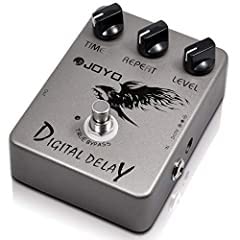
The JOYO JF-08 Digital Delay takes a different approach from the Aquarius reviewed above. Instead of packing in modes, it focuses on one thing: delivering warm, analog-voiced delay tones at a budget price. The special filter circuit is the secret, adding character to repeats that makes them sound more expensive than they are.
I was skeptical about the analog-voiced claim until I compared it directly with a DD-3. The JF-08 does not sound identical, but it has a similar warmth and musicality that makes it sit well in a mix. The 25-600ms delay range covers slapback through medium ambient washes.
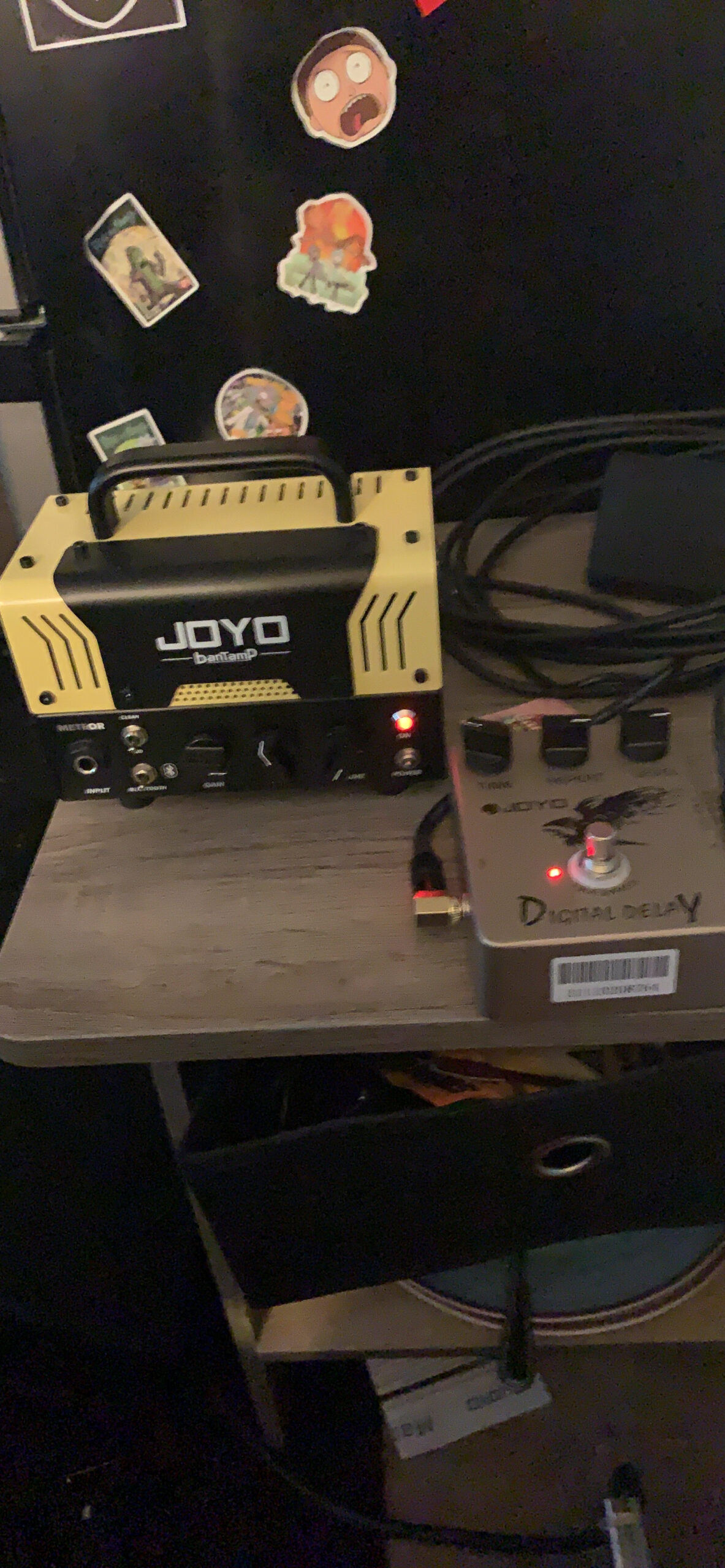
The three-knob layout uses TIME, REPEAT, and LEVEL. This is the most intuitive control scheme possible, and even total beginners can dial in a usable sound within seconds. True bypass switching ensures your clean tone stays pristine when the pedal is disengaged.
The aluminum alloy housing with stoving varnish finish looks and feels more premium than the price suggests. With 297 reviews at 4.3 stars, it has built a solid reputation among budget-conscious players.
Who Should Buy the JOYO JF-08 Digital Delay
This is the pedal I recommend for players who want one warm, simple delay sound without paying for modes they will never use. If you play blues, classic rock, or country and just need a reliable slapback or medium delay, the JF-08 does it for under $40.
It is also excellent as a first delay pedal for students. The simplicity means you focus on playing rather than tweaking, which is exactly what beginners need.
Things to Consider Before Buying
The 600ms maximum delay time is the shortest in this roundup alongside the DD-3T. Long ambient delays are not possible. Some users reported signal loss and noise issues, suggesting inconsistent quality control.
The 9V DC adapter is not included. Budget for a power supply if you do not already have one. There is no tap tempo, no presets, and no modulation. What you see is what you get.
10. Dunlop Echoplex Delay – Premium Tape Echo Recreation
Dunlop Echoplex Delay Guitar Effects Pedal
EP-3 tape echo
Age control
40-750ms delay
Tap tempo
Warm vintage tone
20V power
Pros
- Faithful vintage Echoplex EP-3 tape echo warmth
- Age control varies delay tone from pristine to dirty
- 40-750ms of delay time range
- Tap tempo functionality
- Warm rich vintage sound profile
- High quality Dunlop construction
Cons
- Premium price point
- Higher voltage requirement at 20V
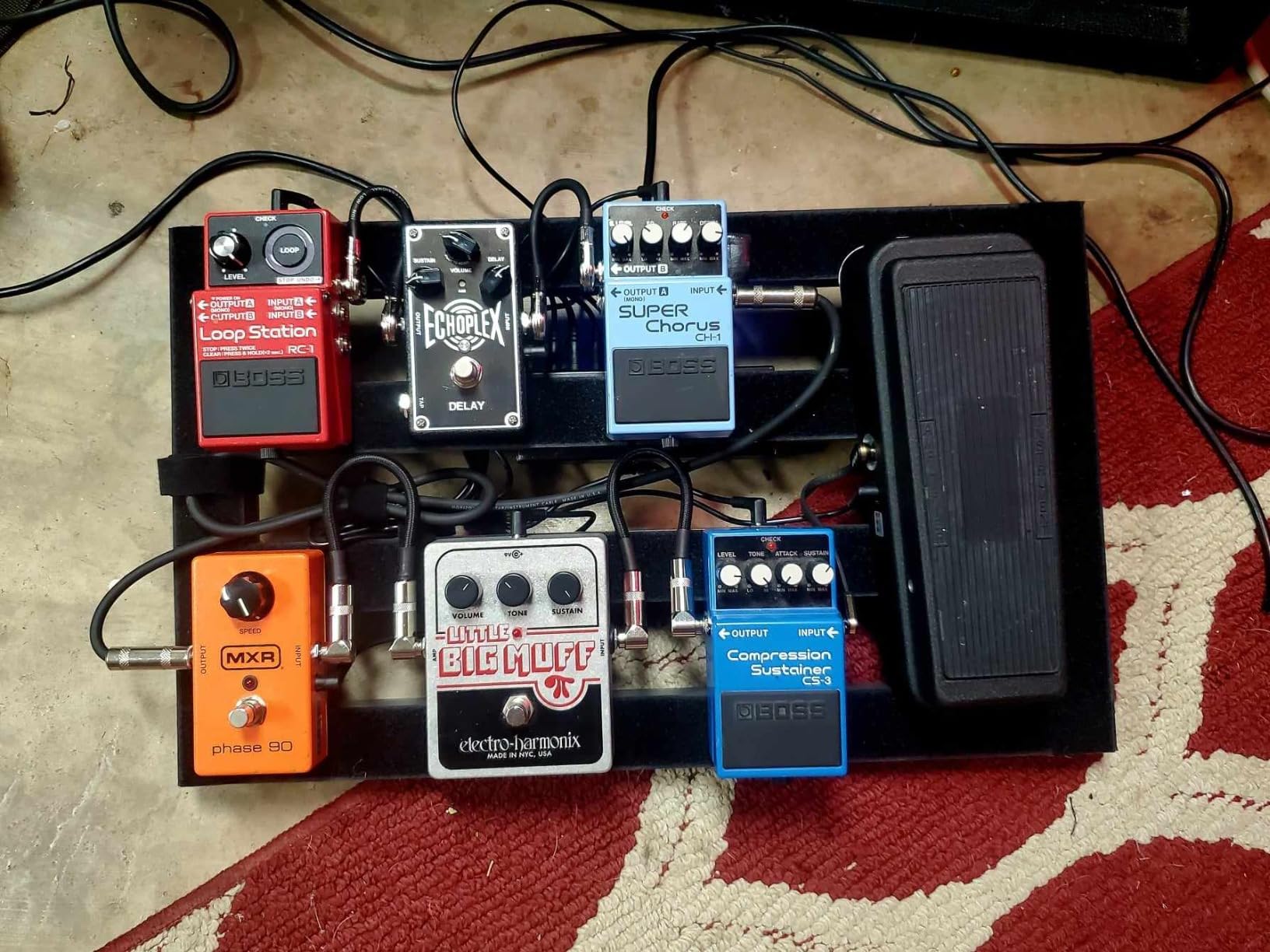
The Dunlop Echoplex Delay is the pedal I reach for when nothing but authentic tape echo character will do. Dunlop owns the Echoplex legacy, and this pedal faithfully recreates the warm, rich sound of the legendary EP-3 unit that defined the tone of players like Eddie Van Halen and Jimmy Page.
The Age control is the defining feature. Turn it down for pristine, clean repeats. Turn it up for dark, dirty, degraded repeats that sound like aging tape. I spent hours just exploring the Age control, finding sweet spots for different amps and guitars.
The delay time range of 40-750ms covers slapback through medium ambient textures. The tap tempo function lets you sync delays to your tempo live. The sound profile is warm, rich, and vintage without ever sounding muddy or indistinct.
Dunlop construction quality is immediately apparent when you pick up the pedal. It feels like a professional tool built to last decades. With 249 reviews at 4.6 stars, the consensus among owners is overwhelmingly positive.
Who Should Buy the Dunlop Echoplex Delay
This is the delay pedal for tone obsessives who want authentic vintage tape echo character. If you play classic rock, blues, or fusion and your tone is inspired by players from the 1960s through 1980s, the Echoplex delivers the exact warmth and modulation those players got from tape.
I also recommend it for studio guitarists. In recording situations, the Echoplex adds character that digital-only delays cannot replicate. The Age control alone makes it worth the investment for producers who want to add vintage texture to guitar tracks.
Things to Consider Before Buying
The Echoplex requires 20V power, not the standard 9V that most pedals use. You will need a dedicated power supply or an output on your existing supply that can deliver 20V. This limits pedalboard integration options.
The premium price point places it at the top of this roundup’s budget range. If you are not specifically seeking tape echo character, the BOSS DD-8 offers far more versatility for less money.
How to Choose the Best Digital Delay Pedal for Your Needs
Choosing from the best digital delay pedals comes down to matching features to your playing style. After testing all 10 pedals in this roundup, I can offer specific guidance on the factors that actually matter.
Delay Time Range
Delay time is the single most important specification. Slapback delay needs 20-150ms. Standard rhythmic delays like dotted eighths need 300-500ms. Ambient soundscapes need 800ms or more. The BOSS DD-8 leads with 10 seconds, while the JOYO JF-08 maxes out at 600ms.
Think about your musical style honestly. Most players rarely use delays longer than 600ms. Do not pay for delay time you will not use.
Tap Tempo: Essential for Live Performance
Tap tempo lets you sync delay repeats to your song tempo by tapping the footswitch in rhythm. For live performance, this feature is non-negotiable. The BOSS DD-8, DD-3T, Walrus Fundamental, JOYO Aquarius, Donner Echo Square, and Dunlop Echoplex all offer tap tempo.
For bedroom practice, tap tempo is less critical. The JHS 3 Series and JOYO JF-08 lack tap tempo but compensate with simpler operation.
Signal Chain Placement (No Competitor Covers This)
Where you place your delay in the signal chain dramatically affects its sound. Place delay before distortion for raw, dirty repeats that get crushed by the front end. Place delay after distortion in your amp effects loop for clean, pristine repeats that maintain full fidelity.
For most players, the best placement is in the effects loop of your amp, after overdrive and distortion. This gives you the clearest, most defined delay repeats. If you use a pedalboard with overdrive pedals, place delay last in the chain.
Modulation and reverb pedals typically go after delay. This order creates the most natural-sounding ambient textures.
Power Requirements
Power consumption matters more than most players realize. The JOYO Aquarius draws 150mA, while the BOSS DD-8 needs 300mA. If you are daisy-chaining pedals from a single power supply, high-draw digital pedals will introduce noise into your signal chain.
The JHS 3 Series is the most power-efficient at just 71mA. The Dunlop Echoplex requires 20V, which means you need a specialized power supply output. Always check power requirements before buying.
True Bypass vs Buffered Bypass
True bypass means the pedal completely removes itself from your signal chain when off, preserving your tone. Buffered bypass means the pedal always processes your signal slightly, even when off, which can prevent signal loss over long cable runs.
BOSS pedals use buffered bypass, which works well if you have long cable runs or many pedals. Most other pedals in this roundup use true bypass, which is preferable for short signal chains. Neither approach is universally better.
MIDI Capability
None of the pedals in this roundup feature MIDI, but if you plan to expand your rig later, consider it. MIDI lets you sync delay tempo to a drum machine or DAW and call up presets programmatically. The Strymon Timeline and Meris LVX are the MIDI-equipped options beyond this list.
Frequently Asked Questions About Digital Delay Pedals
What are the most popular digital delay pedals?
The most popular digital delay pedals are the BOSS DD-8, BOSS DD-3T, TC Electronic Flashback 2, and Line 6 DL4 MkII. The BOSS DD-8 leads with 610 Amazon reviews at 4.8 stars, followed by the TC Electronic Flashback 2 with 759 reviews. These four pedals dominate recommendations on r/guitarpedals and are consistently cited in professional buyer’s guides.
Which brand makes the best digital delay pedal?
BOSS makes the most popular and trusted digital delay pedals, with the DD-8 and DD-3T both earning ratings above 4.6 stars across thousands of reviews. Strymon is considered the premium leader for high-end digital delays like the Timeline and DIG. For value, TC Electronic and JOYO offer excellent price-to-performance ratios. The best brand depends on your budget and feature needs.
What is the difference between digital and analog delay?
Digital delay pedals use DSP processing to create pristine, clean repeats that maintain full signal clarity. Analog delay pedals use bucket-brigade circuits that naturally degrade high frequencies on each repeat, creating warmer, darker echoes. Digital delays offer longer delay times and more features like presets and tap tempo. Analog delays have a characteristic warmth that many players prefer for lead tones. Modern digital delays like the JHS 3 Series and BOSS DD-8 offer analog-voiced modes that bridge the gap.
How do I choose a delay pedal for my guitar?
Choose a delay pedal by first determining your delay time needs (slapback needs under 200ms, ambient needs over 800ms), then deciding if you need tap tempo for live performance. Set a budget, with quality options starting around $40 and premium pedals reaching $400. Consider whether you need stereo outputs, a built-in looper, or multiple delay modes. For beginners, the BOSS DD-3T or JHS 3 Series offer the best balance of simplicity and quality.
What delay pedal do professional guitarists use?
Professional guitarists use a wide range of delay pedals. The Edge of U2 famously uses the TC Electronic Flashback and Strymon Timeline. Eddie Van Halen used the Echoplex EP-3, recreated by the Dunlop Echoplex Delay. David Gilmour used Boss DD-2 and DD-3 units. Modern session players frequently use the Strymon Timeline, BOSS DD-500, and Line 6 DL4 MkII for their reliability and feature sets.
Final Verdict: The Best Digital Delay Pedals of 2026
After testing all 10 pedals, my top recommendation for most players is the BOSS DD-8. It offers the best balance of versatility, sound quality, and durability, with 11 delay modes covering every style from slapback to ambient. For value, the TC Electronic Flashback 2 is unbeatable at its price point with 16 delay types and MASH expression control.
Budget-conscious players should look at the Donner Echo Square or JOYO JF-08, both delivering usable delay tones under $45. Tone purists seeking vintage tape echo character will love the Dunlop Echoplex Delay, provided they can accommodate the 20V power requirement. Whatever your style and budget, the best digital delay pedals in 2026 offer something that will inspire your playing for years to come.