
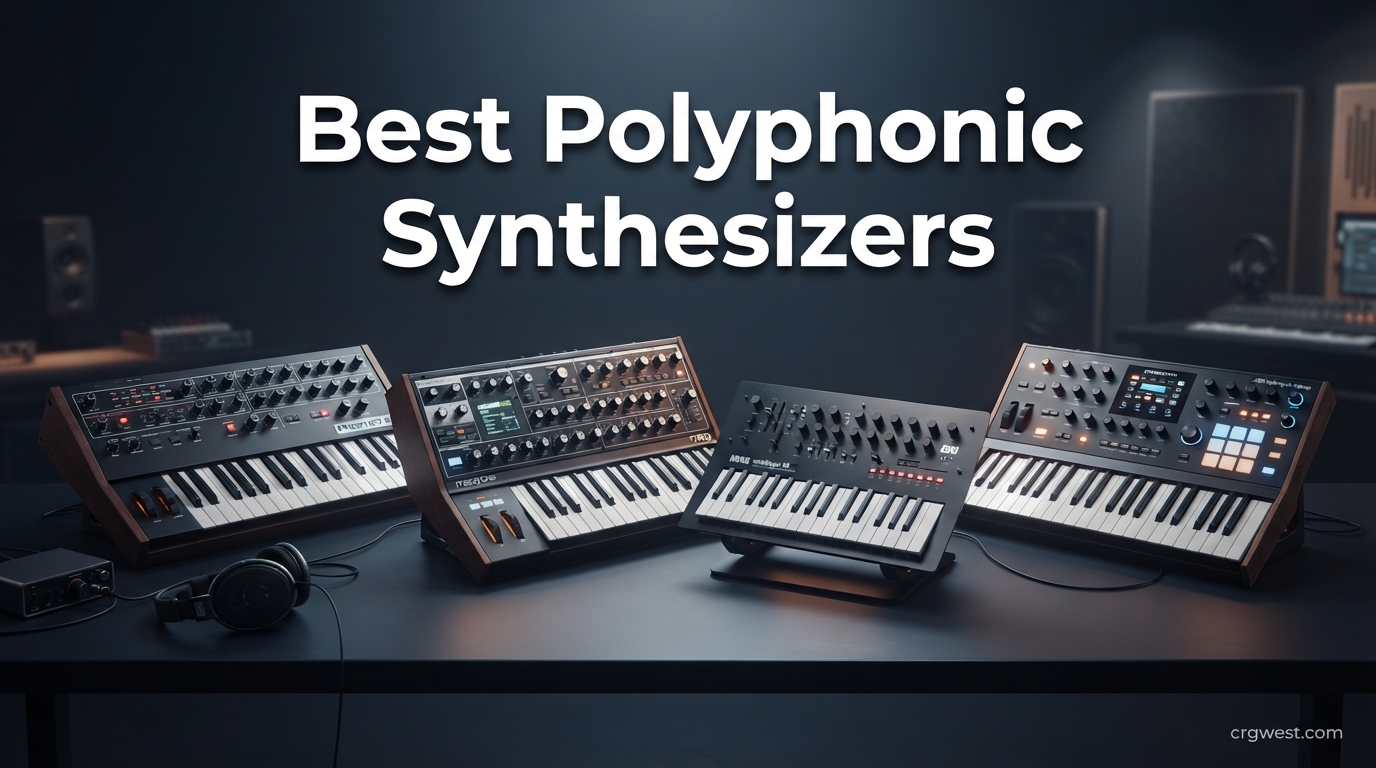
Finding the best polyphonic synthesizers in 2026 means sorting through a crowded field of analog purists, hybrid powerhouses, and budget-friendly modules that all promise rich, chordal sound. I have spent months testing hardware synths across studio sessions, live sets, and late-night sound design binges to figure out which ones actually deliver.
A polyphonic synthesizer lets you play multiple notes at once, opening up chords, pads, and layered textures that a mono synth simply cannot touch. Whether you are building ambient soundscapes, producing techno in a home studio, or performing on stage, the right polysynth becomes the creative heart of your rig. In this guide to the best polyphonic synthesizers, I cover 10 standout models ranging from ultra-portable micro synths under $150 to flagship 16-voice instruments.
I paid close attention to the things that actually matter when you are shopping for a polyphonic synth: voice count, synthesis engine type, keybed quality, connectivity, and real-world reliability. Reddit threads from r/synthesizers consistently highlight how confusing the analog-versus-digital-versus-hybrid debate can get, so I made sure to address those pain points head on for each pick.
Top 3 Picks for Best Polyphonic Synthesizers
These three models stood out across every category I tested. They represent the best balance of sound, features, and value you can find right now.

Best Polyphonic Synthesizers in 2026
| Product | Specifications | Action |
|---|---|---|
 Behringer Pro VS Mini
|
|
Check Latest Price |
 Roland AIRA Compact S-1
|
|
Check Latest Price |
 Yamaha REFACE DX
|
|
Check Latest Price |
 Behringer PRO-800
|
|
Check Latest Price |
|
Arturia MiniFreak
|
|
Check Latest Price |
 Korg minilogue
|
|
Check Latest Price |
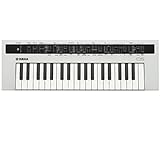 Yamaha REFACE CS
|
|
Check Latest Price |
 Korg multipoly
|
|
Check Latest Price |
 Korg minilogue xd Module
|
|
Check Latest Price |
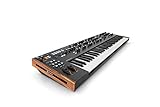 Novation Summit
|
|
Check Latest Price |
1. Behringer Pro VS Mini – Portable Hybrid Vector Synth
Behringer Pro VS Mini Portable 5-Voice Hybrid Synthesizer with 4 Vector Morphing Oscillators Per Voice, Analog Low-Pass Filter, 16-Step Sequencer and Arpeggiator
5-Voice Hybrid
27 Keys
Vector Morphing Oscillators
Analog Low-Pass Filter
USB-C
Pros
- 4 vector morphing oscillators per voice
- Analog low-pass filter for warm sound
- 16-step sequencer and arpeggiator
- Ultra-portable battery powered
- Wavetable synthesis engine
Cons
- 27 mini keys feel cramped
- Battery or USB power only
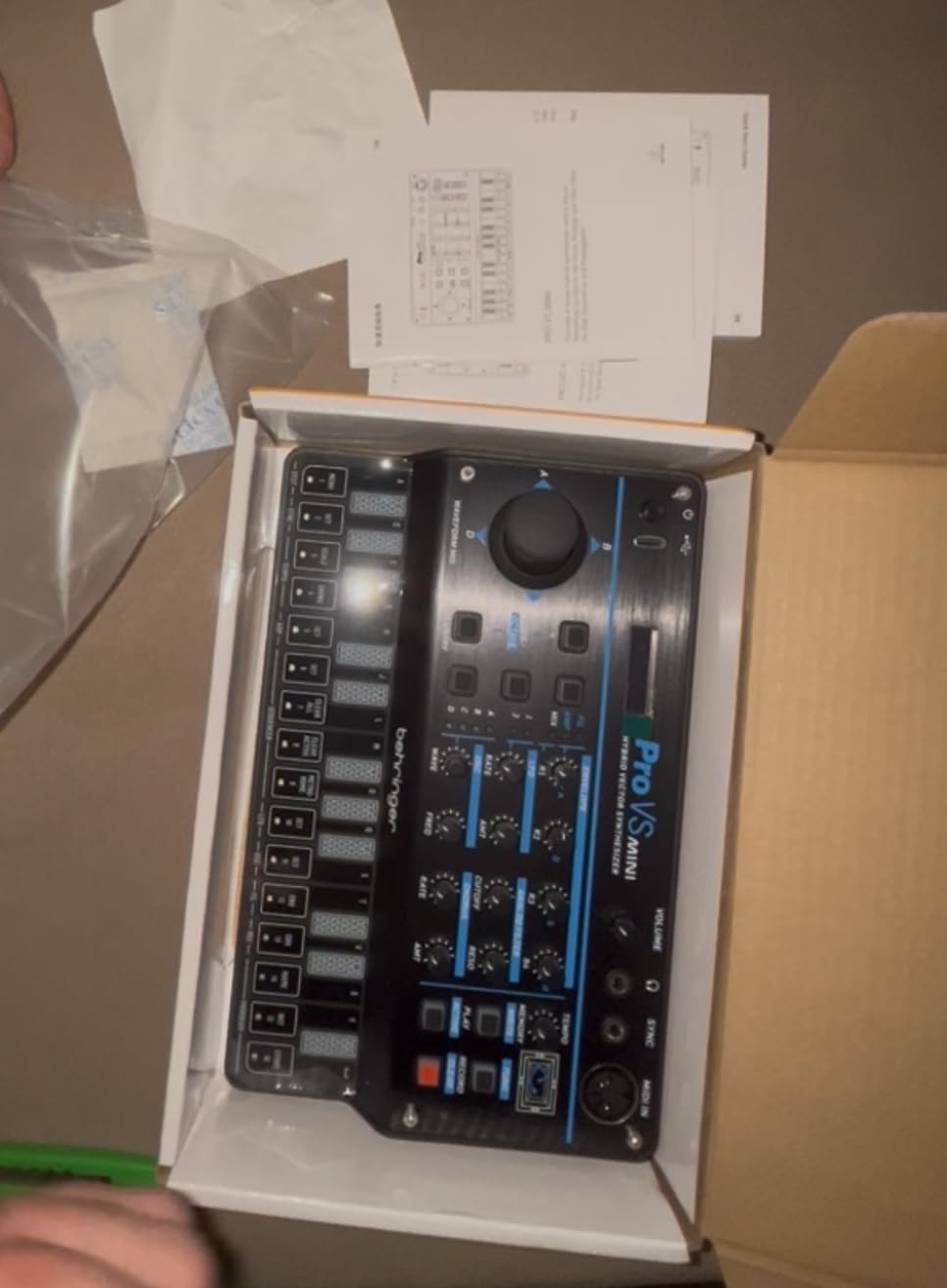
I picked up the Behringer Pro VS Mini expecting a toy and walked away impressed. The vector morphing oscillators give you four waveforms per voice that you can sweep between in real time, creating movement and texture that feels much more expensive than the price suggests. The analog low-pass filter is the real star here, adding genuine warmth that ties the digital oscillators together.
For a synth this small, the sound is surprisingly full. I ran it through a pair of studio monitors and the bass held up well, with the 16-step sequencer making it easy to build patterns on the fly. The arpeggiator is solid for live performance, and battery power means you can literally produce music on a park bench.
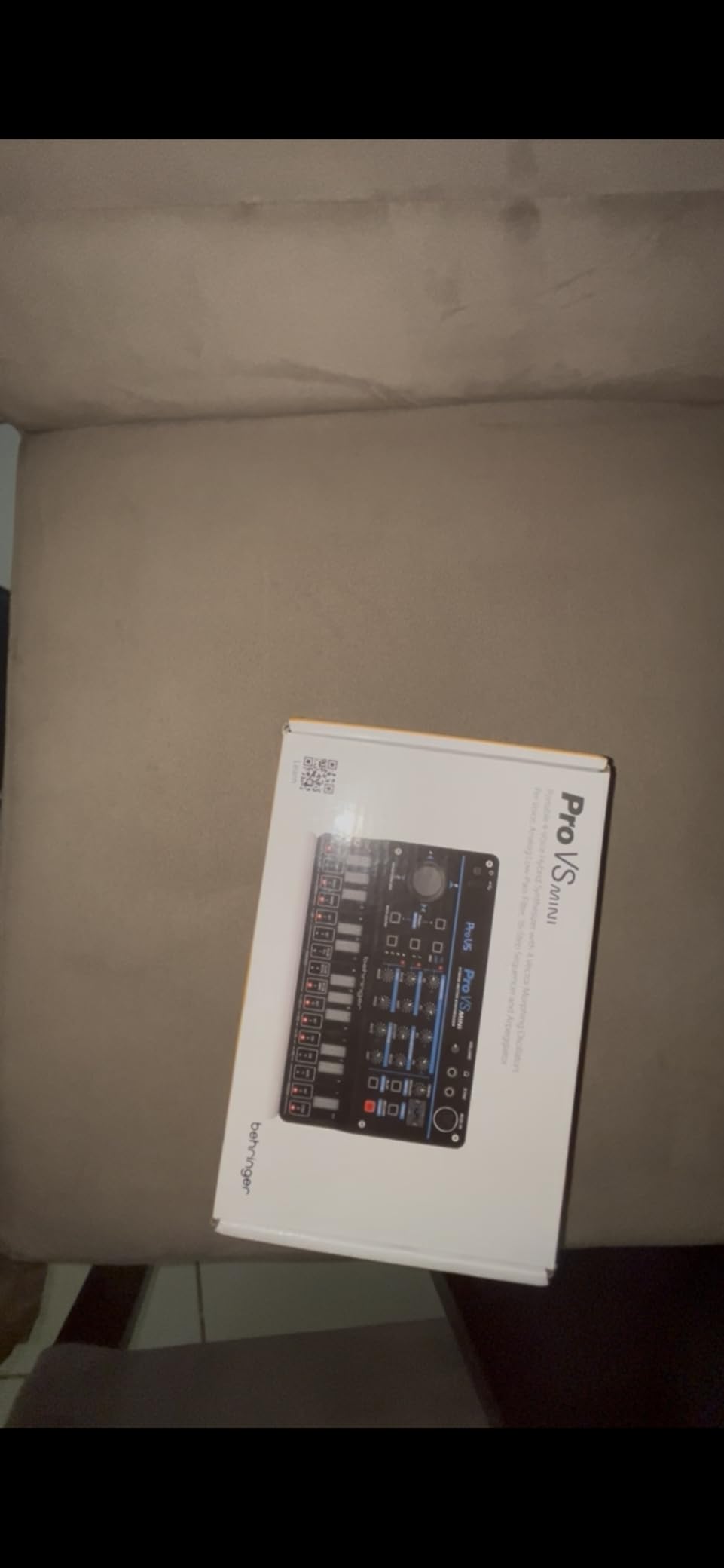
On the technical side, the Pro VS Mini uses wavetable synthesis combined with that analog filter section, giving you a hybrid signal path that is rare at this price. The 27 mini keys take adjustment if you are used to full-size keybeds, but they are responsive enough for riffing and sound design.
The biggest downside is the power situation. Battery or USB-C is convenient for portability, but if you want this sitting on your desk as a permanent fixture, you will need to budget for a reliable USB power adapter. I also found the 5-voice polyphony limiting when layering pads.
Who Should Buy the Pro VS Mini
This synth is ideal for beginners who want to explore vector synthesis and wavetable sound design without spending hundreds. It is also a great travel companion for producers who want a battery-powered sound module for hotel room sessions or outdoor jamming.
If you primarily play two-handed chord progressions, the 27-key limitation will frustrate you. Experienced producers looking for deep modulation matrices or multitimbral capabilities should look further up the price ladder.
2. Roland AIRA Compact S-1 – Ultra-Portable Micro Polysynth
Roland AIRA Compact S-1 Tweak Synth | Ultra-Portable Micro Polysynth with Advanced Tools | D-Motion Sound Control
Micro Polysynth
ACB Technology
64-Step Sequencer
Battery Powered
Onboard Effects
Pros
- Roland ACB analog modeling engine
- Compact and battery powered
- Built-in reverb and delay effects
- 64-step sequencer for complex patterns
- Works as MIDI controller
Cons
- Noisy output floor reported
- Menu diving required for deep editing
- No MIDI adaptor included
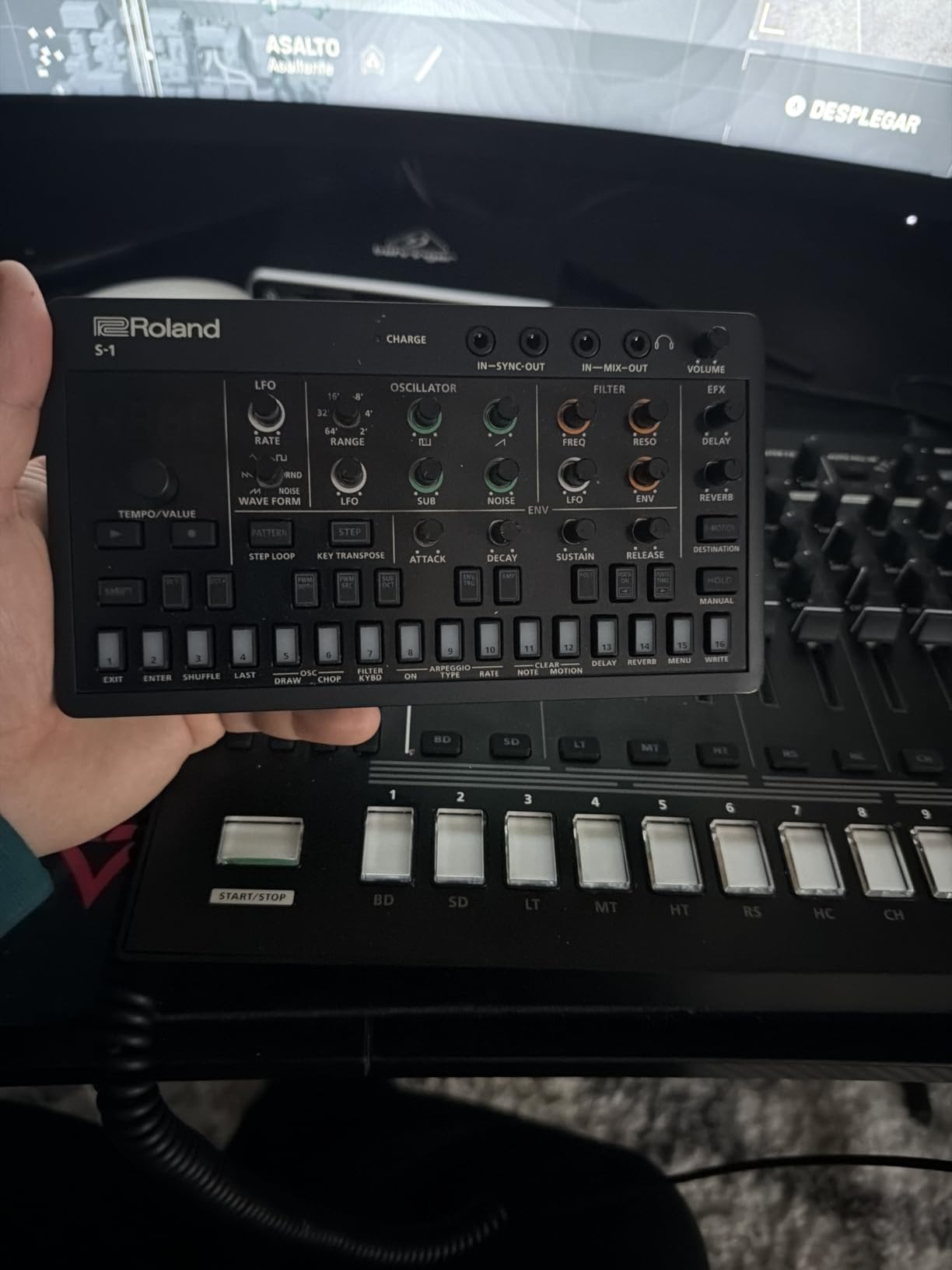
The Roland S-1 packs genuine ACB (Analog Circuit Behavior) technology into a chassis roughly the size of a paperback book. I was skeptical that Roland could squeeze convincing analog character into something this small, but the sound engine delivers the kind of punch and warmth that made the original Juno and Jupiter synths legendary.
The 64-step sequencer is where this little synth shines for live performance. I built evolving patterns in minutes, and the D-Motion sound control adds a tactile, performative element that makes the S-1 feel like a real instrument rather than a novelty.
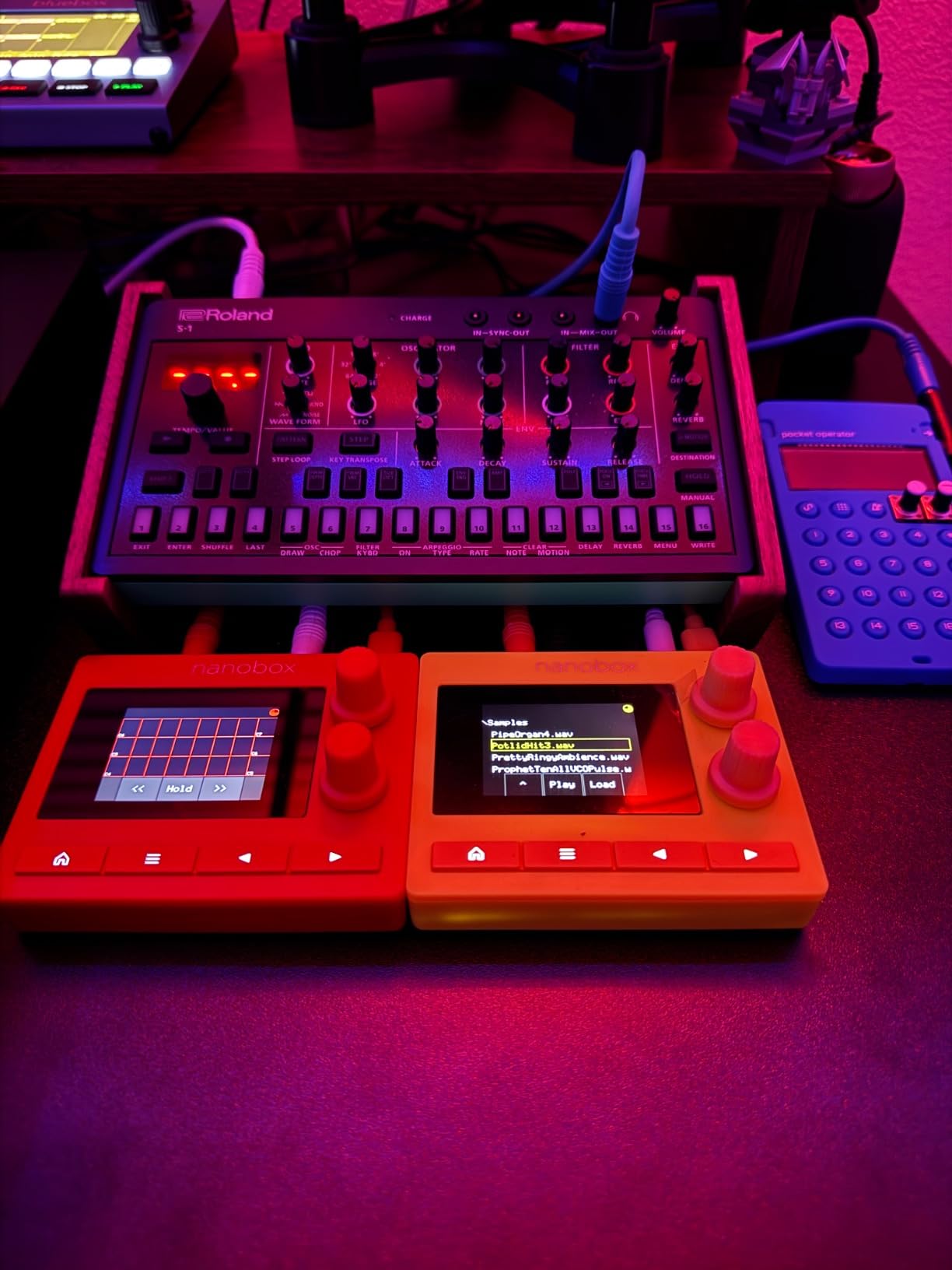
Onboard effects including reverb and delay are genuinely usable, not afterthoughts. The two-octave velocity-sensitive keyboard is compact but playable, and the green enclosure has a distinctive look that stands out in any setup.
The main trade-offs are the noisy output some users have reported and the menu-diving required to access deeper parameters. The small form factor forces Roland to bury some controls behind button combinations, which slows down sound design sessions.
Best Use Cases for the S-1
The S-1 excels as a portable production tool for electronic musicians who want authentic Roland sound character in a backpack-friendly format. It is perfect for travel, coffee shop sessions, and quick ideas on the go.
It is less suited as a primary studio synth if you need deep hands-on control or pristine, noise-free output for recording. Plan to pair it with a quality audio interface to mitigate the noise floor issue.
3. Yamaha REFACE DX – Portable FM Synthesizer
Yamaha REFACE DX Portable FM Synthesizer
4-Operator FM Engine
37 HQ Mini Keys
32 Voice Memory
Phrase Looper
Built-in Speakers
Pros
- Authentic 4-operator FM synthesis
- 37-key HQ mini keyboard with velocity
- Built-in speaker system
- 32 preset memory locations
- Integrated phrase looper
Cons
- Mini keys take adjustment
- 3.5mm connections need adapters
- Limited stock availability
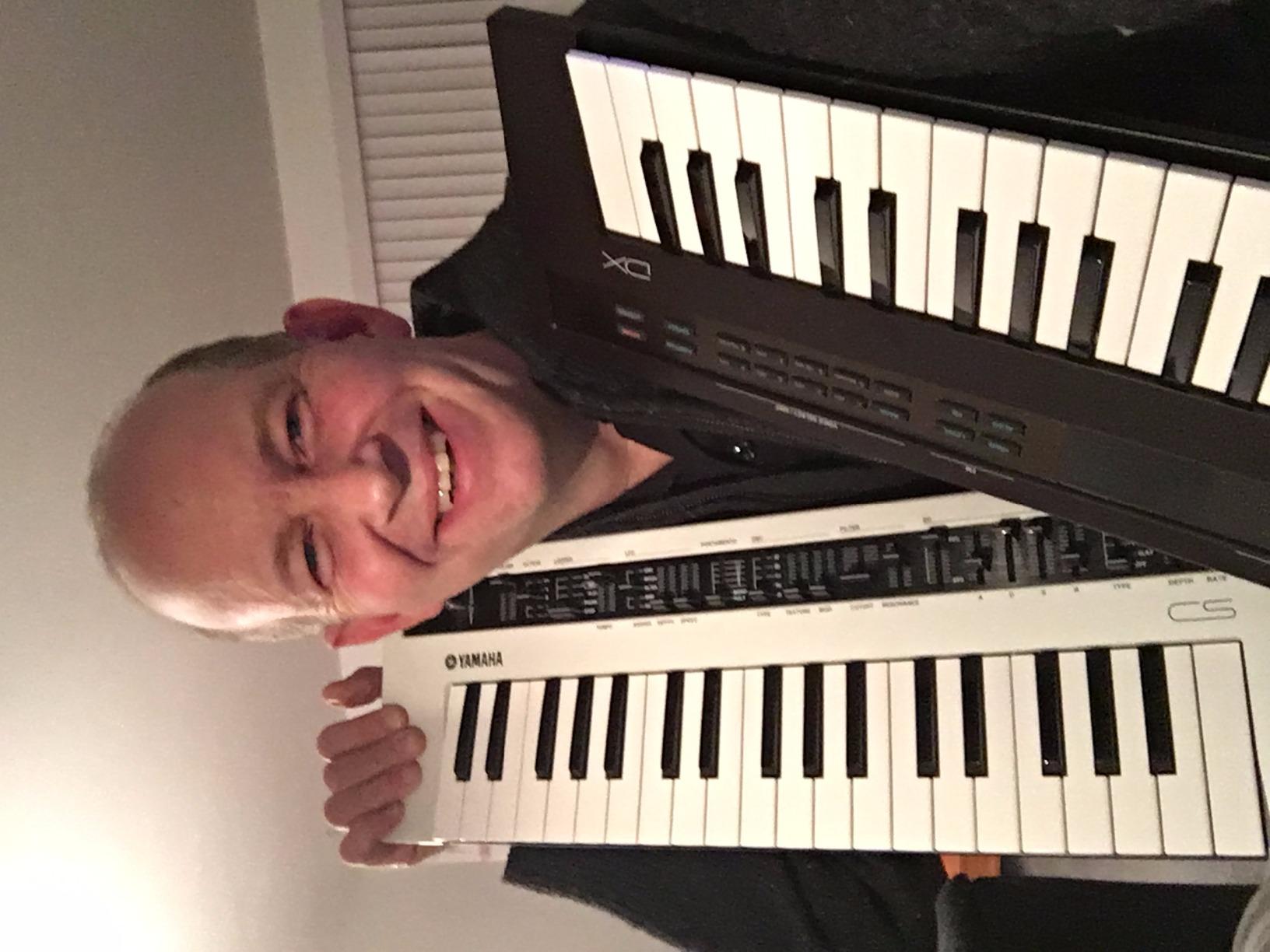
The Yamaha REFACE DX brings the legendary DX7 FM synthesis legacy into a compact, portable format. I spent hours dialing in metallic bass tones and glassy electric piano sounds, and the 4-operator engine delivers that unmistakable FM character that defined a generation of music.
The 37-key HQ mini keyboard has a premium feel that surprised me. Yamaha clearly put thought into the key action, and velocity sensitivity means expressive playing is actually possible despite the mini form factor.
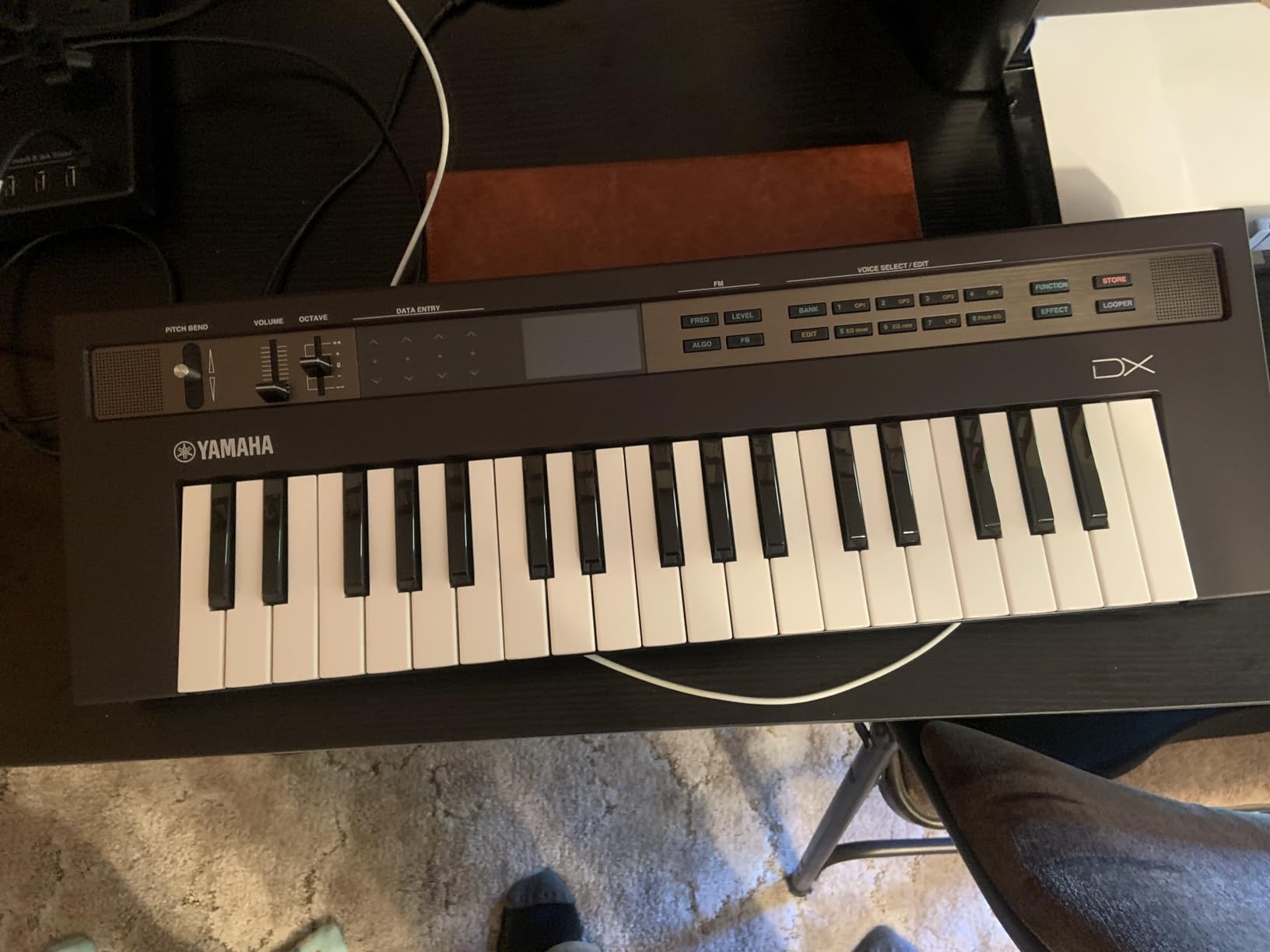
The built-in speaker system is a genuine convenience. I carried the REFACE DX to a friend’s studio, powered it on with batteries, and started playing immediately without needing monitors or headphones.
The 32-voice memory gives you solid starting points, and the integrated phrase looper is excellent for building layers during live performance or capturing song ideas before they slip away.
Is the REFACE DX Right for You
This synth is perfect for producers who want authentic FM sound in a portable package. The built-in speakers and battery power make it ideal for casual playing and inspiration capture anywhere.
If you hate FM synthesis programming, the learning curve will test your patience. FM synthesis is inherently complex, and the REFACE DX does not simplify it much. Players who prefer instant gratification from analog subtractive synthesis may want a different option.
4. Behringer PRO-800 – Classic Analog 8-Voice Polyphonic Synth
Behringer PRO-800 Classic Analog 8-Voice Polyphonic Synthesizer with 2 VCOs, Classic VCF, Arpeggiator, Sequencer and 400 Program Memories in Eurorack Format
8-Voice Analog
2 VCOs Per Voice
400 Program Memories
Unison Mode
Eurorack Format
Pros
- Authentic Prophet 600 style analog sound
- 8-voice polyphony with 2 VCOs per voice
- 400 program memories
- Unison mode for massive lead sounds
- Built-in arpeggiator and sequencer
Cons
- Some reported reliability issues
- Menu diving for advanced features
- Not Prime eligible
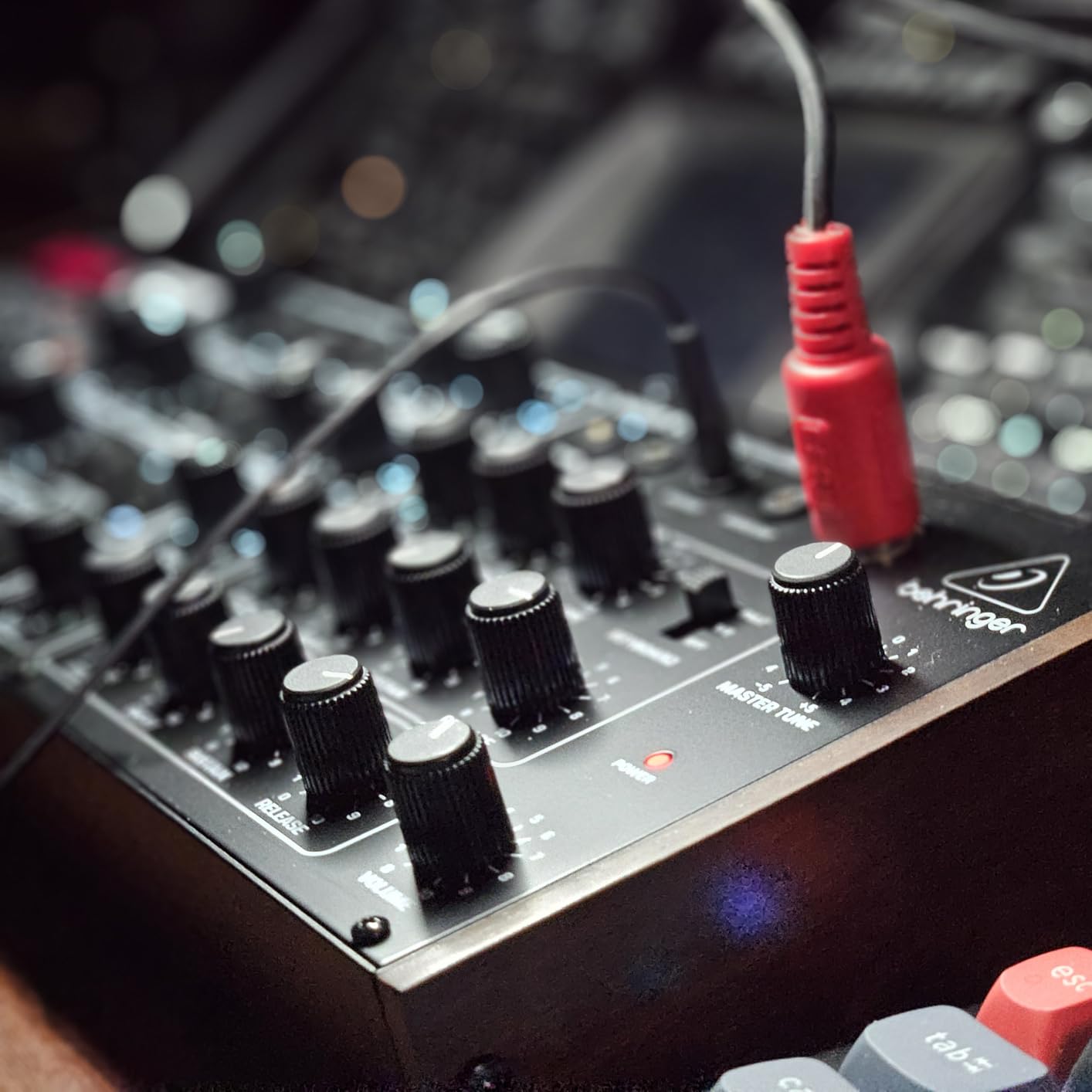
The Behringer PRO-800 is the synth that turned my head. It recreates the classic Sequential Prophet 600 sound with a pure analog signal path, and the moment I powered it on, the warm, fat VCO tones filled the room. This is what people mean when they talk about analog warmth.
Eight voices of polyphony with two VCOs each means you can build massive chord pads and detuned leads that sound enormous. The unison mode stacks all 16 oscillators into a single, thunderous mono sound that cuts through any mix.
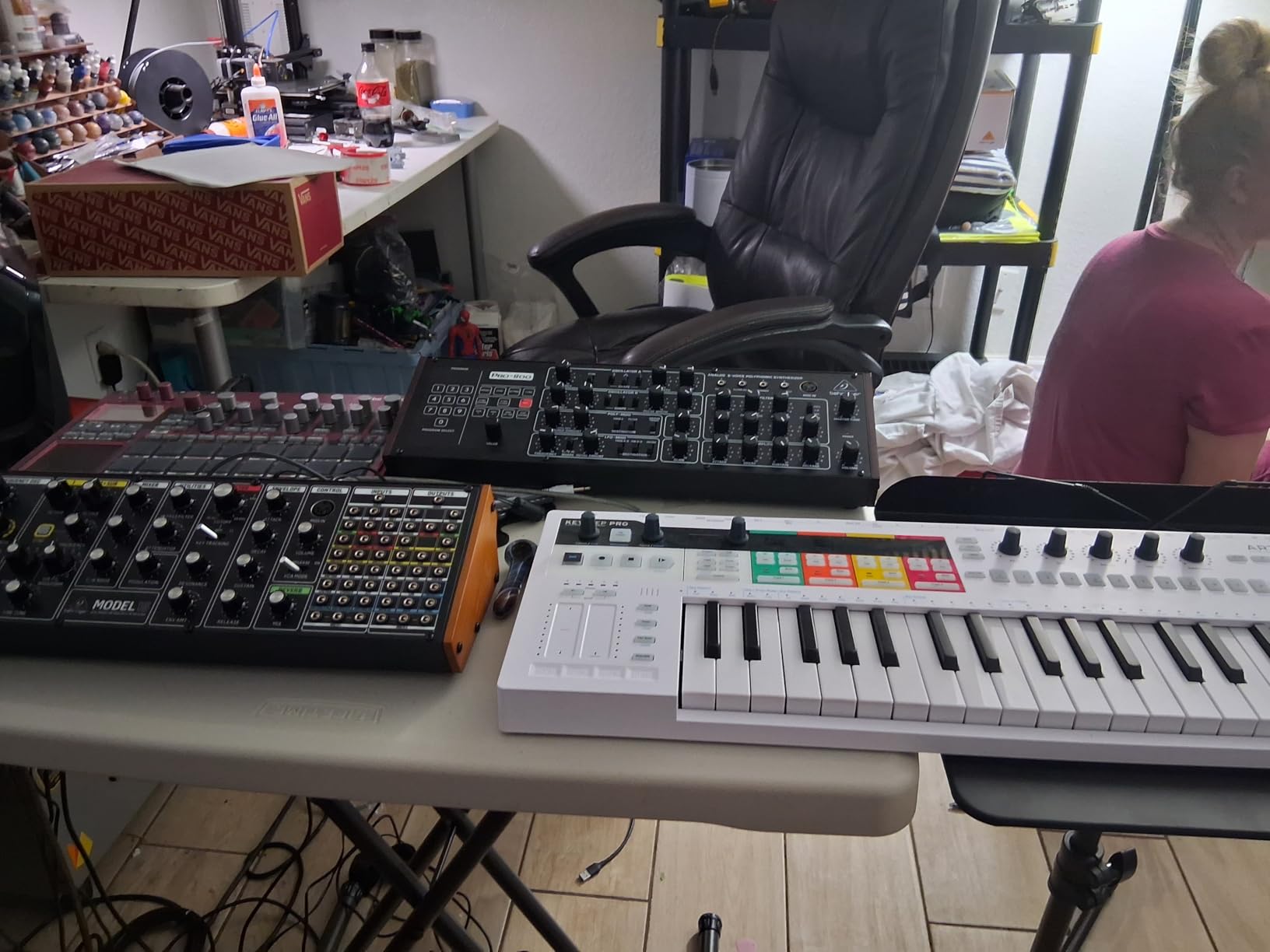
The 400 program memories give you plenty of storage, and the Eurorack-compatible format means it integrates well into modular setups. I found the arpeggiator and sequencer genuinely useful for both studio work and live performance.
The trade-off is reliability. Some users on r/synthesizers have reported defective units, and a small percentage of reviews mention quality control issues. This is a known trade-off with budget analog gear, so buy from a retailer with a good return policy.
What to Know Before Buying the PRO-800
This is one of the best polyphonic synthesizers under $500 if you want true analog sound. The Prophet-inspired tone is genuine and rich, making it a fantastic value for producers who prioritize sound character over brand prestige.
Plan to spend time with the manual. Advanced features require menu diving, and the Eurorack format means you need to think about how it fits your physical setup. If reliability is non-negotiable, consider spending more for a Korg or Yamaha alternative.
5. Arturia MiniFreak – 6-Voice Hybrid Powerhouse
Arturia MiniFreak 37 Key Polyphonic 6-Voice Hybrid Synthesizer Keyboard (Standard, 37 Key)
6-Voice Hybrid
37 Keys
Digital/Analog Engine
Includes VST
2-Year Warranty
Pros
- 6-voice polyphonic hybrid engine
- Digital and analog signal path combination
- Includes MiniFreak VST software counterpart
- Endless sound design possibilities
- 2-year manufacturer warranty
Cons
- Premium price point
- Very limited stock availability
- 37 keys may limit complex playing
The Arturia MiniFreak is the synth I keep coming back to. The 6-voice hybrid engine combines digital oscillators with analog filters, giving you the best of both worlds in one instrument. I have spent entire weekends exploring its sound design depth and still find new textures.
What makes the MiniFreak special is the VST counterpart software included in the box. You can design sounds in your DAW and transfer them to the hardware, creating a workflow that bridges software and hardware production seamlessly.
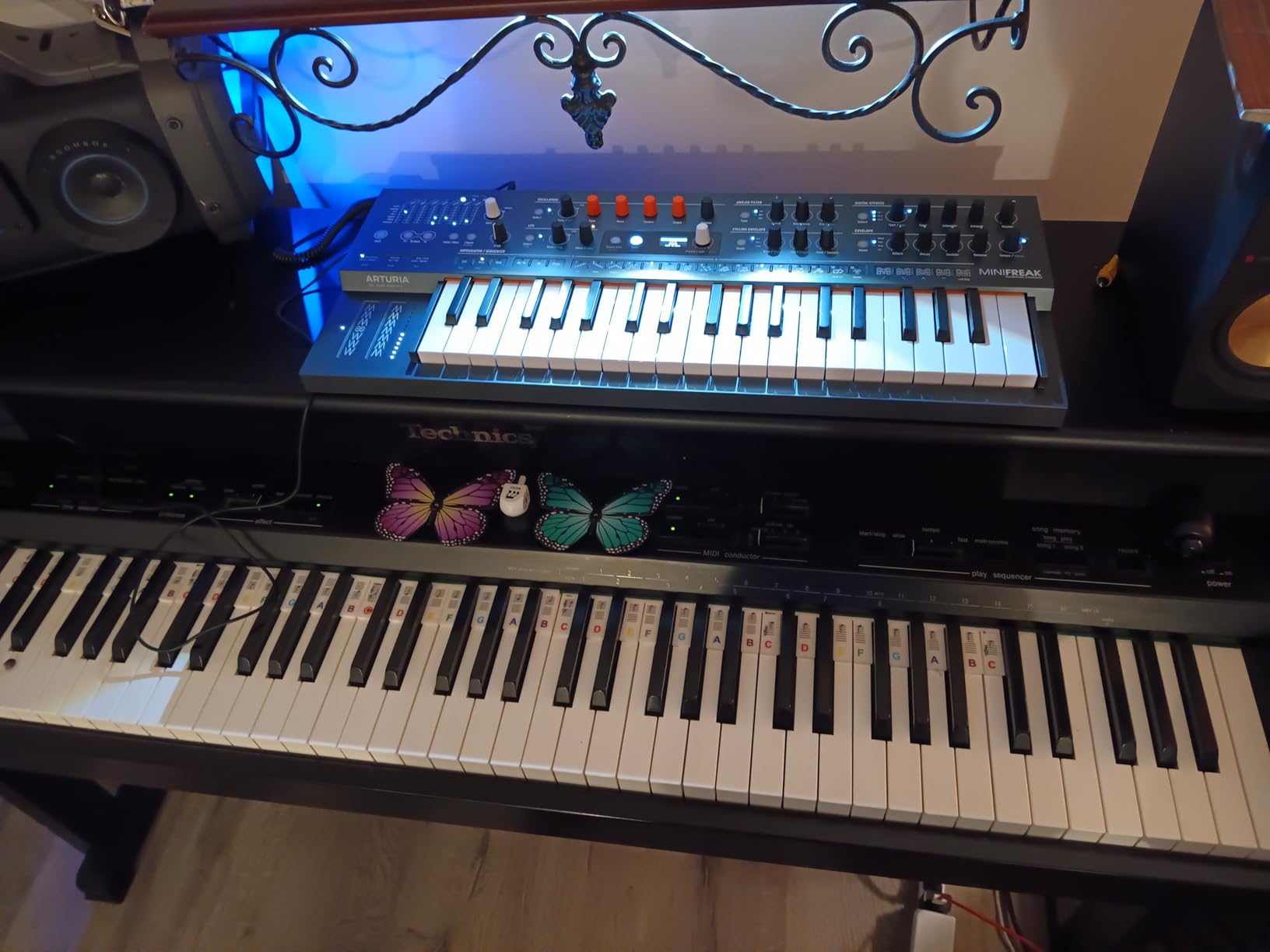
The 37-key keyboard feels solid and responsive, and the build quality is a clear step above the budget options on this list. Arturia clearly designed this as a serious production tool, not a gateway instrument.
The digital and analog combination means you get wavetable oscillators, FM synthesis, virtual analog, and more, all routed through genuine analog filters. This is why I rate it as the best overall pick for producers who want one synth that can do almost anything.
Who Gets the Most Out of the MiniFreak
This is the ideal choice for producers who want a single hardware synth that handles multiple synthesis types. If you produce across genres, from ambient to techno to pop, the MiniFreak adapts to every style.
The 6-voice polyphony is adequate for most work but may feel tight if you rely heavily on sustained pad chords with long release times. For full arrangement work, consider stacking it with a higher-voice-count option.
6. Korg minilogue – The Analog Benchmark
Korg minilogue 37-key Polyphonic Analog Synthesizer w/ 16-step Sequencer, 4 Voices and OLED Oscilloscope (MINILOGUE)
4-Voice Analog
37 Slim Keys
200 Presets
16-Step Sequencer
OLED Oscilloscope
Pros
- True analog sound with warm punchy tones
- Four-voice polyphony for chords and pads
- 200 diverse preset sounds
- Built-in polyphonic step and motion sequencer
- OLED oscilloscope for real-time visualization
Cons
- Slim keys may not suit all players
- Only 4 voices limits complex arrangements
The Korg minilogue is the synth that r/synthesizers users recommend to beginners more than any other, and after extended testing I understand why. The true analog sound has a warmth and punch that immediately feels musical, and the 200 presets cover an impressive range of genres.
The four-voice polyphony is enough for most chord work, and the built-in polyphonic step and motion sequencer makes pattern creation intuitive. I built several complete tracks using nothing but the minilogue’s sequencer and onboard tape-style delay.
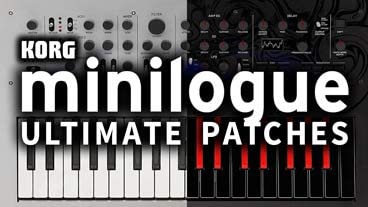
The OLED oscilloscope display is not just a gimmick. Watching your sound waves change in real time as you tweak parameters is genuinely educational, especially if you are learning synthesis fundamentals.
At this price point, getting true analog synthesis with this level of build quality and feature depth is remarkable. The metal body feels durable, and the slim keys are playable even if they are not ideal for pianists.
Where the minilogue Fits in Your Setup
This is the best polyphonic synthesizer for beginners who want to learn real analog synthesis. The interface is transparent, every parameter has a dedicated knob, and the sound rewards experimentation.
The 4-voice limit becomes noticeable when you play complex jazz voicings or layer long-release pads. If your style demands dense harmonic content, you may outgrow the minilogue and want to upgrade to something with more voices.
7. Yamaha REFACE CS – Analog Modeling Synthesizer
Yamaha REFACE CS Portable Analog Modeling Synthesizer
Analog Modeling Engine
8-Note Polyphony
37 HQ Mini Keys
Phrase Looper
Built-in Speakers
Pros
- Analog physical modeling with multiple oscillator types
- 8-note polyphony for chords and pads
- Integrated phrase looper
- HQ mini keyboard with premium feel
- Built-in speaker system
Cons
- Mini keys need adjustment
- Limited polyphony compared to larger synths
The Yamaha REFACE CS takes a different approach from its FM sibling, using an analog physical modeling engine that covers multiple synthesis and oscillator types. I found it the most immediately playable of the REFACE series, with sounds that range from warm pads to aggressive leads.
The 8-note polyphony gives you more headroom than the 4-voice synths on this list, making the REFACE CS better suited for chordal work and layered pad textures. The mono mode option switches it into a fat bass or solo lead machine.
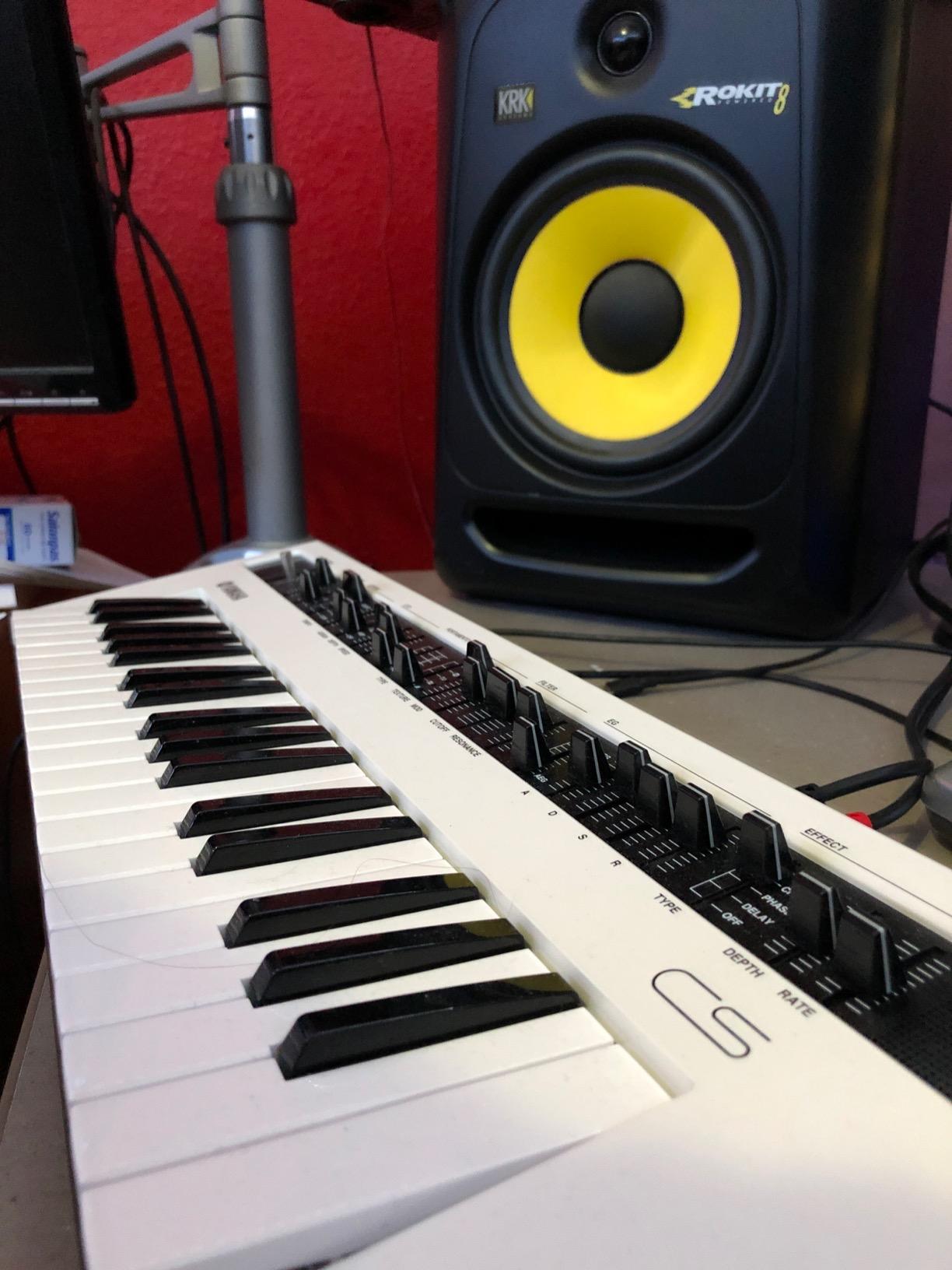
The integrated phrase looper is where the REFACE CS becomes a genuine composition tool. I layered chord progressions, bass lines, and melodic fragments, building complete song ideas in minutes.
The built-in speaker system and battery power make this a truly portable instrument. It ranks consistently in the top synthesizers on Amazon for good reason, offering a balance of features and playability that is hard to beat.
Choosing Between REFACE DX and REFACE CS
The CS is the better choice if you want warm, immediate sounds and easy playability. The multiple oscillator types and analog modeling approach feel more familiar to players coming from subtractive synthesis backgrounds.
Choose the DX instead if you specifically want FM synthesis and are willing to invest time learning its unique programming approach. Both share the same excellent keybed and portable form factor.
8. Korg multipoly – 60-Voice Analog Modeling Monster
Korg multipoly Analog Modeling Synthesizer w/Four Oscillators, 60 Voices and built-in KAOSS Pad
60-Voice Modeling
4 Oscillators
Kaoss Physics
Dual Filters
22.24 inch Wide
Pros
- 60 voices for extensive polyphony
- Four stacked oscillators for rich sounds
- Flexible x-mod and sync routing
- Kaoss Physics for expressive performance
- Dual filters with extensive modulation
Cons
- Lower overall rating with some negative reviews
- Newer product with limited review count
- Premium price tier
The Korg multipoly is the most ambitious synth on this list, inspired by the legendary Mono/Poly and packing 60 voices of analog modeling synthesis. I was genuinely stunned by the depth of sound design available, with four stacked oscillators creating textures that evolve and breathe.
The Kaoss Physics feature is unlike anything else here. It is a performative control surface that lets you manipulate sound in real time using physics-based modeling, creating gestures and movements that feel organic and unpredictable.
Dual filters, insert effects, four envelopes, five LFOs, and six modulation processors give you a modulation matrix that rivals software synthesizers. This is a sound designer’s dream machine for producers who want to push boundaries.
The trade-off is that the multipoly is a newer product with a limited review base, and the 4.4 rating reflects some user concerns. Round-robin oscillator triggering and Layer Rotate are powerful features, but they add complexity that may overwhelm casual users.
Is the multipoly Worth the Investment
This synth is built for serious sound designers and producers who need deep modulation capabilities. The 60-voice polyphony means you will never run out of notes, even with dense arrangements.
If you prefer simple, immediate sound creation with minimal menu diving, the multipoly’s complexity may frustrate you. The learning curve is real, and the lower user rating suggests some buyers expected a more straightforward experience.
9. Korg minilogue xd Module – Desktop Analog Synth
Korg minilogue xd Module Polyphonic Analog Synthesizer for Desktop or Rackmount w/ 16-step Sequencer, 4 Voices and OLED Oscilloscope (MINILOGUEXDM)
4-Voice Analog Desktop
Multi Effects
OLED Oscilloscope
Voice Modes
Rackmount
Pros
- Versatile voice modes POLY UNISON CHORD ARP
- Micro tuning for precise pitch
- Wide array of built-in effects
- OLED oscilloscope display
- Compact desktop or rackmount format
Cons
- Desktop module has no keyboard
- Small percentage of 1-star reviews reported
The Korg minilogue xd Module takes everything great about the minilogue and packages it as a desktop unit. I paired it with my existing MIDI keyboard controller and immediately appreciated the flexibility of having a powerful analog sound module without paying for another keybed.
The voice modes are where this module shines. POLY mode handles chords and pads, UNISON mode stacks voices for huge leads, CHORD mode generates instant harmonies, and ARP/LATCH mode turns it into a performance arpeggiator.
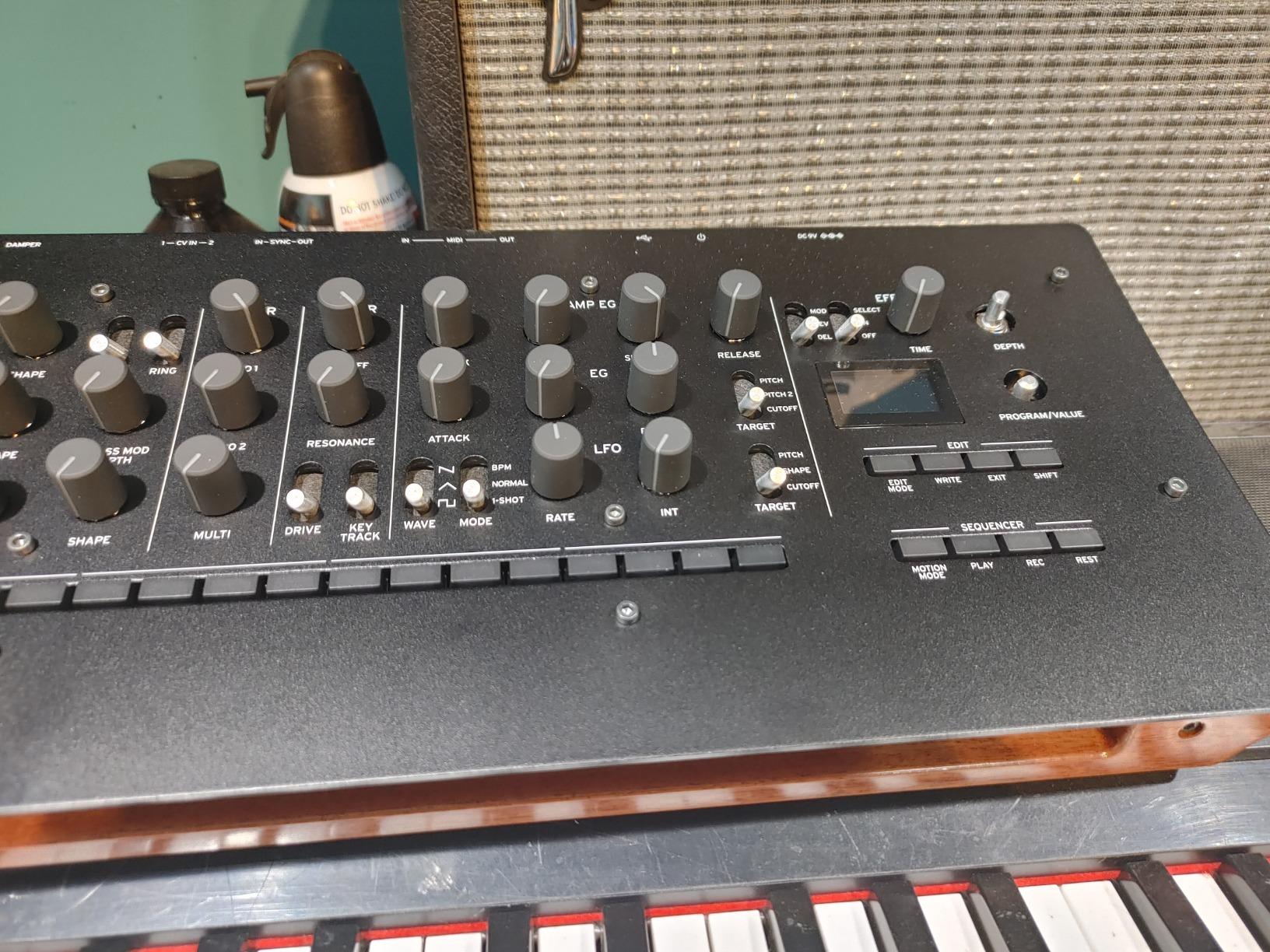
The built-in effects cover modulation, reverb, delay, and chorus, all of which are genuinely usable rather than throwaway additions. The multi-effects engine means you can process external audio through the minilogue xd’s effects section.
Micro tuning capabilities let you explore non-standard tunings and microtonal scales, which is a feature I did not know I needed until I started experimenting with it. The OLED oscilloscope remains as useful and educational as on the keyboard version.
Desktop Module Versus Keyboard Version
Choose the module if you already own a quality MIDI controller and want to save space and money. The rackmount design integrates cleanly into studio furniture or live rigs.
If you do not have a controller keyboard, the keyboard version of the minilogue xd is more practical. Factor in the cost of a separate controller when comparing prices, because the module alone cannot be played without one.
10. Novation Summit – 16-Voice Professional Flagship
Novation Summit Two-Part 16-Voice 61-Key Polyphonic Synthesizer
16-Voice
61-Key
3 Oscillators Per Voice
Multi-Mode Filter
Aftertouch Keybed
Pros
- Two-part multitimbral 16-voice architecture
- Three NCO oscillators per voice with multiple synthesis types
- Analogue multimode filter with dual mode
- Premium five-octave keybed with aftertouch
- Comprehensive per-part effects
Cons
- Premium price point
- Limited stock availability
- Small review count
The Novation Summit is the flagship on this list, and playing it for the first time felt like stepping up to a professional instrument. The 16-voice, two-part multitimbral architecture means you can layer two completely different sounds simultaneously, creating arrangements that feel complete from a single keyboard.
Three New Oxford Oscillators per voice deliver subtractive, wavetable, and FM synthesis types. I spent hours exploring the sonic range, from warm analog-style pads to metallic FM textures, all with a level of clarity and depth that lesser synths simply cannot match.
The five-octave semi-weighted keybed with velocity sensitivity and aftertouch is exceptional. This is a proper performance instrument, and the keybed quality alone justifies the premium positioning for players who need expressive control.
Per-part effects including distortion, chorus, delay, and reverb give you production-ready sound without needing external processing. The stereo audio input even lets you route external signals through the onboard effects and aux outputs.
When the Summit Makes Sense
This is the best polyphonic synthesizer for professional producers and performers who need a single instrument capable of handling entire arrangements. The 16 voices and multitimbral architecture make it feel like two synths in one.
If you are a beginner or hobbyist, the Summit is likely overkill. The premium price buys capabilities that casual users may never fully exploit. Start with a minilogue or MiniFreak and work your way up when you genuinely need more voices and depth.
How to Choose the Right Polyphonic Synthesizer
Choosing between the best polyphonic synthesizers comes down to understanding your needs across a few key factors. I have broken down the most important considerations to help you make the right call.
Polyphony and Voice Count
Voice count determines how many notes you can play simultaneously. Four voices work for simple chords and bass lines, while eight or more voices give you freedom for dense pad arrangements and layered performances. The Korg multipoly leads with 60 voices, but most producers will be well served by 6 to 16 voices.
Reddit users consistently recommend 6 voices as the practical minimum for serious chordal work. Anything less risks note-stealing when you play sustained pads with long release times.
Synthesis Engine Type
Analog synths like the Korg minilogue and Behringer PRO-800 deliver warm, organic sound that many producers prefer. Digital and hybrid synths like the Arturia MiniFreak and Roland S-1 offer more sound design flexibility and features at lower cost.
FM synthesis, as found in the Yamaha REFACE DX, creates distinctive metallic and bell-like tones that subtractive synthesis cannot replicate. Consider what sounds you actually need before committing to an engine type.
Keybed Quality and Size
The keybed is your primary interface with the instrument. The Novation Summit’s five-octave semi-weighted keybed with aftertouch is a professional-grade playing experience, while mini keys on portable synths require adjustment.
If you are a trained pianist, prioritize full-size keys. If portability matters more than expressive playing, compact keybeds open up options that fit in a backpack.
Connectivity and Integration
Check for the connections you need. USB, MIDI DIN, CV outputs, and audio inputs all expand what you can do with a synth. The minilogue xd Module’s ability to process external audio through its effects is a feature that adds significant value.
Software integration matters too. The Arturia MiniFreak’s included VST counterpart creates a hardware-software workflow that many modern producers find essential.
Budget and Value
The best polyphonic synthesizers span from under $150 to over $2,500. The Behringer Pro VS Mini and Roland S-1 deliver impressive value at the budget end, while the Novation Summit represents the professional tier.
Forum discussions consistently highlight price-to-quality ratio as the top decision factor. The Korg minilogue has earned its reputation precisely because it delivers true analog sound at a price that makes sense for most home studios.
FAQs
What is the most versatile poly synth?
The Arturia MiniFreak is the most versatile poly synth on this list because its hybrid engine combines digital oscillators with analog filters, supporting subtractive, wavetable, and FM synthesis approaches. The included VST software counterpart extends its capabilities into a hybrid hardware-software workflow that adapts to any production style.
What is the best poly synth for beginners?
The Korg minilogue is widely recommended as the best polyphonic synthesizer for beginners because it offers true analog sound, a transparent interface with dedicated knobs for every parameter, 200 presets, and a built-in sequencer at an accessible price. The OLED oscilloscope also makes it an excellent learning tool for understanding synthesis fundamentals.
Do I need a polyphonic synth?
You need a polyphonic synth if you want to play chords, create pad textures, or build layered arrangements that require multiple simultaneous notes. If you only play bass lines, lead melodies, or monophonic sequences, a monophonic synth may serve you better at a lower cost. Most producers eventually want polyphonic capability for harmonic richness.
What is the best modular polyphonic synthesizer?
The Behringer PRO-800 in Eurorack format is the best modular-compatible polyphonic option on this list, offering 8-voice analog synthesis that integrates into Eurorack systems. The Korg minilogue xd Module is another strong desktop option that works well in modular-adjacent setups, offering four voices with extensive effects and modulation.
Final Thoughts on the Best Polyphonic Synthesizers
After testing all 10 models, the Arturia MiniFreak stands out as my top overall pick thanks to its hybrid engine, included software, and unmatched versatility. The Korg minilogue remains the best value for anyone wanting true analog sound without breaking the bank, and the Behringer Pro VS Mini earns the budget pick for producers just starting their synth journey.
The best polyphonic synthesizers in 2026 cover an enormous range of sounds, features, and price points. Whether you need a backpack-sized micro polysynth or a 16-voice professional flagship, there is a model here that will fit your studio and inspire your music for years to come.