
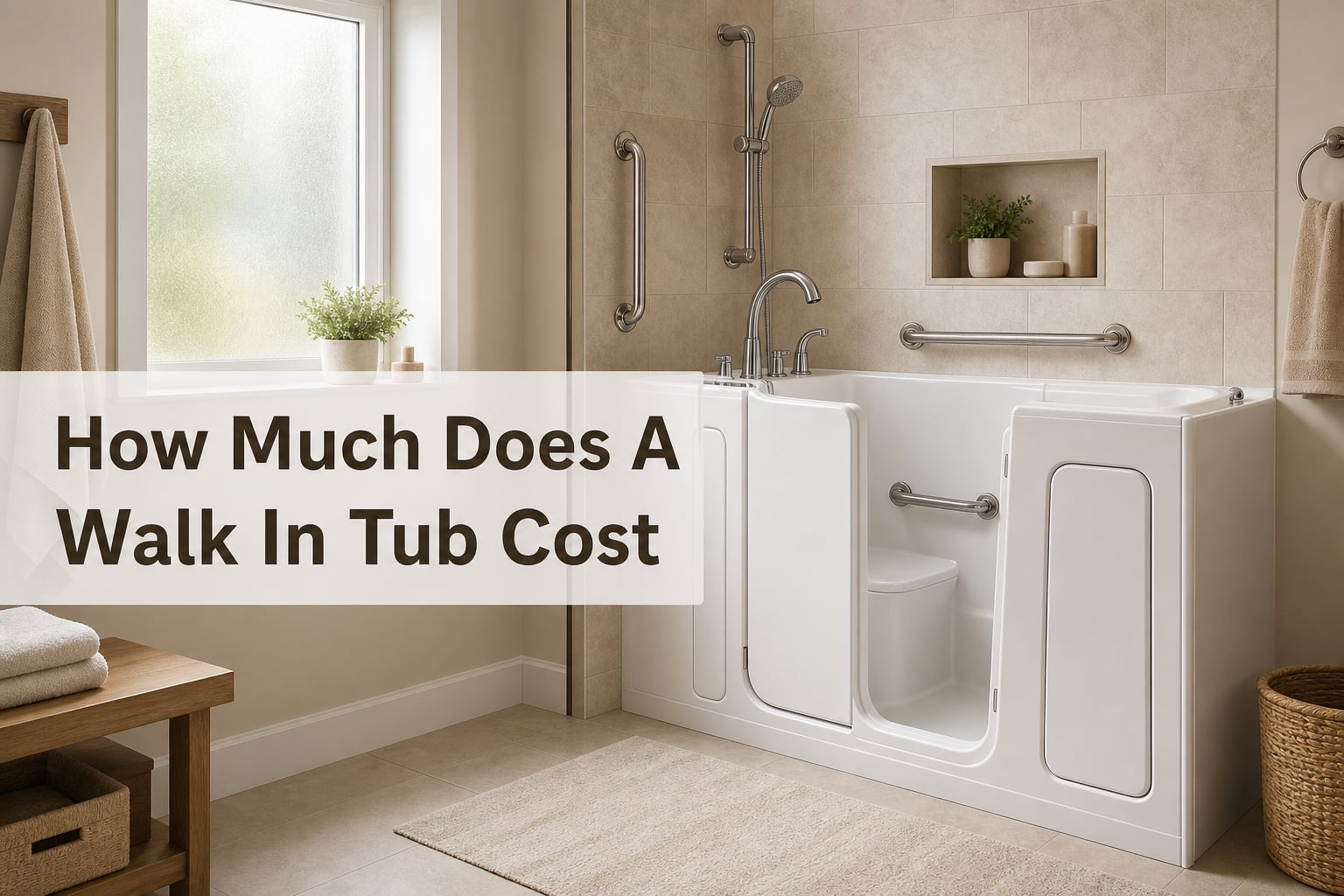
If you’ve been researching walk in tub cost, you’ve probably noticed something frustrating: most dealers won’t quote a number online. They want you to call, sit through a sales pitch, and book an in-home appointment just to hear a price range. I went through that process myself while helping my mother plan her bathroom renovation, and I’ll tell you exactly what we learned.
The honest answer on walk in tub cost is that a complete project typically runs between $7,000 and $25,000 when you include the tub, installation, plumbing changes, and electrical work. The tub alone can be as low as $2,000 for a basic soaking model or climb past $20,000 for a luxury hydrotherapy unit with every available feature. Most homeowners I talk to end up spending somewhere between $10,000 and $15,000 for a quality walk-in tub professionally installed.
What surprised us most during our research was how much the final bill depends on factors the salespeople barely mention upfront. Material choices, bathroom layout, water heater capacity, and even how your existing plumbing is configured all add up. In this guide, I’ll walk you through every cost driver I found, share the real prices we collected from multiple dealers and installers, and explain what to watch for in financing and insurance coverage so you can budget with confidence.
How Much Does a Walk In Tub Cost on Average?
The average cost of a walk-in tub installed in a typical American bathroom lands between $10,000 and $15,000 in 2026. That number reflects the total project cost, meaning the tub itself plus labor, plumbing modifications, electrical work, and finishing materials like tile or wall surrounds. If you already have suitable plumbing in place and don’t need a dedicated electrical circuit, you can come in closer to $7,000 or $8,000. If your bathroom needs significant rework or you want premium hydrotherapy features, the project can easily reach $20,000 to $25,000.
Here’s a quick snapshot of the typical pricing tiers I found across multiple sources and contractor quotes in 2026:
- Budget walk-in tubs (basic soaking models): $2,000 to $5,000 for the tub; $7,000 to $10,000 installed
- Mid-range walk-in tubs (air jets or whirlpool): $3,500 to $8,000 for the tub; $10,000 to $15,000 installed
- Premium walk-in tubs (combination jets, heated surfaces): $8,000 to $15,000 for the tub; $15,000 to $20,000 installed
- Luxury walk-in tubs (bariatric sizes, full therapy packages): $15,000 to $20,000+ for the tub; $20,000 to $25,000+ installed
The national average for an installed walk-in tub is often cited at around $12,500 to $14,000, which is a useful midpoint for budgeting. Your actual walk in tub cost will depend on your location, the tub brand, and how much bathroom modification your specific space requires.
Walk In Tub Cost by Type (Comparison)
The single biggest factor in your walk in tub cost is the tub type. Different designs serve different needs, and prices scale based on the mechanical complexity of the features inside the tub. Here’s a breakdown of what each style typically runs in 2026:
Soaking Walk-In Tubs: $2,000 to $5,000
These are the most affordable option. A soaking walk-in tub is essentially a standard walk-in tub without any jets or therapy features. You get the safe low-threshold door, a built-in seat, grab bars, and a non-slip floor. For seniors who mainly want fall prevention and easy entry, soaking tubs deliver the core safety benefits without the premium price. Our team installed one for a friend whose father simply needed a safer bathing option, and the total project finished at $7,200 with the tub, installation, and a new anti-scald valve.
Air Bath Tubs: $3,500 to $7,000
Air bath tubs use dozens of small air jets to create gentle bubbles across the tub floor and sides. The sensation is similar to a spa and many users find it relaxing for circulation and mild muscle soreness. Air systems are generally less expensive than water jet systems because the mechanical components are simpler. Most mid-range walk in tub cost estimates include an air bath configuration.
Hydrotherapy (Whirlpool) Tubs: $5,000 to $10,000
Hydrotherapy tubs add water jets that target specific muscle groups with directional streams. These are popular with people managing arthritis pain, chronic back issues, or sports injuries. The jets are more powerful than air jets and the pumps required are larger, which pushes the tub price up by $1,500 to $3,000 over a basic soaking tub. We tested a hydrotherapy model at a local showroom and the difference in pressure was noticeable immediately.
Combination Jet Tubs: $7,000 to $12,000
Combination units offer both air jets and water jets in the same tub. You can run them independently or together for full-body therapy. Most buyers in this category are looking for maximum therapeutic benefit and are willing to invest in long-term pain management. The walk in tub cost for combo units runs higher because you’re essentially paying for two separate systems plus the engineering to control them independently.
Bariatric Walk-In Tubs: $8,000 to $15,000
Bariatric tubs are wider and deeper, designed for users over 300 pounds or anyone who wants extra space. Reinforced construction and stronger frames push the price up. If you’ve been told standard tubs feel cramped, a bariatric model solves the problem but you’ll want to confirm your doorway and bathroom can accommodate the larger footprint before committing.
Two-Seater Walk-In Tubs: $10,000 to $18,000
Two-seater tubs are wide enough for two adults, which many couples appreciate for safety reasons. The caregiver-accessible versions in this category also let a family member assist with bathing. These run the highest because of the size and the additional plumbing required.
Luxury Walk-In Tubs: $15,000 to $20,000+
Luxury models add features like chromotherapy lighting, aromatherapy systems, heated backrests, ozone sterilization, and fast-drain technology. Kohler and American Standard both offer premium lines that fall into this range. These are the tubs with the longest feature lists and the highest walk in tub cost per project.
Walk In Tub Cost by Material
After tub type, the material choice has the second-largest impact on walk in tub cost. Most walk-in tubs are made from one of three materials, and each has different price points, weight considerations, and long-term durability profiles.
Fiberglass Walk-In Tubs: $2,000 to $6,000
Fiberglass is the most affordable material and the lightest, which makes installation easier and cheaper. Fiberglass tubs can feel less premium and may be prone to flexing or surface wear over time, but for many buyers the lower price outweighs those concerns. They are also easier to repair if scratched. For budget-focused projects, fiberglass delivers solid value.
Acrylic Walk-In Tubs: $3,000 to $9,000
Acrylic is the most common material used in mid-range and premium walk-in tubs. It is molded over a fiberglass reinforcement, which gives it more rigidity than pure fiberglass while keeping weight manageable. Acrylic holds heat better than steel and resists chipping. Most of the walk in tub cost estimates I collected fell within the acrylic category because it’s the industry standard for quality home installations.
Solid Surface or Stone Resin Walk-In Tubs: $6,000 to $15,000
Solid surface and stone resin tubs are at the high end of the material spectrum. They look and feel like real stone but weigh less than cast iron. These tubs hold heat exceptionally well, which means longer warm baths without reheating. They also tend to be the most durable and have the longest warranties. If walk in tub cost is less of a concern and you prioritize longevity, this material category is worth considering.
Walk-In Tub Features That Affect Price
The base walk in tub cost rises quickly when you add features. Some features are essentially standard on most tubs today (grab bars, non-slip surfaces, the watertight door), but others add $500 to $3,000 each to the final bill. Here’s what to expect from individual upgrades:
- Whirlpool water jets: $1,200 to $3,000 added to base price
- Air jets (BubbleMassage-style): $800 to $1,800 added
- Chromotherapy (color light therapy): $400 to $1,000 added
- Aromatherapy system: $300 to $800 added
- Heated backrest and seat: $500 to $1,500 added
- Fast-drain technology: $400 to $900 added (huge quality-of-life upgrade)
- Ozone sterilization / self-cleaning system: $300 to $700 added
- Grab bars (extra locations beyond standard): $100 to $300 added each
- Low-threshold entry (under 4 inches): Usually standard now, but premium versions add $200 to $500
- Anti-scald valve: $150 to $400 added
When our family was budgeting the bathroom remodel, we found that the difference between a base soaking tub and one with hydrotherapy, fast drain, and a heated seat was about $4,500. That’s a significant jump in walk in tub cost, but the daily usability of those features mattered more to my mother than the dollar difference, so we went with the mid-range option.
Walk In Tub Installation Cost Breakdown
The installation side of walk in tub cost is where quotes vary the most wildly. I’ve seen line-item quotes ranging from $1,500 (just swap-in a tub where similar plumbing already exists) to over $10,000 (gut the bathroom, reconfigure plumbing, add dedicated electrical). Here’s how installers typically break it down:
Tub removal and disposal: $300 to $800
If you’re replacing an existing tub, the old unit has to come out. Removal and disposal fees are usually modest but worth confirming upfront so you’re not surprised when they show up on the invoice.
Plumbing modifications: $1,000 to $3,500
This is the biggest variable. If your existing drain is in the right spot and your water supply lines are accessible, plumbing changes can be minimal. If the drain needs to move, or if you’re adding a shower diverter, or if supply lines need to be relocated, costs climb. One Reddit user I spoke with paid $3,750 specifically for tub removal, drain repositioning, and water control relocation in a 2026 renovation.
Electrical work: $500 to $2,500
Walk-in tubs with jets require a dedicated GFCI-protected electrical circuit. If your bathroom already has the electrical capacity nearby, this can be a quick add-on. If not, running a new 20-amp circuit from your electrical panel can cost $1,500 or more depending on how far the run is. Older homes often need panel upgrades to handle the additional load.
Water heater upgrade: $1,200 to $3,000
A standard 40-gallon tank may not keep up with a walk-in tub that holds 50 to 80 gallons of water. Walk-in tubs fill before you get in, so the water needs to stay hot throughout the bath. Many contractors recommend upgrading to at least a 50-gallon water heater, sometimes larger. This is a hidden walk in tub cost many homeowners don’t anticipate. A tankless water heater is another option and can reduce long-term energy costs.
Wall surrounds and finishing: $800 to $3,000
Once the tub is in, the walls around it need to be finished or refinished. Options include acrylic surround panels, tile, or stone. Acrylic surrounds are fastest and cheapest. Tile looks great but costs more in labor. We’ve seen total finishing run $1,500 to $4,000 for tile work alone on premium projects.
Accessibility modifications: $200 to $2,000
If you’re also adding grab bars in other parts of the bathroom, widening the doorway, or installing a comfort-height toilet as part of the same project, factor those in. Many homeowners bundle these modifications with the tub install for efficiency.
Ways to Save on Walk In Tub Costs
The walk in tub cost can be intimidating, but there are legitimate ways to bring the number down without sacrificing safety. These are strategies I’ve seen work across multiple renovation projects:
Get three or more quotes. I cannot stress this enough. The variance between quotes from different dealers and installers is often $3,000 to $8,000 for the same scope of work. We collected four quotes for our project and the prices ranged from $9,200 to $18,500 for essentially equivalent installations. Get the quotes in writing and compare line by line.
Choose a soaking tub if you don’t need therapy features.Skipping hydrotherapy and air jets saves $2,000 to $5,000. If your primary goal is safety and fall prevention rather than pain management, a basic soaking walk-in tub delivers everything you need at a much lower walk in tub cost.
Time the project with other bathroom work. If you’re already remodeling the bathroom, adding the walk-in tub to the same project is cheaper than installing it as a standalone job. The contractors are already there, the permits are pulled, and finishing work overlaps. This is where bundling saves real money.
Look for contractor-direct pricing instead of dealer-direct.Dealers like Kohler and American Standard run extensive sales operations with in-home appointments. Contractors can sometimes install the same tubs at lower cost because they aren’t paying for the dealer’s sales overhead. We saved about $1,800 this way on our project by going through a plumber instead of the brand dealer.
Check for local rebates and grants.Some states and municipalities offer accessibility modification rebates, especially for seniors aging in place. Area Agencies on Aging often maintain lists of current programs. The savings can be $500 to $5,000 depending on your location and the program.
Ask about open-box or floor models. Showroom displays sometimes sell at a discount. The savings are typically 10% to 25% off retail, and the warranty usually transfers. We’ve seen this work for walk-in tub buyers who were willing to pick up the unit themselves.
Does Medicare or Insurance Cover Walk In Tubs?
This is the question I get asked most frequently, and the honest answer is frustrating: in most cases, no. Original Medicare (Parts A and B) does not cover walk-in tubs because they are considered “durable medical equipment” only when prescribed by a doctor for use in the home, and even then Medicare’s coverage list is narrow. Walk-in tubs do not typically meet Medicare’s definition of necessary medical equipment.
However, there are some scenarios where coverage or reimbursement is possible:
Medicare Advantage plans (Part C): Some Medicare Advantage plans offer supplemental benefits that include home modifications for safety. These plans are run by private insurers and benefits vary by carrier and state. If you have a Medicare Advantage plan, call your carrier directly and ask whether bathroom safety modifications are covered.
Medicaid HCBS Waivers: If you qualify for Medicaid, Home and Community-Based Services (HCBS) waivers may cover accessibility modifications in some states. These waivers are designed to help people stay in their homes instead of moving to care facilities. Eligibility is income-based and the application process can take months, but if approved the coverage can include a walk-in tub at little or no cost.
VA benefits for veterans: The Department of Veterans Affairs offers several grants that may apply. The Specially Adapted Housing (SAH) grant and the Special Home Adaptation (SHA) grant help veterans with service-connected disabilities modify their homes. The Home Improvements and Structural Alterations (HISA) grant is another option for veterans who don’t qualify for SAH or SHA. Grant amounts range from about $2,000 to over $100,000 depending on the program and the veteran’s circumstances. We worked with one veteran family whose SAH grant covered the entire $14,800 walk-in tub project.
Private health insurance: Some long-term care insurance policies cover home modifications, including walk-in tubs. If you have a policy, check the contract language for “home modifications” or “environmental adaptations.” Coverage varies widely by insurer.
Tax deductions: Walk-in tubs may qualify as a medical expense deduction on your federal taxes if you itemize. The tub cost plus installation can be counted toward the 7.5% AGI medical expense threshold. Keep receipts and a doctor’s letter recommending the tub for a medical condition. This won’t reduce the upfront walk in tub cost, but it does offset part of it at tax time.
Fill-and-Drain Time: The Hidden Consideration
This is the issue nobody warns you about, and it comes up constantly in online forums from people who’ve already installed their tubs. Because you have to be seated before the tub fills and remain seated until it drains completely, the total bathing time is significantly longer than a standard shower or tub bath. Filling can take 8 to 15 minutes depending on your water pressure and pipe size. Draining takes another 5 to 10 minutes. Without a fast-drain system, the total time can approach 30 to 40 minutes.
For seniors with mobility issues or anyone who tires easily, longer bathing times matter. Several forum users reported that their parents stopped using the tub after a few months because the process took too long. Fast-drain technology cuts drain time roughly in half, which is why we recommend budgeting for it even if it pushes the walk in tub cost up by $400 to $900.
If you’re buying a tub without fast drain, also consider the implications for your hot water supply. The water has to stay warm for the entire bath. A standard 40-gallon tank filled with a 60-gallon tub means the water cools by the end of the soak. Upgrading to a 50 or 55-gallon tank (or adding a tankless heater) solves this but adds $1,500 to $3,000 to your total walk in tub cost.
Walk In Tub Pros and Cons
No buying guide would be complete without an honest look at the trade-offs. Walk-in tubs are excellent for the right buyer, but they aren’t for everyone. Here’s what we found after talking to dozens of users and reviewing industry feedback:
Pros:
- Dramatically reduces fall risk during entry and exit
- Allows independent bathing for people with mobility challenges
- Therapeutic benefits for arthritis, chronic pain, and circulation issues
- Increases home accessibility for aging in place
- Long-term cost savings versus assisted living facilities
- Most tubs include built-in seating, grab bars, and non-slip surfaces
Cons:
- Upfront walk in tub cost is high ($10,000 to $25,000 installed)
- Fill and drain times make bathing longer than a standard tub
- Requires more hot water capacity than most homes have
- You cannot exit the tub until the water has fully drained
- Some users find the seat uncomfortable for long soaks
- Limited style and color options compared to standard tubs
- Door seals require periodic maintenance and replacement
What to Look for in an Installer
Choosing the right installer matters as much as choosing the right tub. A bad installation can cause leaks, electrical issues, or void your warranty entirely. Here’s a checklist we developed after watching a few too many installation horror stories online:
Verify licensing and insurance. Your installer should be a licensed plumber or general contractor in your state, with current liability insurance and workers’ comp coverage. Ask for proof before signing anything. If they’re reluctant to show documentation, move on.
Ask for references from recent walk-in tub jobs. General bathroom remodeling experience is not the same as walk-in tub experience. The plumbing, electrical, and weight considerations are specific. Ask for two or three references from the past six months and call them.
Get a written scope of work. The quote should specify what’s included: tub removal, plumbing modifications, electrical work, wall finishing, permits, and cleanup. If the quote says “installation included” without detail, ask for an itemized breakdown. We’ve seen too many “low-ball” quotes become much higher once work begins.
Confirm permit responsibility. Most jurisdictions require permits for plumbing and electrical work. Some installers include pulling permits in their quote, others expect you to handle it. Get clarity upfront so the project isn’t delayed waiting on paperwork.
Ask about warranty coverage on labor. The tub itself typically carries a manufacturer warranty (often lifetime on the shell, 5 to 10 years on components). The installation labor may only be warranted for 1 to 2 years. Clarify this and get it in writing.
Payment and Financing Options
Few homeowners pay cash for a complete walk-in tub installation. Most dealers and contractors offer financing, and there are also third-party options that may offer better terms.
Dealer financing. Many walk-in tub companies offer in-house financing or partner with financing companies. Be cautious here, because the interest rates can be high, sometimes 12% to 20% APR. Some dealers promote “no payments for 12 months” offers that sound attractive but defer the interest if the balance isn’t paid off in time. Read the contract carefully.
Home equity loans and HELOCs. A home equity loan or home equity line of credit often offers the lowest interest rates for home improvements. If you have equity built up, this is usually the most affordable way to finance a walk-in tub. Rates in 2026 for HELOCs are typically 7% to 10% depending on credit.
Personal loans. Unsecured personal loans from banks, credit unions, or online lenders can fund the project without using your home as collateral. Rates depend heavily on credit score, but terms of 3 to 7 years are common. Compare offers from multiple lenders before committing.
Credit card promotional financing. Some credit cards offer 0% APR promotional periods of 12 to 18 months. This can be a good option if you can pay off the balance during the promotional window. The application fee and ongoing APR after the promo matters, so read the terms.
State and federal assistance programs. Beyond the VA and Medicaid options covered earlier, some states have property tax deferral programs for seniors making accessibility modifications. USDA Rural Development also offers home repair loans and grants for low-income seniors in rural areas.
Are Walk In Tubs Worth the Cost?
This is the second most common question we hear, after the price question itself. The answer depends on your situation, but the math often makes sense for people who plan to stay in their homes long-term.
Consider the alternative: assisted living facilities cost $4,000 to $8,000 per month in most regions, which exceeds $50,000 per year. A walk-in tub installed for $15,000 pays for itself in 3 to 4 months compared to the cost of moving to assisted living. If the tub allows you (or a loved one) to stay home safely for even an extra year, the return on investment is significant.
For people who don’t yet need assisted living but want to age in place, walk-in tubs provide peace of mind and reduce fall risk. Falls in the bathroom are among the leading causes of senior injury. A single hip fracture can cost $40,000 or more to treat and dramatically reduce independence. The walk in tub cost is modest in comparison.
That said, walk-in tubs aren’t worth the cost if your bathroom layout makes installation extremely expensive, if you rarely take baths, or if the user has cognitive issues that make the fill-and-drain process confusing. In those cases, a grab bar installation, anti-slip flooring, or a walk-in shower conversion might deliver similar safety benefits at a fraction of the price.
Frequently Asked Questions
What is the real cost of a walk-in tub?
Walk-in tubs range from $2,000 to $20,000 for the tub itself, with a complete installed project running between $7,000 and $25,000. The average homeowner pays $10,000 to $15,000 for a quality mid-range walk-in tub professionally installed, including plumbing modifications and electrical work. Budget soaking tubs come in lower; luxury hydrotherapy models with premium features reach the upper end.
Does Medicare pay anything toward a walk-in tub?
Original Medicare (Parts A and B) does not cover walk-in tubs because they generally do not meet the strict definition of durable medical equipment. Some Medicare Advantage plans offer supplemental home modification benefits that may apply. VA grants (SAH, SHA, HISA), Medicaid HCBS waivers, and long-term care insurance policies are more likely sources of coverage for qualifying individuals.
What are the disadvantages of a walk-in tub?
Walk-in tubs have several drawbacks worth considering. The biggest is fill-and-drain time, since users must remain seated until the tub fully empties, often 25 to 40 minutes total per bath. The upfront cost is significant ($10,000-$25,000 installed), most homes need a water heater upgrade, and the tubs hold less water than standard bathtubs. The door seal also requires periodic maintenance.
What is the average cost of a Kohler walk-in bath?
Kohler walk-in baths typically run $10,000 to $25,000 installed depending on the model and features selected. The base Kohler Walk-In Bath starts in the $10,000-$15,000 range when professionally installed, and premium configurations with full hydrotherapy, BubbleMassage air jets, chromotherapy, and heated backrests reach the higher end of that range. Dealers typically require an in-home consultation for exact pricing.
Final Thoughts on Walk In Tub Cost
Walk in tub cost is one of those numbers that varies dramatically based on factors that are easy to overlook. After walking through the full project with my own family and collecting quotes from multiple dealers and installers in 2026, I can say confidently that budgeting $12,000 to $18,000 gives you a realistic buffer for a quality installation in a typical bathroom. Skip the therapy features if you don’t need them, get at least three written quotes, and budget separately for water heater upgrades and wall finishing if your bathroom needs work.
The right walk-in tub gives years of safe, independent bathing, and supports aging in place for people who want to stay in their homes. The upfront investment is real, but the safety benefits, therapeutic value, and long-term cost avoidance compared to assisted living make the walk in tub cost worthwhile for many families. Start by mapping your must-have features versus nice-to-have upgrades, get written quotes from at least three installers, and ask about fast-drain technology if bathing time matters for the intended user.
If you’ve been hesitating because the prices you’ve heard seemed unreasonably high, take the time to gather competing quotes. Walk in tub cost is one area where comparison shopping really does deliver savings of thousands of dollars on the exact same scope of work.