
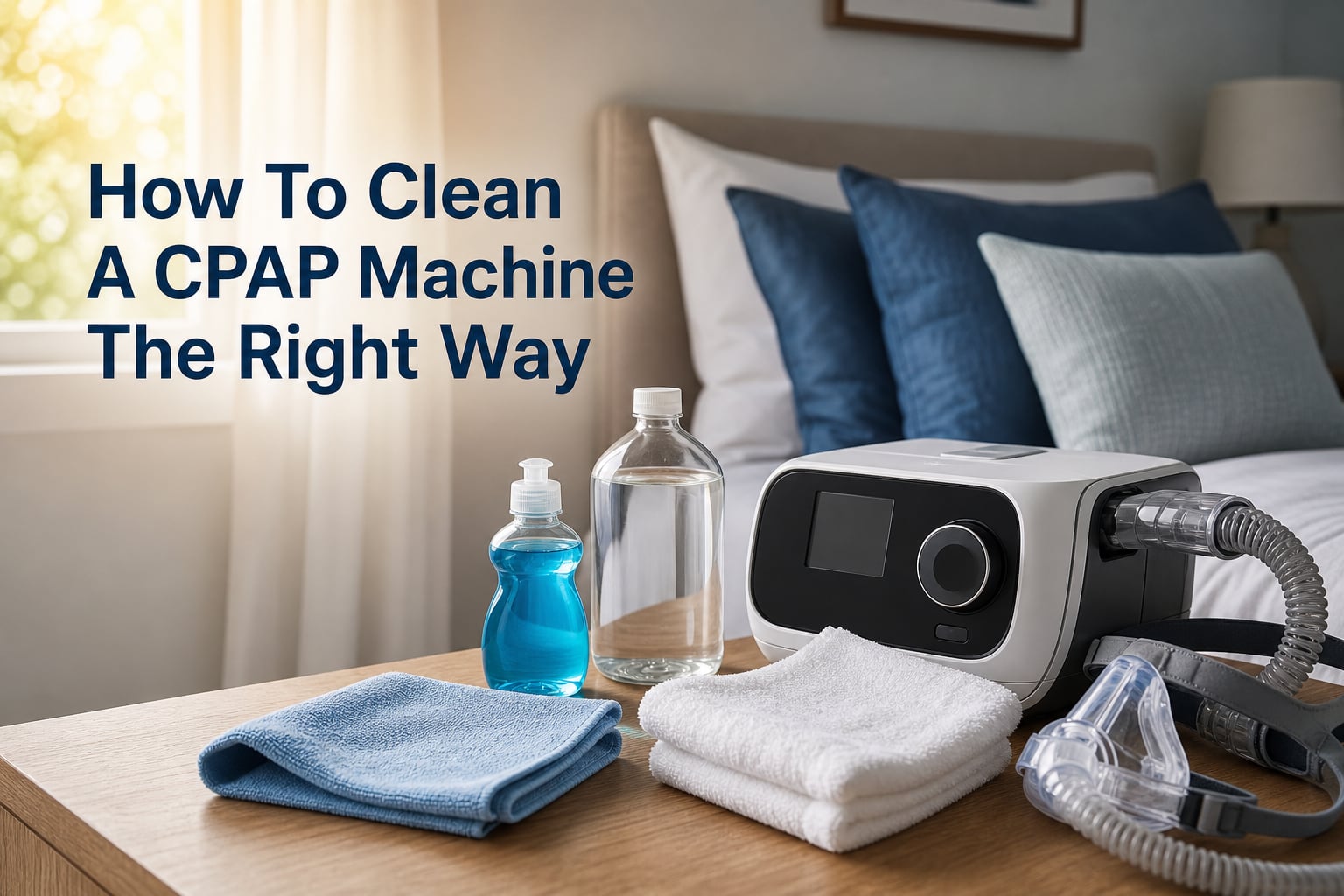
If you rely on a CPAP machine for sleep apnea therapy, learning how to clean a CPAP machine the right way protects both your health and your equipment. I have walked dozens of readers through this routine over the years, and the truth is simple: a few minutes of daily care prevents mold, bacteria, and mineral buildup that can make you sick or shorten the life of your gear.
This guide covers the exact supplies you need, step-by-step daily and weekly routines, products to avoid, and answers to the most common questions I see on sleep apnea forums. Whether you have been using CPAP for years or just unboxed your first device, you will find a clear plan that fits into your morning.
Your CPAP mask, tubing, and humidifier chamber create a warm, dark, and moist environment. That is the perfect place for bacteria, mold, and yeast to grow. Every breath you take pulls air through these components, so any contamination goes straight into your lungs.
Unclean equipment can cause sinus infections, respiratory irritation, skin breakouts around your nose, and unpleasant odors. I have seen readers who skipped cleaning for two weeks develop coughs and congestion that cleared up within days of starting a proper routine.
Beyond health, mineral deposits from tap water can coat your humidifier tub and reduce therapy effectiveness. Facial oils clog the mask cushion, which breaks the seal and forces your machine to work harder. A clean CPAP machine simply delivers better treatment.
CPAP Cleaning Supplies Checklist
You only need a handful of basic supplies to clean a CPAP machine properly. Most are already in your kitchen or bathroom.
Mild, unscented dish soap (Dawn original is the most common choice on CPAP forums)
White distilled vinegar for weekly disinfecting soaks
Warm drinking-quality water (around 86°F or 30°C)
Distilled water for the humidifier chamber (always, not tap)
Soft, lint-free cloth or microfiber towel
A small sink basin or tub dedicated to CPAP cleaning
A drying rack or clean towel with good airflow
Skip antibacterial soaps, bleach, alcohol, essential oils, and scented detergents. These leave residue that irritates airways or damages silicone and plastic parts. The FDA has also warned against ozone-based and UV-light cleaning devices, which we cover below.
How Often Should You Clean Each CPAP Component
Different CPAP parts collect different amounts of moisture and oil. Use this frequency table as your baseline. I have included it as the first thing to print or save because it answers the most common question I receive.
| Component | Clean Frequency | Replace Frequency |
|---|---|---|
| Mask cushion | Daily | Every 1-3 months |
| Mask frame and headgear | Weekly | Every 3-6 months |
| CPAP tubing/hose | Weekly | Every 3 months |
| Humidifier water chamber | Daily rinse, weekly wash | Every 6 months |
| Disposable filter | Check weekly | Every 2 weeks |
| Reusable filter | Every 2 weeks | Every 6 months |
If you have been sick with a cold, flu, or COVID-19, bump the daily mask and water chamber cleaning to twice a day until you recover. Bacteria and viruses linger on silicone and plastic longer than you might expect.
Daily CPAP Cleaning Steps
Daily cleaning takes about five minutes and is the single most important habit for keeping your equipment safe. I do this right after my morning shower so it is out of the way before the day starts.
Unplug the CPAP machine and disconnect the mask from the tubing.
Empty any remaining water from the humidifier chamber. Do not let it sit all day.
Wipe down the mask cushion with a damp cloth and a drop of mild dish soap. Pay attention to the silicone seal where facial oils build up.
Rinse the cushion thoroughly under warm running water to remove all soap residue.
Rinse the water chamber with warm water and a drop of soap. Shake gently, then rinse until the water runs clear.
Set both pieces on a clean towel to air dry away from direct sunlight.
Wipe the outside of the machine with a dry or slightly damp cloth. Never spray anything directly onto the device.
Refill the humidifier with fresh distilled water only when you are ready for bed.
Do not reassemble damp parts. Trapped moisture is what breeds mold in the first place, and rushing this step is the number one cause of musty smells.
Weekly CPAP Cleaning Routine
Once a week, set aside 15 to 20 minutes for a deeper clean. This is when you soak the headgear, tubing, and humidifier tub. I do mine on Sunday mornings while the coffee brews.
Disconnect all removable parts: mask, headgear, frame, tubing, and water chamber.
Fill a clean basin with warm water and a few drops of mild, unscented dish soap.
Submerge the mask, frame, and headgear for 5 to 10 minutes. Swish gently by hand. Do not scrub the cushion aggressively.
Run warm soapy water through the tubing in long loops, then swish the ends in the basin. You can also use a soft tubing brush if buildup is visible.
Wash the water chamber in the same soapy water. For mineral buildup, follow up with a 30-minute soak in a solution of 1 part white vinegar to 9 parts water.
Rinse every part thoroughly under running warm water until soap and vinegar smell is gone.
Hang the tubing vertically over a shower rod or hook so water drains out both ends.
Lay the mask, frame, and headgear flat on a clean towel away from direct sunlight.
Air dry everything completely before reassembling. This usually takes 30 to 60 minutes.
Check the filter while parts dry and replace if it looks gray or clogged.
ResMed, one of the largest CPAP manufacturers, recommends this exact approach. Following manufacturer guidance keeps your warranty intact and your equipment performing the way it was designed.
Cleaning Products and Methods to Avoid
Some cleaners feel like they should work better, but they actually damage CPAP parts or pose health risks. Here is what to keep away from your equipment.
Bleach and chlorine products corrode silicone and plastic over time and leave fumes you do not want near your face.
Rubbing alcohol and ammonia dry out cushion seals and cause cracking.
Scented or antibacterial soaps leave residue that irritates sinuses and airways.
Essential oils break down the silicone and can inflame lung tissue when vaporized.
Ozone CPAP cleaners (sometimes called “activated oxygen”) produce gas that can cause coughing, headaches, and lung irritation. The FDA has not approved these for cleaning CPAP equipment.
UV-light sanitizers are not FDA-approved for CPAP use either, and the light does not reach inside the tubing effectively.
Tap water in the humidifier leaves mineral scale and can harbor microorganisms. Distilled water is the only safe choice.
If a product is not specifically listed in your CPAP manufacturer’s manual, do not put it in or on your machine. When in doubt, mild soap and warm water do the job 99% of the time.
Troubleshooting Bad Odors and Mold
A musty, sour, or “swampy” smell is a sign that something is wrong. In most cases, the culprit is moisture trapped in the tubing, mask, or water chamber. Here is the cleanup sequence I recommend.
Start by soaking the affected part in the vinegar solution: 1 part white vinegar to 9 parts warm water, for 20 to 30 minutes. Vinegar kills mold and dissolves mineral deposits. Scrub gently with a soft cloth if you can see spots.
Rinse thoroughly and air dry completely. If the smell returns within a day, the part is probably contaminated beyond cleaning and needs replacement. Tubing and water chambers should be swapped out every 3 to 6 months anyway.
To kill mold in a CPAP machine, the safest approach is white vinegar plus thorough drying. Avoid bleach, hydrogen peroxide at full strength, or commercial mold sprays inside your equipment. The fumes and residues are worse for your lungs than the mold.
Travel-Size CPAP Cleaning Tips
Cleaning on the road is the gap most articles skip, and forum users ask about it constantly. You do not need a full sink setup to keep things sanitary while traveling.
Pack a small bottle of mild dish soap, a roll of unscented CPAP wipes for quick mask cleans, and a few resealable plastic bags for storing parts after washing. A collapsible silicone basin takes almost no luggage space and gives you a dedicated cleaning surface in any hotel sink.
Use bottled drinking-quality water if you do not have access to safe tap water for rinsing. Skip the humidifier on flights or use an empty chamber with no water to avoid spills. Once you are back home, run your full weekly routine to reset everything.
Making CPAP Cleaning a Habit
Every CPAP forum thread I have read has the same confession: people hate cleaning but know they have to do it. The trick is attaching the routine to something you already do without thinking.
Pair your daily mask wipe-down with brushing your teeth. Pair the weekly deep clean with another Sunday chore like laundry. Set a phone reminder for the first 30 days until the muscle memory kicks in. After that, it becomes automatic.
I also recommend keeping your cleaning supplies in the same spot as your CPAP machine. Out of sight means out of mind, and you are far more likely to wipe down your mask if the soap and towel are right there next to the device.
When to Replace CPAP Components Instead of Cleaning
No amount of scrubbing will fix worn-out parts. Replacement matters as much as cleaning. Most manufacturers publish a schedule, and insurance often covers replacements on a regular cycle.
Mask cushion: replace every 1 to 3 months, or sooner if it no longer seals.
Mask frame: replace every 3 months.
Headgear: replace every 6 months, or when the elastic stretches out.
Tubing: replace every 3 months, or if you see cracks or discoloration.
Humidifier water chamber: replace every 6 months, or if it turns cloudy or cracked.
Reusable filter: replace every 6 months; check it every two weeks.
Disposable filter: replace every 2 weeks.
Mark replacement dates on your calendar or set recurring reminders. A fresh filter and a new cushion can make a 5-year-old machine feel like new again.
Frequently Asked Questions
Can I go 2 weeks without cleaning my CPAP?
Going two weeks without cleaning your CPAP is not recommended. Bacteria, mold, and facial oils build up quickly, and within a few days you may notice odors, skin irritation, or a weakened mask seal. Daily mask wipes and weekly tubing soaks are the minimum routine most manufacturers suggest.
Is Dawn dish soap good for cleaning CPAP?
Yes, original blue Dawn is one of the most popular choices among CPAP users. It is mild, unscented, and rinses clean. Avoid Dawn varieties with added bleach, antibacterial agents, or heavy fragrances, since residues can irritate airways.
Can I run vinegar through my CPAP machine to clean it?
Yes, but only on the removable parts, never through the electronic machine itself. Mix 1 part white vinegar with 9 parts warm water and soak the tubing, mask, and water chamber for 20 to 30 minutes. Rinse thoroughly with warm water and air dry completely before reassembling.
What kills mold in a CPAP machine?
White vinegar at a 1-to-9 ratio with warm water kills mold on silicone and plastic CPAP parts. Soak the affected component for 20 to 30 minutes, scrub gently with a soft cloth, rinse well, and air dry completely. If mold returns, replace the part. Avoid bleach and ozone cleaners, which can damage equipment and irritate lungs.
What soap should I use to clean my CPAP?
Use a mild, unscented, dye-free liquid dish soap such as original Dawn. Avoid antibacterial soaps, bleach, alcohol, essential oils, and any cleaner with heavy fragrance. A single drop is enough to clean a mask or water chamber, and a few drops work for soaking the headgear and tubing.
Final Thoughts on How to Clean a CPAP Machine the Right Way
Cleaning your CPAP machine does not have to be a chore. With a 5-minute daily wipe-down and a 15-minute weekly soak, you will keep bacteria, mold, and mineral buildup away from your airways and your equipment.
Stick to mild dish soap, warm water, and white vinegar. Replace filters, cushions, and tubing on schedule. Pair the routine with a habit you already have, and you will never have to think about it again. Your sleep apnea therapy will work better, and so will your mornings.