
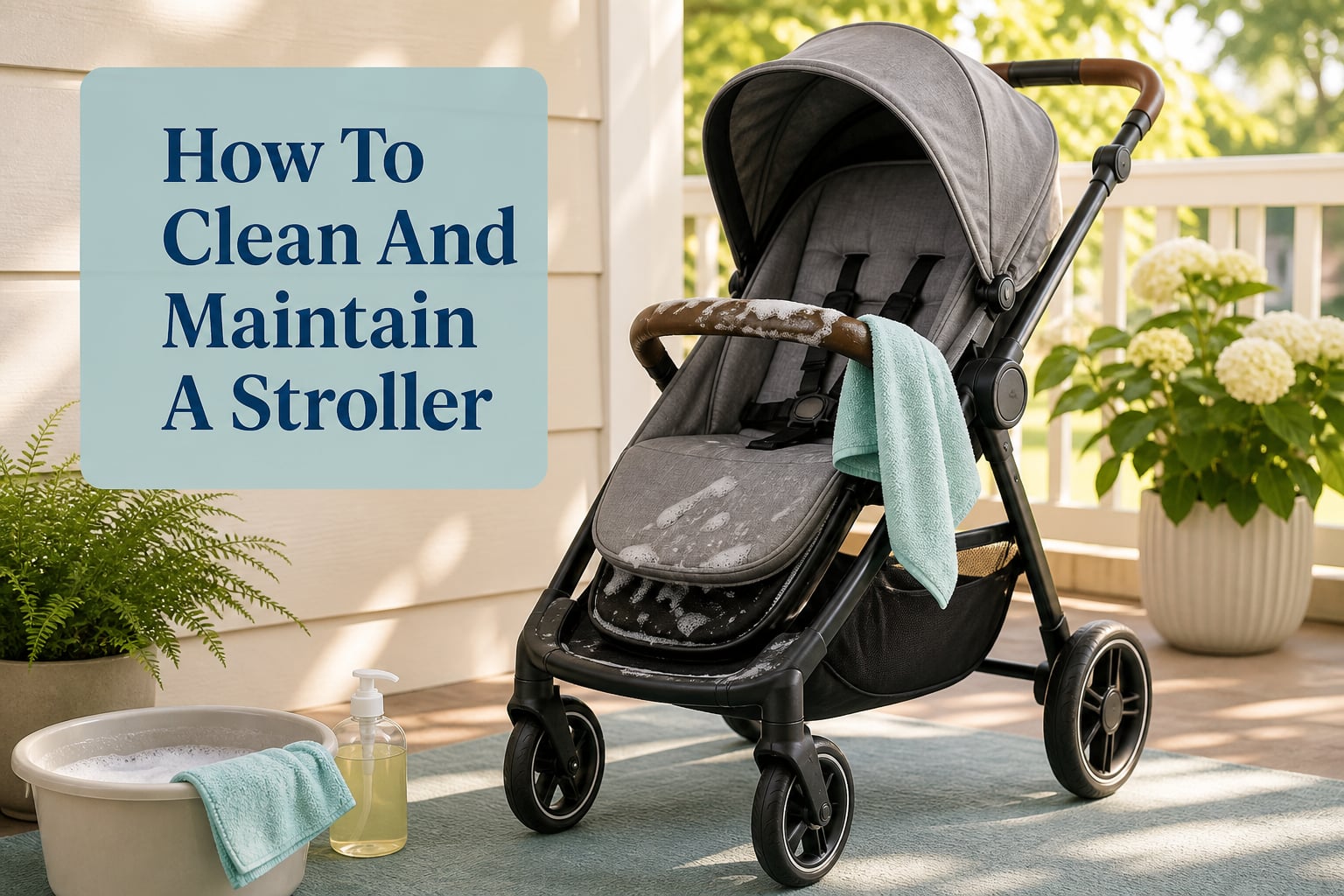
Learning how to clean and maintain a stroller saves parents money, protects baby from germs, and keeps that expensive gear rolling smoothly for years. I wiped down three different strollers at our local parenting group last month, and the amount of ground-in crumbs, spilled milk, and mystery grime under those seats was honestly shocking.
This guide pulls together what I have learned from manufacturer manuals, professional cleaners, and a very active parenting forum. You will get a full supplies list, an 8-step cleaning routine, plus advice on mold removal, sanitizing used strollers, and storing gear between kids.
Why Regular Stroller Cleaning Matters
A stroller is basically a mobile dining tray that lives outdoors. Formula drips, sunscreen smears, dust, pollen, and pet hair all collect on the same surface your baby naps against. Skipping cleanings lets bacteria grow in the fabric folds and grime eat into wheel bearings.
Beyond hygiene, regular stroller maintenance extends the life of the chassis, brakes, and folding mechanism. Most quality strollers last 4 to 6 years with care, but neglect can cut that in half. I have seen parents throw out a stroller after two kids simply because the wheels locked up from dirt.
How Often Should You Clean a Stroller
The honest answer is that it depends on how messy your life gets. Here is a simple breakdown based on what pediatricians and the cleaning experts at Wirecutter recommend.
Spot clean: After every outing, brush off crumbs and wipe obvious spills. Takes 2 minutes.
Quick wipe-down: Weekly if you use the stroller daily. Focus on the handlebar, tray, and seat.
Full clean: Every 2 to 4 weeks for daily users, monthly for occasional users.
Deep clean: Every 3 to 6 months, especially before passing a stroller to a second child.
If your child eats in the stroller, is teething, or has been sick, lean toward the more frequent end. Parents dealing with pets or pollen allergies should also vacuum more often.
Supplies You’ll Need to Clean Your Stroller
You probably own most of these already. I keep mine in a single basket so deep cleaning only takes a few minutes to set up.
Mild dish soap (Dawn or similar baby-safe formula)
White distilled vinegar for natural disinfecting
Baking soda for odor removal and stubborn stains
Hydrogen peroxide (3%) for mold and tough stains
Handheld vacuum with crevice attachment
Microfiber cloths (3 to 4 clean ones)
Soft-bristled brush (an old toothbrush works)
Spray bottle for your cleaning solution
Bucket or basin for soaking small parts
Silicone-based lubricant for wheels
Baby-safe disinfectant wipes for the handlebar and tray
Skip bleach, ammonia, or harsh solvents. These can weaken fabric, fade colors, and leave residues that irritate baby skin. The cleaning pros at Koopers also warn against mixing vinegar and hydrogen peroxide in the same bottle – use one, rinse, then the other.
How to Clean a Stroller: Step-by-Step Process
Set aside about 45 to 60 minutes for a true deep clean. If you only have 10 minutes, do the spot-cleaning steps and save the full wash for later.
Step 1: Check the Owner’s Manual
Before you start scrubbing anything, flip through your stroller manual. Some brands allow machine washing the seat fabric; others require hand washing only. Knowing this in advance prevents a costly shrinkage mistake. The manual also tells you which parts can be removed and which need careful hand cleaning.
Step 2: Vacuum Out Loose Debris
Open the basket, flip up the seat, and run your handheld vacuum across every surface. Crevice tools work beautifully for harness buckles, wheel wells, and the gaps between the seat and frame. Hit the canopy underside too – that is where dust bunnies and snack crumbs love to hide.
Step 3: Spot-Clean or Machine-Wash the Fabric
For most messes, spot cleaning is enough. Mix a few drops of dish soap in warm water, dip a microfiber cloth, wring it well, and blot the stain from the outside in. Avoid soaking or scrubbing hard, which spreads the stain and frays fabric.
If the manual allows machine washing, remove the fabric panels (usually the seat pad and canopy) and wash them on a gentle cycle with cold water and mild detergent. Skip the dryer – heat warps stroller padding. Always air-dry flat.
Step 4: Wipe Down the Frame and Canopy
Take a fresh microfiber cloth dampened with your soapy water and wipe the entire metal or plastic frame. Pay attention to the folding joints, where sticky residue collects. For the canopy exterior, a baby-safe disinfectant wipe works well. Dry everything with a clean cloth to prevent water spots.
Step 5: Clean and Lubricate the Wheels
Pop off the wheels if your model allows it. Soak them in warm soapy water for 10 minutes, then scrub with a brush to remove hair, lint, and mud. For wheels that don’t come off, flip the stroller over and use a brush and damp cloth to get into the spokes.
Once dry, spray the axles lightly with silicone-based lubricant. WD-40 attracts dust and breaks down rubber over time, which is why most parenting forums now recommend silicone spray instead. A light coat keeps wheels rolling quietly for months.
Step 6: Disinfect High-Touch Surfaces
The handlebar, cup holder, and snack tray get touched constantly. Wipe these daily with baby-safe disinfectant wipes. For a deeper clean once a month, use a cloth lightly dampened with a 50/50 white vinegar and water mix. Test a small area first to make sure the finish doesn’t react.
Step 7: Address Stains and Odors
Sunscreen stains come out with a paste of baking soda and water, left on for 15 minutes then wiped away. For food or formula smells, sprinkle dry baking soda on the fabric, let it sit for 30 minutes, then vacuum it up. Stubborn biological stains (spit-up, diaper leaks) respond well to hydrogen peroxide applied with a cloth, then blotted with clean water.
Step 8: Air-Dry Completely Before Reassembly
This step is the one most parents skip, and it is the biggest cause of stroller mold. Every piece – fabric, frame, wheels – must be 100% dry before you put the stroller back together and collapse it for storage. Set everything in the sunshine if possible. UV light is a natural disinfectant that kills odor-causing bacteria.
How to Remove Mold From a Stroller
Mold happens when damp fabric stays folded up. The good news is you can usually save the stroller if you catch it early. White vinegar is your best friend here – it kills about 82% of mold species and is safe for baby gear once it dries.
Take the stroller outside or into a well-ventilated area to avoid breathing spores.
Brush off any visible mold with a soft brush (don’t rub, you’ll spread spores).
Spray the affected area with undiluted white vinegar until saturated.
Let it sit for 30 minutes in direct sunlight if possible.
Scrub gently with a brush dipped in soapy water.
Rinse with a clean damp cloth and let everything dry thoroughly.
For stubborn black mold, repeat with 3% hydrogen peroxide instead of vinegar.
If the mold covers a large area or keeps returning after cleaning, the padding may need replacement. Many manufacturers sell replacement seat pads for popular models.
Cleaning a Stroller That Doesn’t Come Apart
Some travel strollers and budget models have fabric permanently attached to the frame. Don’t despair – you can still clean them well. Mix a strong soap solution, work it into the fabric with a microfiber cloth, then wipe repeatedly with clean water until no soap remains. A wet/dry shop vac set to wet pickup mode pulls water out of cushions fast.
A hair dryer on the cool setting speeds drying. Whatever you do, never store a non-removable fabric stroller while damp, even if it feels almost dry. Trapped moisture under the padding is a mold invitation.
How to Sanitize a Used Stroller
Buying a used stroller is smart and budget-friendly, but sanitizing matters because you don’t know what that stroller went through. The forum parents at r/BabyBumps have a solid protocol that we agree with.
Start with the full 8-step deep clean above, but add a few extra steps. Disinfect every hard surface with the vinegar-water mix, then follow with baby-safe disinfectant wipes. For fabric, soak a cloth in hydrogen peroxide and blot all surfaces. If the seat fabric is removable and the care label allows, machine wash with an extra rinse cycle.
Pay special attention to the harness and buckle – baby hands go there constantly. Soak buckles in hot soapy water for 15 minutes, scrub with a toothbrush, and air-dry. Check the wheels for hair or string wrapped around axles, which is common in older strollers. A final spray of silicone lubricant on the wheels makes a used stroller roll like new.
If the stroller was stored in a garage or barn, watch for rodent damage and mold before reuse. When in doubt, replace the seat pad – most brands sell replacements for $30 to $60.
Drying and Storage Best Practices
Where and how you store your stroller affects how long it lasts. The number one rule is never store it damp. The second rule is never store it in direct sunlight for months at a time, which fades fabric and dries out plastic.
For daily storage, fold the stroller and keep it in a dry corner of your home or apartment. A stroller cover or old crib sheet keeps dust off. For long-term storage between kids or across seasons, follow this checklist.
Complete a full deep clean and let everything dry for 24 hours.
Lubricate the folding joints and wheels.
Wrap wheels in a plastic bag to protect your storage area from grease.
Store in a climate-controlled space – garages and sheds often have moisture swings.
Avoid stacking heavy items on top of the stroller frame.
Unfold once a month to air out, even in storage.
These habits keep your stroller ready for the next child, whether that is 6 months or 6 years away.
When to Call a Professional Stroller Cleaner
Most parents can handle routine stroller care at home, but some situations call for a professional. Companies like BabyQuip and BuckleBath specialize in this, often charging between $50 and $120 depending on stroller size and condition.
Consider calling a pro if you are dealing with extensive mold, biological contamination from a stomach bug, severe sun damage, or simply don’t have time. Professional cleaners use steam and commercial disinfectants that go deeper than home methods. It is also worth the cost if you are preparing a stroller for a new baby and want total peace of mind.
If the frame has rust, cracks, or a damaged harness, cleaning won’t fix those issues – replacement is safer.
FAQs
What should I clean my stroller with?
Use mild dish soap mixed with warm water for routine cleaning, white distilled vinegar for natural disinfecting, and baby-safe disinfectant wipes for high-touch surfaces like the handlebar. Skip bleach, ammonia, or harsh solvents, which can weaken fabric and leave residues that irritate baby skin.
How often should I clean my stroller?
Spot clean after every outing, do a quick wipe-down weekly if you use the stroller daily, perform a full clean every 2 to 4 weeks, and schedule a deep clean every 3 to 6 months. Lean toward more frequent cleaning if your child eats in the stroller, is teething, or has just been sick.
What kills mold on a stroller?
White distilled vinegar kills about 82% of mold species and is safe for baby gear. Spray undiluted vinegar on the affected area, let it sit for 30 minutes in direct sunlight, then scrub gently and rinse. For stubborn black mold, use 3% hydrogen peroxide instead of vinegar.
Can I machine wash the stroller seat fabric?
Only if your owner’s manual specifically says it’s machine washable. Most manufacturers recommend a gentle cold water cycle with mild detergent. Skip the dryer – heat warps stroller padding. Air-dry flat for at least 24 hours before reassembling.
What is the lifespan of a stroller?
A quality stroller typically lasts 4 to 6 years with regular cleaning and maintenance. Neglect, especially failing to clean the wheels and folding joints, can cut that lifespan in half. Strollers that are deep cleaned before being passed to a second child often last through three or more kids.
Is WD-40 safe for stroller wheels?
WD-40 is not recommended for stroller wheels because it attracts dust and breaks down rubber over time. Use a silicone-based lubricant instead. A light coat on the axles keeps wheels rolling quietly and extends their life.
Final Thoughts on Stroller Care
Knowing how to clean and maintain a stroller turns a chore into a quick weekend habit that pays off for years. The basics come down to vacuuming often, spot-cleaning spills before they set, washing fabric gently, drying everything completely, and lubricating the wheels with silicone spray every few months.
Pick a regular cleaning day – Sunday after brunch works well – and your stroller will stay hygienic through every park visit, grocery run, and family vacation. Got a stroller-cleaning question I missed? Drop it in the comments and I will do my best to help.