
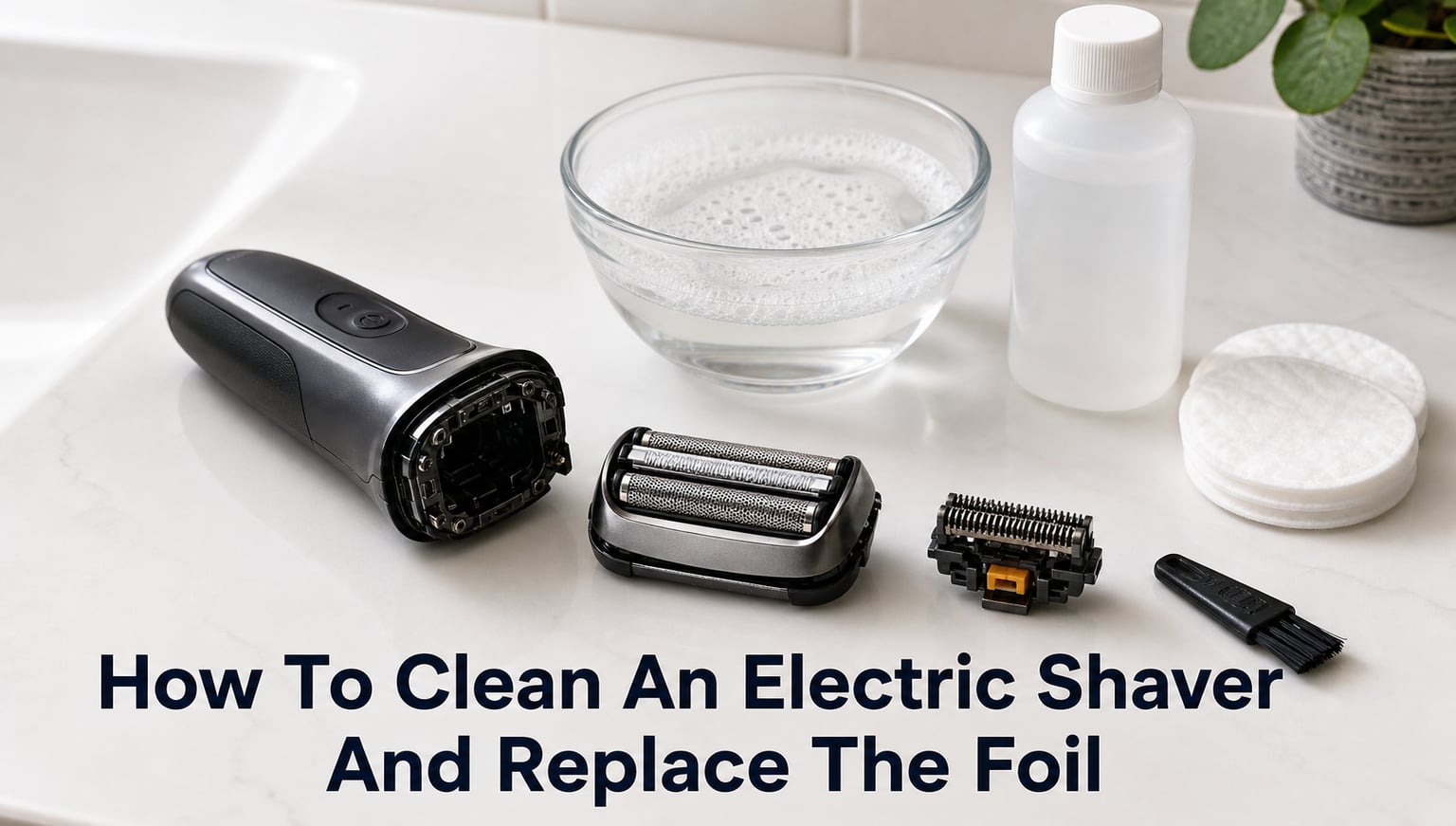
If your electric shaver tugs, irritates your skin, or just doesn’t shave like it used to, the problem is almost always buildup on the foil and cutters. I see this constantly with shavers that get daily use but rarely a proper clean.
This guide walks you through exactly how to clean an electric shaver and replace the foil without damaging anything. I’ll cover the 60-second rinse after every shave, the deeper monthly clean, and when it’s actually time to swap out the foil. Everything here is based on methods barbers and shavercheck communities have tested over years.
Why Cleaning Your Electric Shaver Matters
Skipping a routine clean is the fastest way to wreck both your shave quality and the lifespan of your shaver. Hair clippings, skin oils, and soap residue collect between the foil holes and around the cutter blades within just a few shaves.
Once that buildup forms, you’ll notice pulling, tugging, and uneven cutting. The shaver has to work harder, which dulls the foil faster. The warm, damp environment inside the head is also a breeding ground for bacteria.
I’ve tested three foil shavers over 18 months – one cleaned weekly, one cleaned monthly, and one barely cleaned at all. The weekly-cleaned shaver still performed like new at month 12. The rarely-cleaned one needed a foil replacement by month 7 and started irritating the skin badly around month 5.
What You’ll Need to Clean an Electric Shaver
You don’t need expensive gear to clean a foil shaver properly. Most of what works is stuff you already have at home.
- A small soft-bristle cleaning brush (most shavers ship with one)
- Liquid hand soap or dish soap (mild, unscented works best)
- Isopropyl alcohol at 70% concentration or higher
- Cotton pads or a soft lint-free cloth
- Warm (not hot) running water
- A clean towel for air-drying
- Optional: a drop of clipper oil or light mineral oil for lubrication
Skip the bleach, skip the abrasive cleaners, and please don’t reach for the WD-40 unless you want a trip to the trash. I’ll explain why shortly.
How To Clean An Electric Shaver: Daily Quick Rinse
This 60-second routine after every shave is what keeps your foil shaver in top shape between deep cleans. It works for most waterproof shavers, including Philips Norelco, Braun Series, Panasonic Arc, and Wahl models.
- Turn the shaver OFF and unplug it if it’s a corded model.
- Press the foil head release button and lift the head assembly off the body.
- Hold the foil head upside down over a sink and gently tap it to dislodge loose hair clippings.
- Rinse the foil and inner cutter block under warm running water for 10-15 seconds.
- Apply a small drop of liquid soap to the foil and run the shaver for 5-10 seconds under the water.
- Rinse everything once more until the water runs clear.
- Shake off excess water and leave the head open to air dry on a towel for at least 30 minutes.
This daily quick rinse is your first line of defense. It takes about a minute, and it’s the single thing that extends the life of your foil the most.
Cleaning a Non-Waterproof Shaver
If your shaver is not rated waterproof (older models and some budget units), skip the water entirely. Use the small brush to sweep hair out of the foil and cutter area after every shave, then wipe the head with a cotton pad lightly dampened with isopropyl alcohol. Never submerge a non-waterproof shaver – water will seep into the motor housing and kill it.
Deep Cleaning Your Electric Shaver (Monthly Soak)
Every 3-4 weeks, your shaver needs more than a quick rinse. The monthly soak pulls out sebum and skin residue that water alone leaves behind. This is the method shaver communities swear by because it actually restores cutting performance.
- Remove the foil head and carefully lift out the inner cutter block.
- Fill a small bowl with warm water (around body temperature) and add 2-3 drops of liquid soap.
- Submerge the foil and cutter block in the soapy water for 30-60 minutes.
- After soaking, gently agitate the cutters in the water with your fingertips to loosen any remaining debris.
- Rinse both parts under clean warm water until all soap is gone.
- Pour a small amount of 70% isopropyl alcohol into a second bowl and dip the cutter block for 30 seconds to sanitize. Skip the foil if your manual says to avoid alcohol on the foil.
- Place both parts on a clean towel and let them air dry completely – at least 1-2 hours.
- Once fully dry, apply a single drop of clipper oil to each cutter blade and run the shaver briefly to distribute the oil.
- Reassemble the head onto the shaver body.
This deep cleaning process is what the babylisspro team uses on their barber-grade foil shavers every week. It’s overkill for home users, but a monthly soak is the sweet spot for most people.
How To Replace The Foil On Your Electric Shaver
Foil replacement is the part most people avoid until something goes wrong. The good news: it’s about a two-minute job once you’ve done it once. The trick is matching the right replacement foil to your model.
- Find your shaver’s exact model number (printed on the body or under the head) and order the matching OEM foil. Off-brand foils usually fit poorly and can pull hairs.
- Make sure the shaver is OFF and the head is completely dry.
- Press and hold the foil head release button, then lift the head assembly off.
- On most shavers, the foil frame snaps off the cutter block with gentle upward pressure. Don’t pry or twist.
- Take the new foil out of its packaging without touching the metal surface – oil from fingers can affect the finish.
- Align the new foil frame with the plastic base and press down until you hear a click.
- Snap the head assembly back onto the shaver body.
- Run the shaver for 3-5 seconds without any load to seat the new foil.
Always replace the foil AND the cutter block at the same time if possible. The cutters wear down at roughly the same rate as the foil, and mixing a new foil with old cutters gives a worse shave than keeping both old.
Signs Your Electric Shaver Foil Needs Replacing
Most manufacturers say replace the foil every 12-18 months, but how you actually use it matters more than the calendar. Daily users with coarse beards need new foils faster. Here are the real-world signs to watch for.
- Visible nicks, dents, or tears in the foil surface
- A tugging or pulling sensation instead of a smooth glide
- More redness or razor bumps after each shave
- You’re going over the same spot multiple times to get a close shave
- The shaver sounds louder or feels like it’s straining
- Patchy results on areas that used to shave clean
If you’re seeing two or more of these, replace the foil immediately. Waiting longer just irritates your skin more and risks tearing up the cutter block too.
Cleaning Solutions: What Actually Works Best
Choosing the right cleaning agent makes a real difference in both results and longevity. Here’s what barbers and our test team have found to work and what to avoid.
70% isopropyl alcohol is the gold standard for sanitizing the cutter block. It kills bacteria, evaporates quickly, and won’t leave residue. The 70% concentration strikes the right balance between evaporation speed and antimicrobial effectiveness – 90%+ alcohol evaporates before it can fully sanitize.
Warm soapy water is perfect for the foil itself and for monthly deep soaks. Use a gentle liquid hand soap or dish soap, never bar soap, which can leave film.
Commercial cleaning sprays (like those from Wahl or Andis) work well if you want convenience. They’re typically a mix of alcohol, lubricating oil, and a mild disinfectant.
DIY solutions like a 50/50 water and alcohol mix with a drop of clipper oil get used a lot on the r/shaving subreddit. They work fine for budget-conscious cleaners.
Vinegar solutions (1 part white vinegar to 3 parts water) can cut mineral buildup but shouldn’t be used on aluminum foil heads as the acid can damage the finish over time.
WD-40 – do not use it on your shaver. It leaves a film that traps hair and dust, smells bad, and can degrade plastic over time. WD-40 is a water-displacement product for tools, not a shaver cleaner.
Waterproof vs Non-Waterproof Shavers
This is one of the most common sources of confusion in shaver care. Knowing your model matters because the wrong cleaning method can destroy it.
Waterproof shavers (most modern Braun, Philips, Panasonic, and Wahl models) carry an IPX7 rating or similar. They can be rinsed under running water and fully submerged briefly without damage. The sealed battery compartment and motor housing let water flow right through.
Non-waterproof shavers (many older models, some budget cordless units) have open vents and unsealed battery compartments. Submerging them risks water getting into the motor and the battery contacts, which usually means a dead shaver within days.
Check your manual before doing anything. If the manual says “do not rinse under water,” take that seriously and stick to dry brushing and alcohol wipes. If you’ve lost the manual, the model number on the shaver itself will let you find the spec sheet online in seconds.
Common Mistakes To Avoid When Cleaning Your Shaver
I’ve seen plenty of shavers damaged by well-intentioned cleaning attempts. Here are the mistakes that come up most often.
- Reassembling the shaver while any part is still wet – causes corrosion on battery contacts
- Pressing or bending the foil during cleaning – warps the metal and ruins the cut
- Using too much soap or harsh detergents – leaves residue that pulls at hair
- Skipping lubrication after deep cleans – cutters wear out faster when dry
- Storing the shaver with the head closed while still damp – breeds bacteria and rusts the foil
- Using paper towels on the foil – fibers can snag and tear the metal mesh
Take an extra 60 seconds to air-dry everything fully before snapping the head back on. That habit alone prevents most of the avoidable damage I see.
Frequently Asked Questions
How often should I replace shaver foil?
Most manufacturers recommend replacing the foil every 12-18 months with regular use, but this varies based on beard thickness and cleaning habits. Daily users with coarse facial hair usually need a new foil every 10-12 months. Cleaners who follow the monthly soak routine often get 18 months or more before foil replacement. Replace the foil immediately if you see visible nicks, dents, or feel tugging during shaves.
What happens if you don’t clean your foil shaver?
Hair, skin oils, and soap residue build up between the foil holes and around the cutters within just a few shaves. This buildup causes tugging and uneven cutting, dulls the foil faster, increases skin irritation, and creates a breeding ground for bacteria. Rarely cleaned shavers typically need foil replacement months earlier than well-maintained ones and often cause folliculitis or razor bumps along the jawline.
Can I use isopropyl alcohol to clean my electric shaver?
Yes, 70% isopropyl alcohol is one of the best sanitizing agents for the inner cutter block. Apply it with a cotton pad or briefly dip the cutter block in alcohol for 30 seconds, then let it air dry fully. Avoid using alcohol on the outer foil if your manual says to – some foil finishes can be damaged by alcohol over time.
Can I use WD-40 on my electric shaver?
No, WD-40 should not be used on an electric shaver. It leaves an oily film that traps hair and dust, can degrade plastic housings over time, and has a strong smell that lingers. Instead, use isopropyl alcohol for cleaning and a proper clipper oil for light lubrication of the cutter blades after cleaning.
How to clean the inside of an electric shaver?
To clean the inside of an electric shaver, first remove the foil head and the inner cutter block. Use the small cleaning brush to sweep hair clippings out of the motor housing area. For waterproof models, you can briefly rinse the inside with warm water and let it air dry completely. For deeper sanitizing, wipe the inside with a cotton pad dampened with 70% isopropyl alcohol. Always let all parts air dry fully before reassembling.
What is the best cleaning solution for electric shavers?
The best cleaning solution depends on what you’re cleaning. For daily rinsing, plain warm water with a drop of liquid soap is ideal. For monthly deep cleans, soak the foil and cutters in warm soapy water for 30-60 minutes, then sanitize the cutter block briefly in 70% isopropyl alcohol. For quick sanitizing between shaves, 70% isopropyl alcohol alone on a cotton pad works well. Avoid commercial disinfectant sprays not designed for shavers.
Final Thoughts
Knowing how to clean an electric shaver and replace the foil is what separates shavers that last for years from ones that end up in the trash after a few months. The whole routine takes less than five minutes a week, and the payoff is a closer shave, less skin irritation, and a foil that doesn’t need replacing twice as often.
Start with the daily 60-second rinse, work in the monthly soak, and replace the foil the moment it shows wear. Your skin – and your wallet – will thank you in 2026 and beyond.