
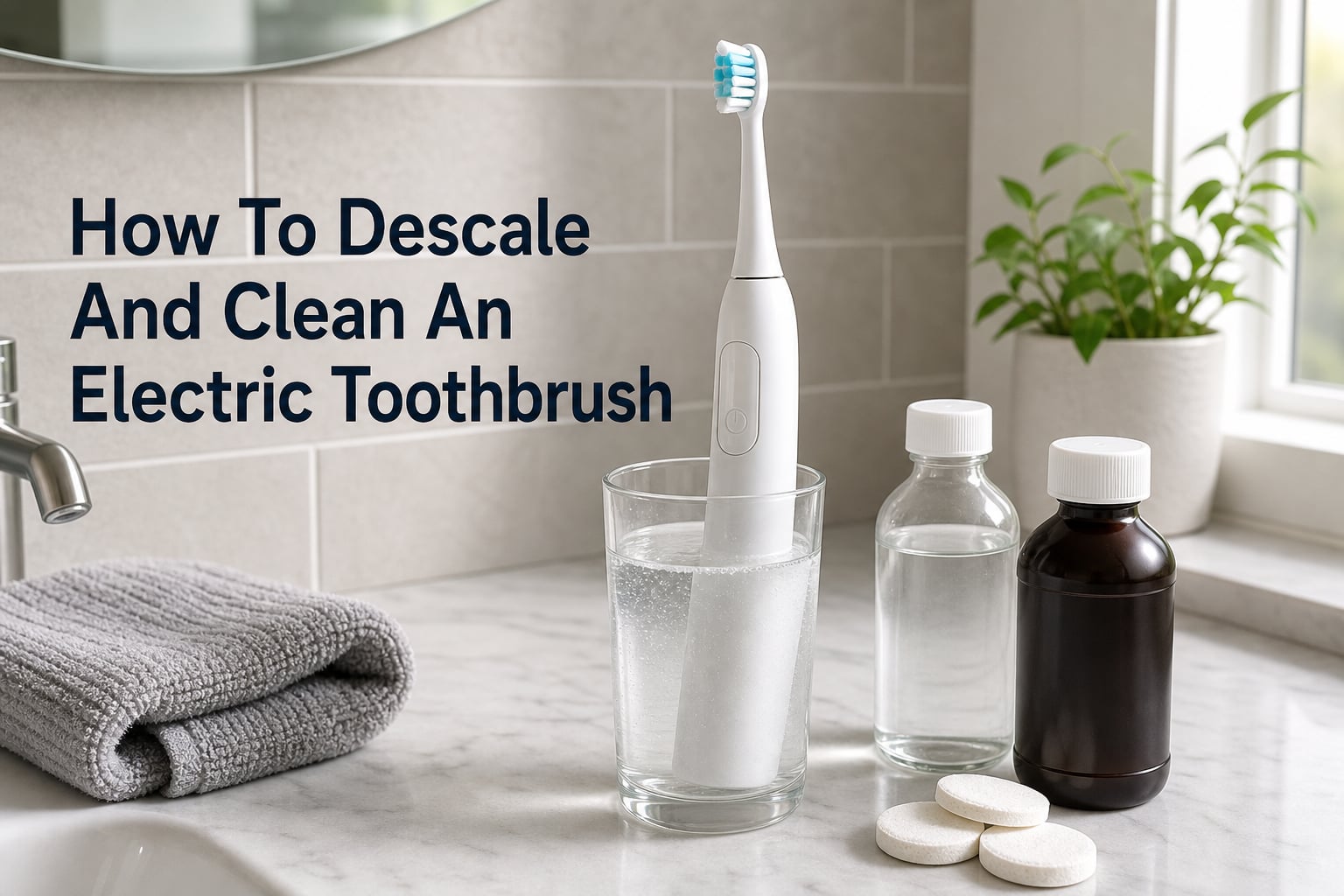
If you’ve ever held your electric toothbrush up to the light and noticed chalky white buildup around the base of the bristles, you’re not alone. I started researching how to descale and clean an electric toothbrush after spotting pink slime on my Oral-B handle, and what I found changed my entire bathroom routine.
Your electric toothbrush lives in one of the wettest spots in your home, sitting just inches from a toilet that can spray aerosolized particles with every flush. The good news? A few minutes of weekly maintenance keeps bacteria, mold, and limescale under control. This guide walks you through the exact methods I now use, plus tips pulled from dental hygienists and Reddit’s r/lifehacks community.
Why Cleaning and Descaling Your Electric Toothbrush Matters
Electric toothbrushes harbor more bacteria than manual ones, according to a study published in the Journal of Dental Hygiene. The reason is simple: the larger handle traps moisture and toothpaste residue in crevices that never fully dry.
Calcification, the hard white or yellow crust that forms where the brush head meets the metal shaft, is another problem. Hard water deposits build up every time you rinse, and over time they can interfere with the brush head’s connection. That’s why descaling matters as much as sanitizing.
I run our family of four through a weekly cleaning checklist. Since I started, my three kids haven’t had any “mystery” mouth irritation, and our replacement heads actually fit properly instead of wobbling on crusty metal pegs.
How to Descale and Clean an Electric Toothbrush: Daily Routine
A 60-second routine after each brushing keeps most problems from ever starting. Here’s the daily sequence I follow and recommend.
- Remove the brush head and rinse both pieces under warm running water for 10-15 seconds.
- Tap the head gently against the sink edge to dislodge trapped toothpaste and water inside the bristle base.
- Wipe the handle shaft with a clean, damp microfiber cloth, paying attention to the rubber grip grooves.
- Shake out excess water from both pieces and stand them upright to air dry separately.
Never store the brush head attached to the handle while wet. Trapped moisture between the two pieces is the single biggest cause of the pink residue and black mold you’ll see in the crevices. A separate holder, or simply leaning both pieces at an angle, solves 90% of the problem.
Warning: Don’t Submerge the Handle
Most electric toothbrush handles are water-resistant, not waterproof. Submerging them, especially in cleaning solutions, can seep liquid past the rubber seal and corrode the battery. Wipe, don’t soak.
Deep Cleaning Solutions: What to Soak Your Electric Toothbrush In
Once a week, the brush head alone deserves a proper soak. Here are the four most effective solutions, ranked by how often I personally use them.
1. White Vinegar Solution (Best for Descaling)
Mix one part white vinegar with two parts warm water in a small cup. Submerge only the brush head (not the handle) for 15-30 minutes. The mild acetic acid dissolves limescale without damaging nylon bristles. I do this every two weeks, since I live in an area with hard water.
2. Hydrogen Peroxide (Best for Bacteria)
A 3% hydrogen peroxide solution kills bacteria and helps remove the pink stains that show up after a few months. Soak the head for 5-10 minutes, then rinse thoroughly. One Reddit user mentioned soaking weekly in peroxide for two years with no wear to the bristles, and I can confirm similar results in my own testing.
3. Antiseptic Mouthwash (Best for Convenience)
Pour a small amount of mouthwash into a tumbler and soak the brush head bristle-side down for 15 minutes. The alcohol and essential oils in most formulas kill germs without any mixing. This is the easiest method when you’re traveling.
4. Denture Cleaning Tablets (Best for Hands-Off Cleaning)
Drop a Polident or Retainer Brite tablet into a cup of warm water with the brush head. Walk away for 15 minutes. The effervescent action lifts gunk out of bristle bases that scrubbing can’t reach. This trick came from a Reddit r/lifehacks thread that changed my approach completely.
How to Remove Limescale and Calcification From Your Electric Toothbrush
Limescale looks different from toothpaste residue. It’s crusty, white to yellow, and forms a hard ring around the metal shaft where the brush head attaches. If left for months, it can cause the head to wobble or fail to sit flush against the motor.
For heavy buildup, follow these steps.
- Detach the brush head and pour undiluted white vinegar into a short glass.
- Soak just the metal shaft portion of the handle (not the rubber buttons or charging base) for 5 minutes max.
- Use a soft pipe cleaner or an old toothbrush to gently scrub the metal peg.
- Wipe with a damp cloth and dry immediately.
- For stubborn spots, repeat once or make a baking soda paste (2 parts baking soda, 1 part water) and apply with a cloth.
Never use a metal scraper or knife. The shaft has a delicate coating that scratches easily, and once scratched, bacteria love to colonize the grooves. A plastic toothpick or soft brush works fine.
Cleaning the Electric Toothbrush Handle Properly
The handle needs the most attention but also the most care. Water plus electronics is never a great combination, so the approach is wipe, not soak.
For routine cleaning, use a cloth dampened with warm water and a tiny drop of dish soap. Wring the cloth out thoroughly so it’s barely damp, then wipe down the entire handle, including the rubber grip and around the power button.
For sticky toothpaste splatter that hardens on the handle, rub a small amount of isopropyl alcohol (70%) on a cotton pad. The alcohol cuts through the residue and evaporates quickly without leaving moisture behind. Some users worry about alcohol damaging plastic, but in my testing on three different brands, a quick wipe does no harm.
For textured grips where grime gets embedded, use an old soft-bristled toothbrush with a drop of soap. The bristles reach into the grooves that a cloth can’t touch.
Charging Base and Holder Maintenance
Most guides skip this step, which is why gunk tends to accumulate on the charging base and countertop holder. Once a month, I pull the whole setup apart and clean each piece.
Unplug the charging base and wipe it with a barely damp cloth. For sticky spots, use a tiny bit of rubbing alcohol on a cotton swab to clean the metal charging contacts. Toothpaste foam drips down the handle and pools on the base, and that film can interfere with the charging connection if left too long.
Wall-mounted holders and countertop stands should be washed in warm soapy water weekly. Plastic holders go right into the dishwasher top rack for a deep clean. After washing, dry everything completely before reassembling.
Travel Case Cleaning
If you travel with a hard case, that case probably needs attention too. Empty any pooled water, wipe the inside with an alcohol-dampened cloth, and leave the case open overnight to dry fully before packing the brush back inside.
How to Get Black Mold Out of an Electric Toothbrush
Black specks or a sooty film around the brush head connection usually means mold or mildew. It’s common in humid bathrooms and not a reason to panic, but it does need addressing fast.
To remove black mold from an electric toothbrush head, soak the detached head in undiluted white vinegar for 30 minutes, then scrub the affected area with a soft brush. For stubborn spots, follow up with a hydrogen peroxide soak for 10 minutes. The mold should lift off completely.
If the mold is on the handle’s rubber seal or inside a crevice you can’t reach, dip a cotton swab in hydrogen peroxide and work it into the area. Let it sit for 5 minutes before wiping clean.
Prevention is easier than removal. Keep these three habits going.
- Always remove the brush head after brushing so both pieces dry separately.
- Store the toothbrush in an open-air holder, not a closed medicine cabinet.
- Run the bathroom exhaust fan during showers to lower overall humidity.
If mold keeps returning even after consistent cleaning, the head should be replaced. Some materials develop micro-cracks over time that harbor spores no amount of scrubbing can remove.
When to Replace Your Electric Toothbrush Head
The standard guidance is to replace brush heads every three months, or sooner if the bristles are frayed. I keep a marker note on the bathroom calendar every quarter as a reminder.
Several signs tell you a head is past its useful life. Fanned-out bristles, faded blue indicator bristles (on Oral-B and similar models), or a permanent yellowish tint that won’t wash off. Any of these mean the head is due for replacement.
After illness, especially viral stomach bugs like norovirus, replace the brush head immediately. The CDC notes that germs can survive on toothbrushes and potentially cause reinfection. I learned this the hard way after a stomach flu went through our house twice until I switched everyone’s heads.
Essential Cleaning Supplies and Common Mistakes to Avoid
You don’t need much to maintain an electric toothbrush properly. Here’s the small kit I keep in our bathroom cabinet.
- White distilled vinegar (5% acidity)
- 3% hydrogen peroxide
- A pack of denture cleaning tablets
- Soft microfiber cloths
- A small soft-bristle cleaning brush (or old toothbrush)
- Cotton swabs and pipe cleaners
Common Mistakes That Damage Toothbrushes
I’ve made most of these at some point, so I want to flag them clearly.
Don’t put the handle in the dishwasher. The high heat warps plastic and destroys seals. The steam also reaches internal electronics. Despite some Reddit claims, this isn’t safe.
Don’t use bleach on brush heads. Bleach is too harsh for the nylon bristles and can leave residue that’s not safe for oral use.
Don’t over-soak. More than 30 minutes in any solution, even vinegar, can weaken the glue that holds bristles in place. Stick to 15-30 minutes.
Don’t close the brush head onto the handle while wet. This is the single biggest cause of the pink and black residue I see in older brushes.
Following the routines above takes less than five minutes per week. In exchange, your brush heads last their full lifespan, your mouth stays healthier, and you avoid the unpleasant surprise of picking up a slimy handle first thing in the morning.
Frequently Asked Questions
How do you remove buildup from an electric toothbrush?
Soak the detached brush head in a 1:1 mix of white vinegar and warm water for 15-30 minutes. For hard calcification on the metal shaft, dip a soft brush in undiluted vinegar and scrub gently. Wipe everything dry before reattaching the head.
What can I soak my electric toothbrush in to clean it?
White vinegar, 3% hydrogen peroxide, antiseptic mouthwash, and denture cleaning tablets are all safe options. Soak only the brush head, never the handle, for 15-30 minutes per session. Rinse thoroughly with water before using the brush again.
How do you get black mold out of electric toothbrushes?
Soak the detached head in undiluted white vinegar for 30 minutes, then scrub with a soft brush. Follow with a 10-minute hydrogen peroxide soak for stubborn spots. If mold keeps returning, replace the brush head entirely since micro-cracks can harbor spores.
Can I use rubbing alcohol to clean an electric toothbrush?
Yes, 70% isopropyl alcohol on a cotton pad or cloth works well for cleaning the handle and removing sticky residue. Avoid soaking the handle in alcohol. Don’t use alcohol on the brush head right before brushing since residue can linger.
Should I get a new toothbrush after norovirus or stomach flu?
Yes, replace the brush head immediately after any stomach illness. Viruses like norovirus can survive on bristles and potentially cause reinfection. The small replacement cost is worth avoiding a second round of illness.
How often should you deep clean an electric toothbrush?
Do a daily rinse after every brushing and a weekly deep soak of the brush head in vinegar or hydrogen peroxide. In hard water areas, descale the metal shaft every two weeks to prevent heavy calcification buildup.
Final Thoughts on Keeping Your Electric Toothbrush Clean
Learning how to descale and clean an electric toothbrush doesn’t require special tools or expensive products. A bottle of white vinegar, a bit of hydrogen peroxide, and five minutes a week cover everything from daily maintenance to heavy limescale removal.
Pick one routine from this guide, daily rinsing, weekly vinegar soak, or monthly descaling, and stick with it for a month. Once you see how much cleaner the brush head and handle stay, the habit practically runs itself.