
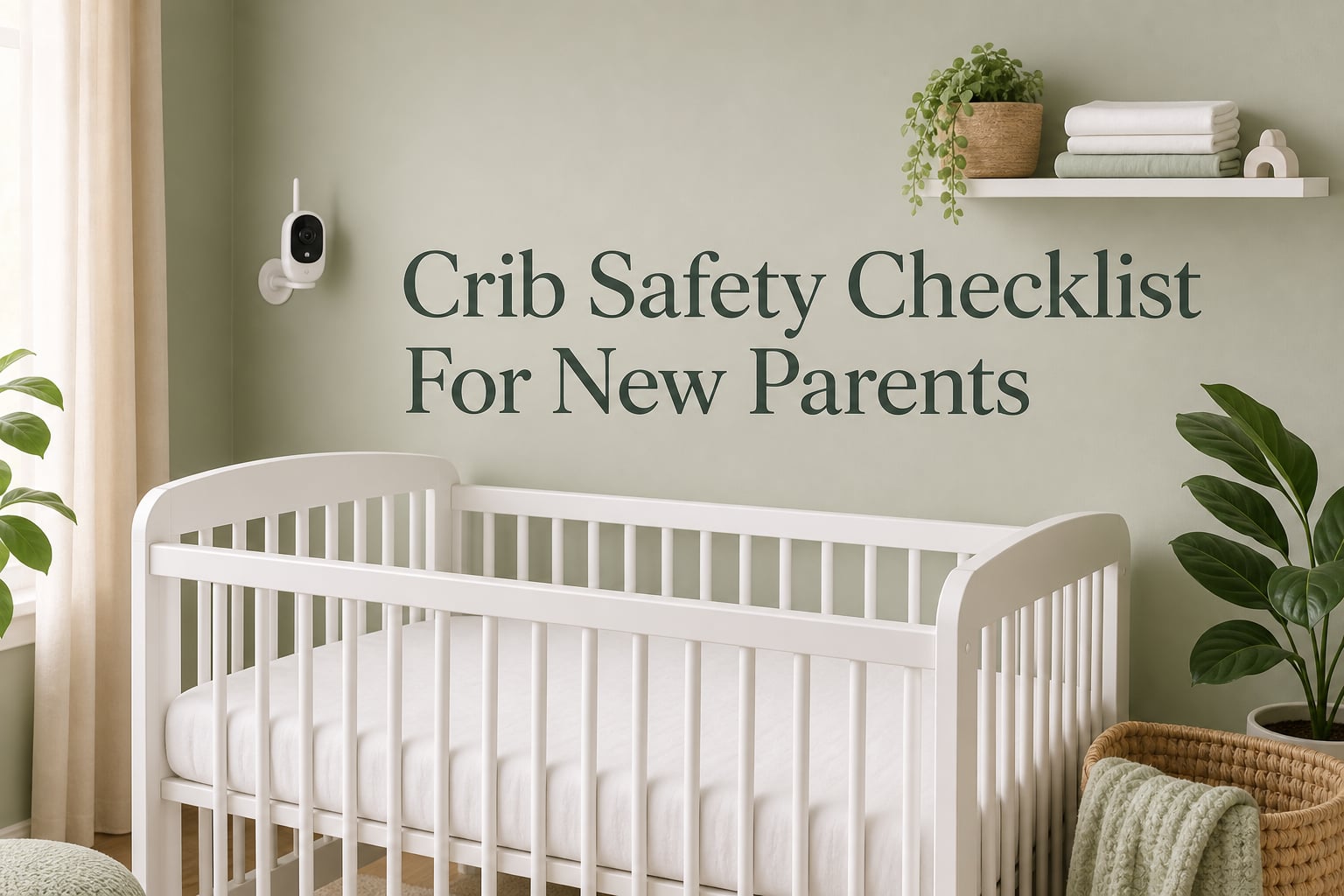
Welcoming a newborn home is one of the most exciting moments of your life, and the crib you choose is one of the most important decisions you will make in those first weeks. Every year in the United States, hundreds of infant sleep-related deaths are linked to unsafe sleep environments that a simple checklist could have prevented.
This crib safety checklist for new parents distills guidance from the American Academy of Pediatrics (AAP) and the U.S. Consumer Product Safety Commission (CPSC) into a single, scannable resource. I will walk you through construction standards, safe sleep rules, age-specific adjustments, and even how to evaluate a hand-me-down crib so you can set up your nursery with confidence in 2026.
Printable Checklist Summary (Key Measurements):
- Slat spacing: no more than 2 3/8 inches (about the width of a soda can)
- Corner posts: less than 1/16 inch above the end panels
- Mattress fit: no more than two fingers between mattress and crib side
- Mattress firmness: does not indent under baby head
- Sleep position: back only, every sleep
- In the crib: nothing except a fitted sheet
What Is a Crib Safety Checklist (And Why Every New Parent Needs One)
A crib safety checklist is a step-by-step guide that helps parents confirm their baby sleep environment meets current federal safety standards. It covers three core areas: the crib itself (construction and hardware), the sleep surface (mattress and bedding), and the surrounding space (room sharing, cords, and furniture).
Following this checklist matters because the leading causes of sleep-related infant deaths (suffocation, strangulation, entrapment, and Sudden Infant Death Syndrome) are largely preventable with the right setup. The AAP updated its safe sleep guidelines most recently in 2022, and the CPSC strict crib standards have been federal law since 2011. Anything older than those benchmarks, including older cribs, may no longer be safe to use.
Crib Construction Standards Every Parent Must Verify
A safe crib starts with the crib itself. Before your baby ever sleeps in it, you need to inspect the construction against four checkpoints: slat spacing, corner posts, hardware, and certification. These standards have been federal law since June 2011, when the CPSC banned the manufacture and sale of drop-side cribs.
Slat Spacing: The 2 3/8 Inches Rule
Slat spacing must be no more than 2 3/8 inches (roughly 6 centimeters), about the width of a soda can. Wider gaps can trap a baby head, leading to suffocation. To test, try inserting a soda can between the slats; if it fits, the crib fails the check.
Corner Posts and Hardware
Corner posts should be less than 1/16 of an inch (about 1.5 millimeters) above the end panels. Anything taller can catch on a baby clothing or pacifier clip and pose a strangulation risk. All screws, bolts, and brackets should be tight, with no missing or stripped hardware. I recommend a monthly walk-around once the crib is assembled; wood swells and contracts with humidity, and loosened hardware is a common silent hazard.
Drop-Side Cribs: Banned for Good Reason
Drop-side cribs have been illegal to sell or manufacture in the U.S. since 2011 because the moving side rail can detach and create a gap where babies get trapped. If you have one inherited from an older family member, do not use it. No modifications, anti-slip pads, or aftermarket kits make a drop-side crib safe again.
JPMA and ASTM Certification
Look for certification marks from the Juvenile Products Manufacturers Association (JPMA) or compliance with ASTM F1169 (full-size cribs) and ASTM F406 (play yards). These certifications confirm the crib has been independently tested against current voluntary standards that go beyond the federal minimum. In our team product reviews over the past several years, we have found that JPMA-certified cribs consistently meet or exceed slat spacing and hardware tests on the first inspection.
The Safe Sleep Environment: Mattress, Sheet, and Nothing Else
A safe crib can become unsafe in seconds if the wrong mattress or bedding is added. The rule from the AAP is simple: a firm, tight-fitting mattress with a fitted sheet, and nothing else in the sleep area.
Firm Mattress Test
The mattress should be firm enough that it does not conform to your baby head when they lie down. Press your hand into the center; if it leaves a visible indentation, the mattress is too soft. Foam density matters more than thickness, and most crib mattresses sold today meet firmness requirements. A good rule of thumb: if a bedsheet tucked tight over it still feels bouncy to the touch, swap it out.
Fitted Sheet Fit Check
The fitted sheet must stay snug even after your baby rolls, kicks, and grabs. Sheets that pop loose become a suffocation hazard. We recommend owning at least two or three fitted sheets in rotation so you can replace them quickly after spit-up without rushing the laundry.
Bumpers, Blankets, and Soft Toys
Bumper pads, loose blankets, pillows, stuffed animals, positioners, and sleep wedges should never be in the crib. The AAP safe sleep guidelines have specifically warned against crib bumpers since 2011 because they have been linked to dozens of infant suffocation deaths. If you are worried about your baby getting cold, use a wearable sleep sack rated for the room temperature instead of a blanket.
Back Sleeping and SIDS Prevention Essentials
Always place your baby on their back for every sleep, naps and nighttime alike. The Back to Sleep campaign, now called Safe to Sleep, reduced SIDS rates by more than 50% since it launched in 1994. Side and stomach sleeping are not safe alternatives at any point during the first year.
Beyond sleep position, three factors significantly reduce SIDS risk: room sharing without bed sharing (for at least the first 6 months), avoiding overheating (skip hats indoors, and keep the room at a comfortable 68 to 72 degrees Fahrenheit), and breastfeeding when possible. A pacifier at sleep time has also been shown to reduce SIDS risk, even if it falls out shortly after sleep begins.
Timeline-Based Safety Progression: 0-6 Months vs 6-12 Months
Your crib safety checklist is not a one-time task; it evolves as your baby grows. Splitting the timeline into two phases helps you know what to watch for at each stage.
Newborn to 6 Months: Highest SIDS Risk Stage
This is the period when SIDS risk is highest and your checklist should be at its strictest. The mattress should be at its highest setting so you can place baby down without bending deeply, but always flat on their back. Keep the crib completely empty besides a fitted sheet. Use a wearable sleep sack instead of swaddle blankets once your baby shows signs of trying to roll, usually around 3 to 4 months.
6 to 12 Months: Mobility Changes the Checklist
Once your baby can sit, pull to stand, or climb, it is time to lower the mattress to its lowest setting. Most cribs have two or three height positions, and parents often forget this step. Babies in this age group can also start to reach for things just outside the crib, so remove nearby cords, wall hangings, and window blind pulls. This is also when many parents transition out of room sharing, though the AAP recommends continuing it for the full first year when possible.
Hand-Me-Down and Used Crib Safety Assessment
Hand-me-down cribs are one of the most common forum questions I see from new parents, and for good reason. An older crib in the family might save money and feel meaningful, but it also might predate current safety standards by a decade or more.
When to Say No to a Hand-Me-Down
Decline any crib that has a drop-side mechanism, was manufactured before June 2011, has missing hardware, shows cracks in the wood or frame, or has been involved in a recall you cannot confirm was repaired. You can verify recalls at CPSC.gov/Recalls. If you cannot find a model number or manufacture date on the crib, that itself is a red flag; current standards require permanent labeling.
How to Assess a Used Crib
If the crib passes the initial screening, run it through the same checklist you would use for a new one. Measure the slat spacing with a tape measure, test the mattress fit, tighten every screw and bolt, and inspect the corner posts. A new mattress is strongly recommended even with a safe used crib, because old mattresses can harbor mold, mildew, or compressed foam that compromises firmness. In our team experience testing older models, even one minor issue (a stripped screw, a slightly wide gap) usually means the crib should be replaced, not repaired.
Beyond the Crib: Surrounding Nursery Hazards
A truly safe sleep environment extends past the crib slats. The surrounding nursery has its own checklist worth completing before baby arrival.
Cords, Blinds, and Strangulation Risks
Window blind cords are one of the top hidden hazards in a nursery. The CPSC recommends cordless blinds or blinds with inaccessible cords in any room where a child sleeps or plays. Keep all cords (including baby monitor cables, lamp cords, and curtain pulls) at least 3 feet away from the crib. Pacifier clips and other wearable cords should be removed before sleep, even if your baby uses them during the day.
Furniture Anchoring and Tip-Over Prevention
Every piece of tall or heavy nursery furniture (dressers, bookshelves, changing tables) should be anchored to the wall with anti-tip hardware. Tip-over incidents send thousands of children to the emergency room each year, and most are preventable with a $10 anchor kit and 15 minutes of installation. Furniture should also include anti-tip straps when possible, especially if it has drawers that a curious toddler might climb.
Smoke and Carbon Monoxide Detectors
Install smoke alarms inside and outside the baby sleep area, and add a carbon monoxide detector on every level of the home. Test them monthly and replace batteries annually. Detectors should be replaced entirely every 10 years for smoke alarms and every 7 to 10 years for CO detectors; check the manufacture date stamped on the back of each unit.
Age-Based Mattress Height Adjustments
Crib mattresses have adjustable heights, and using them correctly is one of the most overlooked checklist items. Start with the highest setting for newborns so you can lower baby in without straining. Lower the mattress once your baby can sit unassisted (usually around 5 to 6 months), and lower it again before they can pull to stand. The general rule is that the top of the crib rail should be at least halfway up your baby chest height when they are standing; otherwise they can topple over the rail.
Frequently Asked Questions
What Should Be in a Crib With a Newborn?
Only a firm, tight-fitting mattress with a fitted sheet. Nothing else. No bumpers, no blankets, no pillows, no stuffed animals, no positioners, and no wedges. If you are worried about warmth, use a wearable sleep sack sized for your baby weight.
What Are the Safety Requirements for a Baby Crib?
A safe crib must have slat spacing no greater than 2 3/8 inches, corner posts under 1/16 inch tall, no missing or loose hardware, no drop-side mechanism (banned since 2011), and permanent labeling showing manufacture date and model number. Look for JPMA certification for independent verification.
How Do You Make a Crib Safe for a Newborn?
Place the mattress at its highest setting and confirm it fits with no more than two fingers of gap between mattress and side. Use only a fitted sheet, place baby on their back for every sleep, keep the crib empty, position the crib away from windows and cords, and lower the mattress once baby can sit or pull to stand.
How Can You Prevent SIDS in the Crib?
Place baby on their back for every sleep, use a firm mattress with a fitted sheet only, room-share without bed-sharing for the first 6 to 12 months, avoid overheating by keeping the room at 68 to 72 degrees Fahrenheit, offer a pacifier at sleep time, and avoid smoke exposure during pregnancy and after birth.
Is a Hand-Me-Down Crib Safe to Use?
Only if it was manufactured after June 2011, has no drop-side mechanism, has all original hardware intact, passes the slat spacing test (no more than 2 3/8 inches), and has not been recalled. When in doubt, replace the crib; a new mattress is also strongly recommended with any used crib.
When Can a Baby Move From a Bassinet to a Crib?
Most babies transition between 3 and 6 months, when they reach the bassinet weight limit (usually 15 to 20 pounds) or show signs of rolling or pushing up on hands and knees. There is no need to wait for a specific age; move baby once they outgrow the bassinet by any measure.
Your Crib Safety Checklist in 2026: Putting It All Together
A crib safety checklist for new parents really comes down to three habits: check the crib itself, keep the sleep area empty, and revisit the setup as your baby grows. Run through the construction standards before the first sleep, keep bumpers and blankets out indefinitely, and lower the mattress as soon as your baby shows signs of sitting or standing. If you follow only these three rules, you have already addressed the leading causes of preventable infant sleep deaths.
For more guidance on setting up your nursery or evaluating other baby gear against current safety standards, bookmark our resource hub at CRG West. We update our safety content whenever the AAP and CPSC release new guidance, so you will always have access to the most current recommendations for keeping your little one safe through every stage.