
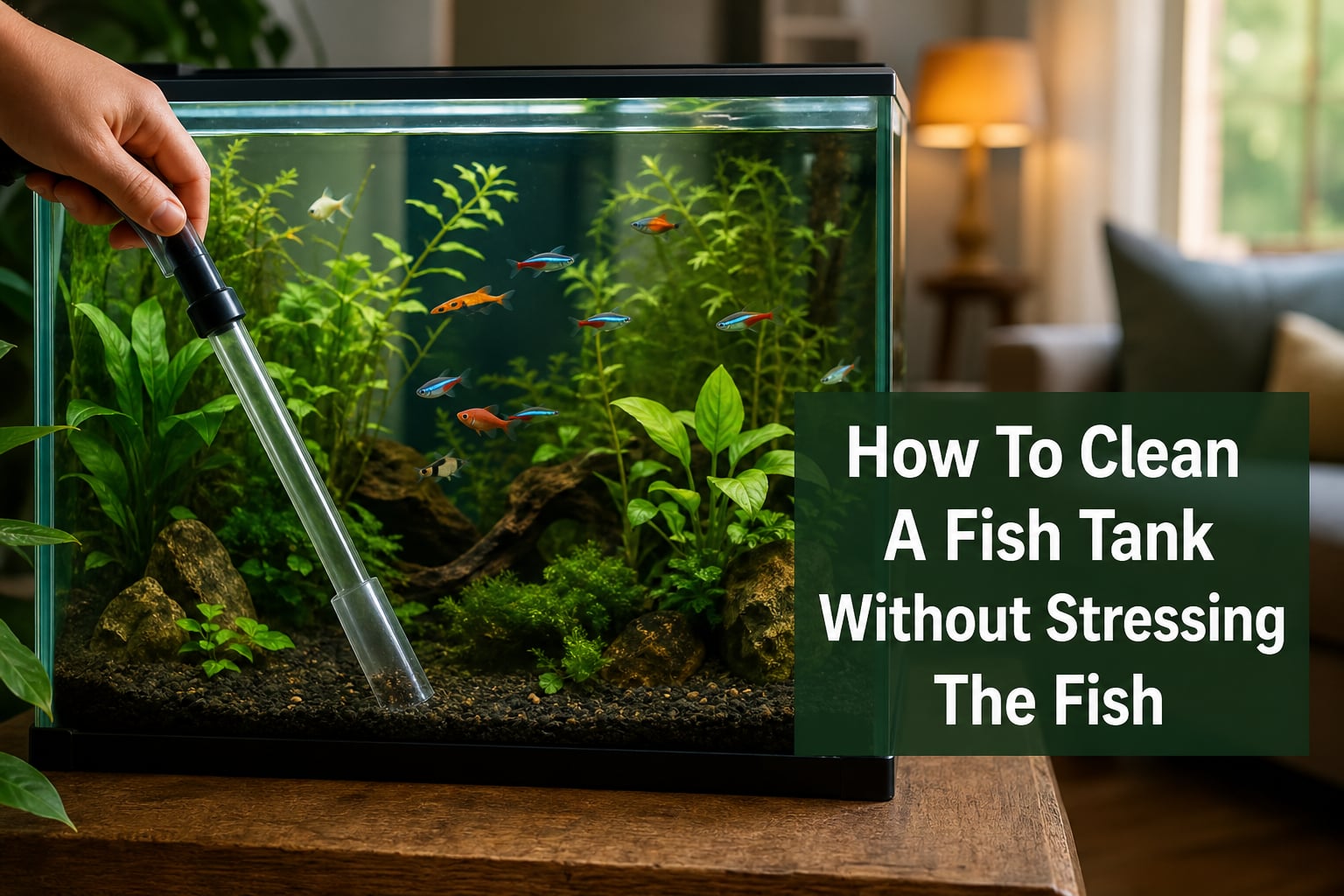
I learned how to clean a fish tank without stressing the fish the hard way. After my first betta, Marbles, spent three days hiding behind the filter after a routine water change, I realized that good intentions can do real harm when fish tank maintenance is rushed.
Cleaning your aquarium doesn’t have to mean terrifying your fish. The key is gentle, partial changes that preserve the water chemistry your fish have already adapted to. In this guide, I’ll walk you through the exact method I now use on my own three tanks, refined over 18 months of trial and error.
You’ll learn the 12 stress-free steps I follow, why temperature matching matters more than most beginners realize, and what to do when your fish still shows signs of stress even after a careful cleaning. Whether you keep bettas, tetras, shrimp, or a community tank, these techniques work.
Quick Stress-Free Cleaning Principles
Before we dive into the full step-by-step process, here are the core principles that keep fish calm during tank cleaning. I follow every single one of these on each cleaning day, and they are the reason my fish no longer dart to the corners when I approach with a bucket.
- Leave your fish in the tank. Removing them causes more stress than the cleaning itself.
- Change only 10-25% of the water at a time. Larger changes crash the nitrogen cycle and shock fish.
- Match the new water temperature exactly. Even 3-4 degrees of difference can shock cold-blooded fish.
- Always treat new water with dechlorinator. Tap water chlorine kills fish and beneficial bacteria.
- Never wash filter media in tap water. Chlorine destroys the beneficial bacteria colony.
- Move slowly and keep noise low. Vibrations and sudden shadows are perceived as threats.
Why Fish Get Stressed During Tank Cleaning
Fish get stressed during cleaning because their environment changes faster than they can adapt. Unlike humans, fish cannot regulate their body temperature. Their entire physiology is tuned to the specific water chemistry they’ve been swimming in for days or weeks.
When you dump in water that’s a different temperature, has different pH, or contains chlorine, fish experience something close to what you’d feel walking from a warm room into an ice bath. Their immune system drops, their breathing rate spikes, and they become vulnerable to disease for the next 48-72 hours.
The five most common stress triggers during cleaning are sudden temperature swings, pH changes from untreated tap water, removal of waste-removing bacteria, loud vibrations from equipment bumping the glass, and visible threats like nets or large hands reaching in from above.
Equipment You Need for Stress-Free Cleaning
You don’t need expensive gear to clean your tank gently. I started with a basic 5-gallon bucket, a simple siphon, and a bottle of dechlorinator. That setup has handled every cleaning for over a year without issue.
For a stress-free cleaning routine, gather a clean bucket that has never held soap or chemicals, a gravel vacuum or siphon hose, a water conditioner or dechlorinator, an algae scrubber or magnetic cleaner, paper towels for the outside glass, and a thermometer to verify temperature match.
What Dechlorinator Does and Why It Matters
Dechlorinator neutralizes chlorine and chloramine in tap water, both of which are toxic to fish even in small amounts. Municipal water treatment adds these chemicals to kill bacteria in the pipes, but they don’t discriminate between harmful bacteria and the beneficial bacteria living in your filter.
Adding untreated tap water to your tank can wipe out the colony that converts toxic ammonia into safer nitrate. That crash is one of the leading causes of fish death following a water change. A few drops of dechlorinator per gallon fixes the problem in seconds.
How To Clean A Fish Tank Without Stressing The Fish: 12 Gentle Steps
Here’s the exact 12-step process I use every Sunday morning on my tanks. The full routine takes about 30 minutes for a 20-gallon setup, including setup and cleanup time.
Step 1: Wash Your Hands and Arms Thoroughly
Wash your hands and arms up to your elbows with plain water. Do not use soap, lotion, or hand sanitizer. Even small residues contaminate the water and stress fish. I rinse my hands in the tank water after washing to neutralize any trace contaminants.
Step 2: Test Your Water Before Starting
Test your water quality with a simple test kit before you begin. Check ammonia, nitrite, nitrate, and pH. This baseline tells you how much water you actually need to change. If ammonia is high, do two smaller changes that week instead of one large one.
Step 3: Unplug Filter and Heater
Unplug the filter first, then the heater. Always unplug electric equipment before placing your hands in the tank. Water and electricity are a dangerous combination, and even a small current stresses fish.
Step 4: Clean the Inside Glass Gently
Clean the inside glass with an algae scrubber or magnetic cleaner. Move slowly in straight lines rather than aggressive circles. Fish interpret rapid movement as a predator approaching, so the slower you move, the calmer they stay.
Step 5: Remove Synthetic Decorations If Needed
Remove any synthetic decorations only if they have heavy algae buildup. Place them in a bucket of tank water, never tap water, while you scrub them with an old toothbrush. Algae on decor is normal and even beneficial in small amounts.
Step 6: Vacuum the Substrate
Vacuum the gravel by pressing the siphon into the substrate and lifting gently. The gravel vacuum pulls waste and uneaten food out without removing the beneficial bacteria that live in the substrate. Only vacuum one-third of the tank each cleaning to preserve the bacteria colony.
Step 7: Skip Plants and Sensitive Areas
Skip vacuuming around live plants, shrimp hiding spots, and breeding areas. These spaces host beneficial microorganisms and baby fish that are easily sucked up. Hover the siphon just above the substrate in those zones instead.
Step 8: Match the New Water Temperature
Fill your clean bucket with tap water and use a thermometer to match the tank temperature exactly. I aim for within 1-2 degrees. Cold water sinks and creates sudden temperature pockets that stress fish, while hot water can scald them on contact.
Step 9: Add Dechlorinator to New Water
Add dechlorinator to the new water and stir gently with a clean spoon. Follow the bottle’s dosage instructions, typically a few drops per gallon. Wait 2-3 minutes for the chemicals to neutralize before pouring.
Step 10: Slowly Pour the New Water
Slowly pour the new water onto a clean plate or decoration to disperse the flow. Direct pouring from a height creates a waterfall effect that stresses fish and stirs up debris. The plate method spreads water gently across the surface.
Step 11: Rinse Filter Media in Tank Water
Rinse your filter media in a bucket of old tank water, never tap water. Squeeze the sponges gently until the water runs mostly clear. This removes debris without killing the beneficial bacteria that keep your tank cycled.
Step 12: Reassemble Equipment and Observe
Reassemble the filter and heater, plug them back in, and watch your fish for 10-15 minutes. Healthy fish return to normal behavior quickly. If any fish is breathing heavily, hiding, or swimming erratically, give them time and check water parameters again in an hour.
Substrate Cleaning Without Destroying Beneficial Bacteria
Substrate cleaning is the most misunderstood part of fish tank maintenance. Many beginners either skip it entirely or vacuum too aggressively. Both approaches cause problems.
The substrate houses roughly 40% of your tank’s beneficial bacteria, especially in established tanks. These bacteria convert toxic ammonia from fish waste into less harmful compounds. Sucking them out disrupts the nitrogen cycle and triggers an ammonia spike that lasts days.
Press your gravel vacuum into the substrate until it touches the bottom, then lift slightly. The flow pulls debris up while leaving the gravel itself in place. Move the vacuum in straight lines across the tank rather than hovering in one spot, which can bury the siphon and pull out substrate.
Filter Maintenance That Preserves Your Cycle
Filter maintenance without disrupting your cycle comes down to one rule: never wash filter media in clean tap water. The chlorine in treated tap water kills the bacteria colony, and it can take 4-6 weeks to rebuild after a major die-off.
I rinse my filter sponges in a bucket of the tank water I just removed during the water change. That water has no chlorine and shares the same chemistry as the tank, so the bacteria survive the cleaning. Squeeze gently 3-4 times until the water runs mostly clear, then return the media to the filter.
Replace filter media only when it’s literally falling apart, not on a schedule. Most cartridges last 6-12 months in a healthy tank. Replacing them too often is the number one reason fish keepers lose their cycle and end up with ammonia poisoning.
Signs of Fish Stress to Watch After Cleaning
Even with careful technique, some fish show mild stress after a cleaning. The key is knowing what’s normal and what needs immediate attention.
Normal stress responses include hiding for 1-2 hours, slightly faded colors, and reduced appetite for the rest of the day. These resolve on their own as fish re-adjust to the refreshed water.
Warning signs that need attention include rapid gill movement lasting more than 4 hours, fish gasping at the surface, erratic swimming or spinning, and white spots or fuzzy patches appearing within 24 hours. These point to water quality issues, infection, or temperature shock. Test your water immediately and consider adding extra aeration with an air stone.
Cleaning Without a Gravel Vacuum: Budget Alternatives
Cleaning without a gravel vacuum is possible with a clean siphon hose or even a length of food-safe plastic tubing. The technique is the same: gravity pulls water and debris out through the hose, but you lose the gravel-piercing tip that lifts waste from the substrate.
Without a vacuum, hover the hose just above the substrate and stir the surface gently with your fingers. Waste clouds up and gets pulled into the siphon. It takes longer and misses debris buried deep in the gravel, but it works for shallow substrate or tanks with sand bottom where vacuums are too aggressive.
Troubleshooting Common Cleaning Problems
When fish breathe heavily after cleaning, it’s almost always a temperature mismatch or low oxygen. Check your thermometer against the tank reading, add an air stone for extra surface agitation, and wait. Most fish recover within a few hours.
If algae keeps coming back despite regular cleaning, the cause is usually excess light or excess nutrients rather than your cleaning routine. Cut lighting to 6-8 hours per day, reduce feeding to what fish eat in 2 minutes, and add live plants that compete with algae for nutrients.
If your filter is loud after reassembly, check that the impeller is seated correctly and the lid is fully closed. A piece of gravel stuck under the lid causes most post-cleaning noise. Open it up, remove the debris, and reseat the cover.
Frequently Asked Questions
Can I clean my fish tank without removing the fish?
Yes, you should clean your fish tank without removing the fish. Moving fish to a temporary container causes more stress than the cleaning itself, including temperature swings, net handling, and exposure to unfamiliar water. Keep your fish in the tank during partial water changes, glass cleaning, and substrate vacuuming. Only remove fish if you are doing a full tank teardown, which should be rare.
How to clean a fish tank without hurting the fish?
Clean a fish tank without hurting fish by changing only 10-25% of the water at a time, matching the new water temperature within 1-2 degrees, treating new water with dechlorinator, moving slowly to avoid startling them, and rinsing filter media in old tank water instead of tap water. These steps prevent the temperature shock, pH swings, and bacteria loss that harm fish.
How often should I clean my fish tank?
Clean your fish tank with a partial 10-25% water change once per week for most freshwater setups. Heavily stocked tanks or tanks without live plants may need twice-weekly changes. Monthly deep cleaning of substrate and filter is usually enough. Avoid 100% water changes, which crash the nitrogen cycle and stress fish significantly.
How to keep a fish tank clean without changing water naturally?
Keep a fish tank cleaner naturally between water changes by adding live plants that absorb nitrates, feeding fish only what they eat in 2 minutes, removing uneaten food after 5 minutes, keeping the tank out of direct sunlight to prevent algae, and adding snails or shrimp that consume algae and debris. These natural methods extend the time between water changes but do not eliminate them.
Final Thoughts on Stress-Free Tank Cleaning
Learning how to clean a fish tank without stressing the fish comes down to respecting the environment your fish have already adapted to. Small, consistent, gentle changes preserve water quality without forcing your fish to readjust to a brand new tank every week.
Stick to 10-25% weekly water changes, match the temperature every single time, and treat new water with dechlorinator. Your fish will reward you with brighter colors, more active behavior, and fewer disease outbreaks. Marbles the betta hasn’t hidden from me in over a year, and that’s the only review that matters.