
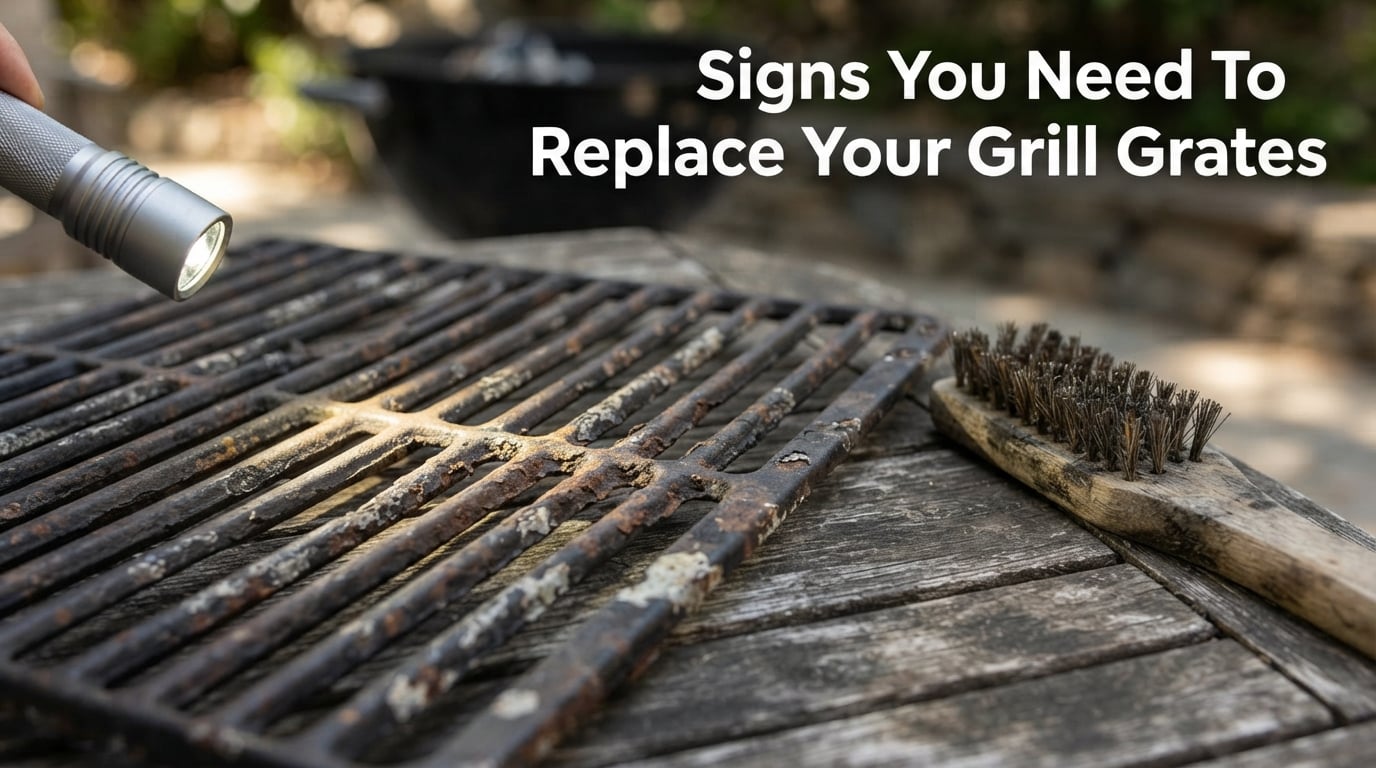
Grill grates are the workhorse of your barbecue setup. They take the heat, hold the food, and deliver those sear marks everyone loves. But after seasons of high-temperature cooking, grease drippings, and exposure to the elements, even the best grates wear down.
The problem is that most grill owners do not realize their grates are failing until food starts sticking, cooking unevenly, or tasting off. By that point, you may have been cooking on damaged surfaces far longer than you should have.
Knowing the signs you need to replace your grill grates helps you catch problems early, avoid potential health risks from rust and chipped coatings, and get back to producing great food. Our team has tested, cleaned, and replaced dozens of grill grates over the years, and the warning signs are consistent across every material type.
Here is a quick summary of the top indicators before we get into the details:
Heavy rust that cannot be removed with brushing or cleaning
Porcelain coating that is chipping, cracking, or flaking off
Broken, cracked, or separated rods that compromise structural integrity
Severe grease buildup that no amount of cleaning will remove
Warping that causes uneven cooking and poor heat distribution
Poor fitment where grates no longer sit level or securely on the grill
If any of these sound familiar, grab a flashlight and head outside. We will walk you through exactly what to look for and when it is time to buy replacements.
Types of Grill Grates and How They Wear Differently
Not all grill grates age the same way. The material your grates are made from determines how they degrade, what warning signs appear first, and how long you can expect them to last. Understanding your grate material is the first step in knowing what to watch for.
Cast Iron Grill Grates
Cast iron is the classic choice for grill enthusiasts who want excellent heat retention and beautiful sear marks. These grates hold heat better than almost any other material, which makes them ideal for high-temperature searing.
The trade-off is that cast iron rusts easily if not properly seasoned and maintained. Without regular oiling and dry storage, cast iron grates develop rust spots that can deepen into pitting over time. Most cast iron grates last 5 to 7 years with proper care, but neglect cuts that lifespan in half.
Stainless Steel Grill Grates
Stainless steel grates are popular for their rust resistance and low maintenance requirements. They do not need seasoning like cast iron, and they clean up relatively easily after each use. Many grill owners upgrade to stainless steel specifically to avoid the rust problems associated with other materials.
However, stainless steel is not indestructible. Lower-quality stainless grates can still corrode, and the rods can warp under extreme heat. The main sign of wear on stainless steel is discoloration, thinning rods, or eventual warping. Quality stainless steel grates can last 10 years or more.
Porcelain-Coated Grill Grates
Porcelain-coated grates combine a steel or cast iron core with a baked-on enamel coating. The porcelain creates a non-stick surface and protects the underlying metal from rust. These grates are common on mid-range gas grills from brands like Weber, Char-Broil, and Napoleon.
The vulnerability here is the coating itself. Once the porcelain chips or cracks, the exposed metal underneath rusts quickly. A single chip may not seem like a big deal, but it spreads. Porcelain-coated grates typically last 3 to 5 years before the coating starts failing.
Carbon Steel Grill Grates
Carbon steel grates are less common but offer a middle ground between cast iron and stainless steel. They heat up quickly, develop a natural non-stick patina with seasoning, and are lighter than cast iron. You will find carbon steel grates on some higher-end grills and in professional barbecue setups.
Like cast iron, carbon steel requires seasoning to prevent rust. The advantage is that carbon steel is more resistant to warping than thinner stainless steel options. With proper maintenance, carbon steel grates last 6 to 8 years.
Sign 1: Heavy Rust That Will Not Come Off
Rust is the number one reason grill owners start thinking about replacement. But not all rust means your grates are doomed. The key is knowing how to tell the difference between surface rust and deep, structural rust.
Surface rust appears as a light orange or brown discoloration on the metal. It sits on top of the grate and can often be removed with a stiff wire brush, some heat, and elbow grease. Many Reddit users on r/grilling report successfully cleaning surface rust off cast iron grates by heating the grill to high, brushing aggressively, and re-seasoning with oil. If the rust brushes away and the metal underneath is still smooth and solid, your grates are still usable.
Deep rust and pitting is a different story. Pitting corrosion creates small craters or holes in the metal surface. Run your finger across the affected area. If you feel rough indentations, grooves, or thin spots, the rust has eaten into the metal itself.
America’s Test Kitchen put it well: if the rust is deep, pitting the grates, or eating away enough to cause cracks or breaks, it is time to replace the grate altogether. At that point, no amount of cleaning will restore the structural integrity.
Deep rust also creates a food safety concern. Rust particles can transfer to your food, giving it a metallic taste and potentially introducing iron oxide into what you eat. While small amounts of rust are not considered highly dangerous, no one wants their burgers tasting like a nail.
Here is a quick test: after a thorough cleaning and brushing, if you can still see rust stains embedded in the metal or if the affected areas feel rough and pitted, replacement is your best option.
Sign 2: Porcelain Coating Is Chipping or Flaking
If you have porcelain-coated grill grates, the coating is your first line of defense against rust. When that coating starts to fail, the entire grate becomes vulnerable. This is one of the most common signs you need to replace your grill grates.
Chipping usually starts small. You might notice a tiny fleck of enamel missing near the edge of a rod or where two rods meet. Over time, those small chips expand as moisture and heat penetrate the exposed metal beneath. The rust spreads outward under the remaining coating, causing more porcelain to flake off in sheets.
Inspect your grates under good lighting. Look for areas where the glossy surface has become dull, rough, or discolored. Run your hand along the rods. If you feel rough patches, raised edges, or bare metal spots, the coating is compromised.
Some grill owners wonder whether they can continue using chipped porcelain grates. The answer depends on the extent of the damage. A small chip on one rod is not necessarily a deal-breaker if the rest of the grate is intact. But once chipping becomes widespread, with multiple rods showing bare metal and surrounding rust, it is time for new grates.
One important note: never try to repair porcelain coating with high-temperature paint or spray-on coatings. These products are not food-safe and can release harmful chemicals when heated. Once porcelain is gone, replacement is the only safe option.
The Virtual Weber Bulletin Board has a thread spanning several years where users share photos of chipped porcelain grates. The consensus is clear: once you see multiple chips spreading, replacement is inevitable and worth doing before you end up with porcelain flakes in your food.
Sign 3: Broken, Cracked, or Separated Rods
Grill grate rods take a lot of stress. They sit directly over intense heat, support the weight of heavy food, and expand and contract with each heating and cooling cycle. Over time, that stress causes structural failure.
Broken rods are the most obvious sign. If a rod has snapped completely or is cracked partway through, the grate needs replacing immediately. A broken rod creates a gap where food can fall through, and the uneven surface makes cooking frustrating.
Separated rods are common on grates where the rods are welded to a frame. Over years of thermal expansion and contraction, those welds can break. You might notice rods that wiggle, sag, or have come loose from the frame entirely. A grate with separated rods cannot support food evenly and may shift dangerously during use.
Cracks are harder to spot but equally important. Hairline cracks in cast iron or steel rods may not be visible at first glance. Tap each rod gently with a metal tool. A solid rod produces a clear ring. A cracked rod sounds dull or flat. That dull sound means the structural integrity is compromised and failure is only a matter of time.
Some people ask whether cracked or broken rods can be welded. Technically, a skilled welder can repair steel or cast iron grates. But the cost of professional welding often exceeds the cost of new replacement grates, and the repaired area may be prone to future cracking. In almost every case, replacement makes more sense than repair.
Sign 4: Severe Grease Buildup That Will Not Clean
Grease is part of grilling. Every burger, steak, and piece of chicken releases fat that drips onto the grates. A light coating of grease is normal and even helps with seasoning. But years of accumulated, baked-on grease create a different problem.
Severe grease buildup looks like a thick, black, crusty layer bonded to the metal. It resists normal cleaning methods like brushing, soaking, or even commercial degreasers. The buildup often has a rancid smell, especially when the grill heats up.
This is not just a cleanliness issue. Thick grease buildup causes flare-ups, which char food and create hot spots on your grill. It also harbors bacteria and can impart off-flavors to everything you cook.
To assess whether your grates are salvageable, try this cleaning process: heat the grill to high for 15 minutes to burn off loose residue, scrub with a brass or stainless brush, and apply a dedicated grill grate cleaner. If the thick black crust remains after this process, the grease has likely bonded to the metal at a molecular level.
Some grill owners on forums report success with vinegar soaks or commercial degreaser baths for removable grates. But if the buildup has been there for multiple seasons and covers a significant portion of the grate surface, replacement is the more practical choice.
New grates give you a fresh start. And this time, you can implement better cleaning habits after each use to prevent the same problem from recurring.
Sign 5: Warping and Uneven Cooking
Warping happens when metal expands and contracts unevenly under heat. The result is grates that are no longer flat. You might notice one side sitting higher than the other, rods that have bowed upward or downward, or grates that rock when you press on them.
Warping is more common with thinner stainless steel grates and lower-quality materials. High heat combined with rapid cooling (like spraying water or dropping cold food on hot grates) accelerates the process. Cast iron grates can also crack from thermal shock rather than warp.
The real problem with warped grates is cooking performance. Uneven grates mean uneven heat contact. Food sitting on a high spot cooks faster while food on a low spot barely touches the grate surface. The result is inconsistent sear marks, undercooked or overcooked sections, and general frustration at the grill.
Test for warping by placing a straight edge across your grates. If you see gaps between the straight edge and the rods, the grates have warped. You can also look for wobbling when you place a heavy pan or food item on the cooking surface.
Can warped grates be fixed? Sometimes, gently. Some grill owners report carefully bending warped rods back into position while the grate is cold. But this is a temporary fix at best. Once metal has warped, it has a memory and tends to return to the warped position under heat again. If warping is noticeable enough to affect your cooking, replace the grates.
Sign 6: Poor Fitment and Loose Grates
This sign is easy to overlook but important for safety. Over time, grates can shrink slightly from repeated heat cycling, or the grill body itself may shift. The result is grates that no longer fit securely.
Signs of poor fitment include grates that slide around during cooking, edges that droop into the flame area, or grates that sit at an angle rather than level. If you have to constantly reposition your grates while grilling, the fit is wrong.
Loose grates are a safety hazard. A grate that shifts while you are flipping burgers or moving a heavy roast can tip food into the fire or cause burns. If your grates do not sit firmly and levelly on the support ledges, replacement is the safe choice.
When ordering replacements, always measure your current grates or your grill’s cooking area. We cover measuring steps below.
How Long Do Grill Grates Last? Lifespan by Material?
One of the most common questions we hear is about grill grate lifespan. The answer depends heavily on material quality, frequency of use, and maintenance habits. Here is what you can reasonably expect:
Cast iron grates: 5 to 7 years with regular seasoning and proper storage. Without maintenance, expect 2 to 3 years before rust becomes a serious problem.
Stainless steel grates: 8 to 12 years for quality 304-grade stainless. Lower-grade 430 stainless may last only 4 to 6 years before showing corrosion or warping.
Porcelain-coated grates: 3 to 5 years is typical. Once the coating starts chipping, the useful life drops rapidly as exposed metal rusts.
Carbon steel grates: 6 to 8 years with proper seasoning. Like cast iron, they require regular maintenance to reach their full lifespan.
Factors that shorten grate lifespan include leaving the grill uncovered in rainy or snowy weather, infrequent cleaning, using metal scrapers that damage protective coatings, and cooking on grates before they are fully preheated or after sudden temperature changes.
Grills that get used 2 to 3 times per week will obviously wear out grates faster than grills used occasionally. If you grill year-round, expect the lower end of these ranges. For weekend warriors, the upper end is achievable with good care.
Replace vs Clean: Making the Right Decision
This is the decision every grill owner faces eventually. You see rust, grease, or damage and wonder: should I try to save these grates or just buy new ones? Our team has developed a simple decision framework based on years of testing and forum research.
Start with a deep cleaning first. Before deciding to replace, give your grates a thorough cleaning session. Heat the grill to high for 20 minutes, scrub aggressively with a quality grill brush, and for cast iron or carbon steel, re-season with a thin layer of oil. Many grates that look terrible clean up surprisingly well.
Assess the results honestly. After cleaning, examine the grates in good lighting. If surface rust came off and the metal is smooth, you are good to keep using them. If pitting, deep rust, cracks, or chipped porcelain remain, replacement is the right call.
Use this quick reference to decide:
Clean if: Surface rust brushes off, grease buildup responds to degreaser, grates are structurally sound, and coating is intact
Replace if: Rust has pitted the metal, rods are cracked or broken, porcelain is chipping extensively, grates are warped, or severe buildup will not budge after cleaning
Consider the cost factor too. Replacement grates typically run $30 to $150 depending on material and brand. If you are spending hours trying to salvage grates that are borderline, your time may be worth more than the cost of new ones. Forum users on The Virtual Weber Bulletin Board frequently share that they wish they had replaced their grates sooner rather than struggling through a season with subpar cooking surfaces.
Maintenance Tips to Extend Grate Life
The best way to avoid premature replacement is consistent maintenance. These practices can add years to your grill grates regardless of material.
Clean After Every Use
While the grates are still warm (not hot), brush them with a grill brush to remove food residue. Warm grates release debris more easily than cold ones. This simple habit prevents the buildup that eventually becomes impossible to remove.
Season Cast Iron and Carbon Steel Regularly
Seasoning means applying a thin layer of cooking oil to the grates and heating them so the oil polymerizes into a protective coating. After cleaning, rub a light coat of vegetable oil or flaxseed oil across the grates using a paper towel. Heat the grill to medium-high for 30 minutes. Repeat this process every few months, or whenever the grates start looking dry.
Seasoning creates a natural non-stick surface and, more importantly, seals the metal against moisture that causes rust. A well-seasoned cast iron grate can last years longer than a neglected one.
Store Grates Dry and Covered
Moisture is the enemy of grill grates. After cleaning, always dry your grates completely before closing the grill lid. If you store your grill outdoors, use a quality cover that keeps rain and humidity out.
For extended off-season storage, some grill owners remove their grates entirely and store them in a dry garage or shed. This is especially helpful in regions with harsh winters or high humidity. A light coat of oil before storage provides extra protection against rust.
Avoid Thermal Shock
Never pour cold water on hot grates or place frozen food directly on a screaming hot grate. Sudden temperature changes cause metal to warp and crack. Let grates cool naturally after cooking.
Use the Right Cleaning Tools
Use brushes with bristles rated for your grate material. Brass brushes work well for softer metals and porcelain coatings. Stainless steel brushes handle cast iron and carbon steel. Avoid scraper tools with sharp edges that can gouge protective surfaces. Replace your grill brush annually, as worn bristles become less effective and can even break off onto the grates.
How to Measure for Replacement Grill Grates
If you have decided it is time for new grates, measuring correctly ensures you get the right fit. Follow these steps:
Step 1: Remove your current grates and measure the cooking surface width and depth. Measure from the outside edges of the support ledges, not just the grates themselves.
Step 2: Note the grate style. Are they rod grates (parallel round bars), cast iron grates (thicker rectangular bars), or solid grates? Each style fits differently.
Step 3: Count the number of individual grate panels. Some grills use a single large grate while others use 2 to 4 smaller panels side by side.
Step 4: Check your grill model number. Many manufacturers offer exact replacement grates matched to specific models. Brands like Weber, Char-Broil, and Napoleon make this easy with online parts finders.
Step 5: If exact replacements are not available, look for universal grates that match your measurements. Just verify the dimensions carefully before ordering.
Yes, you can absolutely buy new grates for your grill. Most major grill brands sell replacement grates directly, and third-party manufacturers offer compatible options. Universal replacement grates are available in standard sizes to fit many popular grill models.
FAQs
How do I know when to replace my grill grates?
Replace your grill grates when you see heavy rust that cannot be removed with cleaning, porcelain coating that is chipping or flaking, broken or cracked rods, severe grease buildup that will not come off, warping that causes uneven cooking, or grates that no longer fit securely. Any one of these signs is enough reason to consider replacement.
Is it okay to grill on rusted grates?
Light surface rust that can be brushed off is generally safe to cook on after cleaning and reseasoning. However, deep rust with pitting, flaking, or structural damage is not safe. Rust particles can transfer to food, affecting taste and potentially introducing contaminants. If rust has eaten into the metal, replace the grates before your next cookout.
How long do grill grates last?
Cast iron grates last 5 to 7 years with proper seasoning and care. Stainless steel grates last 8 to 12 years for quality grades. Porcelain-coated grates typically last 3 to 5 years before the coating fails. Carbon steel grates last 6 to 8 years with regular maintenance. Frequent use, poor storage, and lack of cleaning all shorten these lifespans.
What is the discoloration on grill grates?
Discoloration on grill grates is usually caused by one of three things: grease and food residue that has baked onto the surface, oxidation of the metal from heat exposure, or early rust formation. Dark discoloration is often carbonized grease and is harmless if it cleans off. Orange or reddish discoloration indicates rust and should be monitored closely.
How do you measure for replacement grill grates?
Remove your current grates and measure the width and depth of the cooking surface from the support ledge edges. Note the grate style (rod, cast iron, or solid), count the number of grate panels, and check your grill model number for exact manufacturer replacements. Universal grates are available if exact matches are unavailable.
Can you buy new grates for your grill?
Yes, you can buy replacement grates for almost any grill. Most major brands including Weber, Napoleon, and Char-Broil sell direct replacement grates matched to specific grill models. Third-party and universal options are also available in standard sizes. Replacement grates typically cost between $30 and $150 depending on material and brand.
What is the average lifespan of a gas grill?
The average gas grill lasts 5 to 15 years depending on quality, usage frequency, and maintenance. Higher-end grills from brands like Weber or Napoleon can exceed 15 years with proper care and replacement parts. Budget grills may only last 3 to 5 years. Replacing worn grates and burners can extend a grill’s life significantly.
Final Thoughts on Replacing Your Grill Grates
Cooking on damaged grill grates ruins good food. Uneven heat, rust flavors, food falling through gaps, and flare-ups from grease buildup all trace back to grates that should have been replaced seasons ago. The signs you need to replace your grill grates are clear once you know what to look for: heavy rust, chipped porcelain, broken rods, stubborn grease, warping, and poor fitment.
The good news is that replacement grates are affordable and easy to find. Whether you stick with the same material or upgrade to something more durable like stainless steel, fresh grates breathe new life into an old grill. You will taste the difference in your food immediately.
Take five minutes today to inspect your grates with a flashlight. If you spot any of the warning signs we covered, order replacements before your next cookout. Your burgers, steaks, and vegetables will thank you.