
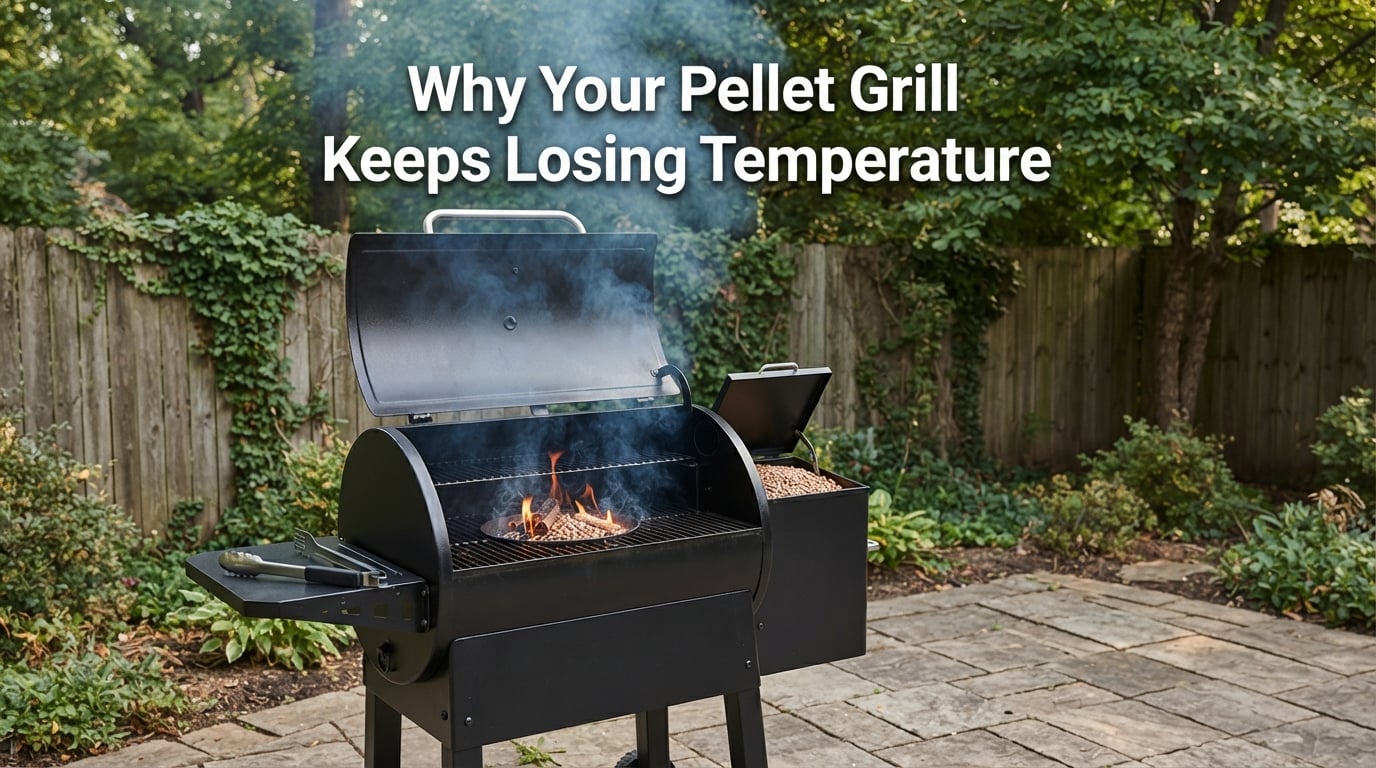
Nothing ruins a slow-cooked brisket faster than watching your pellet grill temperature plummet hours into the cook. If your pellet grill keeps losing temperature, the culprit is usually one of several common issues: pellet quality problems, ash buildup restricting airflow, improper startup or shutdown procedures, or failing components like the RTD sensor, induction fan, or auger motor. Understanding why this happens can save your next cookout and help you maintain steady temperatures for perfect results every time.
I have spent years troubleshooting pellet grills, and temperature drops are one of the most frequent complaints I hear from fellow grillers. The good news is that most causes are fixable with basic maintenance and a few adjustments to your routine. Let me walk you through the most common reasons your pellet grill temperature dropping mid-cook and exactly how to fix each one.
Why Your Pellet Grill Keeps Losing Temperature: Common Causes
Your pellet grill loses temperature when something disrupts the delicate balance of fuel, air, and heat regulation. Here are the most common causes, ranked by how frequently they occur:
The main reasons your pellet grill temperature drops include:
Low-quality or moist pellets producing less heat
Ash buildup in the firepot blocking airflow
Improper startup procedure leaving the firepot unlit
Incomplete shutdown causing auger issues
Failed RTD or thermocouple sensor giving false readings
Malfunctioning induction fan reducing oxygen supply
Auger jam or motor failure stopping pellet feed
Wind, cold weather, or rain affecting heat retention
Adding cold meat acting as a heat sink
Each of these issues has specific symptoms and solutions. I will walk you through how to diagnose and fix each one so you can get back to grilling with confidence.
1. Check Your Pellet Quality
Pellet quality is the number one cause of temperature problems, yet it is often the most overlooked. Low-quality pellets produce excessive ash, burn inconsistently, and fail to generate the heat your grill needs to maintain temperature. Many users on forums report solving mysterious temperature drops simply by switching to better pellets.
Signs of pellet quality issues:
Sawdust or crumbled pellets in the bag
Pellets that feel soft or crumble easily in your hand
Excessive ash buildup after just one cook
Pellets stored in a humid environment or open bag
Moisture is pellet quality enemy number one. Even premium pellets absorb moisture from the air if left in an open bag, causing them to burn cooler and produce less smoke. I recommend storing pellets in airtight containers and using them within two weeks of opening the bag.
If your pellets look dusty, crumbly, or have been sitting in the hopper for weeks, dump them and start fresh. Many grillers find that switching to higher-quality hardwood pellets immediately solves temperature fluctuation problems that they blamed on their grill components.
2. Inspect the Firepot for Ash Buildup
Ash buildup in the firepot restricts airflow to the fire, causing incomplete combustion and temperature drops. When ash accumulates around the igniter rod and blocks the air holes, pellets cannot burn efficiently. This is especially common after long smoking sessions or when using pellets that produce high ash content.
How ash causes temperature loss:
Ash blocks the air holes in the firepot, reducing the oxygen supply to the fire. With less oxygen, pellets burn cooler and less consistently. The RTD sensor detects the lower temperature and calls for more pellets, but without proper airflow, those additional pellets cannot burn effectively either. This creates a cycle where temperature continues to drop despite the auger feeding more fuel.
Cleaning your firepot:
Remove the grate, drip tray, and heat baffle to access the firepot. Use a shop vacuum to remove all ash from the firepot and the area around it. Pay special attention to the air holes in the bottom of the firepot. Run a brush or pipe cleaner through each hole to ensure they are completely clear. I recommend doing this after every 10 to 15 hours of cook time.
3. Verify Proper Startup Procedure
Improper startup is a surprisingly common cause of temperature problems. If the firepot is not fully lit before you set your target temperature, the grill struggles to establish a stable fire. This leads to temperature drops hours into the cook when the initial pellets finally burn through.
Common startup mistakes:
Setting the temperature before the smoke clears
Skipping the prime cycle to speed things up
Opening the lid during startup
Starting with an empty auger
Every pellet grill needs a proper startup cycle. This typically means running the grill on its startup setting for 10 to 15 minutes with the lid closed. You should see a good amount of smoke clearing before you set your target temperature. If you set the temperature too early, the fire has not established properly, and you will experience temperature drops later in the cook.
Make sure pellets have fed through the auger and into the firepot before starting. Some grills require a priming step to fill the auger tube with pellets if it has been emptied for cleaning or storage.
4. Review Your Shutdown Routine
An incomplete shutdown can cause temperature problems on your next cook. If you turn off the grill without running the shutdown cycle, remaining pellets in the auger and firepot can smolder and create back pressure. This leads to auger jams and pellet feeding issues that cause temperature drops.
Why shutdown matters:
The shutdown cycle runs the auger backward to clear pellets from the system and burns off remaining fuel in the firepot. Skipping this step leaves pellets in the auger tube where they can expand from moisture and jam the system. When the auger cannot feed pellets properly, temperature drops as the fire runs out of fuel.
Always run the full shutdown cycle before turning off your grill. This typically takes 10 to 20 minutes depending on your model. The grill will run the fan to cool down and burn off remaining pellets. Let this cycle complete fully before unplugging or moving the grill.
5. Test the RTD or Thermocouple Sensor
The RTD (Resistance Temperature Detector) or thermocouple sensor measures the grill temperature and tells the controller when to feed more pellets. If this sensor fails or gives false readings, your grill cannot maintain proper temperature. A failing sensor is often to blame when your grill shows one temperature on the display but actual grill temperature is much different.
Signs of RTD failure:
Large swings between displayed and actual temperature
LEr or Low Temperature Error appearing frequently
Temperature reading stuck at one value
Display shows normal temp but food is undercooked
Testing your sensor:
You can test the RTD by placing a reliable oven thermometer next to the sensor inside the grill. Set your grill to 250 degrees and compare the readings after 30 minutes. If the difference is more than 20 degrees, your sensor may need calibration or replacement. Some grills allow RTD calibration through the controller menu. Consult your manual for calibration instructions specific to your model.
6. Check the Induction Fan
The induction fan provides the air supply that keeps pellets burning. If this fan fails or runs weakly, your fire cannot generate enough heat. Fan problems often cause gradual temperature drops rather than sudden ones, as the fire slowly starves for oxygen.
Symptoms of fan problems:
Temperature drops slowly over time
Weaker smoke production than usual
Fan making unusual noises or not running at all
Pellets smoldering instead of burning cleanly
Listen for the fan when your grill is running. You should hear a steady hum from the fan housing. If the fan is silent or making grinding noises, it may need replacement. Check the fan blades for buildup of grease and ash that could slow it down. Clean the fan housing carefully with compressed air if you notice buildup.
Fan issues are often related to the controller. If the controller is not sending power to the fan, the fan will not run even if it is in good condition. Testing fan voltage requires a multimeter and some electrical knowledge. If you are not comfortable with this, most grill manufacturers offer fan replacement as a service.
7. Examine the Auger System
The auger feeds pellets from the hopper into the firepot. If the auger jams or the motor fails, pellets stop reaching the fire and temperature drops quickly. Auger problems are often related to pellet quality or improper shutdown procedures.
Causes of auger jams:
Wet pellets expanding in the auger tube
Sawdust and debris clogging the auger
Foreign objects falling into the hopper
Motor failure or stripped auger shaft
Diagnosing auger issues:
If you hear the auger motor running but pellets are not feeding, the auger may be jammed. Turn off and unplug the grill before investigating. Remove the hopper and inspect the auger tube for blockages. You can usually clear a jam by hand or with a thin rod pushed through the tube.
If the motor does not run at all, check the fuse and wiring connections. Auger motors are generally reliable, but they can fail on older grills. Listen for clicking sounds from the motor housing, which indicate the motor is trying to run but cannot turn the auger.
8. Consider Weather and Environmental Factors
Weather conditions significantly affect pellet grill performance. Wind, cold temperatures, and rain all pull heat away from your grill and force it to work harder to maintain temperature. Many temperature problems that seem like component failures are actually weather-related.
Weather effects on temperature:
Wind is particularly problematic because it blows heat away from the grill and can disrupt airflow through the firepot. Cold ambient temperatures force the grill to burn more pellets to maintain heat. Rain evaporating on the grill surface pulls heat away rapidly.
How to mitigate weather effects:
Position your grill perpendicular to prevailing winds
Use a windbreak or grill blanket in windy conditions
Increase pellet consumption settings in cold weather
Consider an insulated grill cover for cold climates
Many grills have controller settings for different ambient temperatures. Check your manual for smoke or temperature settings designed for cold weather operation. Some models automatically adjust pellet feed rates based on how hard the grill is working to maintain temperature.
9. Adding Cold Meat Impact
Adding cold meat to your grill can cause a significant temperature drop that takes a long time to recover. Cold meat acts as a heat sink, absorbing heat from the grill and lowering the overall temperature. Forum users frequently report this issue when adding large cuts like brisket or multiple racks of ribs.
What to expect:
A large brisket straight from the refrigerator can drop grill temperature by 50 degrees or more. This is normal behavior, but recovery time varies by grill. Expect 30 to 60 minutes for temperature to stabilize after adding cold meat. If recovery takes longer, your grill may have other issues compounding the problem.
Tips to minimize temperature shock:
Let meat sit at room temperature for 30 minutes before grilling
Add meat gradually rather than all at once
Avoid opening the lid frequently during recovery
Preheat longer before adding large cuts
Understanding that temperature drops after adding meat are normal helps you distinguish between expected behavior and actual problems. Focus on recovery time rather than the initial drop.
Preventive Maintenance Schedule to Avoid Temperature Drops
The best way to prevent temperature problems is regular maintenance. Many pellet grill temperature dropping issues develop slowly as ash, grease, and wear accumulate. A consistent maintenance routine keeps your grill running smoothly and catches problems before they ruin your cook.
After every cook:
Brush the grates clean
Check the hopper for leftover pellets
Run the complete shutdown cycle
Every 10-15 hours of cook time:
Vacuum the firepot and remove all ash
Clean the air holes in the firepot
Wipe down the temperature sensor
Check the drip tray and grease bucket
Monthly or every 40-50 hours:
Remove and clean the heat baffle and drip tray
Vacuum the entire grill interior
Inspect the auger for debris
Clean the induction fan housing
Check all electrical connections
Seasonally:
Deep clean the entire grill including auger tube
Inspect RTD and controller for corrosion
Lubricate moving parts per manufacturer specifications
Check door seals and gaskets for wear
Test temperature accuracy with an oven thermometer
Keeping a maintenance log helps you track when tasks were last completed. Many grillers find that temperature problems virtually disappear when they stick to a regular cleaning schedule.
FAQs
Why does my pellet smoker keep dropping temperature?
Your pellet smoker keeps dropping temperature due to pellet quality issues, ash buildup in the firepot blocking airflow, improper startup or shutdown procedures, or failing components like the RTD sensor, induction fan, or auger motor. Check your pellets first, then clean the firepot and verify your startup routine.
Why won’t my pellet grill hold temperature?
Your pellet grill won’t hold temperature because of airflow restrictions from ash buildup, a failing temperature sensor giving incorrect readings, a weak induction fan not providing enough oxygen, or an auger not feeding pellets consistently. Start by thoroughly cleaning the firepot and checking pellet quality.
How long will pellets last at 250 degrees?
Pellets typically last 1 to 2 pounds per hour at 250 degrees, depending on ambient temperature and grill efficiency. A standard 20-pound bag provides 10 to 20 hours of cooking time. Expect higher consumption in cold or windy weather as the grill works harder to maintain temperature.
Why does my grill temperature keep going down?
Your grill temperature keeps going down because of insufficient pellet feed, blocked airflow from ash, a failing induction fan, or a malfunctioning temperature sensor. The most common cause is ash buildup in the firepot. Clean your firepot thoroughly and ensure air holes are completely clear.
Keep Your Pellet Grill Running Steady
Temperature drops on a pellet grill are frustrating, but most causes are preventable with proper maintenance and good habits. Start by checking pellet quality and cleaning the firepot, which resolve the majority of temperature issues. Verify your startup and shutdown routines match manufacturer recommendations. If problems persist, systematically test the RTD sensor, induction fan, and auger to identify failing components.
Remember that some temperature fluctuation is normal, especially when adding cold meat or operating in challenging weather. Focus on the severity and frequency of drops rather than expecting perfect stability. If your pellet grill keeps losing temperature despite addressing these common causes, consult your manufacturer support or a qualified technician. Most temperature problems are fixable, and a well-maintained pellet grill will provide consistent results for years of outdoor cooking enjoyment.