
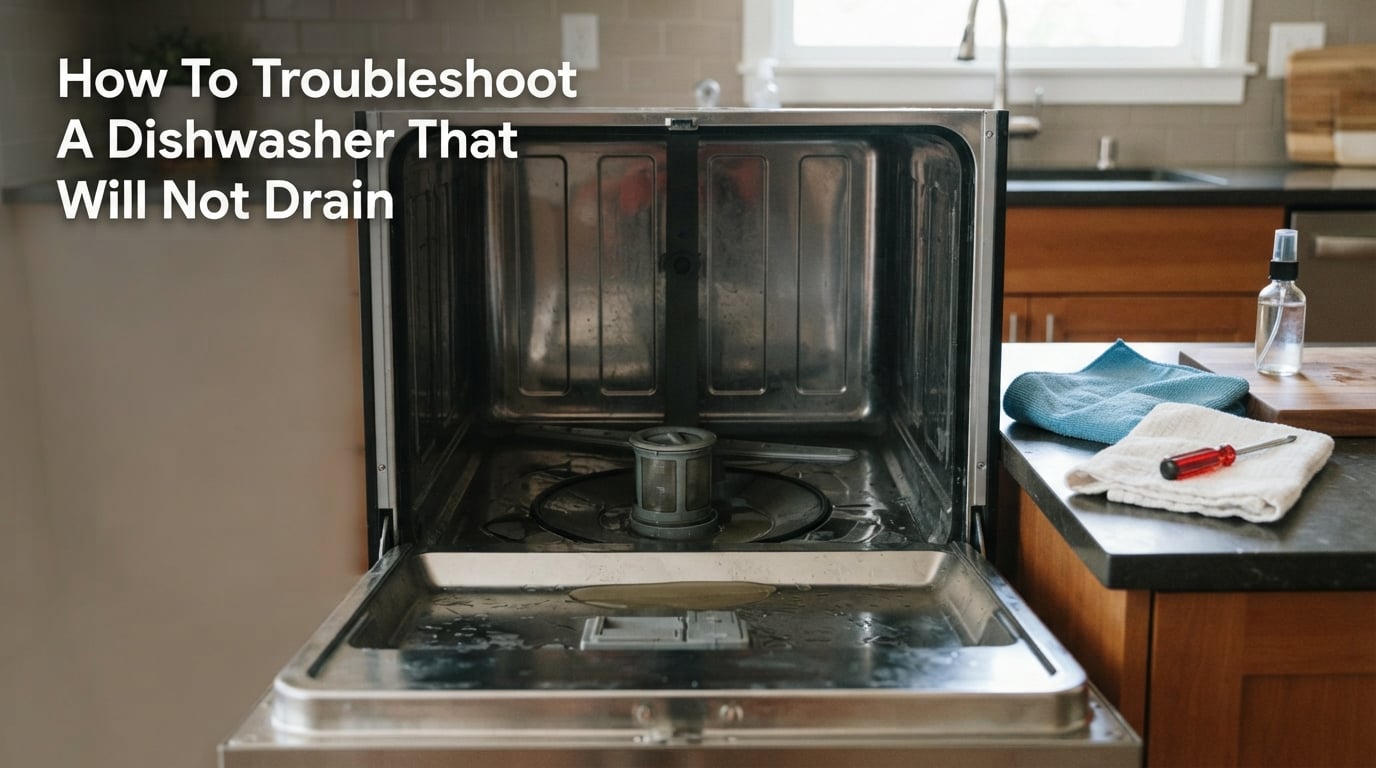
You open your dishwasher after a cycle, and instead of clean dry dishes, you find a pool of murky water sitting at the bottom. Sound familiar? A dishwasher not draining is one of the most common appliance headaches homeowners face, and the good news is that most of the time, you can fix it yourself without a service call.
Our team has walked through this exact problem hundreds of times, and in nearly every case, the cause comes down to a handful of simple blockages or mechanical hiccups. Learning how to troubleshoot a dishwasher that will not drain saves you money, prevents water damage to your kitchen floor, and keeps foul odors from taking over your appliance.
In this guide, we will walk you through every step, from the easiest five-minute fixes to the scenarios where you should pick up the phone and call a professional. Let us get that water moving again.
Common Causes of a Dishwasher Not Draining
Before diving into hands-on troubleshooting, it helps to understand what typically causes a clogged dishwasher. In our experience, drainage problems almost always trace back to one of these six sources.
1. A clogged or dirty filter. The filter traps food debris, grease, and particles during the wash cycle. Over time, that buildup blocks water from passing through. This is the single most common cause, and cleaning it takes about five minutes.
2. A kinked or blocked drain hose. The drain hose carries water from the dishwasher to your sink drain or garbage disposal. If the hose bends, kinks, or gets clogged with debris, water has nowhere to go.
3. Garbage disposal blockage. If your dishwasher connects to a garbage disposal (as most do), a clogged disposal prevents drainage. New garbage disposals come with a knock-out plug that, if left in place, completely blocks the dishwasher drain line.
4. A clogged air gap. That small chrome cylinder on your sink or countertop is an air gap, and it prevents sink water from flowing back into the dishwasher. Food and mineral deposits can clog it over time.
5. Drain pump failure. The drain pump pushes water out of the dishwasher. If the pump motor burns out or the impeller breaks, the dishwasher will not drain even if everything else is clear.
6. A stuck check valve. Some dishwashers have a one-way check valve on the drain line that prevents water from flowing backward. If this valve sticks closed, water stays trapped inside.
Tools and Materials You Will Need
You probably already have most of these items around the house. Gather everything before you start so you are not running to the garage mid-repair with water pooling on the floor.
Here is what to have ready:
Screwdriver set (Phillips and flathead)
Pliers or an adjustable wrench
A shallow bucket or towel for catching water
A shop vacuum (ideal for removing standing water quickly)
Old toothbrush or bottle brush for cleaning the filter
Mild dish soap and warm water
A flashlight for inspecting tight spaces
Wire hanger or plumber’s snake (for stubborn hose clogs)
Work gloves to protect your hands from sharp debris
How To Troubleshoot A Dishwasher That Will Not Drain: Step-by-Step
Work through these steps in order. We arranged them from the easiest and most common fixes to the more involved mechanical checks. Most drainage problems get solved by Step 3 or 4.
Step 1: Safety First, Disconnect the Power
Before you touch anything inside the dishwasher, cut the power. Unplug the unit if it has a visible cord, or flip the circuit breaker that controls the dishwasher. Water and electricity are a dangerous combination, and this step only takes ten seconds.
If your dishwasher is hardwired, locate the breaker in your electrical panel and switch it off. Double-check that the dishwasher is dead by trying to turn it on at the control panel.
Step 2: Remove the Standing Water
With the power off, you need to get rid of the standing water before you can inspect anything. A wet-dry shop vacuum works best for this. Remove the filter basket first, then vacuum the water directly from the sump area at the bottom.
No shop vac? Use a large cup or sponge to bail out as much water as you can, then soak up the rest with towels. This step is messy but necessary, and it lets you see what you are working on.
Step 3: Check and Clean the Filter
This is where most drainage problems end. The filter sits at the bottom of the dishwasher tub, usually under the spray arm. On most models, it twists counterclockwise to remove. Pull it out and inspect it.
If the filter is covered in food debris, grease, or mineral deposits, that is almost certainly your problem. Wash it thoroughly under hot running water. Use an old toothbrush to scrub away stubborn buildup from the mesh screen and the interior of the filter housing.
Check the sump area underneath where the filter sits. Shine your flashlight in there and look for any debris, broken glass, or food chunks that slipped past. Remove anything you find with gloves or pliers.
Reinstall the filter, making sure it locks into place. Run a short test cycle to see if the dishwasher drains properly now. If it does, you are done. If not, move on to Step 4.
Step 4: Inspect the Drain Hose
The drain hose runs from the back of your dishwasher to the sink drain or garbage disposal. Pull the dishwasher out slightly if you need access to the back, or check under the sink where the hose connects.
First, look for visible kinks or sharp bends in the hose. A kinked hose restricts water flow and prevents drainage. Straighten the hose and secure it with zip ties so it stays in position.
Next, disconnect the hose from the sink or disposal end. Place a bucket underneath to catch any water. Feed a wire hanger or plumber’s snake gently through the hose to check for blockages. If you hit resistance, work the debris loose and flush the hose with hot water from a faucet.
Reconnect everything and test. A drain hose clog is the second most common cause of a dishwasher not draining, so this step frequently solves the problem.
Step 5: Check the Garbage Disposal Connection
If your dishwasher drains through a garbage disposal, make sure the disposal itself is working. Run the disposal with water for a few seconds. If it hums but does not spin, it may be jammed, which blocks the dishwasher drain line.
Also check the disposal inlet where the dishwasher hose connects. If your disposal is new, the installer may have forgotten to remove the knock-out plug. You can check by disconnecting the dishwasher hose and looking into the disposal inlet. If you see a solid plug, use a screwdriver and hammer to knock it out.
Run water through the disposal to confirm it drains freely before reconnecting the dishwasher hose.
Step 6: Examine the Air Gap
Not every kitchen has an air gap, but if yours does, it is worth checking. The air gap is the small chrome or plastic fitting mounted on top of your sink or countertop, next to the faucet.
Pop off the decorative cap and remove the inner plastic cover. Shine a flashlight inside and look for debris or buildup. Use a toothbrush or bottle brush to clean the interior thoroughly. If water has been backing up through the air gap, you may even see water spray out when you run the dishwasher.
Reassemble the air gap and test the dishwasher. This fix takes about five minutes and resolves drainage problems in homes that use air gaps.
Step 7: Test the Drain Pump
If you have cleaned the filter, cleared the drain hose, checked the disposal, and inspected the air gap, but your dishwasher still is not draining, the drain pump may be the problem. The drain pump sits at the bottom of the dishwasher and uses a small motor to push water out through the drain line.
Listen for a humming sound when the dishwasher tries to drain. A humming pump that does not move water often means the impeller is jammed or broken. A completely silent pump may mean the motor has failed or the pump is not receiving power.
To inspect the pump, you typically need to remove the lower access panel at the bottom front of the dishwasher. Use your multimeter to check the pump for continuity. If the pump shows no continuity or the impeller is visibly damaged, you will need to replace the pump. This part typically costs between 50 and 150 dollars depending on your brand.
Step 8: Reset the Dishwasher
Sometimes a dishwasher just needs a fresh start. A control board glitch or a cycle that got interrupted can leave the dishwasher stuck without triggering a drain. Resetting clears the memory and forces the appliance to start over.
To reset most dishwashers, disconnect the power for one minute. Either unplug the unit or flip the breaker off. Restore power, then run a drain-only cycle or start a new short cycle and see if the machine drains. On some brands, pressing and holding the Start or Cancel button for three seconds triggers a drain cycle.
Dishwasher Not Draining With No Blockage Found
One of the most frustrating scenarios is when you have cleaned everything, checked every hose, and the dishwasher still will not drain. Users on home improvement forums bring this up constantly, and it usually points to a mechanical component rather than a simple clog.
If there is no visible blockage, here is how to narrow down the culprit. First, check the drain solenoid. This small electromagnetic component opens the drain valve to let water out. If the solenoid clicks but the valve does not open, or if there is no click at all, the solenoid may need replacing.
Next, inspect the check valve on the drain hose. This one-way flapper prevents backflow, but it can stick shut over time. Disconnect the drain hose and locate the valve. If it does not move freely when you push it, clean it or replace it.
The timer or electronic control board is another possible suspect. If the control board does not send the signal to the drain pump at the right point in the cycle, the dishwasher never enters the drain phase. This is harder to diagnose without a multimeter and wiring diagram, and it may require a technician.
Finally, if your dishwasher is more than ten years old and has multiple failing components, you may be better off replacing the unit entirely rather than chasing one repair after another.
Brand-Specific Troubleshooting Notes
Different dishwasher brands have quirks that are worth knowing. Here is what our team has learned from working on the most popular brands.
Whirlpool dishwashers are frequently discussed in online repair forums. On many Whirlpool models, the most common drainage issue is a clogged sump assembly beneath the filter. Remove the lower spray arm and the filter housing to access the sump. Clean out any debris, especially small seeds or fruit pits that slip through the mesh.
Bosch dishwashers use a different filter design with a two-part system: a coarse mesh cup and a fine mesh screen. Both need regular cleaning. Bosch models also have a check valve in the drain hose that is known to fail. If you own a Bosch and water keeps appearing at the bottom, the check valve is a prime suspect.
Frigidaire dishwashers sometimes develop drain pump failures, particularly on models older than seven years. The pump impeller is plastic and can crack over time. If your Frigidaire hums during the drain cycle but does not move water, plan on replacing the drain pump.
GE dishwashers often have a piston-and-nut kit inside the check valve assembly. Over time, the piston wears down and stops sealing properly, which prevents drainage. GE sells this as a replacement kit for about 20 dollars, and it takes about fifteen minutes to install.
Preventive Maintenance To Avoid Future Drainage Issues
The best way to deal with a dishwasher not draining is to prevent it from happening in the first place. A few minutes of maintenance each month keeps water flowing freely.
Clean the filter every two to four weeks. Pop it out, rinse it under hot water, and scrub with a toothbrush. This single habit prevents the vast majority of drainage problems.
Run a cleaning cycle monthly. Use a dishwasher cleaner tablet or a cup of white vinegar on the top rack, then run the hottest cycle. This dissolves grease and mineral deposits inside the pump and spray arms.
Scrape plates before loading. You do not need to pre-wash dishes, but large food scraps should go in the trash or compost. Bones, fruit pits, and fibrous vegetables are the worst offenders for clogging filters and drain lines.
Use the right detergent. Liquid and powder detergents are less likely to leave residue than pods in hard water areas. If you notice a white film on dishes, switch detergents and add rinse aid.
Check the drain hose routing twice a year. Make sure it has not shifted or kinked. Items stored under the sink can push the hose into a bad position over time.
When To Call a Professional
Most dishwasher drainage problems are DIY-friendly, but there are times when calling a professional makes more sense. If you have worked through all eight steps above and the dishwasher still will not drain, a technician can diagnose control board issues, wiring problems, or internal pump failures that are difficult to track down without specialized tools.
Typical service call costs range from 75 to 150 dollars just for the diagnosis, and total repair bills for pump or control board replacement usually land between 150 and 350 dollars including parts and labor. If your dishwasher is more than ten years old, a major repair may not be worth it, since a new mid-range dishwasher costs about the same as two significant repairs.
Call a professional immediately if you notice water leaking from under the dishwasher, burning smells, or sparking. These are safety hazards that go beyond a simple drainage clog.
FAQs
What is the most common cause for a dishwasher not to drain?
The most common cause is a clogged or dirty filter. Food debris, grease, and mineral deposits build up in the filter over time and block water from passing through to the drain pump. Cleaning the filter takes about five minutes and resolves the majority of drainage problems.
How do you reset a dishwasher that won’t drain?
Disconnect the power to the dishwasher for one minute by unplugging it or flipping the circuit breaker. Restore power, then run a drain-only cycle or start a new short cycle. On many models, pressing and holding the Start or Cancel button for three seconds triggers a drain cycle.
Why is my dishwasher not emptying but no blockage?
If there is no visible clog in the filter, drain hose, disposal, or air gap, the problem is likely a mechanical component. The drain pump motor may have failed, the drain solenoid could be stuck, the check valve may be jammed closed, or the electronic control board may not be signaling the drain cycle. Use a multimeter to test the pump and solenoid for continuity.
How can I force my dishwasher to drain?
To manually drain a dishwasher, first disconnect the power. Then use a wet-dry shop vacuum to remove standing water from the sump area at the bottom. Alternatively, bail out the water with a cup and soak up the rest with towels. After removing the water, clean the filter and check the drain hose before running a new cycle.
Conclusion
A dishwasher not draining is frustrating, but in most cases the fix is straightforward. Start with the filter, then work your way through the drain hose, garbage disposal, and air gap. The vast majority of drainage problems are resolved by the time you finish Step 4.
Remember that preventive maintenance, especially regular filter cleaning, keeps clogs from forming in the first place. A few minutes each month saves you from a major headache later. Now that you know how to troubleshoot a dishwasher that will not drain, you can tackle this problem with confidence the next time you find standing water at the bottom of your machine.