
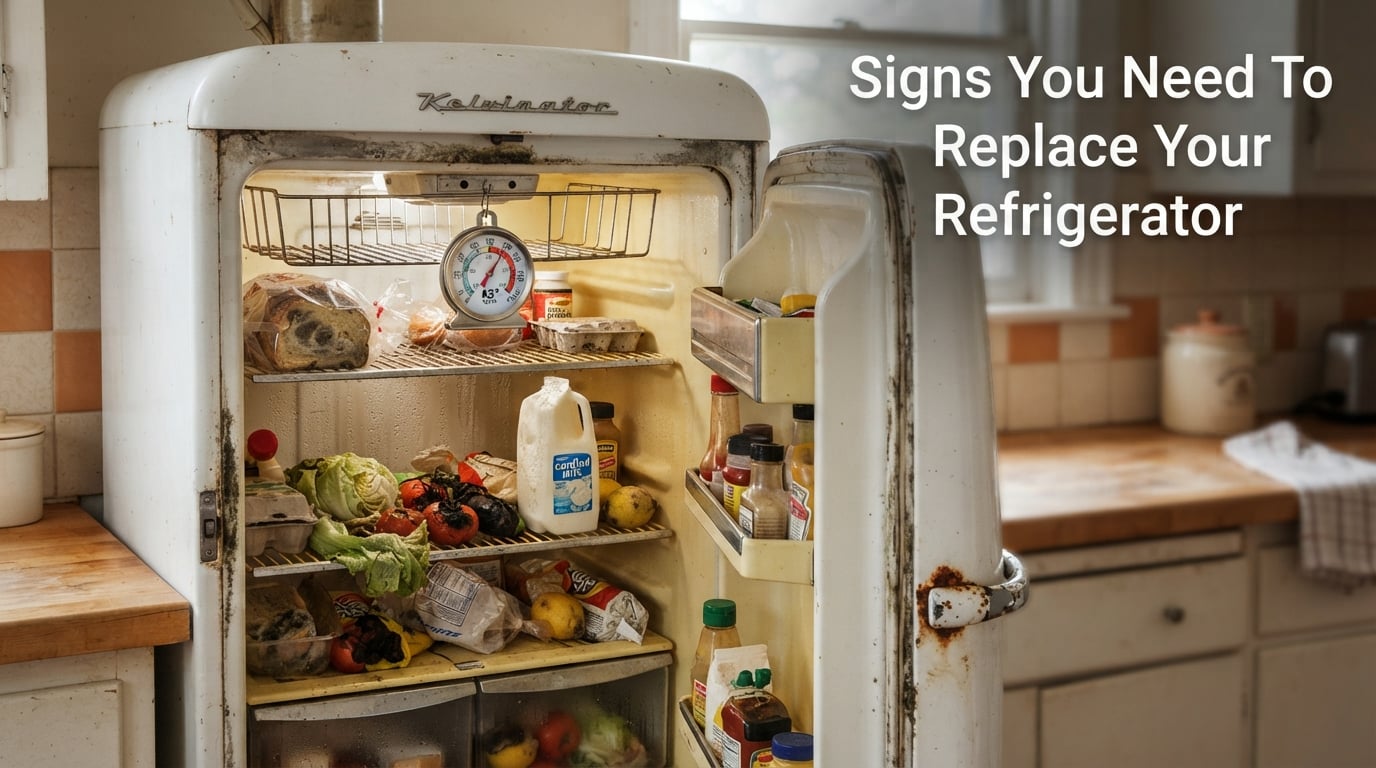
Your refrigerator runs 24 hours a day, 365 days a year, keeping your food fresh and safe. But like any appliance, it eventually reaches the end of its useful life. Recognizing the signs you need to replace your refrigerator can save you from unexpected food spoilage, rising energy bills, and costly emergency repairs. I’ve helped countless homeowners make this decision, and the warning signs are often clearer than you might think.
Most refrigerators last between 10 and 15 years with proper maintenance. However, age alone doesn’t determine when replacement is necessary. The real indicators come from how your fridge performs day-to-day. Let me walk you through the 10 telltale signs that your refrigerator is ready for retirement.
10 Signs You Need To Replace Your Refrigerator
When your refrigerator starts failing, it rarely happens without warning. These signs develop gradually, giving you time to plan before a complete breakdown occurs. Here’s what to watch for.
1. Your Refrigerator Is Over 10 Years Old
Age remains one of the most reliable predictors of refrigerator performance. Units manufactured before 2010 use significantly more energy than modern Energy Star certified models. I’ve seen homeowners cut their energy bills by $100 or more annually simply by upgrading to a newer, more efficient fridge.
Refrigerators aged 10-15 years enter the danger zone where major component failures become increasingly likely. The compressor, condenser fan, and evaporator fan all have finite lifespans. Once these parts start failing, repair costs often exceed the value of keeping an old unit running.
Consider this: a refrigerator that’s 15 years old has already outperformed its expected lifespan. Even if it’s still running, efficiency losses mean it’s working harder and costing you more money each month. Planning a replacement before failure gives you time to research and shop for the best deal.
2. Food Spoils Faster Than Usual
Nothing signals refrigerator trouble quite like watching your groceries go bad before their expected dates. If milk sours days early, vegetables wilt within hours, or leftovers spoil overnight, your fridge isn’t maintaining proper temperature. The ideal refrigerator temperature ranges from 35 to 38 degrees Fahrenheit.
I recommend placing an appliance thermometer in your refrigerator to monitor actual temperatures. Don’t rely on the built-in dial settings, which can be inaccurate by several degrees. When temperatures fluctuate above 40 degrees, bacteria growth accelerates rapidly, turning your fridge into a food safety hazard.
Temperature inconsistency often points to compressor problems, thermostat failures, or refrigerant leaks. These repairs typically cost several hundred dollars, making replacement more economical for older units. Track your food waste over a few weeks. If you’re throwing out significantly more food than usual, your refrigerator is costing you money twice: once in groceries and again in energy.
3. Strange Or Unusual Noises
All refrigerators make some noise during normal operation. The compressor hums, fans circulate air, and ice makers cycle. But new, loud, or persistent sounds indicate mechanical problems that shouldn’t be ignored. A healthy refrigerator should run quietly enough that you barely notice it.
Loud buzzing often signals compressor problems. This critical component circulates refrigerant through the system, and when it fails, replacement costs can exceed $600. Clicking sounds might mean a failing start relay, which helps the compressor turn on. While less expensive to fix, repeated clicking suggests the compressor itself may be failing.
Rattling, squealing, or grinding noises typically come from fan motors. The evaporator fan inside the freezer compartment and the condenser fan near the compressor can both develop bearing problems. Replacing a fan motor costs $100-200, but if your fridge is over 10 years old, putting money into repairs becomes questionable.
4. Excessive Frost Buildup
Modern frost-free refrigerators should never develop thick ice layers in the freezer compartment. If you’re chipping away at frost buildup regularly, something is wrong with the defrost system. This includes the defrost heater, defrost timer, and defrost thermostat working together to prevent ice accumulation.
Frost buildup also occurs when warm, humid air enters the refrigerator through damaged door seals. When frost becomes visible, your refrigerator works overtime to maintain temperature, straining the compressor and driving up energy consumption. I’ve seen freezers become so iced over that storage space shrinks by half.
Defrost system repairs typically run $150-300 depending on which components failed. For refrigerators under 8 years old, this repair might make sense. But for older units with multiple developing problems, the money spent on repairs could instead go toward a new, more reliable appliance.
5. Rising Energy Bills
Your refrigerator accounts for roughly 10-15% of your home’s total electricity usage. When efficiency drops, you’ll see the impact in your monthly utility bills. An old or failing refrigerator can use 50% more energy than a new Energy Star certified model, adding $100-200 annually to your electricity costs.
Several factors cause rising energy consumption. A failing compressor works harder to maintain temperature. Dirty condenser coils reduce heat transfer efficiency. Damaged door seals let cold air escape. Each problem compounds, forcing your refrigerator to run longer cycles more frequently.
Here’s a simple test: listen to how often your refrigerator cycles on and off. A properly functioning unit runs about one-third of the time. If yours runs constantly or cycles on every few minutes, efficiency has dropped significantly. That extra runtime translates directly to higher energy bills.
6. Condensation Inside Or Outside The Fridge
Moisture where it shouldn’t be signals a problem. Condensation on the interior walls or ceiling of your refrigerator indicates temperature fluctuations or humidity issues. If you notice water pooling on shelves or in the crisper drawers, the defrost drain might be clogged, or the door seal could be compromised.
Exterior condensation, especially between the doors, means the refrigerator is working too hard to maintain temperature. This often happens when door gaskets fail, allowing cold air to escape and warm air to enter. The temperature difference between the cold interior and warm kitchen creates moisture on the outside surface.
Left unaddressed, condensation leads to bigger problems. Water damage to flooring is surprisingly common with failing refrigerators. Mold growth in the door gasket grooves can create musty odors and potential health concerns. Replacing worn door seals costs $50-100, but if multiple seals are failing, consider whether the refrigerator’s overall condition justifies further investment.
7. The Back Or Sides Feel Excessively Hot
Refrigerators generate heat as part of the cooling process. That’s normal. But if the exterior becomes uncomfortably hot to touch, something is wrong. The condenser coils, typically located on the back or bottom of the unit, release heat extracted from inside the refrigerator.
When these coils become dirty or the condenser fan fails, heat isn’t dissipated properly. The compressor works harder, generating more heat, which can make the refrigerator exterior unusually warm. In severe cases, this creates a potential fire hazard, especially if the refrigerator is located in a tight space with poor ventilation.
Cleaning condenser coils is a simple maintenance task that takes about 15 minutes. But if the exterior runs hot even after cleaning, the condenser fan may need replacement. A failing compressor can also cause excessive heat. For refrigerators over 10 years old, this combination of problems suggests replacement rather than repair.
8. Visible Rust Or Physical Damage
Rust on your refrigerator isn’t just cosmetic. It indicates moisture problems that can affect structural integrity and food safety. Rust around the door frame or hinges suggests seal failures and air leaks. Rust inside the compartment can contaminate food storage areas.
Physical damage like cracked shelves, broken door bins, and dented walls also matter. While individually minor, these problems accumulate and affect daily usability. A door that doesn’t close properly or a seal that’s come loose means your refrigerator can’t maintain consistent temperatures.
Safety concerns matter here. A rusting refrigerator with compromised door seals and temperature fluctuations isn’t just inconvenient. It’s potentially hazardous to your family’s health. If visual inspection reveals significant rust, multiple broken components, or door alignment problems, replacement offers better value than piecemeal repairs.
9. The Refrigerator Runs Constantly
Properly functioning refrigerators cycle on and off throughout the day. They run long enough to reach the target temperature, then rest until temperatures rise again. A refrigerator that runs continuously without cycling off indicates a serious problem that won’t resolve itself.
Several issues cause constant running. A failing thermostat might not signal the compressor to shut off. A refrigerant leak means the system can’t reach target temperatures regardless of runtime. Dirty condenser coils reduce efficiency so dramatically that the compressor works overtime trying to compensate.
Constant running accelerates compressor wear, leading to premature failure. It also drives energy bills significantly higher. If unplugging the refrigerator for five minutes and plugging it back in doesn’t restore normal cycling, the problem requires professional diagnosis. For units over 10 years old, replacement often costs less than major repairs.
10. Water Leaks On The Floor
Finding water pooling beneath your refrigerator shouldn’t be ignored. Even small leaks can damage flooring, subflooring, and nearby cabinetry. Water damage repairs often cost more than refrigerator replacement itself, making early detection and action essential.
Common causes include clogged defrost drains, which route meltwater from defrost cycles to an evaporation pan. When the drain clogs, water overflows onto the floor. Refrigerators with ice makers and water dispensers have additional water lines that can leak at connection points.
Clearing a clogged defrost drain costs nothing if you do it yourself. Water line repairs typically run $75-150. But if the leak comes from inside the refrigerator compartment or appears during compressor operation, internal problems may be to blame. Multiple leak sources on an older refrigerator suggest systemic failure worth replacing.
DIY Troubleshooting Before You Replace
Before investing in a new refrigerator, try these simple diagnostic tests. Some problems have easy fixes that restore performance without major expense.
Dollar Bill Test for Door Seals: Close a dollar bill in the refrigerator door. Pull it out slowly. You should feel resistance. If it slides out easily, your door gasket isn’t sealing properly. Test multiple points around each door. Replace worn seals to improve efficiency and temperature consistency.
Thermometer Temperature Check: Place an appliance thermometer in your refrigerator and another in your freezer. Check readings after 24 hours. Refrigerator temperature should read 35-38 degrees Fahrenheit. Freezer temperature should read 0-5 degrees Fahrenheit. Adjust settings or investigate if readings fall outside these ranges.
Condenser Coil Cleaning: Locate your condenser coils (usually on the back or behind a lower front panel). Unplug the refrigerator. Use a vacuum with a brush attachment or a specialized coil brush to remove dust and debris. Clean coils improve efficiency dramatically. Perform this maintenance annually.
Power Reset Method: Unplug your refrigerator for 5-10 minutes. Plug it back in. This resets the control board and can resolve minor electronic glitches. If problems persist after reset, mechanical issues likely require professional attention.
Repair Or Replace: Making The Right Call
The decision between repairing and replacing depends on age, repair costs, and overall condition. I use a straightforward framework that helps homeowners make confident decisions.
The 50% Rule: If repair costs exceed 50% of what you’d pay for a new refrigerator, replace it. For a $1,000 new refrigerator, repairs exceeding $500 favor replacement. This threshold accounts for the fact that repaired components still sit in an aging appliance that may develop additional problems.
Age-Based Guidelines: For refrigerators under 8 years old, most repairs make financial sense. Between 8-10 years, consider the repair cost and likelihood of additional problems. Over 10 years, replacement almost always offers better value, especially when multiple signs of failure appear together.
Specific Cost Thresholds: Compressor replacement ($600-800) rarely makes sense for units over 8 years old. Fan motor replacement ($150-250) might be worth it for refrigerators under 10 years. Door seal replacement ($50-100 per seal) is almost always worth doing. Thermostat replacement ($150-300) becomes questionable after 10 years.
Factor in energy efficiency gains when making your decision. A new Energy Star certified refrigerator uses significantly less electricity than models from a decade ago. Energy savings can offset a significant portion of replacement cost over the appliance’s lifetime.
FAQs
How do I know if my fridge needs to be replaced?
Your fridge needs replacement if it’s over 10 years old with multiple problems, food spoils quickly, strange noises develop, energy bills rise significantly, or you see excessive frost, condensation, or water leaks. Multiple warning signs together strongly indicate replacement is necessary.
Is a 7 year old refrigerator worth fixing?
A 7-year-old refrigerator is generally worth repairing for most common issues. At this age, the appliance is mid-life, and repairs like fan motors, door seals, or thermostats typically cost less than replacement. However, compressor failure at this age might justify replacement depending on repair costs.
What is the average life expectancy of a fridge?
The average refrigerator lasts 10-15 years with proper maintenance. Standard top-freezer models often reach 15 years, while models with ice makers and water dispensers may have shorter lifespans due to additional components that can fail. Regular condenser coil cleaning extends refrigerator life.
What are the signs of a dying refrigerator?
Signs of a dying refrigerator include constant running without cycling off, food spoiling before expiration dates, unusual loud noises like buzzing or clicking, excessive frost buildup, rising energy bills, water leaks, exterior heat, and visible rust. Multiple symptoms together indicate approaching failure.
Time For An Upgrade
Recognizing the signs you need to replace your refrigerator helps you plan ahead rather than react to sudden failure. Watch for age exceeding 10 years, food spoilage, unusual noises, excessive frost, rising energy bills, condensation, exterior heat, rust, constant running, and water leaks. When multiple signs appear together, replacement becomes the clear choice.
Start by performing the DIY troubleshooting steps. Clean those condenser coils and test your door seals. Sometimes simple maintenance restores performance enough to buy you time. But don’t wait until your refrigerator fails completely. Planning a replacement lets you research options, compare prices, and schedule delivery at your convenience.
Your refrigerator works hard every day to keep your food safe and fresh. When it starts showing these warning signs, returning that service with a well-timed upgrade protects your food, your budget, and your peace of mind.