
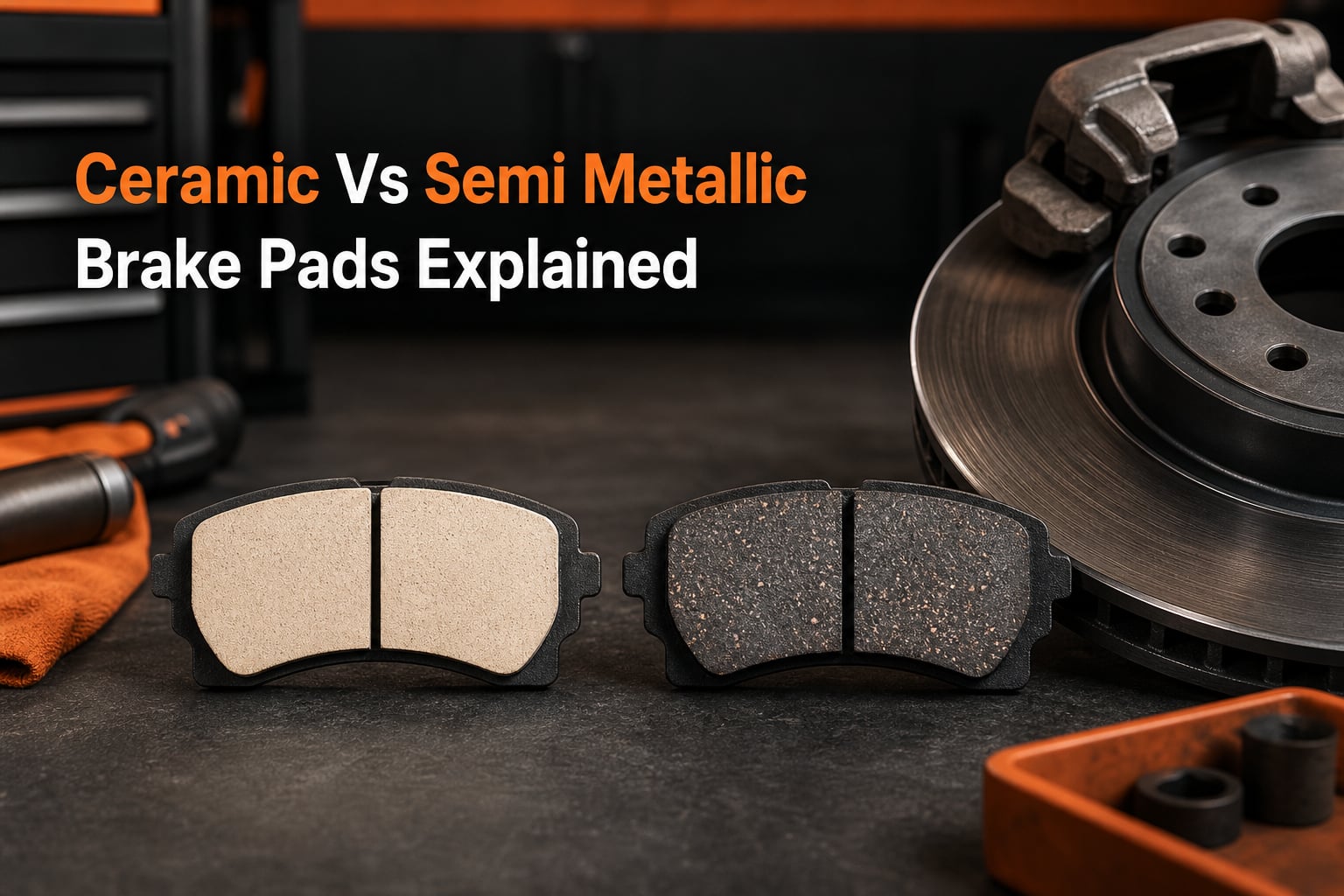
When you press the brake pedal, your car converts speed into heat using a piece of friction material smaller than your hand. The type of material in that pad determines how your car stops, how much dust coats your wheels, how much noise you hear, and how often you will be back at the shop. Ceramic vs semi metallic brake pads is one of the most common questions drivers face when replacing their brake pads, and the wrong choice can cost you comfort, performance, or money.
Our team has spent years researching brake pad performance across daily commuters, heavy-duty trucks, and performance vehicles. We have dug through mechanic forums, manufacturer specifications, and real-world driver reports to put together this guide. By the end, you will know exactly which brake pad type fits your vehicle and driving style.
In this breakdown of ceramic vs semi metallic brake pads explained, we cover how your brake system works, what each pad type is made of, the pros and cons of each, a head-to-head comparison across eight categories, and clear recommendations based on your driving situation. Let us get into it.
How Your Brake System Actually Works
Your brake system is a hydraulic pressure machine that turns kinetic energy into heat. When you press the brake pedal, brake fluid transmits that pressure through the brake lines to each wheel’s caliper. The caliper then squeezes the brake pads against a spinning metal disc called the brake rotor.
The friction between the pad and the rotor is what slows your vehicle down. That friction converts forward momentum into thermal energy, which dissipates through the rotor, the pads, and into the surrounding air. This means every single stop generates heat, and the harder you brake, the more heat gets produced.
Here is where pad material becomes important. Different materials handle heat differently, produce different amounts of friction, wear at different rates, and interact with the rotor surface in different ways. A pad that works great at 200 degrees Fahrenheit might perform poorly at 800 degrees. A pad that grips aggressively might also chew through your rotors faster.
The brake system also includes other components like the master cylinder, brake booster, and sometimes ABS modules that prevent wheel lockup. But the contact point, the place where physics actually stops your car, is always the pad pressing against the rotor. That tiny interaction zone is why choosing between ceramic and semi-metallic pads matters so much.
Most passenger vehicles use disc brakes on at least the front wheels, where most braking force is needed. Some cars still use drum brakes on the rear, but the pad-vs-rotor principle remains the same. The material composition of your brake pads directly affects stopping distance, pedal feel, noise, dust, and overall driving experience.
What Are Ceramic Brake Pads?
Ceramic brake pads are made from a dense ceramic compound similar to the material used in pottery and heat shields, but engineered to be far stronger and more durable. Manufacturers mix ceramic fibers with bonding agents and often embed copper, steel, or other metal fibers to improve friction and heat conductivity. The result is a hard, dense pad that handles high temperatures exceptionally well.
First introduced in the 1990s as a premium alternative to semi-metallic and organic pads, ceramic pads were designed specifically to address noise and dust complaints. The ceramic material vibrates at a frequency above the range of human hearing, which means the friction between the pad and rotor produces less audible noise. This is why ceramic pads are known for their quiet operation.
Ceramic pads generate less brake dust because the compound wears evenly and produces a light-colored dust that does not stick to wheels as aggressively as the dark, metallic dust from semi-metallic pads. Drivers who take pride in clean wheels often switch to ceramic pads for this reason alone.
Pros of Ceramic Brake Pads
Our team consistently finds these advantages when researching and evaluating ceramic brake pads:
Extremely quiet operation: The ceramic material produces less noise than any other pad type, making it ideal for luxury vehicles and daily commuting.
Minimal brake dust: Ceramic pads produce less dust, and the dust they do produce is lighter in color and less visible on your wheels.
Longer lifespan: Ceramic compounds tend to wear more slowly than organic pads, often lasting 50,000 to 70,000 miles under normal driving conditions.
Consistent performance: Ceramic pads maintain stable friction levels across a wide temperature range, meaning your pedal feel stays predictable.
Less rotor wear: Because ceramic is less abrasive than metal-heavy compounds, it tends to be gentler on your brake rotors over time.
Cons of Ceramic Brake Pads
Despite their many advantages, ceramic brake pads have some real-world downsides that you should know about:
Higher cost: Ceramic pads typically cost 20 to 40 percent more than comparable semi-metallic pads, which adds up over the life of a vehicle.
Less initial bite: Some drivers report that ceramic pads do not grab as aggressively during the first fraction of a second of braking, especially in cold conditions.
Not ideal for heavy loads: For towing, hauling, or aggressive performance driving, ceramic pads may not dissipate heat fast enough under sustained heavy braking.
Cold weather concerns: In extremely cold temperatures, some ceramic pads take longer to reach optimal friction levels, which can affect cold-morning stops.
Potential for heat transfer: Because ceramic insulates rather than conducts heat, more thermal energy can pass into the brake fluid, potentially increasing the risk of brake fade under extreme conditions.
Best Use Cases for Ceramic Brake Pads
Ceramic brake pads shine for daily commuters, city drivers, and anyone who values a quiet, clean ride. Uber drivers and rideshare professionals consistently report preferring ceramic pads for their comfort and low dust production during long hours of stop-and-go traffic. If you drive a sedan, crossover, or small SUV primarily on paved roads, ceramic pads are likely your best bet.
Luxury vehicle owners also benefit from ceramic pads because the reduced noise and dust align with the premium driving experience these cars are designed to deliver. Most new luxury vehicles come equipped with ceramic pads straight from the factory for exactly this reason.
What Are Semi-Metallic Brake Pads?
Semi-metallic brake pads are made from a mixture of metal shavings and friction modifiers, typically containing between 30 and 70 percent metal content. The metals used include steel, iron, copper, and other alloys, blended with graphite, lubricants, and binding materials to create the final pad compound. This high metal content gives semi-metallic pads their characteristic strength and heat-handling capability.
These pads have been the workhorse of the brake pad world for decades. They are the standard choice for heavy-duty applications, performance vehicles, and situations where maximum stopping power is needed. The metal content provides excellent thermal conductivity, meaning heat transfers through the pad and dissipates quickly rather than building up at the friction surface.
Semi-metallic pads offer a strong initial bite, meaning the moment you press the pedal, you feel immediate braking response. This aggressive friction is why race teams, track-day enthusiasts, and tow vehicle owners rely on semi-metallic compounds for their demanding braking needs.
Pros of Semi-Metallic Brake Pads
Here is what our research consistently shows as the strengths of semi-metallic brake pads:
Superior stopping power: The high metal content provides excellent friction coefficients, giving you strong, confident braking performance.
Excellent heat dissipation: Metal conducts heat away from the rotor surface efficiently, making semi-metallic pads ideal for heavy braking situations.
Wide temperature range: These pads perform reliably across extreme temperature ranges, from freezing cold to high-performance heat.
More affordable: Semi-metallic pads generally cost less than ceramic alternatives, making them a budget-friendly choice.
Better for heavy loads: Towing, hauling, and mountain driving all benefit from the heat management and bite that semi-metallic pads provide.
Cold weather friendly: Unlike ceramic pads, semi-metallic compounds grip well even at very low temperatures, making them popular in northern climates.
Cons of Semi-Metallic Brake Pads
Semi-metallic pads also come with trade-offs that may affect your driving experience:
More noise: The metal-on-metal interaction produces more audible noise, including squealing during cold starts and wet conditions.
More brake dust: Semi-metallic pads produce dark, metallic dust that sticks to wheels and requires more frequent cleaning.
Faster rotor wear: The abrasive metal content can wear brake rotors faster than ceramic compounds, potentially increasing long-term maintenance costs.
Shorter pad life in city driving: Under stop-and-go conditions, semi-metallic pads may wear out faster, typically lasting 30,000 to 50,000 miles.
Harsher pedal feel: Some drivers find the aggressive bite of semi-metallic pads feels too grabby or jerky for comfortable daily driving.
Best Use Cases for Semi-Metallic Brake Pads
Semi-metallic pads are the go-to choice for trucks, SUVs used for towing, performance vehicles, and anyone driving in mountainous terrain or extreme cold. Transit van owners who navigate mountain passes with passengers on board consistently report preferring semi-metallic pads for their reliable stopping power under load.
BMW and other performance brand owners frequently discuss semi-metallic pads in enthusiast forums as the preferred option for spirited driving and track use. If you regularly tow trailers, haul heavy loads, or drive aggressively, semi-metallic pads will give you the confidence and heat management you need.
Drivers in cold climates, including those dealing with sub-zero temperatures in places like Calgary or the northern United States, often prefer semi-metallic pads because they maintain grip when ceramic pads might struggle to warm up.
Ceramic Vs Semi Metallic Brake Pads: Head-to-Head Comparison
Now let us put these two pad types side by side across the categories that matter most to drivers. This head-to-head comparison will help you see exactly where each type excels and where it falls short.
Stopping Power and Initial Bite
Semi-metallic pads win this category. The metal content provides a higher friction coefficient, meaning more stopping force for the same pedal pressure. Semi-metallic pads also have a stronger initial bite, grabbing the rotor immediately when you press the pedal. Ceramic pads offer smooth, progressive braking but may feel less aggressive during the first fraction of a second.
Noise Levels
Ceramic pads are the clear winner here. The ceramic compound vibrates at a frequency above human hearing, making them the quietest pad type available. Semi-metallic pads can squeal, especially during cold starts, wet conditions, or hard braking. If a quiet ride matters to you, ceramic is the way to go.
Brake Dust Production
Ceramic pads produce significantly less dust, and the dust they generate is light-colored and less likely to stick to your wheels. Semi-metallic pads produce dark, metallic dust that bonds to wheel surfaces and requires more effort to clean. For drivers who take pride in clean wheels, ceramic pads save time and effort.
Rotor Wear
Ceramic pads are gentler on rotors because the ceramic compound is less abrasive than metal-heavy formulations. Semi-metallic pads, with their 30 to 70 percent metal content, can accelerate rotor wear over time. This means that while semi-metallic pads may cost less upfront, you might pay more in rotor replacements down the road.
Temperature Performance
Semi-metallic pads handle extreme heat better due to their metal content, which conducts heat away from the friction surface efficiently. This makes them better for sustained heavy braking, such as long downhill descents or track driving. Ceramic pads handle moderate heat well but can allow heat to build up in extreme conditions, potentially affecting brake fluid temperature.
Cold Weather Performance
Semi-metallic pads perform better in cold weather. The metal compounds maintain friction even at low temperatures, providing consistent braking on cold mornings. Some ceramic pads take a moment to warm up before reaching peak friction. Drivers in regions with harsh winters often prefer semi-metallic pads for this reason.
Lifespan and Mileage Expectations
Under normal driving conditions, ceramic pads typically last between 50,000 and 70,000 miles. Semi-metallic pads generally last between 30,000 and 50,000 miles, though this varies significantly based on driving style. Aggressive driving, heavy towing, and mountainous terrain will reduce lifespan for both types.
For cost-per-mile calculations, ceramic pads often win despite their higher upfront cost. A set of ceramic pads lasting 60,000 miles may cost the same per mile as semi-metallic pads lasting 35,000 miles, especially when you factor in the reduced rotor wear.
Price Comparison
Semi-metallic pads are generally 20 to 40 percent less expensive than ceramic pads for the same vehicle. However, the total cost of ownership includes pad replacement frequency, rotor wear, and potential brake system maintenance. Over a vehicle’s lifetime, ceramic pads can be the more economical choice for daily drivers despite the higher initial purchase price.
What About Organic Brake Pads?
Organic brake pads, also called non-asbestos organic or NAO pads, are made from natural materials like glass, rubber, carbon, and Kevlar fibers bonded with resin. They are the softest and quietest pad type, making them suitable for light-duty driving and smaller vehicles.
Organic pads are gentle on rotors and produce minimal noise, but they wear out faster than both ceramic and semi-metallic options. They typically last only 20,000 to 30,000 miles and do not handle high temperatures well. Most modern vehicles have moved away from organic pads in favor of ceramic or semi-metallic compounds.
If you drive a compact car gently in flat, urban environments, organic pads may still be a reasonable choice. But for most drivers, ceramic pads offer the quiet operation of organic pads with significantly better durability and performance.
How to Choose Between Ceramic and Semi-Metallic Brake Pads
Choosing between ceramic vs semi metallic brake pads comes down to your driving habits, vehicle type, climate, and priorities. Here is a practical guide to help you make the right decision for your specific situation.
For Daily Commuting and City Driving
Choose ceramic brake pads. The quiet operation, low dust production, and long lifespan make them ideal for stop-and-go traffic and daily commuting. You will spend less time cleaning your wheels and enjoy a smoother, more refined driving experience. Most sedans, crossovers, and daily-driven SUVs are perfect candidates for ceramic pads.
For Trucks and Towing
Choose semi-metallic brake pads. Towing heavy loads generates significant heat in your brake system, and semi-metallic pads dissipate that heat better than ceramic alternatives. The superior stopping power and wide temperature tolerance of semi-metallic pads provide the safety margin you need when hauling trailers, boats, or heavy cargo.
For Performance and Aggressive Driving
Choose semi-metallic brake pads. The aggressive initial bite and high-temperature performance make semi-metallic compounds the preferred choice for track days, canyon carving, and spirited driving. Performance brands like BMW, Porsche, and Corvette often use semi-metallic compounds for their high-output vehicles.
For Cold Weather Climates
Choose semi-metallic brake pads. In regions where temperatures regularly drop below freezing, semi-metallic pads maintain their friction properties better than ceramic compounds. Drivers dealing with harsh winter conditions consistently report more confidence with semi-metallic pads during cold morning stops.
For Mountain Driving
Choose semi-metallic brake pads. Long descents on mountain roads generate sustained heat that can overwhelm ceramic pads. Semi-metallic compounds handle this heat better and reduce the risk of brake fade on steep grades. Transit drivers and anyone regularly navigating mountain passes should opt for semi-metallic pads.
Signs Your Brake Pads Need Replacement
Regardless of which type you choose, watch for these warning signs that indicate your brake pads need attention:
Squealing or squeaking noises: Most pads have built-in wear indicators that produce a high-pitched sound when the pad material is getting thin.
Grinding sounds: If you hear grinding, the pad material may be completely worn away and the metal backing plate is contacting the rotor directly. Stop driving immediately and replace your pads.
Reduced braking performance: If your car takes longer to stop or the pedal feels softer than usual, your pads may be worn or your brake system may need attention.
Vibration in the brake pedal: This can indicate warped rotors or unevenly worn pads that need inspection.
Thin pad material: If you can see your pads through your wheel spokes and they look thinner than a quarter inch, it is time for replacement.
Environmental Impact of Brake Pad Materials
Brake pad wear contributes to airborne particulate pollution, and the type of pad you choose affects this environmental impact. Semi-metallic pads shed metal particles including copper, which can wash into waterways and harm aquatic ecosystems. Many regions have passed legislation to reduce copper content in brake pads.
Ceramic pads produce fewer airborne particles and do not contain copper in most modern formulations. This makes them a more environmentally friendly choice from a particulate pollution standpoint. If environmental impact is a factor in your decision, ceramic pads have a slight edge over semi-metallic alternatives.
Some manufacturers now offer low-copper or copper-free semi-metallic pads to comply with environmental regulations. These pads aim to maintain the performance benefits of semi-metallic compounds while reducing their ecological footprint.
Installation Considerations
Both ceramic and semi-metallic pads install using the same process and tools. If you are mechanically inclined, you can replace either type in your garage with basic hand tools, a jack, and jack stands. The process involves removing the wheel, compressing the caliper piston, swapping the old pads for new ones, and reassembling the brake assembly.
One important note: always replace brake pads in axle pairs. Never replace just one side, as uneven braking performance can create dangerous handling characteristics. Most mechanics also recommend having your rotors resurfaced or replaced when installing new pads to ensure proper bedding-in and contact.
New brake pads need a bedding-in period of approximately 200 to 300 miles of moderate driving. During this time, avoid hard braking and allow the pad material to transfer an even layer onto the rotor surface. This process improves braking performance and reduces noise over the life of the pads.
FAQs
Should I get ceramic or semi-metallic brake pads?
Choose ceramic pads for daily commuting, city driving, and quiet, clean operation. Choose semi-metallic pads for towing, performance driving, cold climates, or mountainous terrain where heat management and stopping power are critical.
What is the downside of ceramic brake pads?
The main downsides of ceramic brake pads are higher cost, less aggressive initial bite compared to semi-metallic pads, and potential heat buildup under sustained heavy braking. They may also take longer to reach peak friction in very cold temperatures.
Which lasts longer, ceramic or semi-metallic brake pads?
Ceramic brake pads typically last 50,000 to 70,000 miles, while semi-metallic pads generally last 30,000 to 50,000 miles. Ceramic pads usually have a longer lifespan under normal driving conditions, though actual mileage varies based on driving habits and terrain.
Do semi-metallic pads wear rotors faster?
Yes, semi-metallic pads tend to wear rotors faster than ceramic pads. The high metal content (30 to 70 percent) creates more friction against the rotor surface, which can accelerate rotor wear and increase long-term maintenance costs.
Are ceramic brake pads worth the extra money?
For most daily drivers, ceramic pads are worth the investment. Despite costing 20 to 40 percent more upfront, they last longer, produce less dust, run quieter, and wear rotors more slowly. The cost per mile often works out favorably over the life of the pads.
What type of brake pads are best for trucks?
Semi-metallic brake pads are best for trucks because they handle heat better during towing and hauling, provide superior stopping power under heavy loads, and perform reliably in cold weather. The metal content dissipates heat efficiently, reducing brake fade risk on long descents.
Are ceramic brake pads good for daily driving?
Yes, ceramic brake pads are excellent for daily driving. They offer quiet operation, minimal brake dust, long lifespan, and consistent performance in typical commuting conditions. Most modern sedans, crossovers, and SUVs benefit from ceramic pads for everyday use.
Which brake pads are better in cold weather?
Semi-metallic brake pads perform better in cold weather. The metal compounds maintain friction at low temperatures, while some ceramic pads may need a moment to warm up before reaching peak stopping performance in freezing conditions.
Wrapping Up: Ceramic Vs Semi Metallic Brake Pads Explained
Choosing between ceramic and semi-metallic brake pads does not have to be complicated once you understand what each type does best. Ceramic pads deliver quiet, clean, long-lasting performance ideal for daily drivers, commuters, and anyone who values comfort. Semi-metallic pads provide superior stopping power, heat management, and cold-weather performance for trucks, performance cars, and demanding driving conditions.
The ceramic vs semi metallic brake pads decision ultimately comes down to how you use your vehicle. Match the pad type to your driving style, climate, and vehicle requirements, and you will get the best combination of safety, performance, and value. When it is time for your next brake pad replacement, use this guide to make a confident, informed choice.