
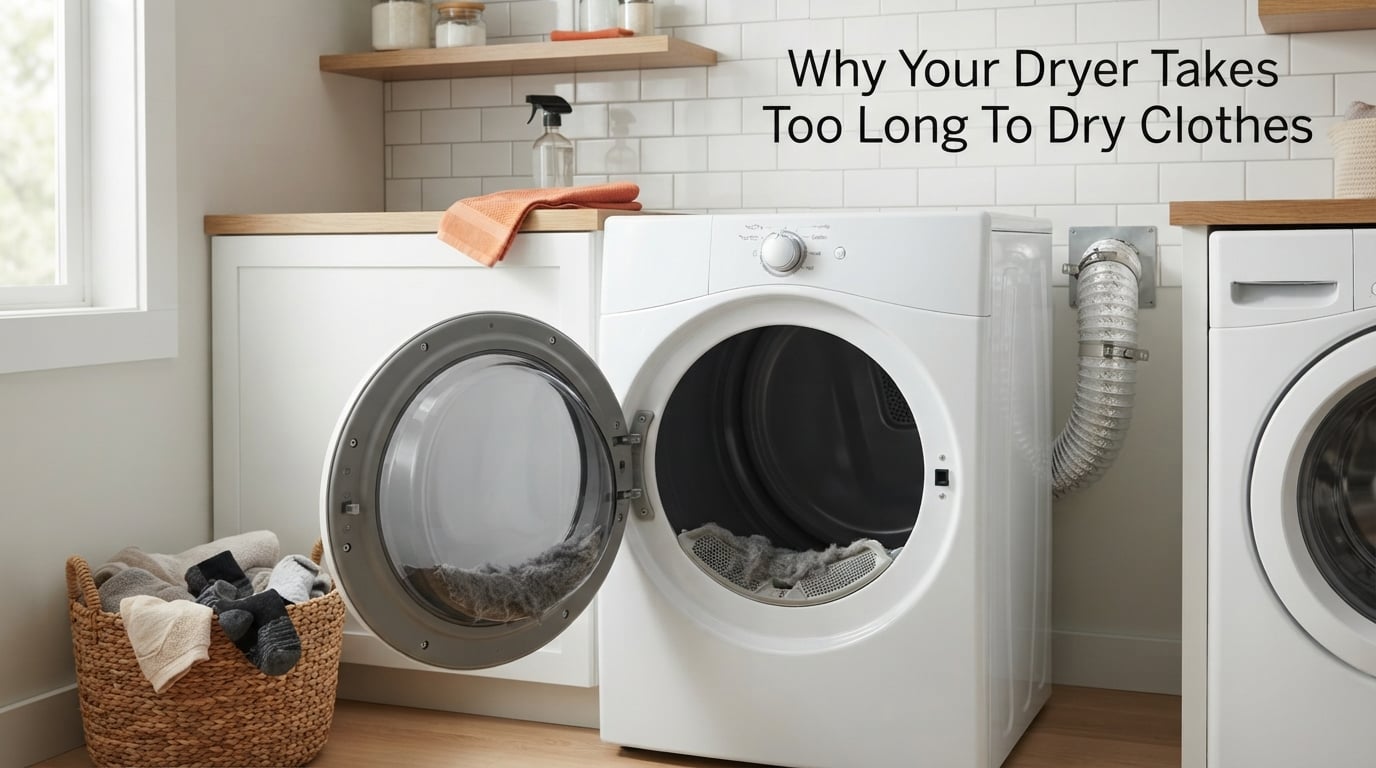
When your dryer takes too long to dry clothes, the problem is almost always airflow related. A normal load of laundry should dry in 40 to 60 minutes. If yours takes 90 minutes, two hours, or multiple full cycles, something is wrong and you are wasting both time and money.
We have analyzed the most common causes of long dry times from appliance repair data, manufacturer troubleshooting guides, and real homeowner experiences. The result is a clear breakdown of why your dryer takes too long to dry and exactly what you can do about it.
Ignoring this problem is risky. The U.S. Consumer Product Safety Commission reports that clothes dryers cause over 15,000 fires each year, and clogged lint buildup is the leading factor. Long dry times are your dryer telling you something needs attention.
7 Common Reasons Your Dryer Takes Too Long To Dry
Here are the seven most common causes when a dryer takes too long to dry clothes, listed in order of how frequently they occur. Most of these you can diagnose and fix yourself.
1. Clogged Dryer Vent (The Most Common Cause)
A clogged dryer vent is the single biggest reason your dryer takes too long to dry. Lint from your clothes passes through the lint trap and accumulates inside the vent ductwork over months and years. This buildup restricts airflow by up to 90 percent, trapping moisture inside the drum.
Here is the key sign: your dryer gets hot but clothes stay wet. The heating element works fine, but the moist air has nowhere to go. The air just circulates inside the drum, never removing the moisture from your clothes.
You can check for a clogged vent by going outside while the dryer runs. You should feel a strong flow of warm air from the exterior vent cap. If the airflow is weak or nonexistent, you have a blockage somewhere in the system.
Professional vent cleaning costs between $100 and $200, or you can do it yourself with a vent cleaning brush kit that costs under $40. Either way, this is the first fix to try when your dryer takes too long to dry.
2. Dirty Lint Filter
The lint filter (also called the lint screen or lint trap) catches most lint before it enters the vent system. But many people do not clean it after every single load. A partially blocked lint filter immediately reduces airflow and extends drying time.
There is also a hidden issue: dryer sheets and fabric softeners leave a waxy residue on the mesh screen. This invisible film blocks air from passing through even when the screen looks clean. If water beads up when you run the filter under the faucet, it has a coating.
To fix this, scrub the lint screen with warm soapy water and a nylon brush every two to three months. Use a toothbrush to get into the mesh. Rinse thoroughly and let it dry completely before putting it back.
3. Overloading the Dryer
Stuffing too many clothes into the dryer prevents proper tumbling and heat circulation. When the drum is packed tight, hot air cannot reach the clothes in the center of the load. The clothes on the outside dry, but the inner layers stay damp.
A properly loaded dryer should be filled to about half to two-thirds full. Clothes need room to tumble freely so air can circulate around each garment. If you cannot see space between items when the drum is stationary, the load is too large.
Bulky items like comforters, sleeping bags, and heavy winter coats need special attention. Dry these items alone and add dryer balls to help break up clumped filling. This prevents damp spots in the center that require extra drying cycles.
4. Heating Element Problems
If your dryer runs but produces very little heat, a failing heating element may be to blame. Electric dryers use metal coils that heat up when electricity passes through them. Over time, these coils can break or weaken, reducing the heat output significantly.
For gas dryers, the equivalent components are the igniter, gas valve coils, and flame sensor. If any of these parts fail, the gas burner will not light properly or will cycle off too quickly. The dryer tumbles but never reaches the temperature needed to dry clothes efficiently.
You can test whether heat is the issue by running the dryer empty for five minutes on high heat. Open the door and feel the inside of the drum. It should be warm to the touch. If it is barely warm or cool, you have a heating problem that likely requires a replacement part.
Heating element replacement costs between $30 and $100 for the part. If you are comfortable with basic DIY repairs, you can swap it yourself in about an hour. Otherwise, an appliance repair technician can handle it for a service call fee plus parts.
5. Moisture Sensor Malfunction
Modern dryers use moisture sensors to detect how wet your clothes are and automatically stop the cycle when they are dry. These sensors are typically two metal strips located inside the drum near the lint filter housing. Over time, a coating of fabric softener residue and lint builds up on these strips.
When the sensor is dirty, it sends inaccurate readings to the dryer’s control board. The dryer may think clothes are dry when they are still damp, causing it to stop prematurely. Or it may run far longer than necessary because it cannot detect that clothes are already dry.
Clean the moisture sensor strips by wiping them with rubbing alcohol on a cotton swab or cloth. Do this every few months to keep the automatic cycles working correctly. If cleaning does not help, the sensor may need replacement, which is a $20 to $50 part.
6. Poor Vent Duct Installation
Even if your vent is clean, the way it was installed can cause your dryer to take too long to dry. Vent runs longer than 35 feet create too much resistance for the blower to push air through. Every 90-degree bend in the ductwork adds the equivalent of 5 feet to the total run length.
The type of duct material matters too. Flexible plastic or foil accordion-style vents are common but problematic. When you push the dryer back against the wall, these flexible vents compress and crush, restricting airflow immediately. They are also major fire hazards because lint gets trapped in the ridges.
The best vent material is rigid or semi-rigid aluminum ductwork. It maintains its shape, provides smooth interior walls for airflow, and is much safer. If your dryer currently uses a flexible plastic vent behind it, replace it immediately with a semi-rigid metal duct. This one change can dramatically improve drying speed.
Also check that the exterior vent cap opens freely. Birds, insects, and debris can block the outside opening. A vent cap that sticks shut defeats the entire exhaust system, no matter how clean the duct is inside.
7. Washer Not Spinning Properly
Sometimes the dryer is not the problem at all. If your washing machine is not spinning clothes out properly, your dryer starts with clothes that are much wetter than normal. This means the dryer has to work twice as hard to remove the excess water.
Front-loading washers should spin at 800 RPM or higher during the final spin cycle. Top-loading washers should reach at least 600 RPM. If your washer is older or has a worn drive belt, it may be spinning too slowly and leaving clothes soaking wet.
Test this by weighing a load of wet clothes right out of the washer. A properly spun load of bath towels should feel damp but not dripping. If water is pooling or dripping from the clothes, your washer needs attention before you blame the dryer.
DIY Troubleshooting Steps For Long Dry Times
If your dryer takes too long to dry clothes, work through these steps in order. Each one takes just a few minutes and requires no special tools.
Step 1: Clean the lint filter completely. Remove the screen, peel off all visible lint, then wash it with warm soapy water to remove fabric softener residue. Let it dry fully before reinserting.
Step 2: Pull the dryer away from the wall and disconnect the vent hose. Check for obvious blockages, kinks, or crush damage. If the hose is plastic or badly damaged, replace it with a semi-rigid aluminum duct.
Step 3: Go outside and inspect the exterior vent cap. Make sure it opens freely when the dryer runs. Clear any debris, nests, or lint accumulation around the opening.
Step 4: Run the dryer empty on high heat for five minutes. Open the door and feel inside the drum. It should be warm. Also check the airflow outside at the vent cap while it runs.
Step 5: Clean the moisture sensor strips with rubbing alcohol. Run your next load on a timed dry cycle instead of auto dry to see if the cycle length was the sensor’s fault.
Step 6: Try drying a smaller load. Fill the drum no more than halfway and time how long the cycle takes. If the smaller load dries in under an hour, overloading was your problem.
If all six steps do not improve drying speed, the issue is likely deeper in the vent system or involves a mechanical component. At that point, consider a professional vent cleaning service or an appliance repair technician.
Why Long Dry Times Are More Than Just Annoying
When your dryer takes too long to dry, the consequences go beyond inconvenience. Clogged dryer vents are the leading cause of clothes dryer fires, resulting in an estimated 15,000 fires, 20 deaths, and $200 million in property damage every year according to CPSC data. If you notice a burning smell, a very hot dryer exterior, or clothes that come out unusually hot to the touch, stop using the dryer immediately and inspect the vent system.
The financial impact adds up fast. A dryer that runs two extra hours per load uses roughly 2 kWh of additional electricity per cycle. For a household doing five loads per week, that is over $100 in wasted energy costs annually. Gas dryers waste similar amounts in fuel.
Your clothes also suffer. Excess tumbling causes friction that breaks down fabric fibers, fades colors, and wears out elastic. Garments that spend three hours in a dryer instead of 45 minutes will have a noticeably shorter lifespan. Fixing your dryer is an investment that pays for itself through lower energy bills and clothes that last longer.
FAQs
How do you fix a dryer that takes too long to dry?
Start by cleaning the lint filter thoroughly, then check and clear the dryer vent system of lint buildup. Ensure the vent hose behind the dryer is not kinked or crushed, and verify the exterior vent cap opens freely. Clean the moisture sensor strips with rubbing alcohol, avoid overloading, and confirm your washer is spinning clothes adequately. If drying times remain long after these steps, inspect the heating element or call a professional for vent cleaning.
Why is my dryer taking 2 hours to dry clothes?
A dryer taking 2 hours to dry a standard load almost always has restricted airflow. The most likely cause is a clogged dryer vent with lint buildup somewhere in the ductwork. Other possibilities include a dirty lint screen coated with fabric softener residue, an overloaded drum, or a crushed vent hose behind the dryer. Check the exterior airflow first to confirm the vent is the issue.
Is it normal for a dryer to take 4 hours?
No, a dryer should never take 4 hours to dry a normal load of clothes. A standard load should dry in 40 to 60 minutes. If your dryer takes 4 hours, you have a serious airflow restriction or mechanical failure that needs immediate attention. Continuing to run a dryer this long wastes significant energy, damages clothes, and creates a potential fire hazard from lint accumulation.
Why is my dryer drying clothes for 3 hours but still wet?
If your dryer runs for 3 hours and clothes are still wet, the vent system is almost certainly blocked. The dryer produces heat but cannot exhaust the moist air outside, so humidity stays trapped in the drum. Disconnect the vent hose from the back of the dryer and run a test load with the vent disconnected. If clothes dry normally, the vent ductwork needs cleaning or repair.
Conclusion
When your dryer takes too long to dry clothes, the root cause is almost always restricted airflow. Start with the simplest fixes: clean the lint filter after every load, clear the vent system annually, avoid overloading, and replace any flexible plastic vent hose with rigid metal ductwork. These steps solve the problem in roughly 9 out of 10 cases.
Pay attention to warning signs like burning smells, unusually hot dryer surfaces, or drying times exceeding 90 minutes. These indicate a serious vent blockage that is both a fire hazard and an energy drain. Do not ignore them.
Understanding why your dryer takes too long to dry empowers you to fix the problem quickly, save money on energy bills, protect your clothes from damage, and most importantly, keep your home safe from dryer fires.