
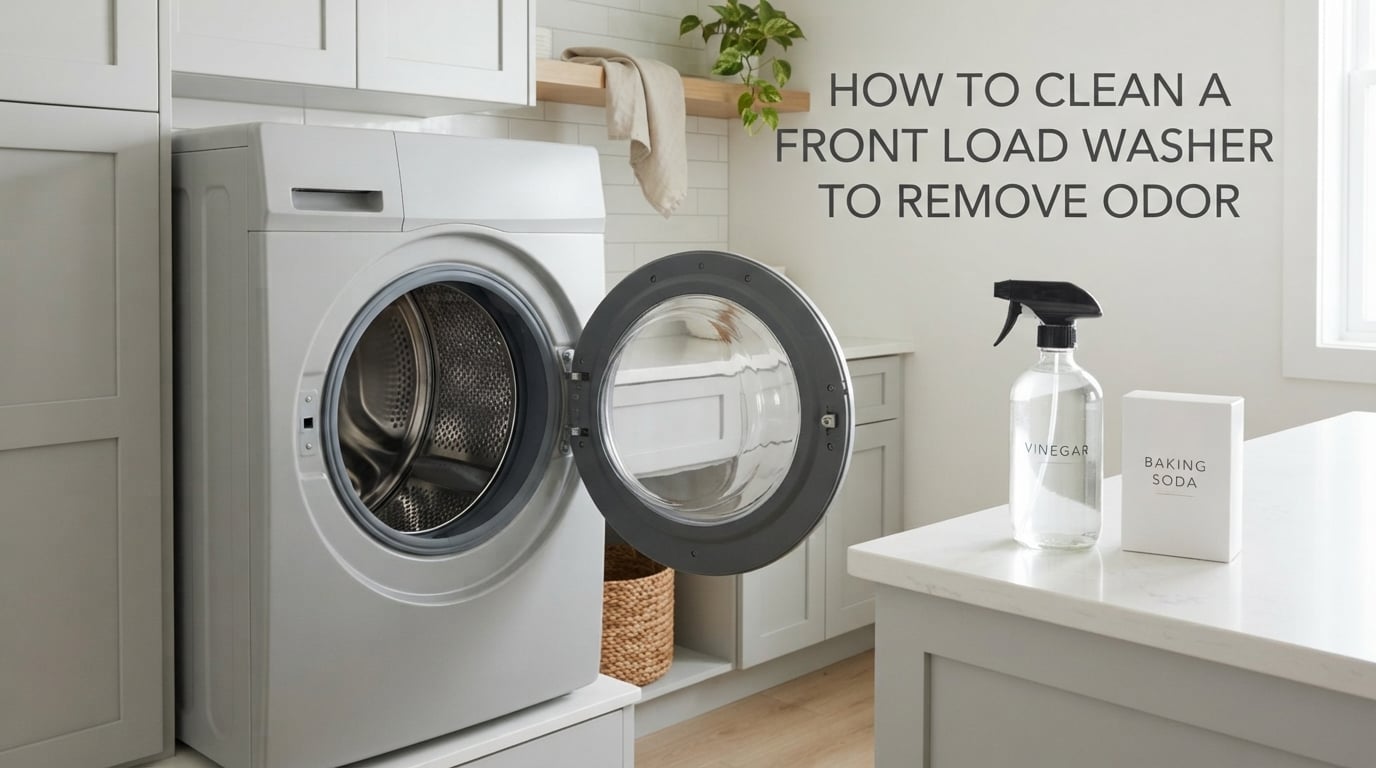
That musty, sour smell hits you the second you open the washer door. Your towels come out smelling worse than when they went in, and you are wondering if something is permanently wrong with your machine. If you own a front load washer, you are not alone in this fight.
Learning how to clean a front load washer to remove odor is one of the most common challenges homeowners face with high-efficiency machines. The good news is that the problem is entirely fixable with the right process, the right cleaning agents, and a few habits that keep odor from coming back.
In this guide, our team walks you through exactly why front load washers develop that nasty smell, how to deep-clean every problem area, and how to prevent the odor from returning. We include exact measurements, safety warnings, and troubleshooting tips that most guides skip.
Whether your washer smells musty, sour, or like straight sewage, the steps below will help you identify the cause and eliminate it for good.
Why Front Load Washers Develop Odors
Front load washers use significantly less water than traditional top loaders. That water-saving design is great for your utility bill but creates a perfect environment for odor. The horizontal tumbling action leaves small amounts of water pooled in the drum, gasket, and internal components after every cycle.
When you combine that leftover moisture with detergent residue, fabric softener buildup, and the dark interior of the machine, you get ideal growing conditions for mold, mildew, and bacteria. These microorganisms form a sticky layer called biofilm that clings to surfaces and feeds on soap scum and organic matter.
Biofilm is the real culprit behind persistent washer odor. It is not just surface mold you can wipe away. Bacteria living inside the biofilm produce sulfur compounds and volatile fatty acids that create the sour, musty, or rotten egg smell coming from your machine.
Musty Smell vs Sewage Smell: Knowing the Difference
Not all washer odors have the same cause, and treating the wrong problem wastes time. Here is how to tell what you are dealing with.
A musty or sour smell almost always points to mold and mildew growing in the rubber gasket, detergent dispenser, or drum interior. This is the most common front load washer odor, and it responds well to the vinegar and baking soda cleaning process below.
A sewage or rotten egg smell often indicates a different issue. This sulfur-like stench can come from bacteria trapped in the drain pump filter, a partially blocked drain hose, or water sitting in the drain trap. If you clean the gasket and run cleaning cycles but the sewage smell persists, the drain pump filter is your next target.
Some homeowners with well water also experience stronger odors due to iron and sulfur bacteria naturally present in their water supply. If your tap water already has a sulfur smell, your washer is amplifying an existing water quality issue rather than creating one.
The Four Problem Areas
Odor-causing buildup concentrates in four specific zones inside your front load washer. Understanding these areas helps you clean thoroughly rather than just treating symptoms.
The rubber door gasket has deep folds and grooves that trap water, hair, lint, and debris. Mold grows freely in these hidden folds where most people never look.
The detergent dispenser drawer and the housing behind it collect soap scum and fabric softener residue. Many users report finding black mold growing in the dispenser housing even when they leave the main door open.
The drum interior develops an invisible film of detergent residue over time. This biofilm coats the stainless steel surface and feeds bacterial growth between washes.
The drain pump filter sits at the bottom front of the machine behind a small access panel. It catches coins, lint, hair, and small items, and standing water inside it can develop a powerful sewage smell.
What You’ll Need to Clean Your Front Load Washer
Gather your supplies before starting so you can move through each step without stopping. You probably already have most of these items in your kitchen and cleaning closet.
2 cups of distilled white vinegar (for the first cleaning cycle)
1/2 cup of baking soda (for the second cleaning cycle)
1 cup of liquid chlorine bleach (only for quarterly deep cleaning, used separately from vinegar)
An old toothbrush dedicated to cleaning (not one used for personal hygiene)
Clean microfiber cloths or old rags
A small bowl or bucket
Rubber gloves
A towel for the floor near the drain filter
Avoid mixing bleach with vinegar, ammonia, or other cleaning products. Combining bleach with acid-based cleaners produces toxic chloramine gas that can cause serious respiratory harm. Always run a complete rinse cycle between using bleach and any other cleaning agent.
How to Clean a Front Load Washer to Remove Odor: Step by Step
This six-step process covers every odor source in your machine. Work through the steps in order, and do not skip the drain pump filter even if it seems intimidating. That filter is often the hidden source of smells that refuse to go away.
Step 1: Clean the Rubber Door Gasket
The rubber gasket is ground zero for front load washer odor. Pull the fold of the gasket back gently and look inside. You will likely find standing water, dark mold spots, trapped hair, and possibly small items like coins or bobby pins.
Mix a solution of equal parts white vinegar and warm water in your small bowl. Dip your toothbrush into the solution and scrub every fold and groove of the gasket thoroughly. Pay close attention to the bottom section where water pools.
For stubborn black mold spots, apply a paste of baking soda and water directly to the stain and let it sit for 5 minutes before scrubbing. Wipe everything clean with a damp microfiber cloth, then dry the gasket completely with a dry cloth.
Check the small drainage holes at the bottom of the gasket. These can clog with debris and prevent water from draining properly, which keeps moisture trapped against the rubber.
Step 2: Clean the Detergent Dispenser Drawer
Remove the dispenser drawer by pressing the release tab or sliding it fully out, depending on your model. You will likely find hardened detergent chunks and a slimy film of fabric softener residue coating every surface.
Soak the drawer in hot water with a splash of vinegar for 15 minutes. Scrub all compartments with your toothbrush, especially the fabric softener section where buildup is thickest. Rinse thoroughly and set it aside to dry.
Before reinserting the drawer, clean the dispenser housing inside the machine. Use a flashlight to look into the opening. Mold frequently grows in this hidden area because it stays damp and dark between washes. Scrub the interior of the housing with your vinegar-dampened toothbrush and wipe it dry.
Check the ceiling of the dispenser housing where water enters. Many owners are surprised to find thick black mold growing right above where the detergent sits.
Step 3: Run the Vinegar Cleaning Cycle
Now it is time to clean the drum interior. Pour 2 cups of distilled white vinegar directly into the detergent dispenser compartment. Do not put vinegar in the drum itself. The dispenser ensures the vinegar enters the wash cycle at the right time and distributes throughout the machine.
Select the hottest water temperature available on your machine. If your washer has a dedicated Self Clean, Tub Clean, or Clean Washer cycle, use that. If not, choose the longest Normal cycle with an extra rinse option.
Run the cycle completely empty with no clothes inside. The hot vinegar water kills bacteria, dissolves mineral deposits, and breaks down the biofilm coating your drum interior.
Step 4: Run the Baking Soda Cleaning Cycle
Immediately after the vinegar cycle completes, run a second cycle using baking soda. Dissolve 1/2 cup of baking soda in a small amount of warm water and pour it directly into the drum. The baking soda neutralizes any remaining vinegar odor while providing mild abrasive scrubbing action.
Run this cycle on the hottest setting as well, with no clothes inside. The combination of vinegar followed by baking soda is the two-cycle approach that cleaning experts consistently recommend for thorough odor removal.
After this cycle finishes, wipe the drum interior and the inside of the glass door with a dry microfiber cloth. Leave the door open so the drum can air dry completely.
Step 5: Clean the Drain Pump Filter
This is the step most cleaning guides skip, and it is often the reason odors persist after all the other cleaning. The drain pump filter is located behind a small panel at the bottom front of your washer.
Warning: Water will come out when you open the filter. Place a thick towel on the floor and have a shallow pan ready to catch what drains out. Some users report this water having an extremely unpleasant smell.
Open the access panel and slowly unscrew or pull out the filter cap. Allow the trapped water to drain into your pan. Remove any debris caught inside: lint, hair, coins, buttons, and small items that escaped pockets are commonly found here.
Rinse the filter under running water and scrub it with your toothbrush if needed. Reinsert the filter, screw the cap back securely, and close the access panel. Run a short rinse cycle to make sure everything is sealed properly before doing a regular load of laundry.
Check your washer manual for specific instructions, as filter access varies by brand. Samsung and LG front loaders typically have the filter behind a round panel on the lower left or right front corner.
Step 6: Quarterly Bleach Deep Clean
For machines with stubborn or recurring odor, a quarterly bleach deep clean provides the heaviest-duty sanitizing option. Pour 1 cup of liquid chlorine bleach into the detergent dispenser and run a hot cycle on the longest setting.
Bleach is the most effective agent for killing deeply embedded mold spores and bacteria that survive vinegar cleaning. However, it is harsher on rubber components, so reserve this method for once every three months rather than weekly use.
Never mix bleach with vinegar, ammonia, or any other cleaning product. Toxic gas production from mixing bleach with acids or ammonia can cause severe lung damage. If you want to try a different cleaning method after bleach, run at least two full rinse cycles first.
Why These Cleaning Solutions Actually Work
Understanding the science behind each cleaning agent helps you use them more effectively. Each solution targets odor through a different mechanism.
White vinegar contains acetic acid at roughly 5 percent concentration. This mild acid kills bacteria and mold by disrupting their cellular functions. Vinegar also dissolves mineral deposits from hard water and breaks down the sticky extracellular matrix that holds biofilm together. When you run vinegar through a hot cycle, the heated acid penetrates areas you cannot physically reach.
Baking soda (sodium bicarbonate) is mildly alkaline. It works by neutralizing acids that cause sour odors and providing gentle abrasive action that lifts residue from surfaces. Running baking soda after vinegar makes sense because it neutralizes the acid while scrubbing away loosened debris.
Bleach (sodium hypochlorite) is a powerful oxidizer that destroys mold and bacteria at the molecular level. It breaks down the proteins and cell walls of microorganisms. Bleach is your heavy weapon for severe infestations where vinegar alone is not enough.
Hot water is not just a delivery mechanism. Temperatures above 140 degrees Fahrenheit kill many bacteria and mold species outright. Hot water also melts detergent and fabric softener residue that has solidified inside pipes and drums, allowing the cleaning agents to work on buildup that cold water simply cannot touch.
How to Prevent Odor From Coming Back
Cleaning your washer once eliminates existing odor, but keeping it away requires a few ongoing habits. These preventive measures address the root causes of front load washer smell.
Leave the Door Open After Every Load
This is the single most important habit for front load washer owners. Closing the door traps moisture inside the drum and gasket, creating the exact conditions mold and bacteria need to grow. Leave the door cracked open for at least several hours after every wash so air can circulate and dry the interior.
If you have small children or pets and worry about an open door, consider using a magnetic door prop or a soft closure guard that allows airflow while preventing the door from swinging fully open.
Wipe the Drum and Gasket After Each Use
Keep a dedicated microfiber cloth near the washer. After removing a load, run the cloth along the rubber gasket folds and wipe the inside of the glass door. This takes 30 seconds and removes the water film that would otherwise sit and feed microbial growth.
Leave the detergent dispenser drawer slightly open as well. The dispenser housing needs to dry just as much as the drum does.
Use the Right Amount of HE Detergent
Most people use far too much detergent in their front load washers. High-efficiency machines require only 2 tablespoons of HE detergent for a normal load. Using more does not get clothes cleaner. The excess suds cannot rinse away completely in the low-water environment, and the leftover residue becomes food for mold and bacteria.
Always look for the HE logo on your detergent. Using non-HE detergent in a front loader produces excessive suds that coat the drum and internal components with residue that takes months to build up and requires deep cleaning to remove.
Avoid Fabric Softener
Fabric softener is one of the worst offenders for washer odor. It coats the drum, gasket, and internal hoses with a waxy film that does not dissolve in water. This film traps moisture and provides an ideal food source for the bacteria causing odor.
Try replacing fabric softener with 1/2 cup of white vinegar in the softener dispenser. Vinegar naturally softens fabric, reduces static, and breaks down detergent residue instead of adding more buildup. Your clothes will not smell like vinegar after the rinse cycle removes it.
Wash in Hot Water Periodically
If you always wash in cold water, detergent residue builds up faster because cold water does not dissolve soap as effectively. Try to run at least one hot water load per week to help flush out the system. Bedding and towels are good candidates for hot water washing.
Run a Monthly Cleaning Cycle
Even with perfect habits, your washer benefits from a monthly cleaning cycle. Set a reminder on your phone for the first Saturday of each month and run the vinegar and baking soda two-cycle process. This monthly maintenance takes about two hours of cycle time but requires only a few minutes of hands-on work.
Preventive cleaning is far easier than fighting an entrenched odor problem. A monthly cycle keeps biofilm from establishing itself in the first place.
Detergent Dos and Don’ts for Front Load Washers
Detergent choice and usage directly affect how quickly odor develops. Getting this right reduces how often you need to deep-clean your machine.
Do use HE detergent only. The HE formula produces low-sudsing action designed specifically for the water-saving environment of front load washers. Regular detergent creates excessive suds that leave residue throughout the internal components.
Do measure carefully. Two tablespoons for a normal load is sufficient. If you have a high-capacity washer or heavily soiled loads, use no more than 3 tablespoons. The measuring lines on the detergent cap are designed for top loaders and will cause you to overdose.
Do consider switching to powder detergent. Some front load washer owners report that powder HE detergent leaves less residue than liquid. Liquid detergents contain water and fillers that can contribute to buildup over time.
Don’t use pods or capsules exclusively. Pods contain concentrated detergent wrapped in a dissolving film. In cold water or short cycles, the film may not fully dissolve, leaving residue inside the machine. If you use pods, alternate with measured powder or liquid.
Don’t use fabric softener. As mentioned above, fabric softener coats surfaces with a water-resistant film. Replace it with vinegar in the softener dispenser or skip it entirely.
Don’t overload the machine. Overloading prevents clothes from tumbling freely and reduces rinsing effectiveness. Poor rinsing means more detergent stays in the drum and on your clothes, feeding odor between washes.
Some owners who switch to natural or homemade detergent report that their odor problems disappear entirely. While this is not practical for everyone, reducing the chemical load going into your machine consistently reduces buildup and odor frequency.
Troubleshooting: When Odor Persists After Cleaning
Sometimes you complete every cleaning step and the smell comes back within days. This is frustrating but usually points to a specific underlying issue.
If the smell returns immediately after a vinegar and baking soda cleaning, inspect the drain pump filter again. Small items like socks can get past the drum and lodge in the drain system, creating a continuous source of bacterial growth. Check the filter every few weeks if this is a recurring problem.
Check your drain hose connection. If the hose is inserted too far into the standpipe, it can siphon dirty drain water back into the machine. The hose should enter the standpipe no more than 4 to 6 inches.
Inspect the rubber gasket for damage. Deep cracks or tears in the gasket harbor bacteria that surface cleaning cannot reach. A damaged gasket may need replacement to fully resolve persistent odor.
If your washing machine smells like sewage even after thorough cleaning, the problem may be in your home plumbing rather than the washer itself. A dry P-trap, blocked vent pipe, or sewer line issue can send gases through the washer drain connection. Run water in nearby floor drains to refill P-traps, and consult a plumber if the smell persists.
Brand-Specific Cleaning Tips
Different washer brands have slight variations in their cleaning cycles and filter access. Here are quick notes for the most popular brands.
Samsung front load washers feature a Self Clean cycle that should be run every 40 washes. Samsung recommends adding a dedicated cleaning agent like Affresh to the drum for this cycle. The drain filter is behind a panel on the lower front, typically on the right side.
LG front load washers have a Tub Clean cycle accessible from the main control dial. LG recommends running this cycle monthly and offers a proprietary cleaning tablet. The drain filter is behind a rectangular panel on the lower left front. LG machines are particularly prone to gasket mold, so inspect folds weekly.
Bosch front load washers often have a more concealed design with the drain filter behind a circular cover that requires a coin or flat tool to open. Bosch recommends their Descaler tablets for the cleaning cycle, which runs on the Drum Clean setting.
Regardless of brand, always check your owner’s manual for the specific cleaning cycle name and any brand-specific recommendations. The general vinegar and baking soda process works across all brands.
FAQs
How do I get rid of the horrible smell in my washing machine?
Run two empty hot cycles back to back: first with 2 cups of white vinegar in the detergent dispenser, then with 1/2 cup of baking soda dissolved in water in the drum. Clean the rubber gasket with a vinegar-soaked toothbrush and remove the drain pump filter to clear trapped debris. This three-step approach eliminates the most common odor sources.
How to remove rotten egg smell from washing machine front loader?
A rotten egg or sewage smell usually comes from bacteria in the drain pump filter or drain trap rather than surface mold. Open the filter access panel at the bottom front of the machine, drain the water, and remove trapped debris. Run a hot cycle with 2 cups of vinegar. If the smell persists, check your drain hose connection and home plumbing for sewer gas issues.
Can I use vinegar to clean my front loader?
Yes, vinegar is one of the safest and most effective cleaners for front load washers. Pour 2 cups of distilled white vinegar into the detergent dispenser and run an empty hot cycle. The acetic acid kills bacteria and mold while dissolving mineral deposits and biofilm. Follow with a baking soda cycle for best results.
Does vinegar help with washing machine odors?
Yes, vinegar is highly effective against washing machine odors. Its acetic acid content kills the bacteria and mold that produce sour and musty smells, and it dissolves the detergent residue that feeds microbial growth. Use it monthly as a preventive cleaning cycle to keep odor from returning.
How often should I clean my front load washer?
Run a full vinegar and baking soda cleaning cycle once a month. Clean the rubber gasket weekly by wiping it with a dry cloth after each load. Check and clean the drain pump filter every 2 to 3 months. Do a quarterly bleach deep clean if odor is a recurring problem.
Why does my front load washer smell even after cleaning?
If odor persists after cleaning, the most likely culprits are a clogged drain pump filter with trapped debris, a drain hose inserted too far into the standpipe causing siphoning, or damaged gasket folds harboring deep bacteria. Check each of these areas. If none resolve the issue, the smell may originate from your home plumbing rather than the washer.
Conclusion
Knowing how to clean a front load washer to remove odor comes down to understanding where the moisture and residue hide, then hitting those areas with the right cleaning agents. The rubber gasket, detergent dispenser, drum, and drain pump filter are the four zones that need regular attention.
The two-cycle method of vinegar followed by baking soda handles most odor problems, while a quarterly bleach deep clean tackles stubborn cases. Prevention is equally important: leave the door open, measure your HE detergent correctly, skip the fabric softener, and run a monthly maintenance cycle.
Start with the full six-step cleaning process above, then build the preventive habits into your laundry routine. Your towels, your nose, and your family will thank you.