
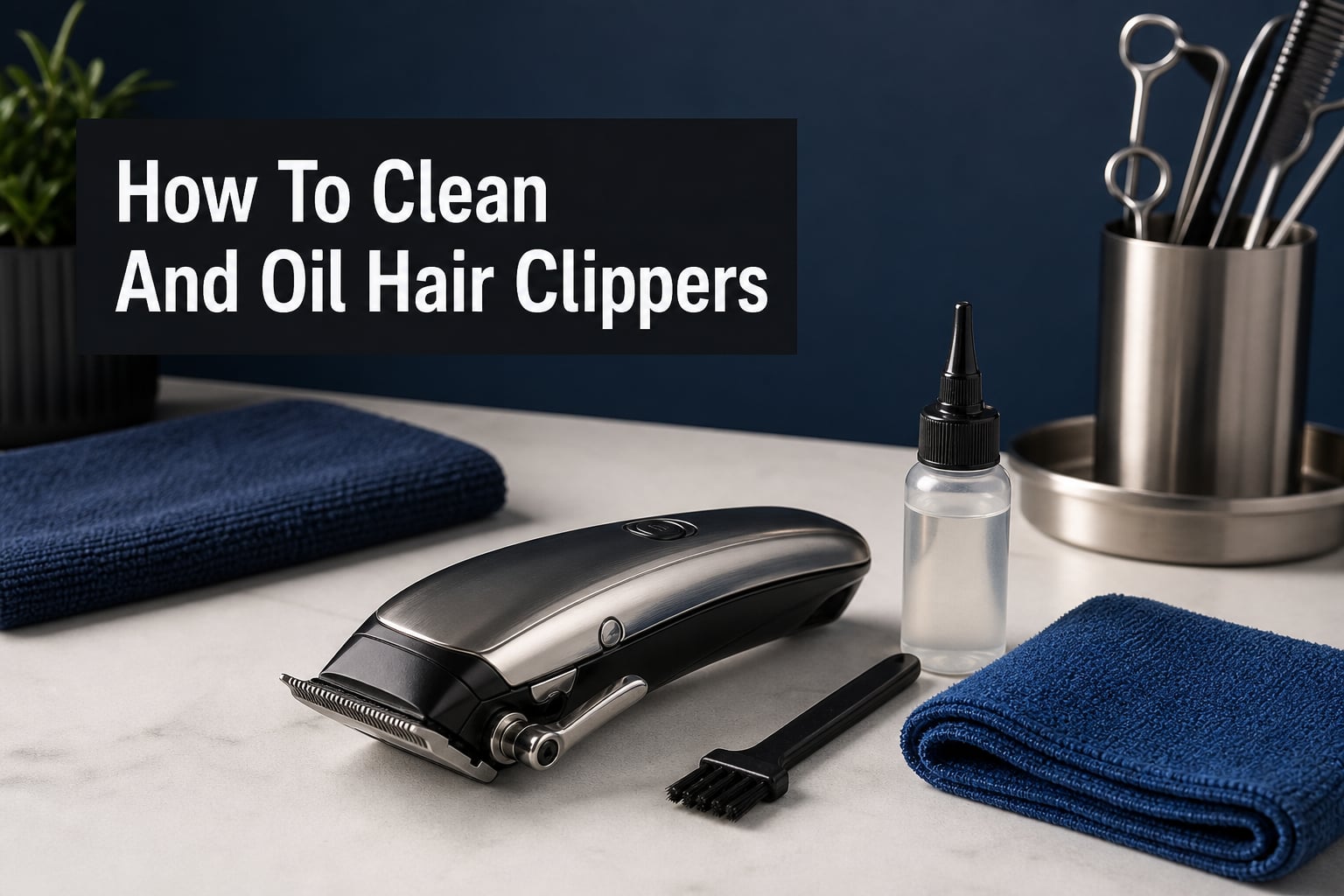
I have been cutting my own hair at home for over five years, and the single biggest mistake I made early on was ignoring clipper maintenance. Within eight months, my first pair of clippers started pulling hair, running loud, and cutting unevenly. Once I learned how to properly clean and oil hair clippers, that same pair lasted me another three years without a single issue.
Whether you are a home barber giving yourself weekly fades or a professional stylist managing back-to-back clients, this guide walks you through every step. I cover the cleaning process, the oiling process, which solutions actually work, which ones to avoid, and how often you should be doing all of it.
Why Cleaning and Oiling Your Hair Clippers Matters
Skip maintenance and you will notice the consequences fast. Hair clippers are precision tools with rapidly moving metal blades that generate friction, heat, and static. Without regular cleaning and oiling, that friction turns into damage.
Here is what proper maintenance does for your clippers:
Prevents rust and corrosion on metal blades exposed to moisture and skin oils
Reduces motor overheating by lowering friction between moving parts
Improves hygiene by removing bacteria, dead skin, and hair debris
Extends clipper lifespan by months or even years
Prevents pulling and snagging that damages hair and irritates skin
Maintains cutting precision so every haircut looks clean and professional
Think of it like changing the oil in a car. The engine runs, sure, but without fresh oil, it grinds itself apart. Your clippers work the same way.
Signs Your Hair Clippers Need Cleaning or Oiling
Most people wait until something goes wrong before maintaining their clippers. By that point, you may already have blade damage. I check my clippers before every cut, and these are the warning signs I look for.
Your clippers need attention if you notice any of the following:
Pulling or snagging hair instead of cutting cleanly through it
Unusual noise or vibration that was not there before, often described as a rattling sound
Visible hair buildup between the blades that the brush cannot fully remove
Blades feel warm or hot to the touch after just a minute or two of use
Rust spots or discoloration on the metal blade surface
Reduced cutting performance where the clippers leave patches or uneven lines
A burning smell during use, which means the motor is overheating from excess friction
If you notice even one of these signs, stop using the clippers and go through the full cleaning and oiling process below. Continuing to use poorly maintained clippers will only accelerate the damage.
What You Need to Clean and Oil Hair Clippers
Before starting, gather your supplies. I keep all of mine in a small bin next to my cutting mirror so maintenance takes under five minutes.
Essential supplies:
Cleaning brush (most clippers include one; a clean toothbrush works too)
Isopropyl alcohol (70% concentration) for sanitizing blades
Clipper oil (the small bottle that came with your clippers is ideal)
Clean microfiber cloth or paper towels for wiping
Small screwdriver if your model has removable blades
Pipe cleaner for tight spaces between the blade housing
Optional but useful additions:
Barbicide solution for professional-level disinfection between clients
Andis Cool Care Plus or similar blade wash spray for deep cleaning
Distilled white vinegar as a descaling agent for hard water residue
How to Clean Hair Clippers: Step-by-Step Process
This is the core cleaning routine I follow after every haircut. It takes about three minutes once you get the hang of it.
Step 1: Turn Off and Unplug Your Clippers
Safety first. Turn the clippers off and unplug them if you are using a corded model. For cordless clippers, remove the blade guard or attachment comb. Never clean clippers while they are running.
Step 2: Brush Away Loose Hair
Use the cleaning brush to sweep hair from the front of the blades, moving from the sides toward the center. Brush in the direction the blades move, not against them. Tap the clippers gently against your palm or a hard surface to dislodge hair trapped between the cutting blades.
Step 3: Remove the Blades (If Your Model Allows)
For deeper cleaning, unscrew the blade assembly. Most Wahl, Andis, and Oster clippers have removable blades held by two screws. Place the screws somewhere safe. Removing the blade gives you access to the cutter blade underneath, where hair and skin debris accumulate heavily.
Step 4: Clean the Blades With Isopropyl Alcohol
Dampen a cloth or paper towel with 70% isopropyl alcohol and wipe both the stationary blade and the moving cutter blade. For stubborn buildup, dip a pipe cleaner in alcohol and run it through the gap between the blades. The alcohol dissolves hair product residue and sanitizes the surface.
Step 5: Use Blade Wash for a Deep Clean
Every few weeks, run the blades in a blade wash solution like Andis Blade Care Plus. Pour a shallow amount into a small container, dip just the blade portion (never the motor housing), and run the clippers for 10 to 15 seconds. This flushes out oil residue and microscopic debris that brushing misses.
Step 6: Dry Completely Before Reassembling
Use a dry cloth to wipe all moisture from the blades. Let them air dry for at least two minutes. Never reassemble or store clippers while the blades are still wet, because trapped moisture causes rust overnight.
Step 7: Reattach Blades Securely
If you removed the blades, reattach them and tighten the screws firmly but do not overtighten. Run the clippers briefly to confirm everything is seated correctly and the blade alignment is straight.
How to Oil Hair Clippers: The 5-Point Oiling Method
Oiling is what keeps the metal sliding smoothly and prevents the heat buildup that kills motors. I learned this 5-point method from a barber who has used the same Andis Master clippers for over a decade.
Step 1: Ensure Blades Are Clean and Dry
Never oil dirty blades. Oil traps debris against the metal and creates a grinding paste that dulls the cutting edge faster. Always clean first, then oil.
Step 2: Apply Oil Using the 5-Point Method
With the clippers turned off, apply a single drop of clipper oil to each of these five points:
Point 1: One drop across the top of the blade teeth
Point 2: One drop on the left side rail where the cutter slides
Point 3: One drop on the right side rail
Point 4: One drop at the back of the blade where the lever connects
Point 5: One drop along the center track of the moving cutter
That is roughly three to four drops total across all five points. A little oil goes a long way.
Step 3: Turn On and Run for 30 Seconds
Turn the clippers on and let them run for about half a minute. The blade motion distributes the oil evenly across all moving surfaces. You will hear the motor smooth out within a few seconds as the lubrication takes effect.
Step 4: Wipe Away Excess Oil
Turn the clippers off and use a cloth to wipe any oil from the exterior blade surface. Leftover oil on the teeth will attract hair and dust during your next cut, creating fresh buildup.
Step 5: Test Before Cutting
Run the clippers across a small section of hair on your arm or leg. If they cut smoothly without pulling, you are good to go. If you still feel snagging, you may need to repeat the cleaning process or check for blade misalignment.
Cleaning Solutions Compared: Alcohol, Barbicide, and Vinegar
One thing I noticed across competitor guides is that none of them properly compare cleaning solutions. People in Reddit forums constantly ask which solution is best, and the answer depends on your situation.
Isopropyl Alcohol (70%)
This is the most accessible option and what I use at home. It sanitizes, evaporates quickly, and leaves no residue. The downside is it strips oil from the blades, so you must re-oil after every alcohol cleaning. Use it with a cloth rather than submerging the clippers.
Barbicide
This is the blue liquid you see in barbershops. It is a hospital-grade disinfectant that kills viruses, bacteria, and fungi. Mix it at a ratio of 2 ounces per 16 ounces of water. Barbicide is ideal for professional barbers who need to prevent cross-contamination between clients. However, it can corrode blades if left soaking too long. Never exceed 10 minutes of contact time.
Distilled White Vinegar
Vinegar works well for removing hard water deposits and descaling blade surfaces. It is not a strong disinfectant, so I use it specifically for periodic deep cleaning when I notice mineral buildup. Dilute it with equal parts water and apply with a cloth.
Blade Wash Solutions (Andis Blade Care Plus, Wahl Blade Ice)
These are purpose-made products designed to flush debris, lubricate lightly, and cool blades during use. They are the most convenient option but cost more than household alternatives. I keep a bottle for weekly deep cleans.
Oil Alternatives: What Works and What to Avoid
This is where I see the most confusion. The short answer: use dedicated clipper oil whenever possible. But if you are in a pinch, here is what works and what will destroy your blades.
Recommended oils:
Clipper oil (Wahl, Andis, Oster brands) – formulated specifically for the speed and temperature of clipper blades
Mineral oil (food grade) – a close substitute that is odorless, non-toxic, and will not gum up over time
Acceptable in a pinch:
Baby oil – essentially mineral oil with fragrance. It works but the fragrance additives can build up on blades over time. Wash it out thoroughly during your next deep clean.
Never use these on hair clippers:
WD-40 – This is the most common mistake. WD-40 is a solvent and water displacer, not a lubricant. It strips existing oil, attracts dust, and degrades metal surfaces over time. It will ruin your blades.
Olive oil and cooking oils – These go rancid. They thicken into a sticky residue that gums up the blade mechanism and attracts bacteria. Never put food oils on clipper blades.
3-In-One oil or motor oil – These are too heavy for the fine tolerances of clipper blades. They slow the cutter movement and put unnecessary strain on the motor.
Coconut oil – Solidifies at room temperature. It will literally freeze your blade mechanism.
How Often Should You Clean and Oil Hair Clippers?
Frequency depends on how often you use your clippers and whether you are cutting multiple people’s hair. Here is the schedule I recommend.
Professional barbers and stylists:
Brush blades after every single client
Disinfect with Barbicide or alcohol between every client
Oil blades after every 2 to 3 clients, or whenever blades feel warm
Deep clean with blade wash at the end of each workday
Home users (cutting your own hair or family members):
Brush blades after every haircut
Clean with alcohol after every 2 to 3 haircuts
Oil blades after every haircut or once per week, whichever comes first
Deep clean with blade wash once per month
Pet grooming clippers:
Clean and oil after every use – pet hair is coarser and dulls blades faster than human hair
Deep clean weekly if you groom multiple animals
Common Mistakes to Avoid When Maintaining Hair Clippers
I have made most of these mistakes myself, and forum discussions show that thousands of others have too. Learn from these errors instead of repeating them.
1. Running Clippers Under Water
This comes up constantly on Reddit. Water gets into the motor housing and causes internal corrosion. Even waterproof models are only designed for blade rinsing, not full submersion. Use alcohol or a damp cloth instead.
2. Using Too Much Oil
More oil does not mean better lubrication. Excess oil flies off the blades during operation, coats the housing, and attracts hair debris. Stick to three or four drops total.
3. Oiling Without Cleaning First
Oiling dirty blades is like putting fresh motor oil into a dirty engine. The oil mixes with hair debris and skin particles, creating an abrasive paste. Always clean before oiling.
4. Using WD-40 as a Lubricant
I have already covered this, but it bears repeating because it is the number one mistake people make. WD-40 will damage your clippers. Buy a $5 bottle of clipper oil instead.
5. Storing Clippers in Humid Bathrooms
Bathrooms are the worst place for clippers because humidity causes blade rust. Store them in a dry room or a sealed case.
How to Store Hair Clippers Properly
Good storage prevents 80% of maintenance problems before they start. Here is what I do.
Keep clippers in a dry, room-temperature environment away from humidity. Store them in the original case or a dedicated pouch to keep dust off the blades. Always snap the blade guard on before storing. If you will not use them for more than a week, apply a light coat of oil to the blades to prevent oxidation during storage.
Avoid tossing clippers loosely into a drawer where they can bang against other objects. Impact damage throws off blade alignment, which causes uneven cutting and pulling.
FAQs
What can I use to oil my hair clippers?
Use dedicated clipper oil from brands like Wahl, Andis, or Oster. Food-grade mineral oil is the best substitute if you do not have clipper oil. Apply 3 to 4 drops using the 5-point oiling method across the blade teeth, side rails, and center track.
Can I use WD-40 to oil hair clippers?
No. WD-40 is a solvent and water displacer, not a lubricant. It strips protective oil from blades, attracts dust, and degrades metal surfaces over time. Using WD-40 will permanently damage your clippers. Use clipper oil or mineral oil instead.
What is the best thing to clean hair clippers with?
Isopropyl alcohol (70% concentration) is the best all-purpose cleaning solution for home users. Professional barbers should use Barbicide (2 oz per 16 oz water) for hospital-grade disinfection between clients. For periodic deep cleaning, use a purpose-made blade wash like Andis Blade Care Plus.
Can I use olive oil to lubricate clippers?
No. Olive oil and other cooking oils go rancid over time, turning into a sticky residue that gums up blade mechanisms and attracts bacteria. Use clipper oil or food-grade mineral oil instead. These stay stable at high temperatures and will not degrade.
Is rubbing alcohol good for cleaning clippers?
Yes, 70% isopropyl alcohol is effective for sanitizing clipper blades. It dissolves hair product residue, kills surface bacteria, and evaporates quickly without leaving residue. Apply it with a cloth rather than submerging the clippers, and always re-oil the blades afterward since alcohol strips lubrication.
How often should hair clippers be oiled?
Oil your clippers after every haircut for home use, or after every 2 to 3 clients for professional barbers. You should also oil whenever the blades feel warm to the touch. Professional barbers typically brush blades between every client and perform a full clean and oil at the end of each day.
How do barbers disinfect their clippers?
Barbers use Barbicide, a hospital-grade disinfectant mixed at 2 ounces per 16 ounces of water. They brush away hair, then spray or wipe the blades with the solution and allow 10 minutes of contact time. Some also use UV sterilizer cabinets for additional sanitization between clients.
Can you use hydrogen peroxide to clean barber clippers?
Hydrogen peroxide is not recommended for clipper blades. It is a weak disinfectant compared to isopropyl alcohol or Barbicide, and prolonged contact can oxidize metal surfaces, accelerating rust. Stick with 70% isopropyl alcohol or Barbicide for reliable disinfection.
Conclusion
Knowing how to clean and oil hair clippers is the difference between a pair that lasts six months and one that lasts five years. Clean after every cut, oil using the 5-point method, avoid WD-40 and cooking oils, and store your clippers somewhere dry. That is the entire system. Build the habit, and your clippers will reward you with smooth, quiet cuts every single time.