
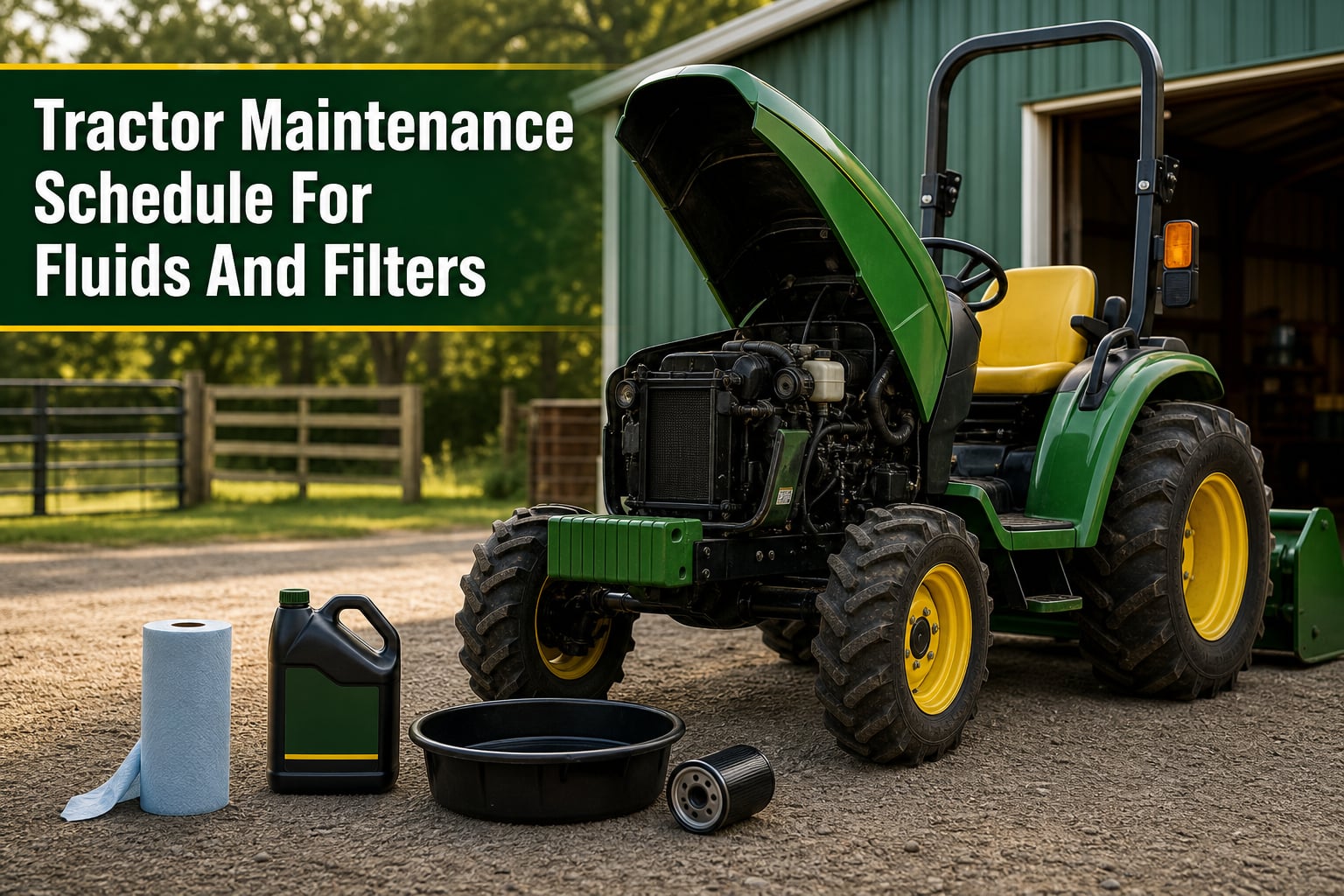
Keeping your tractor running for decades instead of years comes down to one thing: following a consistent tractor maintenance schedule for fluids and filters. Whether you own a compact utility tractor for weekend property work or run a diesel workhorse for daily farming, every hour on the meter tells you exactly when to check, drain, refill, and replace.
I have talked with dozens of tractor owners on forums like r/kubota and TractorByNet, and the pattern is always the same. The owners who hit 3,000+ hours without major repairs are the ones who never skipped a service interval. The ones staring at repair bills are the ones who pushed an oil change “just one more season.”
This guide breaks down every service interval from daily checks to the 500-hour major service. You will get a brand-agnostic tractor maintenance schedule for fluids and filters that works for Kubota, John Deere, New Holland, Yanmar, and other popular makes. I have also included sections on DIY cost savings, environmental fluid disposal, and record keeping that most guides skip entirely.
Daily Tractor Maintenance Checklist
Your daily pre-operation routine is the single most effective habit for catching problems before they become expensive. Before you turn the key, spend five minutes walking around the machine. This daily tractor maintenance checklist covers the essentials.
Start with fluid levels. Pull the dipstick and check engine oil, then inspect the hydraulic/transmission reservoir sight glass. Glance at the coolant level in the overflow bottle. Look under the tractor for fresh puddles that signal a weeping seal or loose drain plug.
Check tire pressure and condition on all four wheels. Underinflated tires cause uneven wear and make steering sluggish on hills. Overinflated tires ride rough and lose traction. Walk around and look for cuts, bulges, or embedded debris.
Inspect the battery terminals for corrosion and confirm connections are tight. Test headlights, taillights, and hazard flashers. Confirm the parking brake holds the tractor on a slight grade. Check the radiator screen and clean off debris so airflow stays unrestricted.
Finally, look at the fuel gauge and top off if needed. A full tank reduces condensation buildup inside the tank, which is a common cause of water in diesel fuel systems.
50-Hour Break-In Service: What First-Time Owners Need to Know
The 50-hour service is the most important maintenance event in your tractor’s early life. New engines shed microscopic metal particles during the first hours of operation as components wear and seat together. That contaminated oil needs to come out fast.
First-time tractor owners on r/kubota frequently ask whether they can do the 50-hour break-in service themselves. The answer is yes, and many report completing it with basic hand tools in about two hours. Here is what the 50-hour break-in service includes.
Change the engine oil and replace the oil filter. Use the viscosity grade specified in your operator’s manual, typically SAE 15W-40 or 10W-30 for diesel engines. Do not use passenger car motor oil, as tractor engines need oil designed for diesel combustion stresses.
Replace the fuel filter or drain the fuel water separator. New tractors often have manufacturing residue in the fuel system that the first filter catches. Replace the hydraulic filter element to remove any break-in debris circulating in the hydraulic circuit.
Grease all grease fittings on the loader, three-point hitch, and steering components. Check the tension and condition of all drive belts. Retorque wheel bolts to the factory specification, as wheels can settle during break-in.
100-Hour Service Milestones
At 100 hours, the tractor maintenance schedule for fluids and filters calls for your first recurring engine oil service. This is the same oil-and-filter change you will repeat every 100 to 200 hours depending on operating conditions.
Replace the engine oil and oil filter. If you completed the 50-hour break-in service, the 100-hour interval is your first standard oil change. Use the same oil specification and capacity listed in your manual.
Inspect the air filter element. In dusty conditions, you may need to clean or replace it at this interval. If you operate in cleaner environments, you can typically wait until 200 hours. Tap the element gently to remove loose dust and hold it up to a light source. If you cannot see light through the paper, replace it.
Drain the fuel water separator bowl. Water accumulation is one of the most common causes of injector damage in diesel tractors. This 30-second task prevents expensive fuel system repairs.
Check hydraulic fluid level and top off if needed. Inspect all hydraulic hoses for cracking, chafing, or leaks at the fittings. Check the coolant level and concentration using a hydrometer or test strip.
200-Hour Service: The Mid-Season Refresh
The 200-hour service is where things get more involved. This interval introduces hydraulic, transmission, and axle fluid changes that many owners find intimidating. Forum members on TractorByNet consistently report that these services are very doable with proper guidance.
Repeat the engine oil and filter change. Replace the hydraulic filter, and if your tractor has two hydraulic filters, replace both. Drain and replace the hydraulic and transmission fluid, as many tractors share a common sump for both systems.
Replace the front axle gear oil. This is a commonly overlooked service on four-wheel-drive tractors. The front axle operates under heavy load during loader work and needs fresh oil every 200 to 400 hours.
Replace the fuel filter if you have not done so since the 50-hour service. Inspect and clean the radiator core externally. Check coolant condition and add or replace as needed.
Grease all fittings and inspect the brake pedal travel. Check the power steering fluid level if your tractor uses a separate reservoir. Inspect seat safety switches and the PTO engagement mechanism for proper operation.
400 to 500-Hour Major Service
The 400 to 500-hour service is the most comprehensive service interval short of a full engine overhaul. New Holland service guides recommend this major service at 500 to 600 hours. At this stage, every fluid and filter on the tractor should be replaced.
Drain and refill the engine oil with a new filter. Replace the air filter element regardless of its visual condition. Install a new primary and secondary fuel filter. Replace all hydraulic filters and drain and refill the complete hydraulic and transmission system.
Replace the front axle oil and check the rear axle and final drive gear oil levels. Flush and replace the engine coolant with fresh mixture. If your tractor uses DEF (diesel exhaust fluid), check the DEF tank level and quality.
This is also the time to check valve clearance on models where the manufacturer specifies it. Inspect the fuel injection nozzles and injection pump timing. Check the exhaust system for leaks and verify the DPF (diesel particulate filter) is functioning if equipped.
Replace any worn drive belts. Inspect the clutch free play on manual transmission models. Check all electrical connections and clean the starter and alternator terminals. This is the ideal time to address any minor issues you have been putting off.
Complete Filter Replacement Schedule
Keeping filter replacement intervals straight is one of the biggest pain points for tractor owners. Manuals can be unclear, and different filters have different lifecycles. This section consolidates every filter into one easy reference.
The engine oil filter should be replaced at every oil change. That means every 50 hours for the break-in service, then every 100 to 200 hours depending on conditions. Always replace the filter when you change the oil, never reuse a filter.
The primary fuel filter should be replaced every 200 to 400 hours. The fuel water separator should be drained every 50 hours and replaced at 200 hours. If you notice water in the separator more frequently, you may have a fuel contamination issue that needs attention.
The air filter element typically lasts 200 to 500 hours depending on dust levels. Check it at 100 hours and replace by 500 hours at the latest. A clogged air filter reduces engine power and increases fuel consumption.
Hydraulic filters follow a 200 to 400-hour replacement cycle. Tractors with two hydraulic filters sometimes have staggered intervals for primary and return filters. Check your manual for the specific sequence. Transmission filters, where separate, are usually replaced at 400 to 500 hours.
The cabin air filter, if equipped, should be replaced every 200 to 400 hours or at the start of each operating season. A neglected cabin filter reduces air conditioning performance and lets dust into the operator area.
Tractor Fluid Types and Specifications
Using the correct fluid type is just as important as changing it on schedule. Putting the wrong oil in your tractor can void the warranty and damage internal components. Here is what you need to know about tractor fluid specifications.
Engine oil for diesel tractors typically uses SAE 15W-40 or 10W-30 viscosity grades. Always use API-rated diesel engine oil, not gasoline engine oil. The API rating for modern diesel tractor oil is usually CJ-4 or CK-4. Synthetic oil costs more upfront but extends drain intervals and performs better in extreme temperatures.
Hydraulic and transmission fluid is often a shared reservoir on compact tractors. Most manufacturers specify a universal tractor transmission oil (UTTO) or a specific hydrostatic fluid. These fluids serve double duty as hydraulic oil and transmission lubricant. Never substitute regular hydraulic oil for UTTO, as it lacks the friction modifiers your transmission needs.
Front axle and final drive gear oil is typically SAE 80W-90 or 85W-90 GL-5 gear oil. Coolant should be a low-silicate automotive or heavy-duty diesel antifreeze mixed with distilled water at a 50/50 ratio. Never use straight water as coolant, and never mix different coolant chemistries.
DEF (diesel exhaust fluid) is a consumable used by Tier 4 emissions-compliant diesel engines. It is not a lubricant but needs periodic refilling. Use only API-certified DEF, as contaminated fluid will trigger emissions system faults.
Seasonal Maintenance and Winterization
Seasonal maintenance is an area where many tractor maintenance schedules fall short. Hour-based intervals are essential, but seasonal changes in temperature and usage patterns demand their own attention.
Pre-season preparation starts with a full fluid and filter check. After winter storage, inspect for moisture damage, rodent activity in the wiring, and flat spots on tires. Charge the battery fully before the first start, as batteries lose capacity in cold storage.
Switch your engine oil viscosity if you operate in extreme temperature swings. A 10W-30 oil flows better in cold winter starts, while 15W-40 provides better film strength during hot summer loader work. Check your manual for approved viscosity ranges for your climate.
Winterization for storage is critical if your tractor sits unused for months. Add a fuel stabilizer to a full tank and run the engine for 10 minutes to circulate it. Change the oil before storage so contaminants are not sitting in the engine all winter.
Remove the battery and store it in a cool, dry location on a maintenance charger. Grease all fittings so a protective film covers metal surfaces during storage. Inflate tires to the high end of the recommended range to prevent flat spotting.
Cover the exhaust pipe and air intake to keep moisture and pests out. Store the tractor indoors or under a quality cover. Jack stands under the axle take weight off tires for long-term storage.
DIY Tractor Maintenance: Cost-Saving Tips
Dealer service costs are a top complaint on tractor forums. Many first-time owners are surprised to learn that the majority of routine maintenance tasks are straightforward DIY jobs. With a basic tool set and a service manual, you can save hundreds per year.
Buy maintenance kits rather than individual filters. Most major brands offer 50-hour, 100-hour, and 200-hour service kits that bundle every filter and gasket you need in one box. This is cheaper than buying parts separately and ensures you do not forget a critical component.
Invest in a fluid extractor pump for about $40 to $60. This tool lets you extract oil and hydraulic fluid through the dipstick tube without crawling under the tractor. It also makes the job cleaner and faster.
Keep a dedicated maintenance toolbox near the tractor with oil filter wrench, channel locks, drain pan, funnel, and grease gun. Having everything in one place removes the friction of getting started.
Tasks like oil changes, filter swaps, and greasing are well within reach for any owner. Save valve adjustments, injection pump timing, and major hydraulic repairs for the dealer or a qualified mechanic.
Environmental Fluid Disposal Guidelines
Used tractor fluids and filters are environmental hazards that require proper disposal. No major competitor in this space covers disposal, and it is an important responsibility for every tractor owner.
Never pour used oil, coolant, or hydraulic fluid on the ground, into a storm drain, or into your household trash. A single gallon of used oil can contaminate up to one million gallons of water.
Collect used fluids in clean, labeled containers. Most auto parts stores accept used motor oil and hydraulic fluid for recycling at no charge. Check with your local county for hazardous waste collection events that accept coolant and contaminated fluids.
Used oil filters should be drained for 24 hours, then sealed in a plastic bag. Many recycling centers accept drained filters. Fuel filters and air filters can typically go in household trash once drained. Check local regulations, as rules vary by jurisdiction.
Keeping Maintenance Records
Record keeping is another gap in most tractor maintenance guides. Tracking what you serviced and when is the key to staying on schedule and proving maintenance history if you sell the tractor.
Keep a simple logbook in the tractor tool compartment. Record the date, hour meter reading, fluids and filters changed, and any observations. A notebook works fine, or use a free spreadsheet template on your phone.
Snap photos of the hour meter before and after each service. Save receipts for all fluids, filters, and parts. This documentation protects your warranty and adds resale value by proving the tractor was maintained.
Set hour-based reminders on your phone for upcoming service intervals. When you hit 180 hours, you get a reminder to gather parts for the 200-hour service. This prevents the common problem of blowing past intervals because you forgot to prepare.
FAQs
How often should the hydraulic filter be changed on a tractor?
Most tractor manufacturers recommend replacing the hydraulic filter every 200 hours of operation. Tractors with two hydraulic filters may have staggered intervals, with the return filter replaced at 200 hours and the suction filter at 400 hours. Always check your operator’s manual for the exact interval for your model.
What are the symptoms of a clogged hydraulic filter on a tractor?
Common symptoms include sluggish or jerky loader and three-point hitch movement, unusual whining from the hydraulic pump, increased operating temperature, and reduced lifting capacity. In advanced cases, you may notice the transmission shifting roughly or the power steering feeling stiff.
Can a hydraulic filter be cleaned?
Paper hydraulic filter elements cannot be cleaned and must be replaced when clogged. Some older tractors use cleanable mesh screen filters that can be washed in solvent and reinstalled. Attempting to clean a disposable paper filter will damage the media and allow contaminants into the hydraulic system.
What is the maintenance schedule for compact utility tractors?
A typical compact utility tractor maintenance schedule includes daily fluid and tire checks, a 50-hour break-in service with engine oil and filter change, 100-hour oil and fuel filter service, 200-hour hydraulic and transmission fluid change, and a comprehensive 500-hour service covering all fluids and filters. Always follow the specific intervals in your operator’s manual.
Conclusion
A consistent tractor maintenance schedule for fluids and filters is the difference between a tractor that lasts 500 hours and one that runs strong past 3,000. Start with your daily checks, nail the 50-hour break-in service, and never skip the 200 and 500-hour milestones. Keep records, dispose of fluids responsibly, and do not be afraid to handle routine service yourself.
Your operator’s manual is the final authority on specific intervals and fluid specifications for your model. Use this guide as your framework, then confirm the details against manufacturer recommendations. Your tractor, and your wallet, will thank you.