
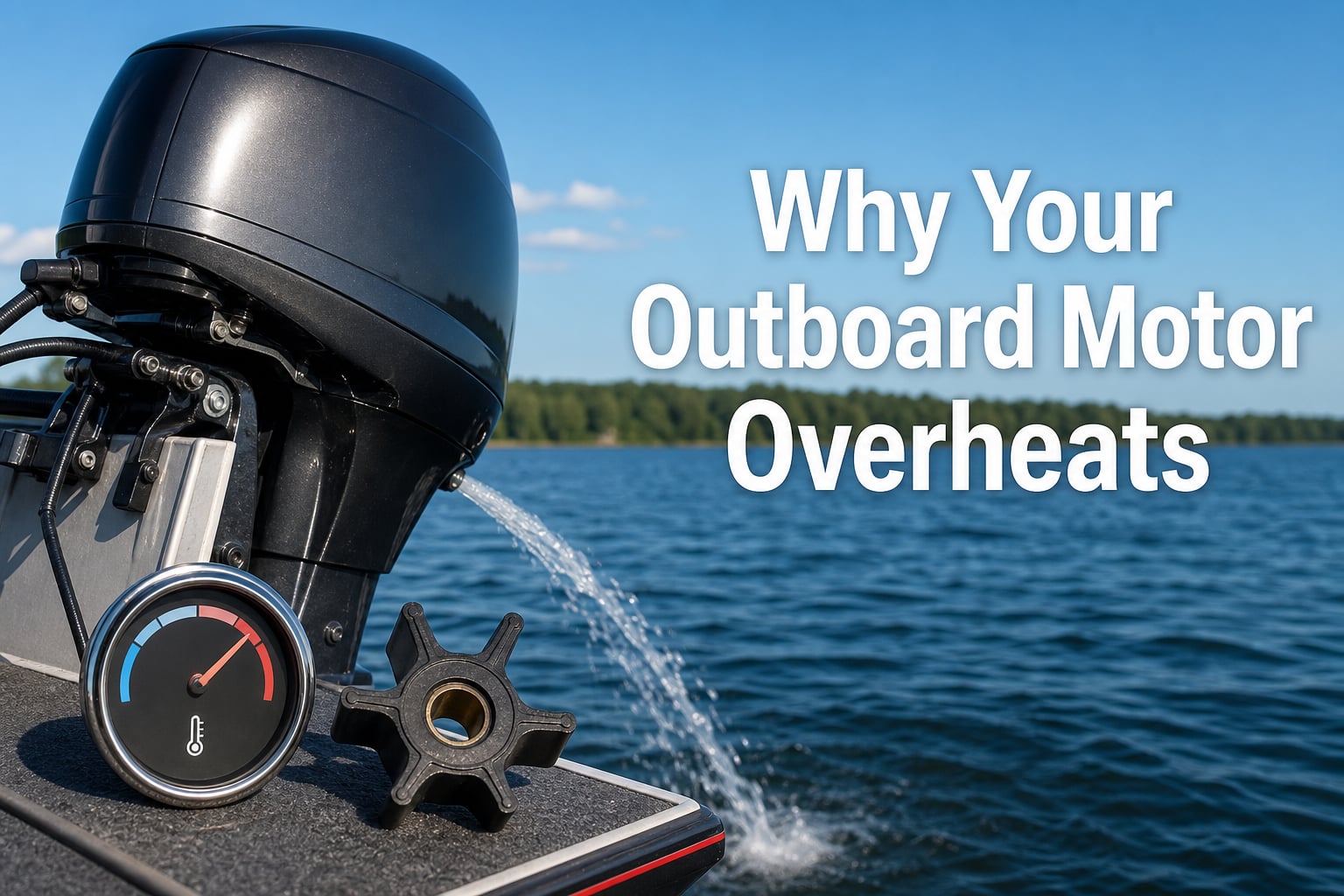
There is nothing quite like the sinking feeling of hearing your overheat alarm scream while you are miles from the dock. When your outboard motor overheats, you have minutes to act before real damage sets in. I have been there myself, and I can tell you that understanding what is happening under the cowling makes all the difference.
An overheating outboard is almost always a cooling system failure. The good news is that most causes are predictable, preventable, and fixable without a mechanic if you catch them early. In this guide, I will walk you through every common reason your outboard motor overheats, how to diagnose each one on the water, and the exact maintenance schedule that keeps your engine running cool for years.
Whether you run a small 2-stroke kicker or a big 4-stroke main engine, the principles are the same. Let us break down what is going wrong and how to fix it.
How an Outboard Cooling System Works
Most outboard motors use a raw water cooling system, which means they pull water directly from the lake, river, or ocean around you. There is no closed-loop radiator with antifreeze like a car. Everything depends on a steady flow of outside water moving through the engine.
The process starts at the water intake screens on the lower unit. Water enters those slots and travels up through the water pump, which is driven by the driveshaft. Inside the pump housing sits a rubber impeller. That little rubber star is the heart of your cooling system. It spins and pushes water up through the engine block, around the cylinder walls and cylinder head, absorbing heat as it goes.
The hot water then exits through the exhaust system and out the telltale stream, the little pisser hole on the side of the engine. That stream is your visual confirmation that water is flowing. If it stops, weakens, or runs hot enough to scald you, something is wrong in the chain.
A thermostat regulates the flow to keep the engine at its ideal operating temperature. A poppet valve, also called a pressure relief valve, controls water pressure at higher RPMs so the system does not over-pressurize. Every single component in this chain matters. One failure anywhere and your outboard motor overheats.
Warning Signs Your Outboard Motor Overheats
Your engine gives you plenty of warning before it seizes. The trick is knowing what to look and listen for. Here are the signs I always tell boaters to watch for:
The overheat alarm sounds. This is the most obvious sign. A continuous beep or tone from your gauge panel means the engine computer has detected dangerously high operating temperature.
The telltale stream stops, weakens, or disappears. No water coming out of the telltale hole means no cooling water is flowing through the engine. A weak or intermittent stream means partial blockage.
The water from the telltale is scalding hot. Some warmth is normal, but if the water is hot enough to burn your hand, the engine is running too hot.
The engine loses power or runs rough. When cylinder temperatures spike, the engine may stumble, bog down, or lose RPM. This is your motor crying for help.
You smell burning or see smoke. Overheated rubber components, melting wiring insulation, or even steam from the cowling are late-stage signs that mean you need to shut down immediately.
The engine block feels unusually hot to the touch. Experienced boaters use the touch test. If you cannot hold your hand on the cylinder head for more than a second or two, the engine is too hot.
The temperature gauge reads above normal. If your boat has a temperature gauge, watch for readings above the normal range. For most outboards, anything over 160 degrees Fahrenheit warrants attention.
I cannot stress this enough: do not ignore these signs. An alarm is not a suggestion. It is a last-chance warning before expensive damage begins.
Why Your Outboard Motor Overheats: Common Causes
When your outboard motor overheats, the culprit almost always falls into one of seven categories. Let me walk you through each one, starting with the most common.
1. Blocked Water Intake
This is the number one cause of outboard overheating, and it is usually the easiest to fix. The water intake screens on your lower unit sit just above the gearcase. Their job is to let water in while keeping debris out. But debris does not always cooperate.
In weedy lakes and rivers, aquatic plants wrap around the lower unit and clog the intake slots. Sand and mud in shallow water can pack into the intake openings. Plastic bags, fishing line, and even rope can get sucked against the screens. In saltwater environments, barnacles, salt crystals, and marine growth slowly narrow the intake passages over time.
The fix is simple but needs to happen fast. Kill the engine, tilt it up, and clear the debris by hand. Check the intake screens from all angles. In saltwater, make flushing your engine with fresh water a habit after every single trip. I keep a soft brush on board specifically for scraping growth off the intakes.
If you boat in weedy or shallow conditions regularly, consider installing a water pressure gauge. It gives you real-time feedback and will show pressure dropping before the alarm ever sounds.
2. Worn or Damaged Impeller
The rubber impeller inside your water pump takes more abuse than any other cooling component. It spins at engine speed, flexing its rubber vanes thousands of times per minute while sitting in hot water. Over time, that rubber hardens, cracks, and loses vanes. When vanes break off, they can lodge in the cooling passages and cause blockages downstream.
A worn impeller might still move some water, but not enough to keep the engine cool at high RPM. You will see a weak telltale stream, intermittent overheating, or overheating that only happens above a certain throttle position. A completely failed impeller means no water flow at all.
The standard recommendation is to replace the impeller every 100 hours of operation or once per year, whichever comes first. In harsh conditions, saltwater, or heavy use, I replace mine every 50 to 75 hours. Impeller kits are inexpensive compared to a rebuilt powerhead. This is the one maintenance item I never skip.
When you pull the old impeller, check the pump housing for grooves and wear. A scored housing cannot seal properly against the vanes, even with a brand-new impeller installed. Replace the housing if you see deep wear marks.
3. Thermostat Failure
The thermostat in your outboard controls when cooling water flows at full volume. At startup, it stays mostly closed so the engine reaches operating temperature quickly. Once warm, it opens fully to allow maximum cooling flow. When a thermostat fails, it usually fails closed, blocking water flow and causing rapid overheating.
A thermostat stuck open causes the opposite problem. The engine never reaches proper operating temperature, runs cold, and may produce white smoke or run inefficiently. This is less immediately damaging but still needs attention.
To test a thermostat, remove it from the engine and drop it in a pot of water on your stove. Heat the water and watch for the thermostat to open. Most outboard thermostats begin opening around 140 to 160 degrees Fahrenheit. If it does not open at all, or opens only partially, replace it.
Thermostats are cheap and easy to replace. I keep a spare on board for my engine. If you are overheating and the impeller and intake are fine, the thermostat is the next thing to check.
4. Poppet Valve and Pressure Relief Valve Issues
The poppet valve is one of the least understood cooling components, and many boaters do not even know it exists. It controls water pressure inside the cooling system based on engine RPM. At low RPM, the poppet stays closed to build enough pressure for cooling. At high RPM, it opens to release excess pressure and maintain steady flow.
When the poppet valve sticks open, the engine runs fine at speed but overheats at idle. This is a very specific and frustrating symptom. You cruise out to your spot with no issues, then sit there trolling or drifting and the alarm goes off. Water pressure drops too low at idle because the valve is not closing.
When it sticks closed, you may see overheating at high RPM because the system cannot relieve excess pressure. The cooling water gets restricted and the engine runs hot under load.
The poppet valve is a small spring-loaded diaphragm typically located under a cover plate on the cylinder block. Mineral deposits and salt buildup are the usual enemies. Remove it, clean it, and inspect the spring and diaphragm for damage. If the rubber diaphragm is cracked or the spring is weak, replace the whole valve assembly.
5. Exhaust and Cooling Passage Blockages
Over years of use, the internal water passages inside your outboard accumulate deposits. In saltwater motors, salt crystals and calcium scale build up inside the cooling jackets. In all motors, corrosion, mineral deposits, and sediment gradually narrow the passages until water flow is severely restricted.
This type of blockage is sneaky. It happens slowly over seasons, so you may not notice the gradual reduction in cooling efficiency until the engine starts running hotter than normal. The telltale stream might still flow, but the volume is lower and the water temperature is higher.
Flushing your engine with fresh water after every use is the best prevention. For motors that already have buildup, a descaling solution designed for marine engines can dissolve deposits inside the water jackets. I run a descaling treatment at the start of every season as preventive maintenance.
Exhaust passages also play a role in cooling. Some outboards route cooling water through the exhaust to cool it before it exits. Blockages in the exhaust path can restrict this flow and contribute to overheating. A professional mechanic can inspect exhaust passages during a full service.
6. Environmental Factors
Sometimes your cooling system is working fine, but the environment is working against it. Operating in warm water means the raw water entering your engine starts at a higher temperature and absorbs less heat. Gulf Coast boaters in summer know this well. Water temperatures in the 80s or 90s reduce cooling efficiency measurably.
Hot air temperatures compound the problem. On a 95-degree day with 90-degree water, your outboard is starting from a thermal disadvantage. The engine has less headroom before it reaches critical temperature.
Shallow water creates another issue. When you stir up sand, mud, and silt in shallow areas, that debris gets sucked into the intake. Even if you clear the screens, fine particles can pass through and accumulate in the cooling passages over time.
If you operate regularly in warm climates, consider reducing your cruising RPM slightly on the hottest days. Running at 80 percent throttle instead of wide-open can make a real difference in engine temperature when conditions are against you.
7. Fuel and Electrical Issues
This category surprises a lot of boaters. Fuel and electrical problems can mimic or contribute to overheating in ways that are hard to diagnose. A 2-stroke outboard running lean, meaning too much air and not enough fuel, burns hotter. The lean condition can be caused by a clogged carburetor, fuel restriction, or incorrect mixture. The engine overheats because the combustion temperature itself is too high, not because the cooling system failed.
On the electrical side, a failing stator or ignition coil can cause temperature issues. When these components heat up during operation, they can short internally. Some boaters report engines that run fine for 20 minutes, then overheat and stall. After cooling down, the engine restarts and runs fine again. That pattern points to an electrical component failing when warm, not a cooling system problem.
If your overheating is intermittent and the cooling system checks out, look at the fuel system. Check for clogged fuel filters, weak fuel pumps, or carburetor issues. On older 2-strokes, verify the oil mixture is correct. Too little oil means less lubrication and more friction heat.
What Temperature Is Too Hot for an Outboard Motor?
This is one of the most common questions I see on boating forums, and most articles skip it entirely. Let me give you the actual numbers.
Most modern 4-stroke outboards are designed to run between 140 and 160 degrees Fahrenheit at normal operating temperature. The thermostat typically begins opening around 145 degrees and reaches full open by 160 degrees. This is your baseline for a healthy engine.
When the temperature climbs above 170 degrees, you are in the warning zone. Most overheat alarms trigger between 180 and 200 degrees, depending on the manufacturer. Mercury, Yamaha, and Honda all set their alarms slightly differently, but the range is consistent.
Sustained operation above 200 degrees risks permanent damage. At 220 degrees and above, you risk warping cylinder heads, blowing head gaskets, and seizing pistons. If your gauge ever reads above 200, shut the engine down immediately. Do not try to limp back to the dock. Call for a tow.
For the telltale stream, the water coming out should feel warm but not scalding. If you cannot comfortably hold your hand in the stream for several seconds, the engine is running too hot. This simple touch test is one of the most reliable checks you can do without any tools.
2-Stroke vs 4-Stroke Overheating Differences
No competitor article covers this, but it matters. Two-stroke and four-stroke outboards overheat differently, and understanding the distinction helps you diagnose problems faster.
Two-stroke outboards use oil mixed into the fuel for lubrication. When a 2-stroke overheats, the oil film protecting the cylinder walls breaks down almost instantly. This leads to piston scuffing and ring damage very quickly. Two-strokes also tend to run at higher RPMs, which means the cooling system is under more constant stress. The good news is that 2-strokes generally have simpler cooling systems with fewer components that can fail.
Four-stroke outboards have a dedicated oil sump, so lubrication is more robust during brief temperature spikes. However, 4-strokes have more cooling system components, including thermostats, poppet valves, and sometimes oil coolers. More components mean more potential failure points. Four-strokes also run at lower average RPMs, which means the water pump is spinning slower and moving less water at cruising speed.
The diagnostic approach differs too. On a 2-stroke, always check the fuel and oil mixture first. On a 4-stroke, check the thermostat, poppet valve, and oil cooler before suspecting fuel issues. Knowing your engine type saves diagnostic time.
What to Do When Your Outboard Overheats on the Water
When that alarm sounds, you need to act fast. Here is the exact sequence I follow every time:
Immediately throttle back to idle. Reduce the heat load on the engine by dropping RPM as fast as possible. Do not shut the engine off yet if you still need steering or charging.
Check the telltale stream. Look at the water output. No stream means a blockage or failed impeller. Weak stream means partial blockage or worn impeller.
Check the water intake. Kill the engine and tilt the lower unit up. Clear any weeds, debris, or obstructions from the intake screens.
Restart and monitor. If the telltale returns with good flow, run at idle and watch the temperature. If it drops back to normal, you can proceed slowly to the nearest dock.
If the stream does not return, shut down. Do not run an overheating engine hoping it will fix itself. You will cause permanent damage. Call for a tow.
Do NOT remove the cowling while hot. Wait for the engine to cool before inspecting. Sudden temperature changes can crack metal components.
Log the incident. Note the RPM, conditions, and symptoms. This information helps with diagnosis once you are back on shore.
I keep a small toolkit on the boat with an impeller kit, basic hand tools, and zip ties for clearing debris. These items have saved my fishing trips more than once.
Prevention: A Maintenance Schedule That Works
The best fix for overheating is preventing it in the first place. I follow this schedule on my own engines, and it has kept me alarm-free for years.
After every trip: Flush the engine with fresh water for 10 to 15 minutes. This is non-negotiable, especially in saltwater. Use a flushing attachment or ear muffs if your engine does not have a built-in flush port.
Every 50 hours or quarterly: Inspect the water intake screens, check the telltale stream for flow and temperature, and visually inspect cooling system hoses for cracks or leaks. Replace any clamps that show corrosion.
Every 100 hours or annually: Replace the water pump impeller. This is the single most important preventive maintenance item. Inspect the pump housing and wear plate for grooves. Replace them if worn.
Every 200 to 300 hours or every 2 to 3 years: Replace the thermostat, inspect and clean the poppet valve, and run a descaling solution through the cooling system. Replace all cooling system hoses if they are more than 5 years old.
Annually before the season: Do a full cooling system check. Test the thermostat in hot water, inspect the poppet valve, replace the impeller, and flush with descaler. This is also the time to check your engine’s anodes, which protect against corrosion that can block cooling passages.
Parts to keep on hand: a spare impeller kit matching your engine model, a spare thermostat, an extra poppet valve diaphragm, and a container of marine descaling solution. These cost very little compared to a tow bill or a rebuilt powerhead.
FAQs
How to fix overheating outboard?
Start by checking the water intake for debris, then inspect the telltale stream. If the stream is weak or absent, replace the water pump impeller. If the impeller is fine, test the thermostat by placing it in hot water to see if it opens. Clean or replace the poppet valve if it is stuck, and flush the cooling system with a descaling solution to remove internal blockages.
How do you fix an overheated engine?
Immediately throttle back to idle or shut the engine off. Let it cool for at least 15 to 20 minutes before inspecting anything. Once cool, check the water intake for blockages, verify the telltale stream is flowing, and inspect the impeller. If you cannot identify the cause, call for a tow rather than risking further damage by running the engine.
Is an engine ruined if it overheats?
Not necessarily. A brief overheat caught quickly usually causes no permanent damage. However, sustained overheating above 200 degrees Fahrenheit can warp cylinder heads, blow head gaskets, seize pistons, and damage bearings. Always have the engine inspected by a professional after any overheating event to check for internal damage, even if it seems to run fine afterward.
What happens if an outboard motor overheats?
When an outboard overheats, metal components expand beyond their design tolerances. Pistons can scuff cylinder walls, bearings can fail from lubrication breakdown, and head gaskets can blow. The engine may lose power, run rough, or seize completely. In 2-stroke engines, the oil film protecting the cylinders breaks down very quickly. The overheat alarm is your last warning before serious damage begins.
What temperature is too hot for an outboard motor?
Most outboards run between 140 and 160 degrees Fahrenheit normally. Overheat alarms typically trigger between 180 and 200 degrees. Sustained temperatures above 200 degrees risk permanent engine damage, and anything above 220 degrees can warp cylinder heads and seize pistons. If your temperature gauge reads above 180, shut down immediately and investigate.
Is the water coming out of my outboard supposed to be hot?
The water from the telltale stream should feel warm but not scalding. It has absorbed heat from the engine block, so some warmth is expected and normal. If the water is hot enough to burn your hand or uncomfortable to touch for more than a second, the engine is running too hot. Use the touch test regularly to monitor cooling system health without any tools.
Why does my outboard overheat at idle but not at speed?
This is a classic symptom of a stuck-open poppet valve or pressure relief valve. At idle, the poppet should be closed to maintain water pressure in the cooling system. If it sticks open, pressure drops too low at low RPM and the engine overheats. At higher RPM the water pump moves enough volume to compensate. Remove and clean the poppet valve, then replace it if the diaphragm or spring is damaged.
Conclusion
Understanding why your outboard motor overheats comes down to knowing the cooling system inside and out. The seven causes I covered, from blocked intakes to failing poppet valves to environmental factors, account for nearly every overheating incident on the water. When your outboard motor overheats, the right response is to throttle back, check the telltale, clear the intake, and shut down if flow does not return.
The maintenance schedule I shared is the real secret. Replacing your impeller annually, flushing after every trip, and running descaler before each season prevents the vast majority of overheating problems before they start. Keep spare parts on board. Know your temperature thresholds. And never ignore that alarm.
Take care of your cooling system, and your outboard will take care of you on every trip out. If you found this guide helpful, bookmark it for your next maintenance session and share it with your boating crew. Stay cool out there.